
About Biome Guide
An independent, citation-first microbiome reference. Every health claim links to its source. No credentials are inflated. No sponsors influence the content.
Important: I am not a doctor, dietitian, or microbiologist. I have no medical or clinical credentials. This site is built by an independent researcher who reads primary literature — not by a healthcare professional. Every claim is linked to its peer-reviewed source so you can verify it yourself. Always consult a qualified healthcare provider before acting on anything you read here.
A Layperson Who Reads the Studies
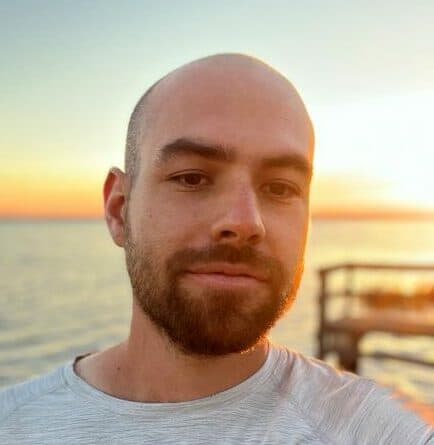
Marketer by trade. Self-taught microbiome researcher by obsession. No medical credentials — just 15 years of reading the primary literature and a belief that this science should be accessible to everyone.
My name is Lucas Summer. My day job is in marketing — I build things I think will positively impact the world. I have no medical degree, no science degree, no degree at all. What I do have is 15 years of reading peer-reviewed microbiome research, one study at a time, and a deep fascination with how native biological systems actually work.
It started with a personal problem. I spent several years dealing with overactive allergies that conventional treatments could only partially manage. When I discovered peer-reviewed research connecting specific bacterial strains to Th1/Th2 immune balance, I began working with targeted probiotics as an adjunct to sublingual immunotherapy (SLIT) — an approach supported by published research on immune modulation through microbial intervention.1,2,3
The combination of SLIT with targeted strains — particularly Lactobacillus rhamnosus GG, Bifidobacterium longum, and Lactobacillus paracasei — helped provide the Th1/Th2 rebalancing my immune system needed to become more adaptive. It was adjunctive, not a replacement for clinical treatment, and it was guided entirely by what the published literature supported.
But the process revealed something bigger: this research was nearly impossible for everyday people to find and understand. The studies existed — they were just locked behind paywalls, written in dense scientific language, and scattered across hundreds of journals. I'd also done my own microbiome testing through services like Viome to better understand my personal microbial profile, and I realized how much context was missing for consumers trying to interpret their results.
That's why I built Biome Guide. Fifteen years of reading primary literature, distilled into a structured reference anyone can use. I read the studies, extract the findings, cite every claim, and present it in plain language. Where the evidence is strong, I say so. Where it's preliminary, I say that too. I don't pretend to have credentials I don't have — I let the citations speak for themselves.
My personal experience is not medical advice and should not be treated as such. The combination of SLIT and targeted probiotics was my experience and should not be interpreted as a recommended protocol. Individual responses vary significantly. Always work with a healthcare provider who knows your medical history before making any changes to your treatment plan.
References
- Kalliomäki M, et al. Probiotics in primary prevention of atopic disease: a randomised placebo-controlled trial. The Lancet. 2001;357(9262):1076-1079. doi:10.1016/S0140-6736(00)04259-8
- Yan F, Polk DB. Probiotics and immune health. Curr Opin Gastroenterol. 2011;27(6):496-501. doi:10.1097/MOG.0b013e32834baa4d
- Ozdemir O. Various effects of different probiotic strains in allergic disorders: an update from laboratory and clinical data. Clin Exp Immunol. 2010;160(3):295-304. doi:10.1111/j.1365-2249.2010.04109.x
What We've Built
Biome Guide is a structured, citation-backed reference covering the organisms, strains, metabolites, and conditions that make up human microbiome science. Every number below is verifiable by browsing the site.
Editorial Process
Every page on Biome Guide follows a structured editorial workflow. This isn't a blog where opinions get published — it's a reference database where every entry is built from primary sources.
Literature Search
Every organism, strain, and condition page begins with a systematic search of PubMed, Cochrane Library, and ClinicalTrials.gov. We prioritize meta-analyses and randomized controlled trials (RCTs) over observational studies, and human data over animal models.
Source Extraction
Key findings are extracted with their study design, sample size, primary outcomes, and effect sizes. Every claim is paired with a DOI-linked citation in AMA format so readers can verify the original paper directly.
Evidence Grading
We use hedged language calibrated to the strength of evidence. "Has been shown to" (strong RCT evidence) is treated differently from "may contribute to" (preliminary or preclinical). We explicitly mark where evidence is limited, conflicting, or based solely on animal studies.
Strain Verification
Strain profiles include culture collection numbers (ATCC, DSM, CNCM, JCM) cross-referenced against public registries. We distinguish between strains with extensive human RCT data and those with only preclinical evidence, and we note when strain designations have been reclassified.
Ongoing Review
Content is updated as new research is published. Every page displays a date stamp. When a study we've cited is retracted or superseded, we update accordingly. Readers can report errors or suggest corrections via our contact page.
Understanding the System First
The human body evolved over millions of years in concert with trillions of microorganisms. Your immune system, your metabolism, your neurotransmitter production — none of these work in isolation. They function as part of a dynamic, interconnected system where bacteria, fungi, archaea, and viruses all play roles that research is only beginning to map.
Biome Guide approaches health through this lens: understanding how the body is designed to work with its microbiome, rather than defaulting to external interventions that bypass or override these native systems. This isn't anti-medicine — it's pro-understanding-the-system-first.
Modern medicine excels at acute intervention. But for the chronic, complex conditions that dominate modern health — autoimmune disorders, metabolic dysfunction, allergic disease, mood disorders — there is a growing body of peer-reviewed evidence suggesting that working with the body's native microbial ecology may offer a fundamentally different, and sometimes more durable, approach. We believe this research deserves to be accessible to everyone, not just specialists.
What This Site Is — and Isn't
What it is
- • A structured reference that summarizes peer-reviewed microbiome research in plain language
- • Every health claim is backed by a DOI-linked citation you can check yourself
- • Built and maintained by one person reading primary literature full-time
- • Free, with no paywalls, no sponsored content, and no affiliate-driven recommendations
- • Open to corrections — if we've cited something wrong, tell us
What it isn't
- • Not medical advice — nothing here replaces a consultation with your doctor
- • Not written by a doctor, microbiologist, or registered dietitian
- • Not a diagnostic tool — microbiome science is complex and individualized
- • Not sponsored by any supplement, testing, or pharmaceutical company
- • Not infallible — we make mistakes and rely on readers to help us catch them
Where Our Information Comes From
We draw exclusively from peer-reviewed literature and recognized institutional databases. We do not cite blogs, press releases, or supplement manufacturer claims as primary sources.
Research Databases
- PubMed / MEDLINE
- Cochrane Database of Systematic Reviews
- ClinicalTrials.gov
- NIH Human Microbiome Project
- ATCC / DSMZ Culture Collections
- NCBI Taxonomy Browser
Journals We Cite Most
- Gut
- Nature Microbiology
- Cell Host & Microbe
- The Lancet Gastroenterology
- Nutrients
- British Journal of Nutrition
- Applied and Environmental Microbiology
- Frontiers in Microbiology
Conflicts of Interest Disclosure
Biome Guide is independently operated and funded out of pocket. Full transparency on how this site operates, as of March 2026:
- • Funding: This site is entirely self-funded. There are no investors, grants, or institutional backers.
- • Sponsorships: We accept no sponsored content and no payments for product mentions, reviews, or placement.
- • Affiliate links: We may add affiliate links to microbiome testing services in the future. If we do, they will only be for products I have personally used and honestly reviewed. Affiliate relationships will be clearly disclosed on the relevant pages and will never influence the scientific content or conclusions of this site.
- • Testing experience: I have personally used microbiome testing services including Viome. References to testing services on our testing page are based on my direct experience and publicly available information about each service.
- • Updates: If any of the above changes, this disclosure will be updated with the date of the change.
Found an Error? Tell Us.
The fastest way to improve this site is reader feedback. If we've cited something incorrectly, missed an important study, or stated something misleading, we want to know.
Report a CorrectionLast updated: March 2026