

Medical Disclaimer: This article is for informational purposes only and does not constitute medical advice. Individual responses to prebiotic foods vary based on existing gut microbiome composition, health status, and other factors. Consult a healthcare provider before making significant dietary changes, especially if you have IBS, SIBO, or other gastrointestinal conditions.
Prebiotic foods contain specialized fibers and compounds that your body cannot digest but your beneficial gut bacteria can. By selectively feeding these helpful microorganisms, prebiotics may help support digestive health, immune function, and metabolic balance [gibson2017]. Unlike probiotics — which are live organisms — prebiotics are the fuel that helps your existing good bacteria flourish.
This guide provides a comprehensive prebiotic foods list, practical daily intake targets, and evidence-based tips for incorporating these foods into your diet.
Prebiotic Foods List: 20+ Foods That Feed Your Gut Bacteria
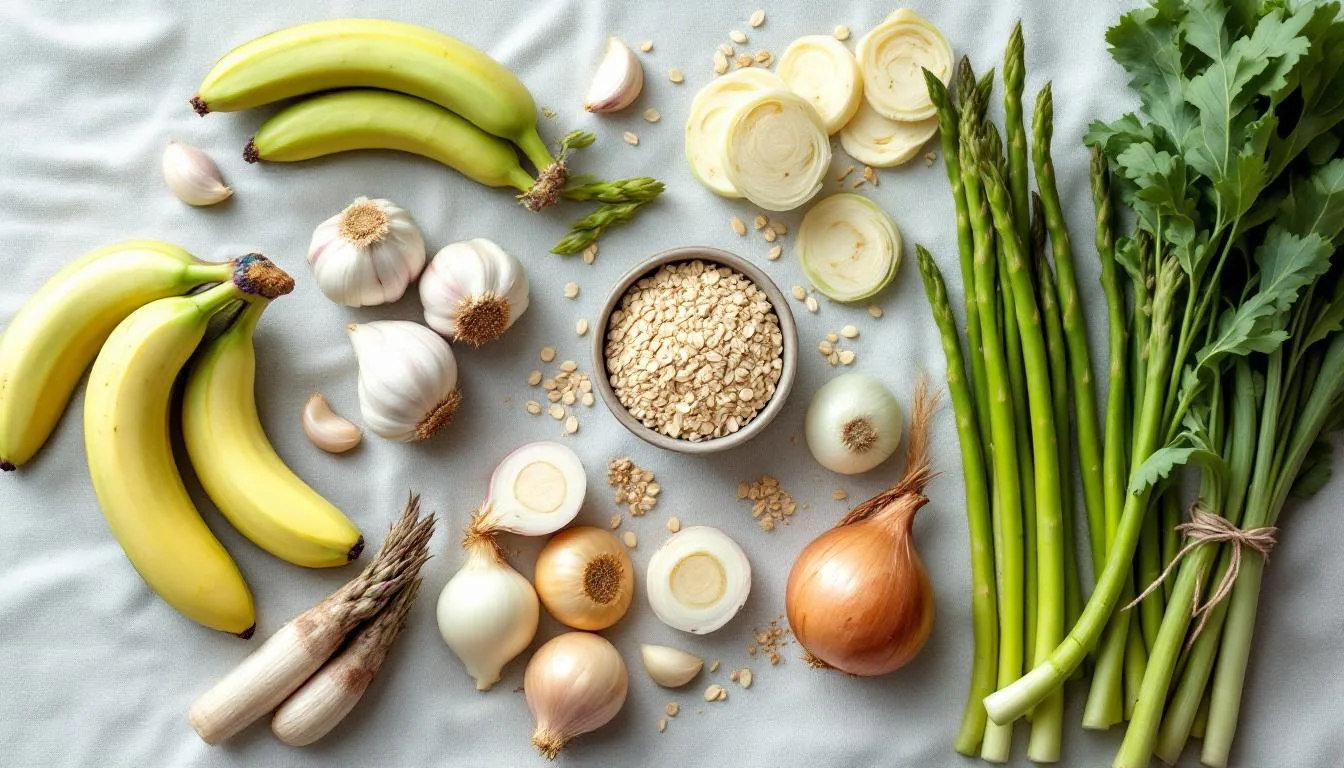
The following table lists common prebiotic foods, the type of prebiotic fiber they contain, and a practical serving size. Prebiotic content can vary based on growing conditions, preparation methods, and ripeness [carlson2018].
| Food | Primary Prebiotic Type | Serving Size | Approx. Prebiotic Fiber |
|---|---|---|---|
| Chicory root | Inulin | 1 tbsp (ground) | 4-5 g |
| Jerusalem artichoke | Inulin | 1/2 cup (sliced) | 9-13 g |
| Garlic | Fructans / FOS | 3 cloves | 1-2 g |
| Onions (raw) | FOS | 1 medium | 2-4 g |
| Leeks | Inulin | 1 cup (chopped) | 2-5 g |
| Asparagus | Inulin / FOS | 6 spears | 2-3 g |
| Dandelion greens | Inulin | 1 cup (raw) | 2-3 g |
| Bananas (slightly green) | Resistant starch | 1 medium | 1-3 g |
| Barley | Beta-glucan | 1/2 cup (cooked) | 2-3 g |
| Oats | Beta-glucan | 1/2 cup (dry) | 2-3 g |
| Apples | Pectin | 1 medium | 1-2 g |
| Flaxseeds | Mucilage / lignans | 2 tbsp | 1-2 g |
| Jicama | Inulin | 1/2 cup (sliced) | 3-5 g |
| Cocoa powder | Polyphenols / fiber | 2 tbsp | 1-2 g |
| Wheat bran | Arabinoxylan | 1/4 cup | 2-3 g |
| Lentils | GOS / resistant starch | 1/2 cup (cooked) | 2-4 g |
| Chickpeas | GOS / resistant starch | 1/2 cup (cooked) | 2-4 g |
| Savoy cabbage | Fiber / sulfur compounds | 1 cup (shredded) | 1-2 g |
| Konjac root (glucomannan) | Glucomannan | 1 tsp (powder) | 3-4 g |
| Seaweed | Various polysaccharides | 1/4 cup (dried) | 1-3 g |
| Mushrooms (especially shiitake) | Beta-glucan / chitin | 1 cup (sliced) | 1-2 g |
| Pistachios | Fiber / polyphenols | 1 oz (about 49 nuts) | 1-2 g |
Note: Cooking can reduce the prebiotic content of some foods, particularly those rich in resistant starch. However, cooling cooked starches (like rice, potatoes, and lentils) may actually increase their resistant starch content — a process called retrogradation.
How Much Prebiotic Fiber Do You Need Per Day?
The International Scientific Association for Probiotics and Prebiotics (ISAPP) and most research studies suggest a daily prebiotic intake of 3-5 grams as a minimum threshold for meaningful effects on gut bacteria populations, with many studies using 5-8 grams per day [gibson2017].
Current intake levels: Most adults in Western countries consume only about 1-4 grams of prebiotic fiber per day, well below what research suggests is optimal. Total dietary fiber intake also falls short — the average American consumes roughly 15 grams per day versus the recommended 25-38 grams [slavin2013].
How to build up gradually:
- Week 1: Add one prebiotic-rich food per day (e.g., a banana, a serving of oats, or garlic in cooking) — target 2-3 grams of prebiotic fiber
- Week 2: Add a second serving (e.g., lentils at lunch or asparagus at dinner) — target 4-5 grams
- Week 3: Aim for 3 or more prebiotic food sources daily — target 5-8 grams
- Ongoing: Maintain variety by rotating through different prebiotic foods throughout the week
Why the shortfall matters: Prebiotic fiber is the substrate for butyrate-producing bacteria, and those are precisely the organisms depleted in several gut-brain conditions — including ADHD, where gut health research consistently finds reduced Faecalibacterium prausnitzii and lower faecal short-chain fatty acids. Appetite-suppressing stimulant medication makes fiber the first thing to drop out of the diet, which compounds the problem.
Who should be cautious: People with IBS, SIBO, or other functional gut disorders may need to introduce prebiotic foods more slowly, as rapid increases in fermentable fibers can temporarily worsen bloating, gas, and abdominal discomfort. A low-FODMAP diet followed by structured reintroduction — ideally guided by a dietitian — may be a better approach for these individuals [ford2018].
Prebiotic Foods vs. Prebiotic Supplements
With prebiotic supplements increasingly available, a common question is whether food-based prebiotics are sufficient or whether supplementation is necessary [hutkins2016].
When food is likely enough:
- You eat a varied diet with multiple servings of vegetables, legumes, whole grains, and fruits daily
- You tolerate high-fiber foods well
- You have no specific gastrointestinal conditions requiring targeted prebiotic therapy
- You consistently reach 5+ grams of prebiotic fiber from dietary sources
A single meal containing garlic, onions, lentils, and a side of asparagus could easily provide 5-8 grams of prebiotic fiber — more than many supplements offer.
When supplements may have a role:
- You have difficulty eating enough variety due to food allergies, intolerances, or access limitations
- A healthcare provider has recommended a specific prebiotic type (e.g., inulin or GOS) at a targeted dose
- You are following a restricted diet (low-FODMAP reintroduction phase, elimination diet) and need to support specific bacterial populations
- You want a standardized, measurable dose for consistency
Key differences between food and supplements:
Foods provide a complex matrix of fibers, polyphenols, vitamins, and minerals that work synergistically. A single Jerusalem artichoke delivers inulin alongside potassium, iron, and thiamine. Supplements provide isolated prebiotic compounds at standardized doses, which can be useful for precision but lack this broader nutritional context [makki2018].
For a detailed look at specific prebiotic fiber types and the research behind them, see our prebiotics guide and individual pages on inulin and FOS.
Meal Planning With Prebiotic Foods
Incorporating prebiotic foods into your daily routine does not require dramatic dietary overhauls. Here are practical, evidence-informed strategies [sonnenburg2016]:
Breakfast strategies:
- Add ground flaxseeds or sliced banana to oatmeal (beta-glucan + resistant starch or mucilage)
- Blend kefir with slightly green banana and cocoa powder (probiotics + resistant starch + polyphenols)
- Top whole-grain toast with mashed avocado and sauerkraut
Lunch strategies:
- Build meals around legumes — lentil soup, chickpea salad, or black bean bowls provide GOS and resistant starch
- Add raw onion and garlic to dressings and salsas for FOS and fructans
- Include a side of jicama sticks or raw asparagus for inulin
Dinner strategies:
- Roast Jerusalem artichokes, leeks, or asparagus as a side dish
- Cook grains and legumes in advance, then cool and reheat to increase resistant starch
- Use garlic and onions as a flavor base — sautéing reduces but does not eliminate their prebiotic content
Snack strategies:
- Pistachios or almonds with an apple (fiber + polyphenols + pectin)
- Hummus with raw vegetable sticks (GOS + various prebiotic fibers)
- A small square of dark chocolate (70%+ cacao) for polyphenols
The 30-plant challenge: Research from the American Gut Project suggests eating 30+ different plant foods per week is associated with significantly greater microbial diversity. This includes herbs, spices, nuts, and seeds — so variety across all food categories counts. For more on how prebiotic fibers compare to probiotics, see our prebiotics vs. probiotics guide.
Cooking tips to preserve prebiotics:
- Eat some prebiotic vegetables raw when possible (garlic, onions, jicama)
- Steam rather than boil to retain more water-soluble fibers
- Cook and cool starchy foods (rice, potatoes, lentils) to increase resistant starch via retrogradation
- Store bananas at room temperature and eat them when still slightly green for maximum resistant starch
Frequently Asked Questions
See the FAQ section at the top of this article for structured answers to the most common questions about prebiotic foods.
References
All references are cited inline using AMA format. See the reference list in the article metadata for full citation details.
Frequently Asked Questions
What foods are highest in prebiotics?
Chicory root is the single richest food source of prebiotic inulin, containing roughly 36-48 grams of inulin per 100 grams (dry weight). Among more commonly consumed foods, Jerusalem artichokes (16-20g inulin per 100g), garlic (9-16g fructans per 100g), leeks (3-10g inulin per 100g), and onions (2-6g FOS per 100g) are among the highest sources of prebiotic fiber.
How much prebiotic fiber should I eat per day?
Most research suggesting health benefits has used prebiotic doses of 3-8 grams per day, though some studies have gone as high as 15-20 grams. The ISAPP suggests a minimum of 3-5 grams daily for meaningful effects on gut bacteria. It is generally recommended to start with a lower amount and increase gradually over 2-3 weeks to minimize gas and bloating.
Can I get enough prebiotics from food alone?
Yes, most people can obtain adequate prebiotic fiber from a varied whole-foods diet. A single medium artichoke provides about 10 grams of fiber (much of it inulin), a serving of oats contains beta-glucan, and a cup of lentils delivers multiple types of prebiotic fiber. Eating a diverse mix of vegetables, legumes, whole grains, and fruits throughout the week should provide sufficient prebiotics for most individuals.
Do prebiotic foods cause gas and bloating?
Prebiotic fibers are fermented by gut bacteria, which does produce gas as a natural byproduct. Some people, particularly those new to high-fiber diets or those with IBS, may experience temporary gas, bloating, or abdominal discomfort. Starting with small portions and increasing gradually over 2-3 weeks typically allows the gut microbiome to adapt and reduces symptoms.
Are prebiotic foods the same as high-fiber foods?
Not exactly. All prebiotics are a type of fiber (or fiber-like compound), but not all fibers are prebiotics. To qualify as a prebiotic, a compound must resist digestion in the upper GI tract, be selectively fermented by beneficial gut bacteria, and confer a health benefit. Some fibers, like cellulose, add bulk but are not selectively used by beneficial bacteria. Prebiotic fibers include inulin, FOS, GOS, and resistant starch.
References
- Gibson GR, Hutkins R, Sanders ME, et al.. Expert consensus document: The International Scientific Association for Probiotics and Prebiotics (ISAPP) consensus statement on the definition and scope of prebiotics. Nature Reviews Gastroenterology & Hepatology. 2017;14(8):491-502. doi:10.1038/nrgastro.2017.75
- Slavin J. Fiber and Prebiotics: Mechanisms and Health Benefits. Nutrients. 2013;5(4):1417-1435. doi:10.3390/nu5041417
- Carlson JL, Erickson JM, Lloyd BB, Slavin JL. Health Effects and Sources of Prebiotic Dietary Fiber. Current Developments in Nutrition. 2018;2(3):nzy005. doi:10.1093/cdn/nzy005
- Makki K, Deehan EC, Walter J, Bäckhed F. The Impact of Dietary Fiber on Gut Microbiota in Host Health and Disease. Cell Host & Microbe. 2018;23(6):705-715. doi:10.1016/j.chom.2018.05.012
- Sonnenburg ED, Sonnenburg JL. Starving our microbial self: the deleterious consequences of a diet deficient in microbiota-accessible carbohydrates. Cell Metabolism. 2016;20(5):779-786. doi:10.1016/j.cmet.2014.07.003
- Hutkins RW, Krumbeck JA, Bindels LB, et al.. Prebiotics: why definitions matter. Current Opinion in Biotechnology. 2016;37:1-7. doi:10.1016/j.copbio.2015.09.001
- Wilson B, Whelan K. Prebiotic inulin-type fructans and galacto-oligosaccharides: definition, specificity, function, and application in gastrointestinal disorders. Journal of Gastroenterology and Hepatology. 2017;32(S1):64-68. doi:10.1111/jgh.13700
- Ford AC, Harris LA, Lacy BE, Quigley EMM, Moayyedi P. Systematic review with meta-analysis: the efficacy of prebiotics, probiotics, synbiotics and antibiotics in irritable bowel syndrome. Alimentary Pharmacology & Therapeutics. 2018;48(10):1044-1060. doi:10.1111/apt.15001