

Streptococcus salivarius is a gram-positive, facultatively anaerobic coccus that is one of the earliest colonizers of the human oral cavity after birth, appearing within 2 days of life[1]. It is a predominant commensal bacterium of the oral microbiome, particularly on the dorsum of the tongue (comprising up to 10% of total microbiota), the pharyngeal mucosa, and the saliva. S. salivarius is considered one of the most important beneficial bacteria in the oral cavity, with FDA GRAS-designated strains (K12: GRN 000591; M18: GRN 000807) being developed as probiotics for oral and upper respiratory tract health[2].
Probiotic Strains and BLIS Production
The most clinically significant strains are K12 and M18, each producing distinct bacteriocin-like inhibitory substances (BLIS):
Strain K12 produces salivaricin A2 (2,368 Da) and salivaricin B (2,740 Da), both encoded on a 190-kb transmissible megaplasmid (pSsal-K12), making it the first streptococcus reported to produce two distinct lantibiotics[1]. These bacteriocins are effective against Streptococcus pyogenes and other pathogenic streptococci. Colonization studies show K12 persists for up to 3 weeks after administration, with approximately 30% of children achieving stable colonization by day 3.
Strain M18 produces salivaricins A, MPS, M, 9, and G32, and critically produces dextranase (solubilizes dental plaque biofilms) and urease (breaks down urea to ammonia, increasing oral pH and neutralizing acid from cariogenic bacteria)[3]. M18 bacteriocin-encoding megaplasmids can be transferred between strains, creating enhanced variants with >400% relative adherence.
Key Characteristics
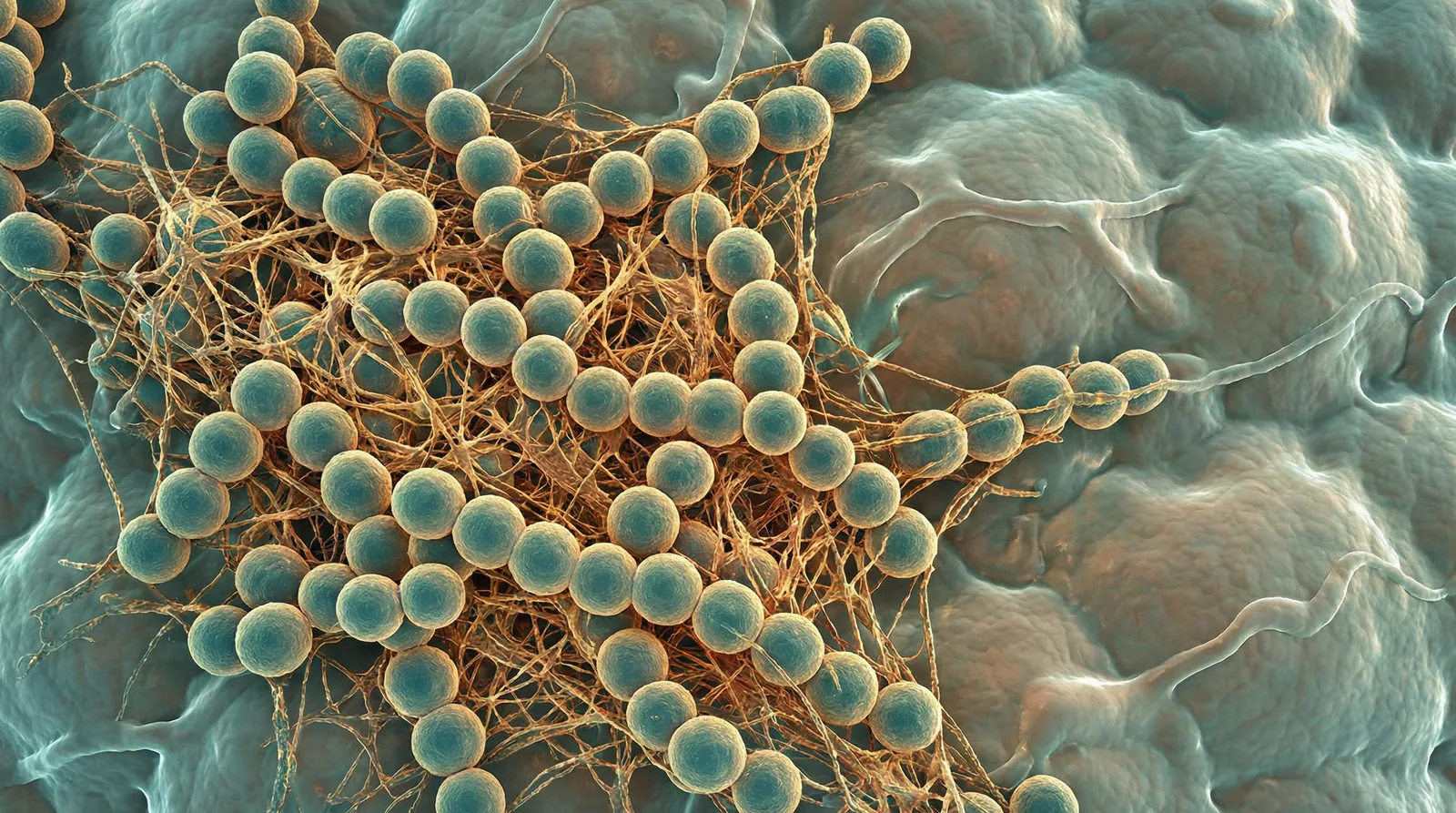
S. salivarius belongs to the viridans group streptococci and is characterized by its alpha-hemolytic activity on blood agar. The bacterium appears as chains of cocci under microscopic examination and forms soft, glistening colonies on agar plates. It is non-motile, catalase-negative, and can ferment various carbohydrates.
Key genetic features include:
- 26 dockerin-containing proteins and cohesin-carrying scaffoldins
- Constitutive bacteriocin expression (not substrate-induced)
- Lack of virulence factors: Lacks hemolytic activity and known streptococcal virulence genes (sagA, scpA, smez-2, speB, emm)
- Antibiotic sensitivity: Sensitive to most common antibiotics; intrinsic moderate resistance to gentamicin and ofloxacin[2]
Role in Human Microbiome
S. salivarius is one of the most abundant species in the oral microbiome, particularly on the dorsal surface of the tongue, where it can comprise up to 10% of the total microbiota. It is also found in the pharynx, saliva, and to a lesser extent, in the intestinal tract.
As one of the earliest colonizers of the oral cavity in newborns (detectable within 18 hours after birth), S. salivarius plays a crucial role in the development of the oral microbiome. It helps establish a balanced microbial community by:
- Creating a favorable environment for other beneficial bacteria
- Competing with potential pathogens for adhesion sites
- Producing antimicrobial compounds that inhibit pathogenic bacteria
- Modulating host immune responses
The presence of S. salivarius in the oral cavity is generally associated with good oral health and a reduced risk of oral diseases.
Clinical Evidence: Upper Respiratory Tract Health
Pharyngitis and Tonsillitis Prevention
A landmark multicenter trial of 61 children with recurrent oral streptococcal disorders found that K12 supplementation (5×10⁹ CFU/day for 90 days) achieved 96% reduction in streptococcal infections vs 7% in controls (P<0.001), with 80% reduction in viral infections (P<0.01)[4]. Antibiotic use dropped from 900 days (control) to 30 days (treated). The odds ratio for tonsillitis was 0.003 (95% CI: 0.001-0.026).
A 2024 systematic review of 15 studies with 2,355 children found K12 achieves 90% reduction in streptococcal pharyngitis, >80% reduction in antibiotic use, and 85% reduction in school absences[5].
Otitis Media Prevention
A prospective RCT of 100 children with nasal spray containing S. salivarius 24SMB and S. oralis 89a showed AOM incidence of 26.0% vs 70.0% placebo (P<0.001)[4]. However, a large 2023 JAMA trial (827 children at 50 day care centers) found K12 alone did not reduce AOM occurrence, suggesting efficacy may depend on specific formulations[6].
Clinical Evidence: Oral Health
Dental Caries Prevention
A randomized parallel single-blinded trial of M18 in 40 children (aged 3-6 years) for 7 days showed significant decrease in S. mutans (P=0.049) and significant increase in salivary buffering capacity (P=0.045)[3]. A larger 3-month RCT in 100 dental caries-active children found significantly lower plaque scores (P=0.05), particularly in subjects with high initial plaque[7].
Gingivitis and Periodontal Health
A double-blind RCT of M18 lozenges for 4 weeks showed significant decrease in gingival index (effect size 0.58, 95% CI 0.05-1.10) and plaque index (effect size 0.55, 95% CI 0.02-1.07), with gingival improvement persisting 4 weeks after discontinuation[8]. In vitro studies demonstrate K12 and M18 reduce pathogen-induced IL-6 and IL-8 by 30-63% via a secreted heat-stable proteinaceous molecule[9].
Halitosis
A meta-analysis of 7 RCTs (279 participants) found probiotics including K12 significantly reduce organoleptic scores short-term (SMD = -0.58, P<0.0001) and long-term (SMD = -0.45, P=0.03), with short-term VSC/H₂S reductions[10]. Removal of tongue coating may be a prerequisite for optimal efficacy.
Immunomodulatory Mechanisms
S. salivarius exhibits potent anti-inflammatory properties through multiple pathways:
NF-κB Inhibition: K12 significantly altered 565 host genes in bronchial epithelial cells, reducing basal IL-8 to 40% of control at 6h, reducing P. aeruginosa-induced IL-8 by 62% (P<0.002), and flagellin-induced IL-8 by 75% (P<0.001)[11]. The mechanism involves downregulation of NF-κB signaling and inhibition of p65 translocation.
Colitis Protection: In murine TNBS-induced colitis models, live S. salivarius reduced Wallace scores by 55% (P<0.001) and Ameho scores by 69% (P<0.001). Heat-killed bacteria showed no effect, indicating metabolically active bacteria are required[12].
Competitive Exclusion: Pre-exposure to S. salivarius caused a 7-log decrease in S. pyogenes CFU and significantly reduced GAS adherence and internalization to HEp-2 cells. S. salivarius dominated in mixed-species biofilms[13].
Safety Profile
S. salivarius K12 and M18 have established safety profiles with FDA GRAS status:
Clinical Safety Data
A randomized, double-blind, placebo-controlled safety study of 56 healthy adults consuming 1.1×10¹⁰ CFU K12 daily for 28 days found no significant differences in vital signs, clinical chemistry, hematology, or urinalysis between groups[2]. Rodent toxicology showed no signs of overt toxicity at doses up to 5,000 mg/kg bw/day (8×10¹⁰ CFU/kg bw/day), and Ames testing confirmed non-mutagenicity.
Use in Children
A 12-month study of 224 infants (7-13 months) receiving K12-supplemented formula showed 93.1% of 876 adverse events were unrelated to treatment, with no significant differences in growth indices[5]. The systematic review of 2,355 children found only minor transient local side effects (sneezing, itching) with intranasal administration.
Pathogenic Potential
S. salivarius is generally considered a safe commensal with minimal pathogenic potential. However, in rare cases, it can act as an opportunistic pathogen, particularly in immunocompromised individuals. The probiotic strains lack known streptococcal virulence genes, toxins, and resistance determinants, and are sensitive to common antibiotics, allowing treatment if opportunistic infection were to occur.
Metabolic Activities
S. salivarius exhibits diverse metabolic capabilities that contribute to its ecological success in the oral cavity:
Carbohydrate metabolism: It can ferment various sugars, including glucose, fructose, and sucrose, producing primarily lactic acid as an end product.
Urease activity: Some strains produce urease, which hydrolyzes urea to ammonia, helping to neutralize acidic conditions in the oral cavity and protecting against dental caries.
Dextranase and fructanase production: These enzymes break down extracellular polysaccharides in dental plaque, reducing biofilm formation by cariogenic bacteria.
Bacteriocin synthesis: Production of lantibiotics (salivaricin A and B) and other antimicrobial peptides that inhibit competing bacteria.
Adhesion mechanisms: Expression of adhesins that facilitate attachment to oral surfaces and coaggregation with other bacteria.
These metabolic activities allow S. salivarius to thrive in the oral environment while contributing to the overall health of the oral microbiome.
Clinical Relevance
The clinical significance of S. salivarius primarily relates to its probiotic applications:
Oral probiotics: Strains K12 and M18 are commercially available as probiotics for oral health, with clinical studies supporting their efficacy in reducing halitosis, preventing dental caries, and decreasing the incidence of streptococcal pharyngitis.
Upper respiratory tract infections: Regular use of S. salivarius K12 has been shown to reduce the recurrence of otitis media and pharyngotonsillitis in children.
Dental caries prevention: The M18 strain has demonstrated efficacy in reducing dental plaque and protecting against caries development.
Halitosis management: Clinical trials have shown significant reductions in volatile sulfur compounds and improved breath odor following S. salivarius K12 administration.
Diagnostic considerations: In clinical microbiology, distinguishing S. salivarius from other viridans streptococci is important for accurate diagnosis when these organisms are isolated from normally sterile sites.
Interaction with Other Microorganisms
S. salivarius engages in complex interactions with other members of the oral microbiome:
Antagonism against pathogens: Through bacteriocin production, S. salivarius inhibits various oral pathogens, including Streptococcus pyogenes, Streptococcus pneumoniae, Moraxella catarrhalis, and periodontal pathogens.
Biofilm interactions: It can coaggregate with other oral bacteria, influencing the structure and composition of oral biofilms.
Interspecies communication: S. salivarius participates in quorum sensing and may modulate the virulence expression of other bacteria.
Competition for nutrients: It competes effectively for carbohydrates and other nutrients in the oral environment.
Interactions with fungi: Some strains can inhibit the growth and biofilm formation of Candida albicans, potentially protecting against oral candidiasis.
These interactions contribute to the ecological balance of the oral microbiome and help maintain oral health.
Research Significance
S. salivarius has become increasingly important in microbiome and probiotic research:
Probiotic development: As one of the best-characterized oral probiotics, S. salivarius serves as a model for developing next-generation probiotics for oral and respiratory health.
Bacteriocin research: The lantibiotics produced by S. salivarius are being studied as potential alternatives to conventional antibiotics.
Microbiome modulation: Understanding how S. salivarius shapes the oral microbiome provides insights into ecological approaches to preventing oral diseases.
Immune system interactions: Research on how S. salivarius modulates host immune responses may lead to novel anti-inflammatory strategies.
Biofilm control: Studies on S. salivarius biofilm interactions inform approaches to managing pathogenic biofilms in the oral cavity and beyond.
The continued study of S. salivarius promises to enhance our understanding of host-microbe interactions and expand the applications of this beneficial commensal in promoting human health.
Clinical Applications and Dosing
| Indication | Strain | Dosage | Duration | Evidence Level |
|---|---|---|---|---|
| Recurrent pharyngitis/tonsillitis | K12 | 5×10⁹ CFU/day | 90 days | Multiple RCTs |
| Dental caries prevention | M18 | Daily lozenges | 3 months | Multiple RCTs |
| Gingivitis management | M18 | Daily lozenges | 4+ weeks | RCTs |
| Halitosis | K12 | Daily lozenges | Up to 30 days | RCTs (mixed results) |
| Otitis media prevention | 24SMB + S. oralis 89a | Nasal spray | 90 days | RCT |
Limitations and Considerations
- Transient Colonization: Both K12 and M18 show transient colonization (2-4 weeks), requiring repeated administration for sustained effects
- Variable Colonization Success: Only ~30% of individuals achieve stable colonization; some may be non-responders
- Antibiotic Sensitivity: Should not be administered during antibiotic therapy; allow washout period
- Mixed Clinical Results: Some large trials (e.g., 2023 JAMA AOM trial) showed no benefit, indicating efficacy depends on population and indication