

Lactulose
A synthetic disaccharide with dual roles as a pharmaceutical laxative and prebiotic, promoting Bifidobacterium growth and beneficial fermentation.
Food Sources
Naturally found in these foods:
Key Benefits
- Promotes Bifidobacterium growth
- Effective for constipation relief
- Treats hepatic encephalopathy
- Enhances SCFA production
- Lowers gut pH
Bacteria This Prebiotic Feeds
This prebiotic selectively nourishes these beneficial microorganisms:
Overview
Lactulose is a synthetic disaccharide composed of galactose and fructose, linked by a β-1,4 glycosidic bond[1]. Unlike lactose (galactose-glucose), lactulose cannot be digested by human intestinal enzymes, making it a non-absorbable carbohydrate that reaches the colon intact. This property underlies its dual functionality as both a pharmaceutical agent for constipation and hepatic encephalopathy, and as a prebiotic that promotes beneficial gut bacteria growth.
Mechanism of Action
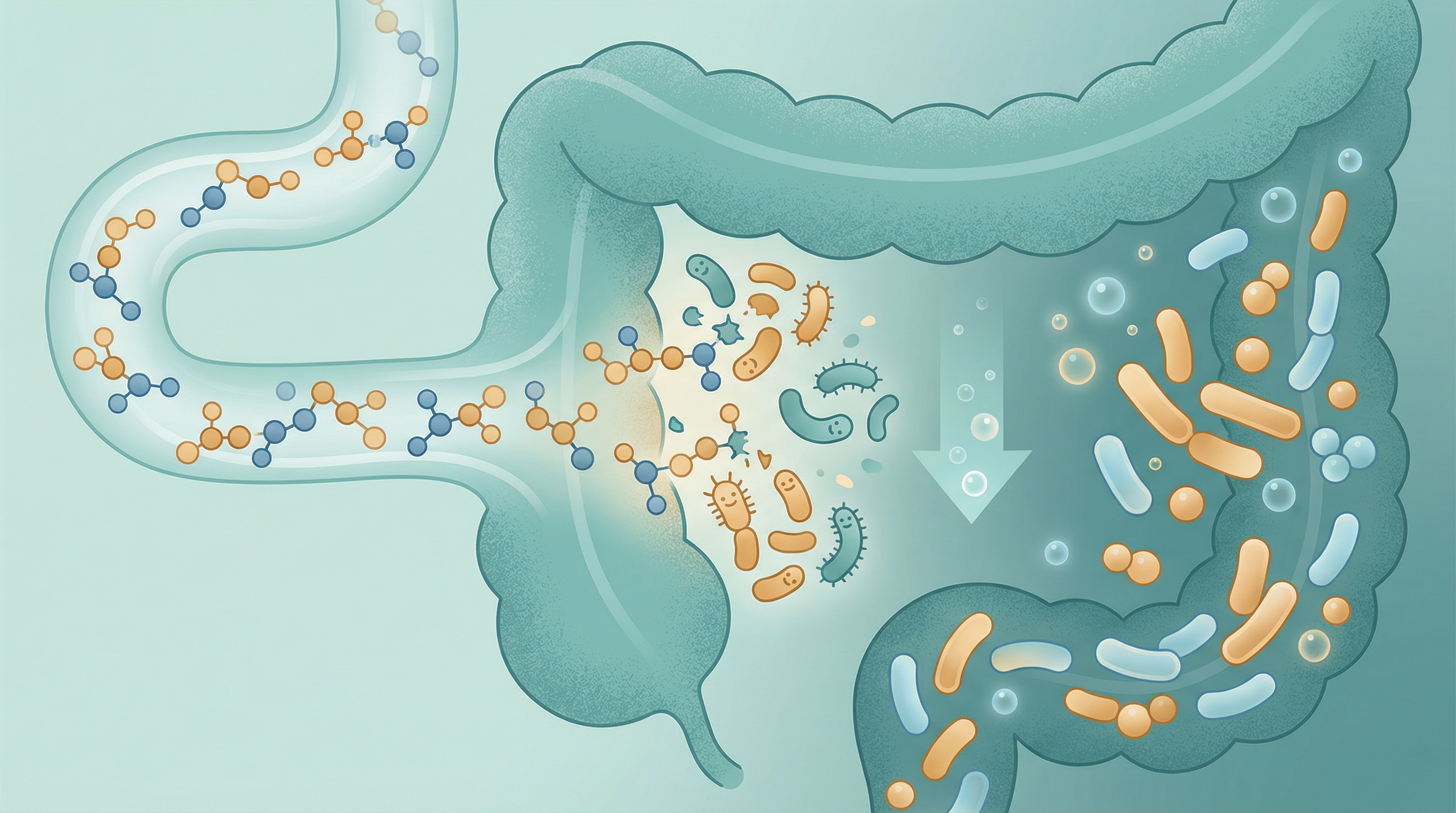
Lactulose acts through several interconnected mechanisms[1]:
Osmotic Effect
- Draws water into the intestinal lumen
- Increases stool volume and softness
- Accelerates intestinal transit
- Primary mechanism for laxative effect
Prebiotic Fermentation
- Selectively fermented by colonic bacteria
- Bifidobacteria and lactobacilli preferentially utilize lactulose
- Produces short-chain fatty acids (SCFAs)
- Lowers colonic pH
Ammonia Reduction
Critical for hepatic encephalopathy treatment:
- Acidification of colon converts ammonia (NH₃) to ammonium (NH₄⁺)
- Ammonium is less absorbable across gut epithelium
- Increased bacterial nitrogen assimilation
- Reduced systemic ammonia levels
Effects on Gut Microbiome
Bifidogenic Effects
Randomized controlled trials have demonstrated lactulose's prebiotic effects[2]:
- Significant Bifidobacterium increase: 10g daily increased fecal bifidobacteria
- Dose-dependent response: Higher doses produce greater effects
- Sustained effect: Maintained throughout supplementation period
- Reversible: Returns to baseline after discontinuation
Microbiome Changes
- Increased Bifidobacterium species
- Enhanced Lactobacillus populations
- Reduced potentially pathogenic bacteria
- Shift toward saccharolytic fermentation
SCFA Production
Lactulose fermentation produces:
- Acetate: Primary product
- Lactate: Intermediate metabolite
- Propionate and butyrate: Through cross-feeding
- Net effect: Colonic acidification

Clinical Applications
Constipation Treatment
Lactulose is a first-line treatment for chronic constipation[1]:
- Mechanism: Osmotic laxative effect combined with fermentation
- Dosage: 15-30ml (10-20g) daily for constipation
- Onset: 24-48 hours for effect
- Advantages: Safe for long-term use, non-habit forming
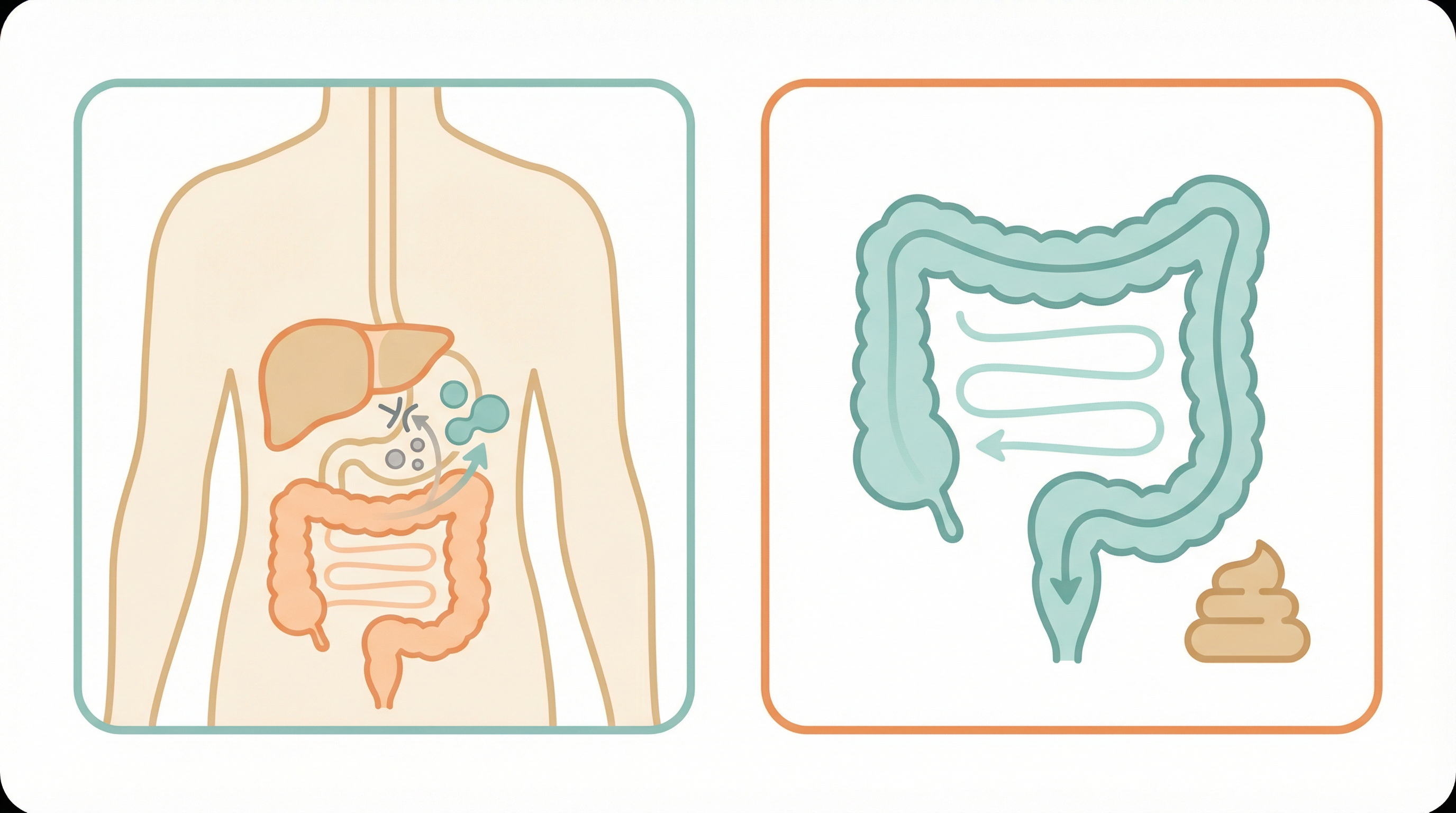
Hepatic Encephalopathy
Lactulose is standard of care for hepatic encephalopathy[3]:
- Reduces blood ammonia levels
- Improves cognitive function in patients with cirrhosis[6]
- Prevents recurrent episodes
- First-line therapy worldwide
Clinical trials have shown that lactulose:
- Improves cognitive functions in minimal hepatic encephalopathy
- Enhances health-related quality of life
- Prevents overt hepatic encephalopathy episodes
- Safe for long-term maintenance therapy
Prebiotic Supplementation
At lower doses, lactulose serves purely prebiotic functions[2]:
- Dose: 3-10g daily
- Effect: Bifidogenic without significant laxative action
- Duration: Continuous supplementation for sustained effects
- Populations: Suitable for all ages
Dosage Guidelines
By Application
| Use Case | Dosage | Frequency |
|---|---|---|
| Prebiotic effect | 3-10g | Daily |
| Constipation | 15-30ml (10-20g) | Once or twice daily |
| Hepatic encephalopathy | 30-45ml (20-30g) | 3-4 times daily |
| Portal-systemic encephalopathy prophylaxis | 30-60ml | Daily |
Practical Considerations
- Start low: Begin with lower doses to assess tolerance
- Gradual increase: Titrate to desired effect
- Timing: Can be taken with or without food
- Hydration: Adequate fluid intake recommended
Fermentation and Energy
Unlike digestible carbohydrates, lactulose's energy availability differs[5]:
- Caloric value: ~2 kcal/g (vs. 4 kcal/g for digestible sugars)
- Mechanism: Energy derived from absorbed SCFAs
- Glycemic impact: Minimal effect on blood glucose
- Insulin response: Does not stimulate significant insulin release
Comparison with Other Prebiotics
| Feature | Lactulose | Inulin | FOS | GOS |
|---|---|---|---|---|
| Structure | Disaccharide | Polysaccharide | Oligosaccharide | Oligosaccharide |
| Source | Synthetic | Plant-derived | Plant-derived | Lactose-derived |
| Osmotic effect | Strong | Mild | Mild | Mild |
| Pharmaceutical use | Yes | No | No | No |
| Fermentation rate | Moderate | Moderate | Fast | Fast |
Advantages of Lactulose
As a Prebiotic
- Well-established bifidogenic effects
- Long history of safe use
- Available as pharmaceutical-grade product
- Dual benefits at different doses
As a Pharmaceutical
- Effective for constipation without dependency
- First-line treatment for hepatic encephalopathy
- Safe in pregnancy and lactation
- Suitable for elderly patients
Side Effects and Tolerability
Common side effects relate to its mechanism of action:
- Flatulence: From fermentation gas production
- Bloating: Particularly at higher doses
- Cramping: Usually transient
- Diarrhea: With excessive dosing
These effects typically diminish with continued use and can be minimized by:
- Starting with low doses
- Gradual dose escalation
- Divided doses throughout the day
- Adequate hydration
Safety Considerations
Lactulose is generally very safe[1]:
- Safe during pregnancy and breastfeeding
- Appropriate for children and elderly
- No significant drug interactions
- Does not cause electrolyte disturbances at normal doses
- Can be used long-term
Precautions
- Galactosemia: Contraindicated due to galactose content
- Diabetes: May affect blood glucose monitoring (contains trace sugars)
- Lactose intolerance: Generally well-tolerated but may cause symptoms in severe cases
Summary
Lactulose occupies a unique position as both a pharmaceutical and a prebiotic. Its non-digestible nature allows it to reach the colon intact, where it is fermented by beneficial bacteria—particularly Bifidobacterium species—producing short-chain fatty acids and lowering colonic pH. This dual mechanism underlies its effectiveness in treating constipation and hepatic encephalopathy while simultaneously supporting gut microbiome health. With its excellent safety profile and decades of clinical use, lactulose remains a valuable tool for both therapeutic and prebiotic applications.
Dosage Guidelines
Recommended Dosage
10-20g daily (prebiotic), higher for medical uses
Start with a lower dose and gradually increase to minimize digestive discomfort. Consult a healthcare provider for personalized recommendations.
References
- Schumann C. Medical, nutritional and technological properties of lactulose. An update. European Journal of Nutrition. 2002;41(Suppl 1):I17-I25. doi:10.1007/s00394-002-1103-6
- Bouhnik Y, Attar A, Joly FA, et al.. Lactulose ingestion increases faecal bifidobacterial counts: a randomised double-blind study in healthy humans. European Journal of Clinical Nutrition. 2004;58:462-466. doi:10.1038/sj.ejcn.1601829
- Bass NM, Mullen KD, Sanyal A, et al.. Rifaximin treatment in hepatic encephalopathy. New England Journal of Medicine. 2010;362(12):1071-1081. doi:10.1056/NEJMoa0907893
- Agrawal A, Houghton LA, Morris J, et al.. Clinical trial: the effects of a fermented milk product containing Bifidobacterium lactis DN-173 010 on abdominal distension and gastrointestinal transit in irritable bowel syndrome with constipation. Alimentary Pharmacology & Therapeutics. 2012;29(1):104-114. doi:10.1111/j.1365-2036.2008.03853.x
- Oku T, Nakamura S. Digestion, absorption, fermentation, and metabolism of functional sugar substitutes and their available energy. Pure and Applied Chemistry. 2002;74(7):1253-1261. doi:10.1351/pac200274071253
- Prasad S, Dhiman RK, Duseja A, et al.. Lactulose improves cognitive functions and health-related quality of life in patients with cirrhosis who have minimal hepatic encephalopathy. Hepatology. 2007;45(3):549-559. doi:10.1002/hep.21533