

Overview
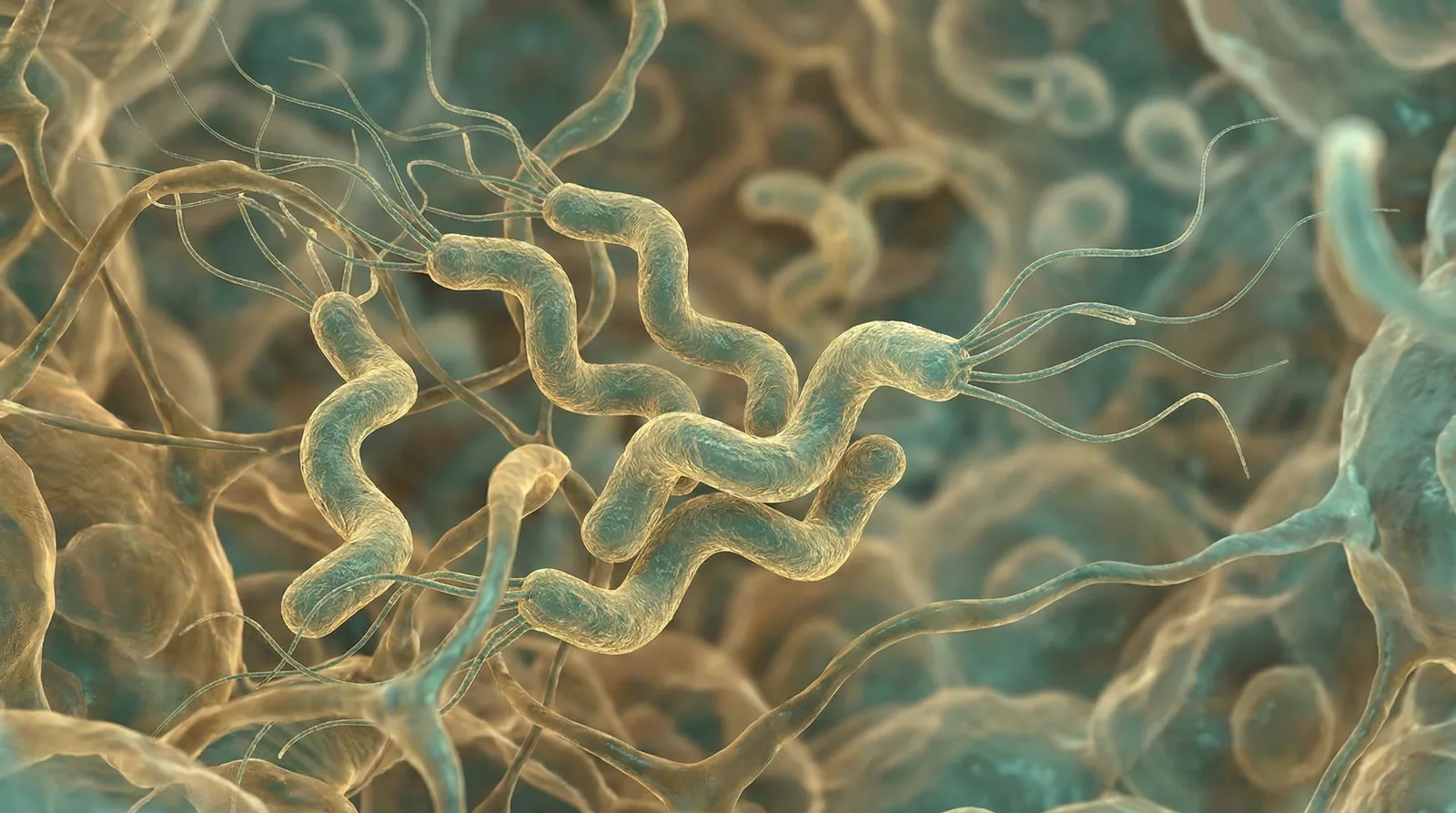
Helicobacter pylori is a Gram-negative, microaerophilic, spiral-shaped bacterium that colonizes the human stomach. Discovered in 1982 by Barry Marshall and Robin Warren (Nobel Prize 2005), it infects approximately 43% of the global population and is classified as a Class I carcinogen by WHO.[1]
Global Epidemiology
Current Prevalence[1]
- Global: Declined from 58.2% (1980-90) to 43.1% (2011-22)
- Africa: Highest prevalence (70.1%)
- Oceania: Lowest prevalence (24.4%)
- Children: 32.3% globally; 43.2% in low/middle-income vs 16.3% in high-income countries
Risk Factors
- Lower socioeconomic status
- Crowded living conditions
- Poor sanitation
- Lower universal health coverage
Virulence Factors
CagA (Cytotoxin-Associated Gene A)[2]
- Translocated via Type IV Secretion System into host cells
- Undergoes tyrosine phosphorylation at EPIYA motifs
- East Asian CagA: Binds SHP2 100-fold more strongly than Western type
- Activates oncogenic pathways: Ras-ERK, Wnt-β-catenin, YAP
- Induces epithelial-mesenchymal transition (EMT)
- Degrades tumor suppressors: p53, RUNX3, ASPP2
VacA (Vacuolating Cytotoxin A)
- Pore-forming toxin inducing vacuoles in host cells
- s1/m1 and i1 genotypes: Strongest association with gastric cancer
- Induces apoptosis via mitochondrial pathway
- Inhibits T and B cell proliferation
- Causes endoplasmic reticulum stress
Urease
- Constitutes ~10% of total bacterial protein
- Neutralizes gastric acid for survival
- 1.1 MDa dodecameric complex with bi-nickel catalytic center
- Promotes angiogenesis via PI3K-AKT-mTOR pathway
Associated Diseases
Correa Cascade[3]
H. pylori infection progresses through sequential stages:
- Chronic non-atrophic gastritis (nearly all infected individuals)
- Chronic atrophic gastritis
- Intestinal metaplasia
- Dysplasia
- Gastric adenocarcinoma
Clinical Manifestations
| Disease | Association |
|---|---|
| Chronic gastritis | Virtually all infected individuals |
| Peptic ulcer disease | 15-20% of infected persons |
| Gastric adenocarcinoma | 1-3% lifetime risk |
| MALT lymphoma | ~90% of cases H. pylori-associated |
MALT Lymphoma
- ~75% of H. pylori-positive cases achieve complete remission through eradication
- CagA is key driver of lymphomagenesis
- Bacteria induce chronic inflammation attracting lymphoid cells
Antibiotic Resistance Crisis
Current US Resistance Rates[4]
| Antibiotic | Resistance Rate |
|---|---|
| Metronidazole | 42.1% |
| Clarithromycin | 31.5% |
| Levofloxacin | 31.6% |
| Amoxicillin | 3.0% |
| Tetracycline | 0.9% |
| Rifabutin | 0.2% |
Resistance Mechanisms
- Clarithromycin: 23S rRNA mutations (A2142G, A2143G, A2142C)
- Metronidazole: rdxA/frxA gene mutations preventing prodrug activation
- Levofloxacin: gyrA mutations at codons 87 and 91
- Biofilm formation: Increases antibiotic tolerance up to 1,000-fold
Current Treatment Recommendations
- First-line: Bismuth quadruple therapy (14 days)
- Alternative: Rifabutin-based triple therapy
- Emerging: Vonoprazan-based regimens show promise
Paradoxical Protective Effects
Growing evidence suggests H. pylori may protect against certain conditions:[5]
Allergic Diseases
- Childhood asthma: OR 0.63 for cagA+ strains
- Allergic rhinitis: OR 0.55 for childhood onset
- Atopic eczema: Inverse association
- Mechanism: Induces regulatory T cells that suppress allergic inflammation
Esophageal Diseases
- GERD: Strong inverse association with cagA+ strains
- Barrett's esophagus: Protective effect
- Esophageal adenocarcinoma: Inverse correlation
Proposed Mechanisms
- Reprograms dendritic cells toward tolerogenic state
- Shifts immune response toward Th1/Treg dominance
- Protection most effective when infection acquired in early life
- Influences neuroendocrine peptides (leptin, ghrelin)
Clinical Implications
Eradication Benefits
- Prevents peptic ulcer recurrence
- Reduces gastric cancer risk
- Achieves MALT lymphoma remission in most cases
- Restores DNA repair functions
Considerations Against Universal Eradication
- Rising esophageal diseases in developed countries
- Increasing allergic and autoimmune disorders
- Gut microbiome disruption from antibiotic treatment