

Beta-Glucan: Prebiotic from Oats
Beta-glucan is a prebiotic fiber in oats and mushrooms that supports immune function, heart health, and beneficial gut bacteria growth. See the evidence.
Food Sources
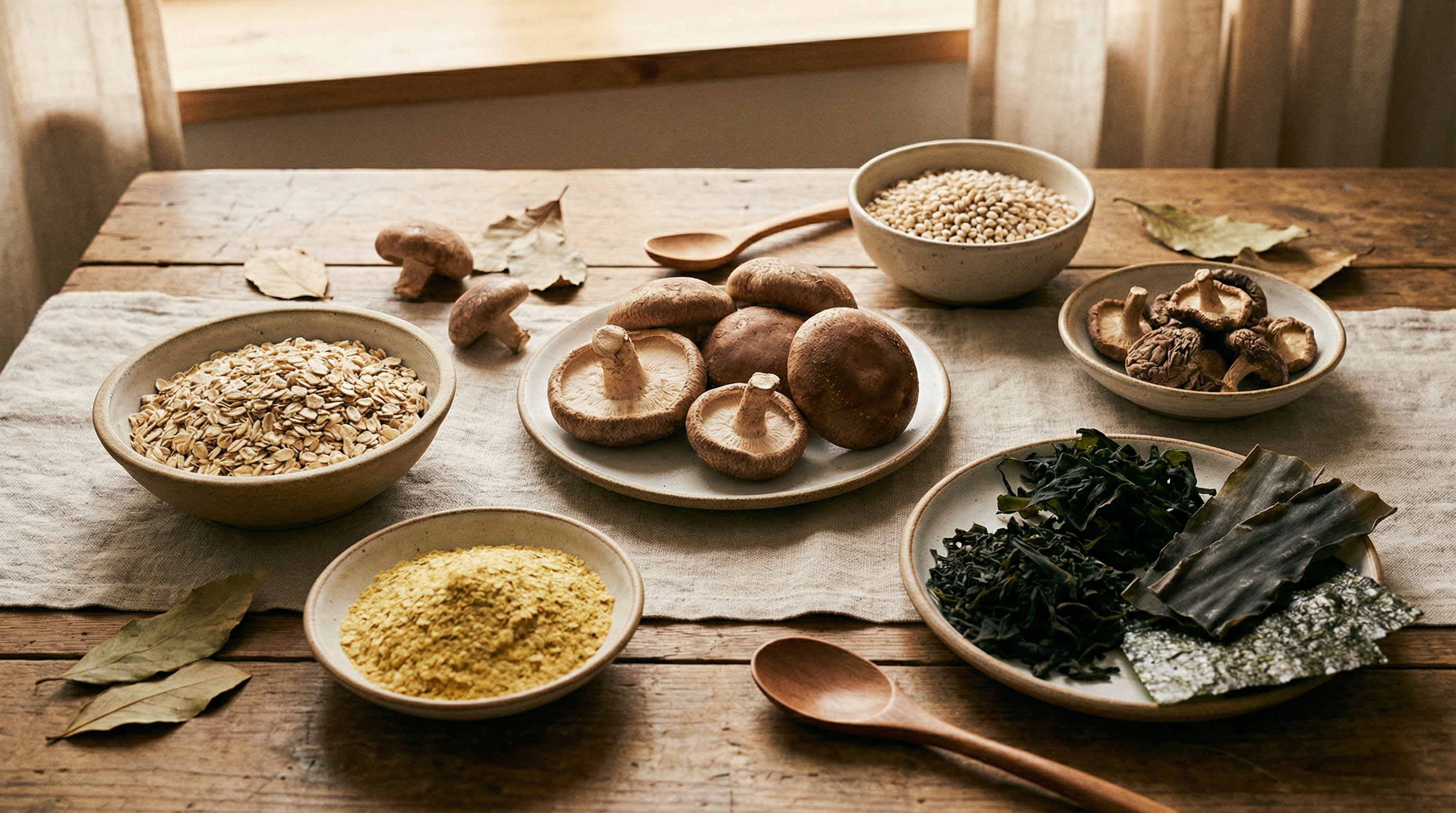
Naturally found in these foods:
Key Benefits
- Supports immune function
- Lowers cholesterol levels
- Promotes beneficial bacteria
- May improve blood glucose control
- Enhances SCFA production
Bacteria This Prebiotic Feeds
This prebiotic selectively nourishes these beneficial microorganisms:
Overview
Beta-glucans are a diverse group of naturally occurring polysaccharides consisting of glucose molecules linked by beta-glycosidic bonds. Found in the cell walls of cereals, fungi, yeast, and certain bacteria, beta-glucans have gained significant attention for their dual role as both prebiotic fibers and immunomodulatory compounds[1]. The structural differences between cereal-derived and fungal beta-glucans result in distinct health benefits, though all types share the capacity to influence gut microbiome composition.
Types of Beta-Glucans
Beta-glucans vary in structure depending on their source, and these structural differences determine their functional properties[2]:
Cereal Beta-Glucans (β-1,3/1,4)
- Sources: Oats, barley
- Structure: Mixed-linkage β-1,3/1,4-glucans
- Primary benefits: Cholesterol lowering, glycemic control
- Solubility: High viscosity, gel-forming
Fungal Beta-Glucans (β-1,3/1,6)
- Sources: Mushrooms (shiitake, reishi, maitake), yeast
- Structure: β-1,3-backbone with β-1,6-side branches
- Primary benefits: Immune modulation
- Solubility: Variable, often particulate
Mechanism of Action
Prebiotic Effects
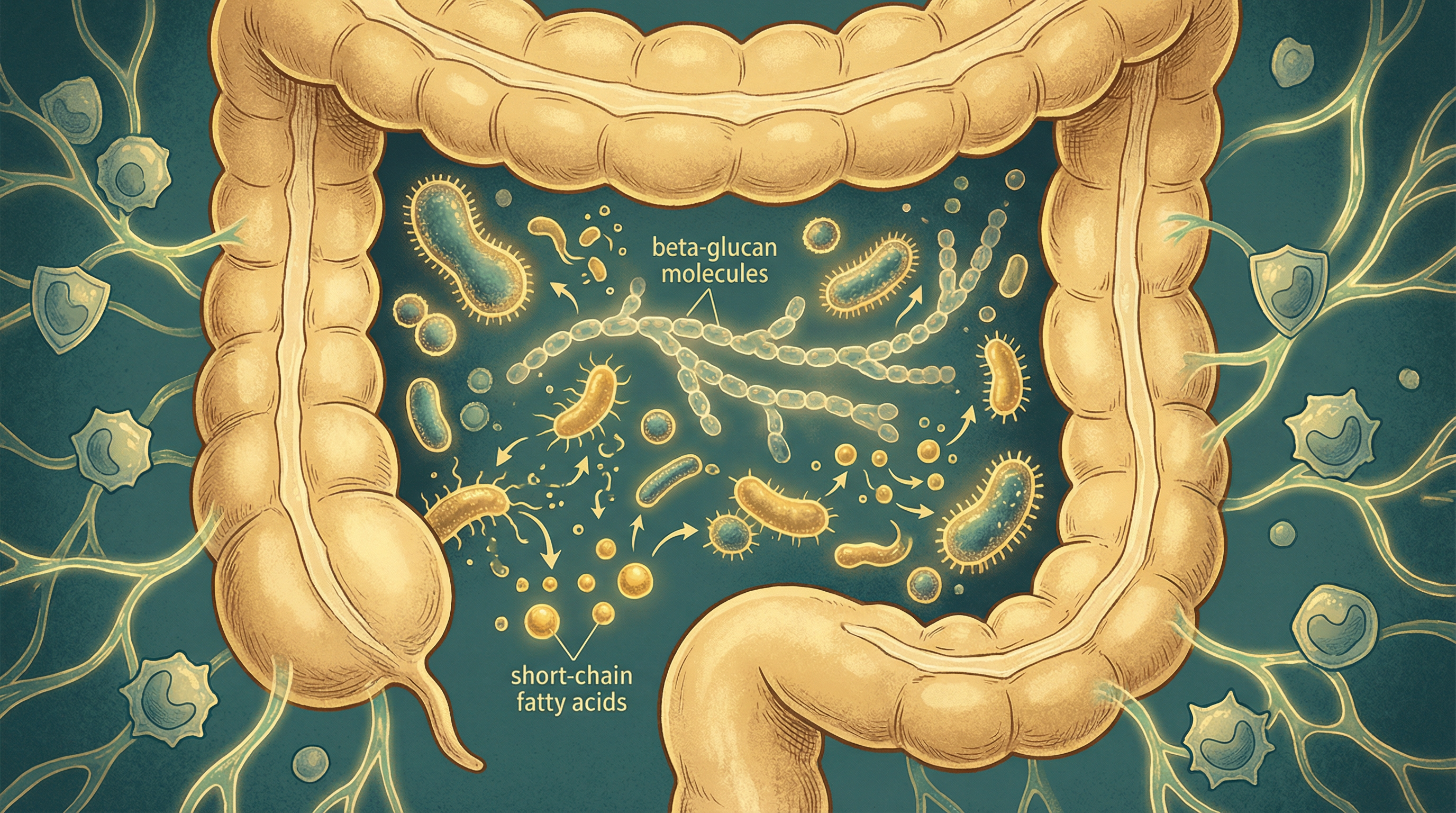
Beta-glucans serve as fermentable substrates for gut bacteria, leading to:
- Selective fermentation: Beneficial bacteria like Bifidobacterium and Lactobacillus utilize beta-glucans preferentially
- SCFA production: Fermentation produces acetate, propionate, and butyrate
- Cross-feeding: Degradation products support secondary fermenters
- Microbiome diversity: Promotes a more diverse bacterial community
A critical review on beta-glucans and gut microbiota demonstrated significant effects on microbiome composition[6]:
- Increased Bifidobacterium populations
- Enhanced Lactobacillus growth
- Stimulation of Bacteroides species
- Production of beneficial SCFAs
Immune Modulation
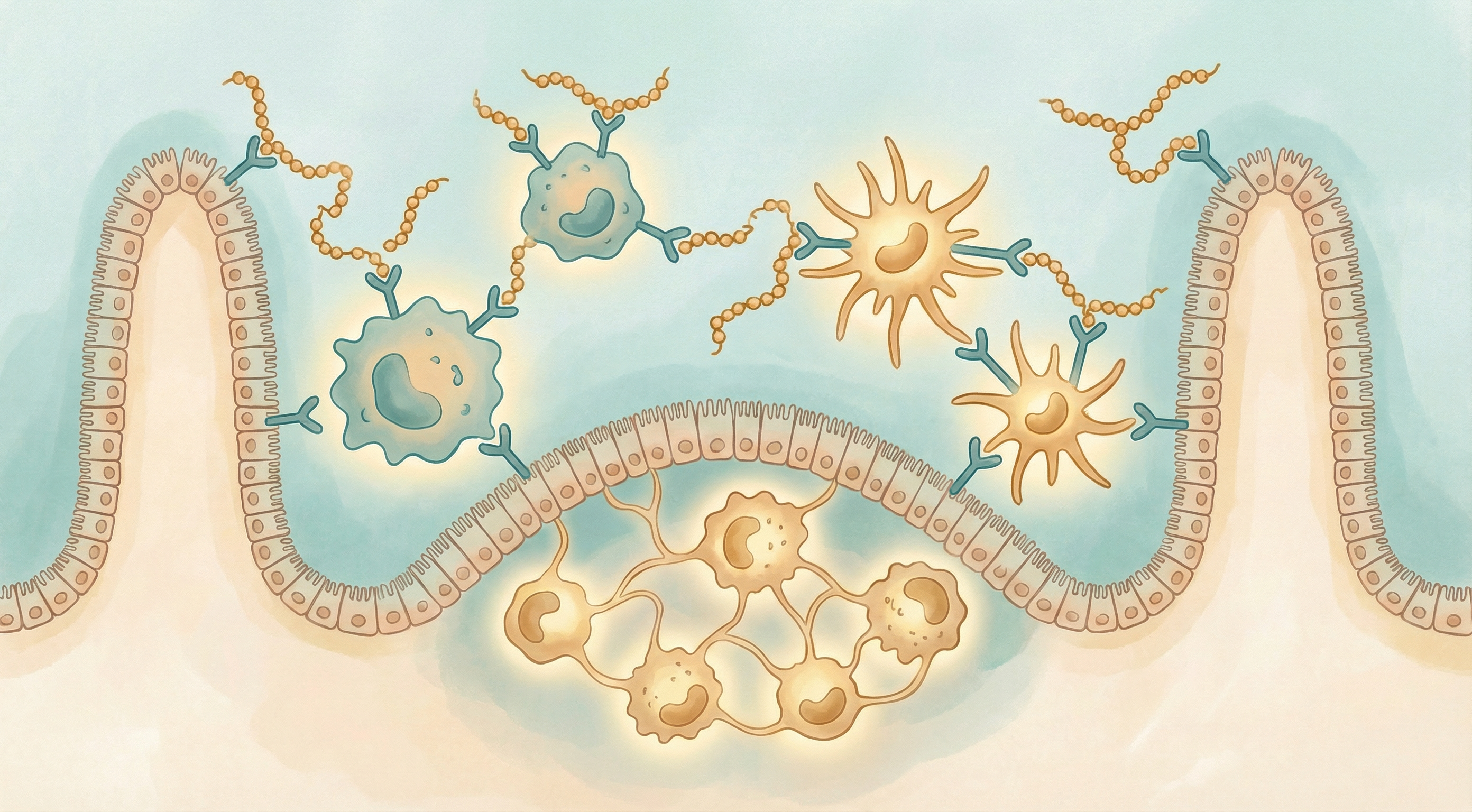
Fungal beta-glucans activate the immune system through specific receptor interactions[5]:
- Binding to Dectin-1 receptors on immune cells
- Activation of macrophages and dendritic cells
- Enhanced natural killer (NK) cell activity
- Modulation of cytokine production
Viscosity Effects
Cereal beta-glucans form viscous solutions that[3]:
- Slow gastric emptying
- Reduce glucose absorption rate
- Bind bile acids in the intestine
- Enhance satiety signaling
Effects on Gut Microbiome
Primary Effects
- Bifidobacterium: Significant increases with regular beta-glucan consumption
- Lactobacillus: Enhanced populations, particularly with oat beta-glucan
- Bacteroides: Involved in initial beta-glucan degradation
- Prevotella: Stimulated in individuals with fiber-adapted microbiomes
Secondary Effects
- Increased microbial diversity
- Enhanced SCFA production (particularly propionate from cereal sources)
- Reduced populations of potentially pathogenic species
- Improved gut barrier function through SCFA-mediated effects
Clinical Evidence
Cholesterol Reduction
EFSA has approved health claims for oat and barley beta-glucans based on robust clinical evidence[4]:
- Effective dose: 3g daily of oat or barley beta-glucan
- LDL reduction: 5-10% decrease in LDL cholesterol
- Mechanism: Binding of bile acids leading to increased cholesterol excretion
Blood Glucose Control
Evidence supports beta-glucan's role in glycemic management[3]:
- Reduced post-prandial glucose peaks
- Lower insulin responses
- Improved glucose tolerance in at-risk individuals
- Dose-dependent effects with 4g or more being most effective
Immune Function
Clinical studies on fungal beta-glucans demonstrate[1]:
- Reduced frequency of respiratory infections
- Enhanced vaccine responses
- Improved wound healing
- Modulated inflammatory responses
Combined Prebiotic and Metabolic Benefits
The dual action of beta-glucans provides comprehensive health benefits[6]:
- Gut microbiome modulation
- Improved metabolic markers
- Enhanced immune surveillance
- Anti-inflammatory effects
Dosage and Sources
Recommended Intake
| Goal | Dose | Best Source |
|---|---|---|
| Cholesterol lowering | 3g daily | Oat/barley |
| Glycemic control | 4g+ daily | Oat/barley |
| Immune support | 250-500mg daily | Mushroom/yeast |
| Prebiotic effects | 3-6g daily | Any source |
Dietary Sources
Cereals (beta-glucan content per 100g dry weight):
- Oat bran: 7-10g
- Rolled oats: 4-6g
- Barley: 3-8g
- Wheat: 0.5-1g
Mushrooms:
- Shiitake: High β-1,3/1,6-glucan content
- Reishi: Rich in immunomodulatory glucans
- Maitake: Well-studied for immune effects
- Turkey tail: High polysaccharide content
Supplements
Commercial beta-glucan supplements are available in various forms:
- Oat fiber concentrates
- Yeast-derived extracts
- Mushroom polysaccharide complexes
Practical Recommendations
For Cardiovascular Health
- Include 3+ servings of oat products daily
- Choose whole grain barley as a rice alternative
- Ensure consistent daily intake for sustained effects
- Consume with meals for optimal viscosity effects
For Immune Support
- Consider mushroom-derived beta-glucans
- Regular consumption (daily or several times weekly)
- Combine with other immune-supportive nutrients
- Yeast beta-glucans available in supplement form
For Prebiotic Benefits
- Combine with other prebiotic fibers
- Include variety of beta-glucan sources
- Maintain consistent intake
- Allow 2-4 weeks for microbiome adaptation
Safety and Tolerability
Beta-glucans are generally well-tolerated:
- High doses may cause mild gastrointestinal symptoms
- Cereal beta-glucans contain gluten (avoid in celiac disease)
- Mushroom varieties are gluten-free
- No significant drug interactions at normal doses
- Safe for long-term consumption
Summary
Beta-glucans represent a multifunctional dietary component with well-established prebiotic, metabolic, and immunomodulatory benefits. Cereal beta-glucans (oat, barley) provide viscosity-dependent effects on cholesterol and blood glucose with EFSA-approved health claims at 3g daily, while fungal beta-glucans offer potent immune-modulating properties. Both types support beneficial gut bacteria and contribute to a healthy microbiome, making beta-glucans a valuable addition to a health-promoting diet.
Dosage Guidelines
Recommended Dosage
3-10g daily
Start with a lower dose and gradually increase to minimize digestive discomfort. Consult a healthcare provider for personalized recommendations.
Frequently Asked Questions
What is Beta-Glucan: Prebiotic from Oats?
Beta-glucan is a prebiotic fiber in oats and mushrooms that supports immune function, heart health, and beneficial gut bacteria growth. See the evidence.
What foods contain Beta-Glucan: Prebiotic from Oats?
Beta-Glucan: Prebiotic from Oats can be found in: Oats, Barley, Mushrooms (shiitake, reishi, maitake), Seaweed, Baker's yeast.
What are the health benefits of Beta-Glucan: Prebiotic from Oats?
Key benefits include: Supports immune function, Lowers cholesterol levels, Promotes beneficial bacteria, May improve blood glucose control, Enhances SCFA production.
References
- Murphy EJ, Rezoagli E, Major I, et al.. β-Glucan metabolic and immunomodulatory properties and potential for clinical application. Journal of Fungi. 2020;6(4):356. doi:10.3390/jof6040356
- De Marco Castro E, Calder PC, Roche HM. β-1,3/1,6-Glucans and Immunity: State of the Art and Future Directions. Molecular Nutrition & Food Research. 2020;65(1):e1901071. doi:10.1002/mnfr.201901071
- Tosh SM. Review of human studies investigating the post-prandial blood-glucose lowering ability of oat and barley food products. European Journal of Clinical Nutrition. 2013;67(4):310-317. doi:10.1038/ejcn.2013.25
- EFSA Panel on Dietetic Products, Nutrition and Allergies. Scientific Opinion on the substantiation of health claims related to beta-glucans from oats and barley and maintenance of normal blood LDL-cholesterol concentrations. EFSA Journal. 2011;9(6):2207. doi:10.2903/j.efsa.2011.2207
- Volman JJ, Ramakers JD, Plat J. Dietary modulation of immune function by β-glucans. Physiology & Behavior. 2008;94(2):276-284. doi:10.1016/j.physbeh.2007.11.045
- Jayachandran M, Chen J, Chung SSM, Xu B. A critical review on the impacts of β-glucans on gut microbiota and human health. Journal of Nutritional Biochemistry. 2018;61:101-110. doi:10.1016/j.jnutbio.2018.06.010