

Prevotella copri
Prevotella copri is a gram-negative, anaerobic bacterium belonging to the genus Prevotella within the phylum Bacteroidetes. It is one of the most abundant species of the Prevotella genus found in the human gut microbiome. P. copri has gained significant attention in microbiome research due to its complex associations with both beneficial and detrimental health outcomes, as well as its strong relationship with dietary patterns.
Key Characteristics
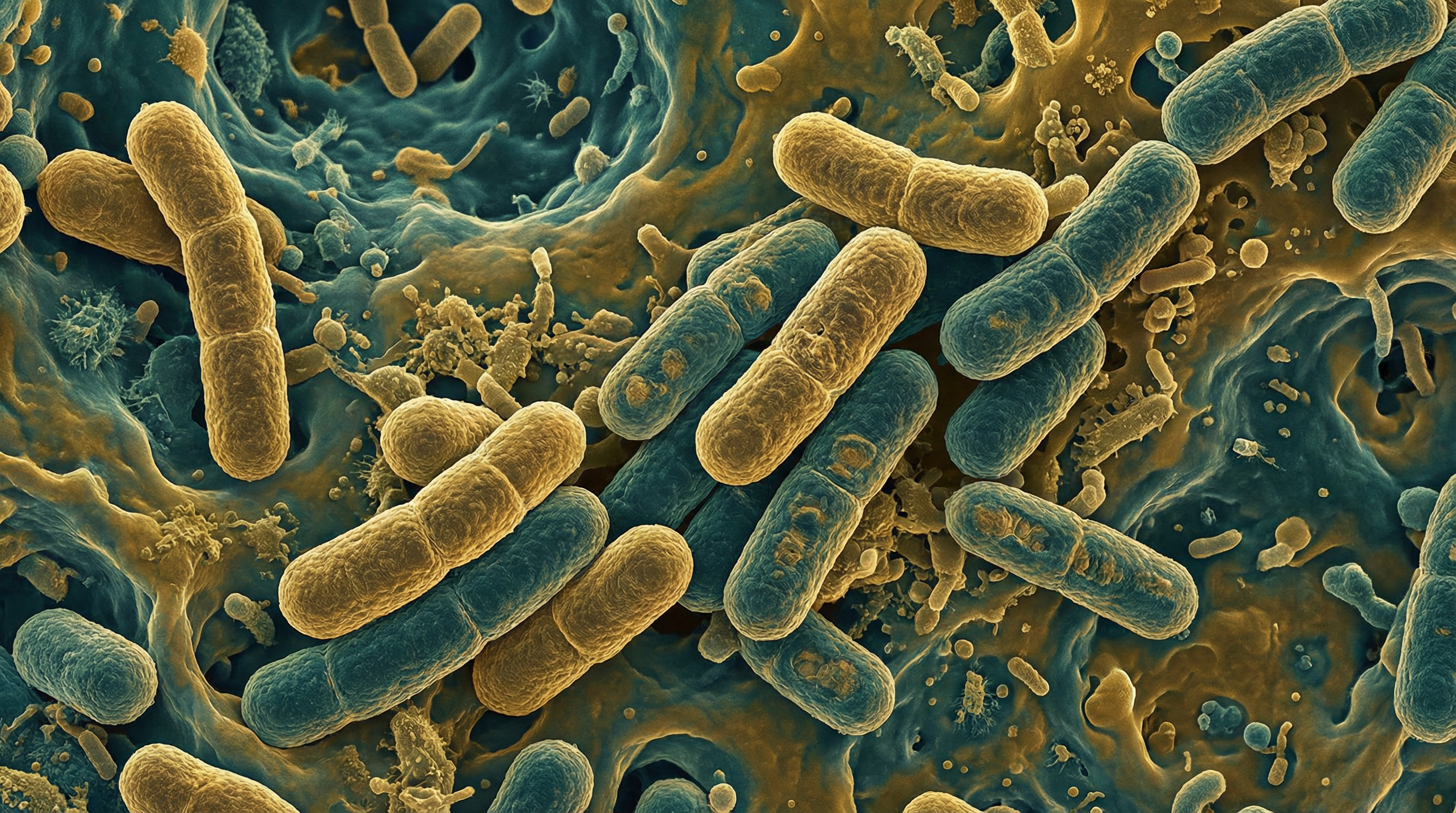
Prevotella copri is a non-spore-forming, rod-shaped bacterium that typically measures 0.5-0.8 μm in width and 1.5-2.0 μm in length. As a gram-negative bacterium, it possesses a thin peptidoglycan layer and an outer membrane containing lipopolysaccharides (LPS). P. copri is strictly anaerobic, requiring an oxygen-free environment for growth and survival.
The genome of P. copri is approximately 3.5-3.8 million base pairs in size, with a relatively low GC content (around 44-48%). Genomic analyses have revealed that P. copri is not a single species but rather a complex of four distinct clades (A, B, C, and D) with substantial genetic diversity. These clades can coexist within the same individual, effectively functioning as distinct species with different metabolic capabilities.
P. copri possesses an extensive repertoire of carbohydrate-active enzymes (CAZymes), particularly those involved in the degradation of complex plant polysaccharides such as cellulose, hemicellulose, and pectin. This enzymatic arsenal includes glycoside hydrolases, polysaccharide lyases, and carbohydrate esterases, which enable P. copri to break down dietary fibers that are indigestible by human enzymes.
A distinctive feature of P. copri is its remarkable strain-level diversity, with different strains exhibiting distinct genetic and functional traits. This strain heterogeneity likely contributes to the varied and sometimes contradictory associations of P. copri with human health and disease.
Role in Human Microbiome
P. copri is primarily found in the human gastrointestinal tract, where it can be a dominant member of the gut microbiota in some individuals. Its prevalence and abundance vary significantly across human populations, with higher levels typically observed in non-Western populations consuming fiber-rich, plant-based diets.
The relationship between P. copri and the human host is complex and context-dependent:
Dietary associations: P. copri abundance is strongly influenced by diet, with higher levels associated with plant-based, fiber-rich diets. Studies comparing populations with different dietary habits have consistently found higher P. copri prevalence in individuals consuming non-Western diets rich in complex carbohydrates and fiber, compared to those following Western-style diets high in animal protein, fat, and simple sugars.
Population distribution: The prevalence of P. copri varies geographically, with higher rates in populations from Africa, Latin America, and Asia compared to those from Europe and North America. This distribution pattern aligns with traditional dietary patterns in these regions.
Enterotype association: P. copri is often associated with the Prevotella enterotype, one of the major gut microbiome community structures. When present, Prevotella species, particularly P. copri, tend to dominate the gut microbiome, often at the expense of Bacteroides species.
Colonization dynamics: P. copri can rapidly respond to dietary changes, with increases in abundance observed within days of switching to a plant-based diet. However, long-term dietary patterns appear to have a stronger influence on stable colonization.
Strain diversity: Different human populations harbor distinct P. copri strains with varying functional capabilities. Strains from non-Western populations typically possess more extensive carbohydrate degradation capabilities, while strains from Western populations show enrichment in genes related to amino acid metabolism and xenobiotic processing.
Vertical transmission: There is evidence for vertical transmission of P. copri from mother to infant, suggesting that early colonization may influence long-term carriage and potentially impact health outcomes.
Competitive interactions: P. copri often exhibits competitive relationships with Bacteroides species, with an inverse correlation frequently observed between their respective abundances. This competitive dynamic may influence the overall structure and function of the gut microbiome.
Health Implications
The health implications of P. copri colonization are multifaceted and sometimes contradictory, reflecting the complex nature of host-microbe interactions and the genetic diversity within this species:
Metabolic Health
Glucose metabolism: Several studies have linked P. copri to improved glucose metabolism. In a landmark study, P. copri was shown to improve glucose tolerance in mice fed a barley kernel-based diet rich in fiber. The mechanism appears to involve increased glycogen storage in the liver, mediated by the tricarboxylic acid cycle and the production of succinate.
Insulin sensitivity: Some strains of P. copri have been associated with enhanced insulin sensitivity, potentially through the production of short-chain fatty acids (SCFAs) from dietary fiber fermentation. These SCFAs, particularly propionate and butyrate, can improve insulin signaling and reduce inflammation.
Type 2 diabetes: The relationship between P. copri and type 2 diabetes is complex. While some studies suggest a protective effect, others have found associations with insulin resistance, particularly in the context of diets high in branched-chain amino acids (BCAAs). This discrepancy may be explained by strain-specific differences in metabolic capabilities.
Obesity: The role of P. copri in obesity is similarly nuanced. Some studies have found negative correlations between P. copri abundance and obesity, while others have reported positive associations, particularly in the context of high-fat diets. Recent research in pigs demonstrated that P. copri could increase fat accumulation when combined with formula feeding, suggesting context-dependent effects.
Inflammatory Conditions
Rheumatoid arthritis: P. copri has been associated with new-onset rheumatoid arthritis (RA). Studies have found increased abundance of P. copri in patients with untreated RA compared to healthy controls or patients with treated RA. Mechanistically, P. copri may promote Th17 cell differentiation and exacerbate joint inflammation in genetically susceptible individuals.
Inflammatory bowel disease (IBD): The relationship between P. copri and IBD is complex. Some studies suggest that P. copri may have protective effects through the production of anti-inflammatory metabolites, while others have found associations with increased inflammation, particularly in the context of certain genetic backgrounds.
Systemic inflammation: P. copri can induce the production of pro-inflammatory cytokines, including IL-6, IL-17, and TNF-α, potentially contributing to systemic inflammation. However, this effect appears to be strain-dependent and influenced by host factors.
Other Health Associations
Cardiovascular health: Some studies have suggested that P. copri may have beneficial effects on cardiovascular health, potentially through the production of SCFAs and the modulation of bile acid metabolism. However, the evidence is still emerging.
Neurological conditions: Preliminary research has explored potential links between P. copri and neurological conditions, including Parkinson's disease and autism spectrum disorders, but the evidence remains inconclusive.
Response to medications: P. copri has been shown to influence the metabolism of certain medications, potentially affecting their efficacy and side effect profiles. This includes drugs used to treat diabetes, arthritis, and cardiovascular disease.
Strain-Specific Effects
A key factor in understanding the seemingly contradictory health associations of P. copri is the recognition of strain-level diversity. Different strains possess distinct genetic repertoires that can lead to varied metabolic outputs and host interactions:
Carbohydrate metabolism: Strains from non-Western populations typically have enhanced capabilities for complex carbohydrate degradation, which may contribute to beneficial metabolic effects when combined with fiber-rich diets.
Amino acid metabolism: Strains from Western populations often show enrichment in genes related to branched-chain amino acid biosynthesis, which has been linked to insulin resistance and glucose intolerance.
Xenobiotic metabolism: Western-associated strains also exhibit higher prevalence of genes involved in drug metabolism, potentially affecting the processing of both medications and dietary compounds.
Immunomodulatory effects: Different strains can elicit distinct immune responses, ranging from anti-inflammatory to pro-inflammatory, depending on their surface structures and metabolic outputs.
This strain-level diversity underscores the importance of considering not just the presence or absence of P. copri, but also the specific strains present when evaluating potential health implications.
Metabolic Activities
P. copri possesses a diverse metabolic repertoire that enables it to thrive in the competitive environment of the human gut:
Carbohydrate Metabolism
Complex polysaccharide degradation: P. copri is particularly adept at breaking down complex plant polysaccharides, including cellulose, hemicellulose, pectin, and resistant starch. This capability is supported by an extensive array of CAZymes, including glycoside hydrolases, polysaccharide lyases, and carbohydrate esterases.
Fiber fermentation: Through the fermentation of dietary fibers, P. copri produces various metabolites, including SCFAs (primarily acetate, propionate, and butyrate), succinate, and lactate. These metabolites can influence host metabolism, immune function, and gut barrier integrity.
Glycogen metabolism: P. copri can influence host glycogen metabolism, particularly in the liver. Studies in mice have shown that P. copri colonization can increase hepatic glycogen storage, potentially improving glucose homeostasis.
Mucin utilization: Some strains of P. copri can degrade mucin glycoproteins, which may contribute to their ability to colonize the mucus layer of the intestine. This capability varies among strains and may influence their interaction with the host epithelium.
Protein and Amino Acid Metabolism
Branched-chain amino acid (BCAA) metabolism: Certain strains of P. copri, particularly those associated with Western populations, show enrichment in genes related to BCAA biosynthesis and metabolism. BCAAs and their metabolites have been linked to insulin resistance and type 2 diabetes.
Proteolytic activity: P. copri possesses various proteases and peptidases that enable it to break down dietary and host proteins. This activity can generate bioactive peptides and amino acid derivatives that may influence host physiology.
Amino acid fermentation: P. copri can ferment certain amino acids, producing short-chain fatty acids, branched-chain fatty acids, and other metabolites that may have both beneficial and detrimental effects on host health.
Lipid Metabolism
Bile acid metabolism: P. copri can modify primary bile acids through deconjugation and other transformations, potentially affecting lipid absorption, cholesterol metabolism, and signaling through bile acid receptors.
Fatty acid metabolism: Some strains of P. copri possess genes involved in fatty acid biosynthesis and modification, which may influence the lipid composition of the gut environment and potentially affect host lipid metabolism.
Microbe-Microbe Interactions
Cross-feeding: P. copri engages in metabolic cross-feeding relationships with other gut microbes. For example, the succinate and lactate produced by P. copri can serve as substrates for butyrate-producing bacteria such as Faecalibacterium prausnitzii and Roseburia species.
Competitive exclusion: P. copri can compete with other gut bacteria, particularly Bacteroides species, for nutrients and ecological niches. This competition may involve the production of inhibitory compounds or the more efficient utilization of specific substrates.
Biofilm formation: P. copri can participate in polymicrobial biofilms within the gut, which may enhance its persistence and influence its metabolic activities through close interactions with other microbes.
Host-Microbe Metabolic Interactions
Short-chain fatty acid production: The SCFAs produced by P. copri can influence host metabolism through various mechanisms, including:
- Serving as an energy source for colonocytes
- Activating G-protein coupled receptors (GPR41, GPR43, GPR109A)
- Inhibiting histone deacetylases, affecting gene expression
- Modulating immune cell function and inflammatory responses
Succinate production: P. copri is a significant producer of succinate, which can act as a signaling molecule affecting glucose metabolism and inflammatory responses. Succinate can also be converted to propionate by other gut bacteria.
Influence on bile acid pool: By modifying bile acids, P. copri can affect the signaling functions of these molecules, potentially influencing glucose and lipid metabolism through receptors such as FXR and TGR5.
Xenobiotic metabolism: Some strains of P. copri possess enzymes capable of metabolizing drugs and other xenobiotics, potentially affecting their bioavailability and activity.
The metabolic activities of P. copri highlight its potential to significantly influence host physiology, particularly in the context of diet-microbiome-host interactions. The strain-specific nature of many of these metabolic capabilities underscores the importance of considering strain-level diversity when evaluating the potential impact of P. copri on human health.
Clinical Relevance
The clinical relevance of P. copri encompasses several areas, from its potential as a biomarker to its therapeutic applications and implications for personalized nutrition:
Diagnostic and Prognostic Value
- Microbiome profiling: The presence and abundance of P. copri in gut microbiome profiles may provide insights into an individual's dietary habits, metabolic status, and potential disease risks. However, the interpretation must consider strain-le (Content truncated due to size limit. Use line ranges to read in chunks)