

Bacteroides dorei
Bacteroides dorei is a gram-negative, obligately anaerobic, non-spore-forming rod-shaped bacterium that is a common member of the human gut microbiome. First isolated from human feces in 2006, B. dorei has emerged as an important species within the Bacteroidetes phylum with significant implications for human health and disease. Research has revealed its complex roles in immune modulation, metabolic processes, and associations with various health conditions.
Key Characteristics
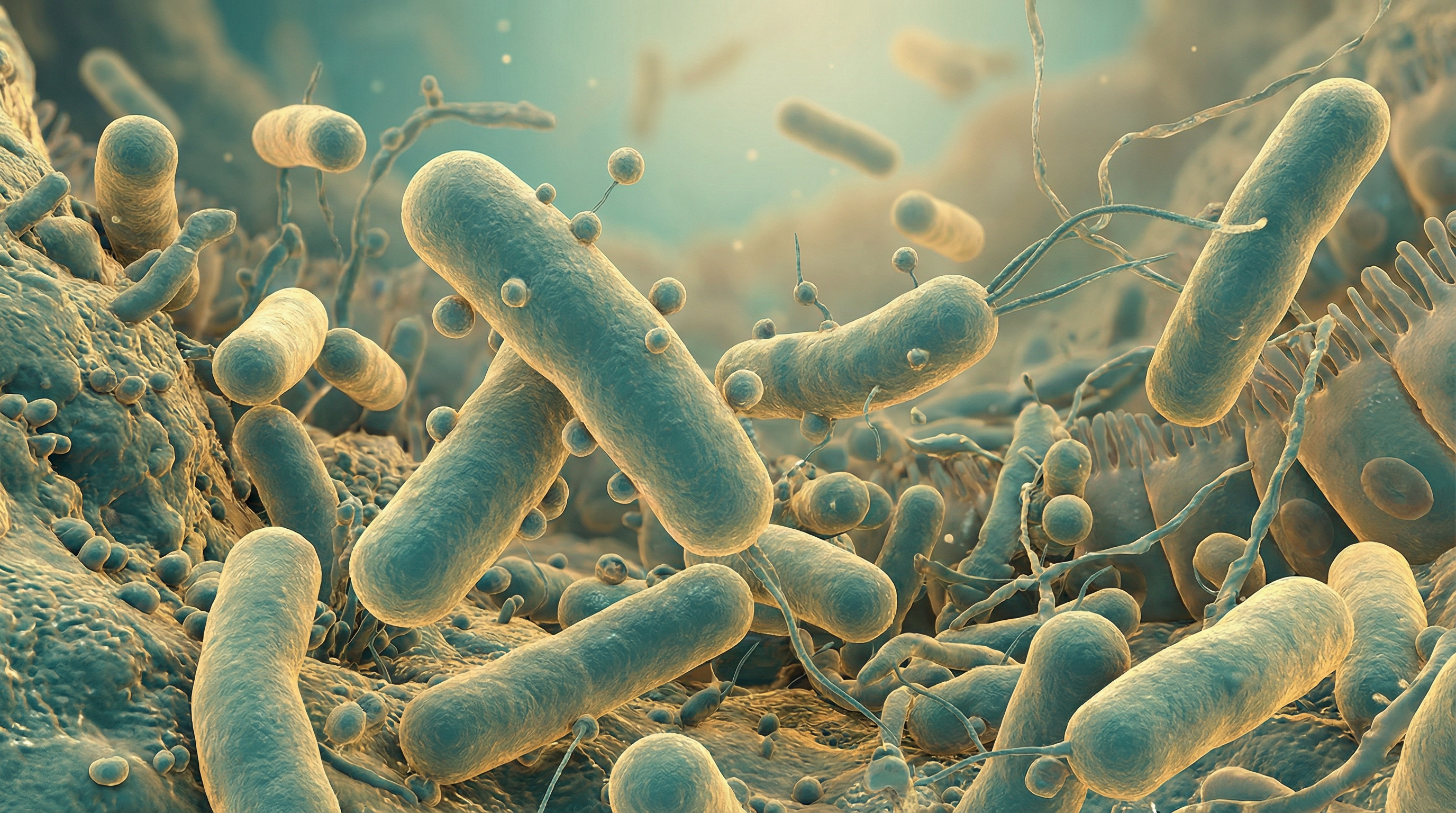
B. dorei belongs to the family Bacteroidaceae and the genus Bacteroides, which comprises one of the most abundant groups of bacteria in the human intestinal microbiota. The bacterium is non-motile, saccharolytic, and capable of fermenting various carbohydrates.
Morphologically, B. dorei appears as a rod-shaped cell with rounded ends. When grown on blood agar plates under anaerobic conditions, it forms small, circular, convex, and smooth colonies. The bacterium is catalase-positive and indole-negative, which helps distinguish it from some other Bacteroides species.
Genomic analysis has revealed that B. dorei possesses numerous polysaccharide utilization loci (PULs) that enable it to break down and metabolize a wide variety of complex carbohydrates, including dietary fibers and host-derived glycans. This metabolic versatility contributes to its successful colonization of the human gut.
B. dorei shares high genetic similarity with Bacteroides vulgatus, making them difficult to distinguish using conventional 16S rRNA sequencing alone. More advanced metagenomic sequencing techniques are often required to accurately differentiate between these closely related species.
Role in Human Microbiome
B. dorei is primarily found in the human gastrointestinal tract, where it is a common and abundant member of the gut microbiome. It typically colonizes the colon and can comprise a significant portion of the Bacteroidetes phylum in the gut.
The abundance of B. dorei in the gut microbiome can vary considerably between individuals and is influenced by factors such as:
- Diet: Particularly the intake of dietary fibers and complex carbohydrates
- Age: Its abundance may change throughout the lifespan
- Geographic location: Studies have shown differences in B. dorei prevalence across different populations
- Health status: Certain health conditions may be associated with altered B. dorei abundance
Interestingly, research has shown that B. dorei abundance peaks at around 7-8 months of age in some infants, which coincides with the introduction of solid foods. This timing has been particularly noted in studies of Finnish children at high risk for type 1 diabetes, suggesting potential interactions between diet, gut microbiome development, and immune system maturation.
Health Implications
Metabolic Functions
B. dorei plays several important metabolic roles in the gut:
Carbohydrate metabolism: It possesses extensive enzymatic machinery for breaking down complex carbohydrates, including plant polysaccharides and host-derived glycans.
Short-chain fatty acid (SCFA) production: Through fermentation, B. dorei produces SCFAs such as acetate, propionate, and butyrate, which serve as energy sources for colonocytes and have various beneficial effects on host metabolism and immunity.
Bile acid metabolism: Like other Bacteroides species, B. dorei can modify primary bile acids through deconjugation and other transformations, potentially influencing lipid metabolism and signaling pathways.
Vitamin synthesis: It contributes to the synthesis of certain B vitamins and vitamin K in the gut.
Immune Modulation
Recent research has revealed significant immunomodulatory properties of B. dorei:
Influenza protection: Studies have demonstrated that B. dorei can ameliorate influenza virus infection in mice, increasing survival rates by approximately 30% and improving weight loss, lung pathology, and viral clearance. This protective effect appears to involve promoting earlier interferon expression and down-regulating inflammatory responses.
Interferon production: B. dorei can promote the production of interferon-β by dendritic cells, which inhibits the replication of influenza virus in epithelial cells.
Anti-inflammatory effects: It can suppress pro-inflammatory immune responses in certain contexts, potentially through the production of specific metabolites or through direct interactions with immune cells.
Vaccine adjuvant potential: Recent research suggests that B. dorei may enhance the efficacy of certain vaccines, including SARS-CoV-2 vaccines, by elevating immunoglobulin G antibody and neutralizing antibody titers.
Associations with Health Conditions
B. dorei has been associated with several health conditions, though many of these associations are correlative rather than causative:
Type 1 diabetes: Studies of Finnish children at high genetic risk for type 1 diabetes found that B. dorei abundance peaked at approximately 7.6 months of age in children who later developed autoimmunity, over 8 months before the appearance of the first islet autoantibody. This suggests a potential role in the early events leading to autoimmunity, possibly related to the timing of solid food introduction.
Atherosclerosis: B. dorei has been shown to reduce gut microbial lipopolysaccharide (LPS) production, potentially suppressing pro-inflammatory immune responses associated with atherosclerosis development.
Clostridium difficile infection: Some research indicates that B. dorei may inhibit the growth of Clostridium difficile, suggesting a potential protective role against this pathogen.
COVID-19: Preliminary studies have found negative correlations between B. dorei abundance and SARS-CoV-2 viral load in fecal samples of hospitalized COVID-19 patients, suggesting a potential protective effect.
It's important to note that many of these associations require further research to establish causality and to understand the underlying mechanisms.
Metabolic Activities
B. dorei exhibits diverse metabolic capabilities that enable it to thrive in the competitive environment of the human gut:
Polysaccharide utilization: The genome of B. dorei contains numerous polysaccharide utilization loci (PULs) that encode enzymes for breaking down complex carbohydrates. These PULs allow B. dorei to utilize a wide range of dietary fibers and host-derived glycans as energy sources.
Glycoside hydrolase production: B. dorei produces various glycoside hydrolases that cleave glycosidic bonds in complex carbohydrates, releasing simpler sugars that can be fermented.
Fermentation: Through fermentation of carbohydrates, B. dorei produces short-chain fatty acids (SCFAs) such as acetate, propionate, and butyrate, which have important roles in gut health and systemic metabolism.
Flavonoid metabolism: Some research suggests that B. dorei may have the capacity to metabolize certain flavonoids, which could contribute to its immunomodulatory effects.
Adaptation to gut conditions: B. dorei possesses metabolic pathways that allow it to adapt to the anaerobic, nutrient-rich environment of the gut, including mechanisms for dealing with bile acids and other potentially inhibitory compounds.
These metabolic activities not only support the growth and survival of B. dorei in the gut but also influence the broader gut ecosystem and host physiology through the production of various metabolites.
Clinical Relevance
The clinical significance of B. dorei is still emerging, but several areas of potential relevance have been identified:
Biomarker potential: The abundance of B. dorei in the gut microbiome may serve as a biomarker for certain conditions, such as risk for type 1 diabetes autoimmunity in genetically susceptible infants.
Probiotic development: Given its immunomodulatory properties and protective effects against influenza virus infection, B. dorei is being investigated as a potential next-generation probiotic or "immunobiotic."
Vaccine adjuvant: Research suggesting that B. dorei can enhance vaccine efficacy points to potential applications in improving vaccination strategies.
Therapeutic target: Understanding the role of B. dorei in various health conditions may lead to therapeutic approaches that aim to modulate its abundance or activity in the gut.
Diagnostic considerations: Accurate identification of B. dorei in clinical samples may be important for microbiome-based diagnostics, though this requires advanced sequencing techniques due to its similarity to B. vulgatus.
While these applications are promising, it's important to note that most are still in the research phase and require further validation before clinical implementation.
Interaction with Other Microorganisms
B. dorei engages in complex interactions with other members of the gut microbiome:
Competition with pathogens: B. dorei has been shown to inhibit the growth of certain pathogens, including Clostridium difficile, potentially through competition for nutrients or production of inhibitory compounds.
Relationship with other Bacteroides species: B. dorei shares ecological niches with other Bacteroides species, particularly B. vulgatus, with which it has high genetic similarity. These species may compete for similar resources or engage in cooperative interactions.
Cross-feeding relationships: The metabolic activities of B. dorei, such as the breakdown of complex carbohydrates and production of SCFAs, may support the growth of other bacterial species through cross-feeding relationships.
Microbiome stability: As a common and abundant member of the gut microbiome, B. dorei likely contributes to the overall stability and resilience of the gut ecosystem.
Phage interactions: Like other bacteria, B. dorei is subject to predation by bacteriophages, which can influence its population dynamics and evolution.
These interactions contribute to the complex ecology of the gut microbiome and may have important implications for host health and disease.
Research Significance
B. dorei has become an important focus of research for several reasons:
Type 1 diabetes connection: The association between B. dorei abundance and subsequent development of autoimmunity in children at risk for type 1 diabetes has sparked interest in its potential role in the early events leading to this autoimmune disease.
Immunomodulatory properties: The discovery of B. dorei's protective effects against influenza virus infection and its potential to enhance vaccine efficacy has opened new avenues for research on microbiome-based approaches to infectious disease prevention.
Metabolic versatility: The extensive polysaccharide utilization capabilities of B. dorei make it an interesting model for studying microbial adaptation to the gut environment and the role of diet in shaping the gut microbiome.
Taxonomic challenges: The close genetic relationship between B. dorei and B. vulgatus highlights the challenges in accurately classifying and identifying gut microbiome members, driving advances in metagenomic sequencing and analysis techniques.
Probiotic potential: As interest in next-generation probiotics grows, B. dorei represents a promising candidate for development as a therapeutic agent, particularly for respiratory infections and immune modulation.
Continued research on B. dorei promises to enhance our understanding of gut microbiome function and may lead to novel approaches for preventing and treating various diseases.
References
Davis-Richardson AG, Ardissone AN, Dias R, et al. Bacteroides dorei dominates gut microbiome prior to autoimmunity in Finnish children at high risk for type 1 diabetes. Front Microbiol. 2014;5:678.
Song L, Huang Y, Liu G, et al. A Novel Immunobiotics Bacteroides dorei Ameliorates Influenza Virus Infection in Mice. Front Immunol. 2021;12:828887.
Bakir MA, Kitahara M, Sakamoto M, Matsumoto M, Benno Y. Bacteroides dorei sp. nov., isolated from human faeces. Int J Syst Evol Microbiol. 2006;56(Pt 7):1639-1643.
Vatanen T, Franzosa EA, Schwager R, et al. The human gut microbiome in early-onset type 1 diabetes from the TEDDY study. Nature. 2018;562(7728):589-594.
Qi Y, Arora R, Seidman JS, et al. Genomic, Probiotic, and Functional Properties of Bacteroides dorei DSM 17855. Nutrients. 2023;15(6):1066.
Wang Z, Roberts AB, Buffa JA, et al. Non-lethal Inhibition of Gut Microbial Trimethylamine Production for the Treatment of Atherosclerosis. Cell. 2015;163(7):1585-1595.