

Bacteroides vulgatus
Bacteroides vulgatus is a gram-negative, obligately anaerobic, non-spore-forming rod-shaped bacterium that is one of the most prevalent members of the human gut microbiome. As a core microbe of the human gut ecosystem, B. vulgatus plays significant roles in various metabolic processes and has been implicated in both health-promoting and potentially detrimental effects, depending on the context and specific strain.
Key Characteristics
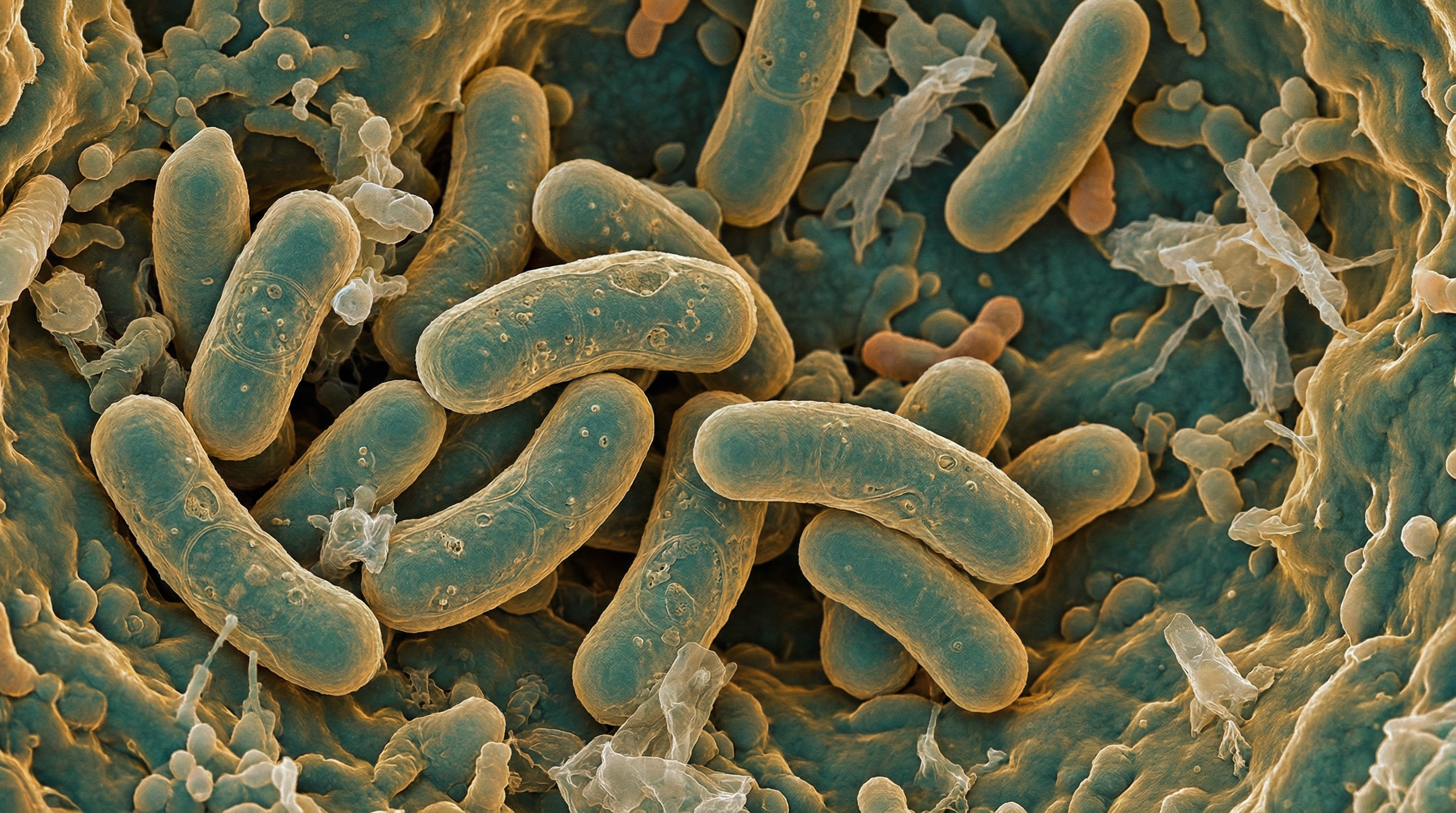
B. vulgatus belongs to the family Bacteroidaceae and the genus Bacteroides, which comprises one of the most abundant groups of bacteria in the human intestinal microbiota. The bacterium is non-motile and saccharolytic, with the ability to ferment various carbohydrates.
Morphologically, B. vulgatus appears as a rod-shaped cell with rounded ends. When grown on blood agar plates under anaerobic conditions, it forms small, circular, convex, and smooth colonies. The bacterium is bile-tolerant, which is a distinguishing characteristic of the B. fragilis group, enabling its growth on Bacteroides bile-esculin agar.
Genomic analysis has revealed that B. vulgatus possesses numerous polysaccharide utilization loci (PULs) that enable it to break down and metabolize a wide variety of complex carbohydrates, including dietary fibers and host-derived glycans. This metabolic versatility contributes to its successful colonization of the human gut.
B. vulgatus shares high genetic similarity with Bacteroides dorei, making them difficult to distinguish using conventional 16S rRNA sequencing alone. More advanced metagenomic sequencing techniques are often required to accurately differentiate between these closely related species.
Role in Human Microbiome
B. vulgatus is primarily found in the human gastrointestinal tract, where it is one of the most abundant species of the Bacteroides genus in the gut microbiome. It typically colonizes the colon and can comprise a significant portion of the Bacteroidetes phylum in the gut.
The abundance of B. vulgatus in the gut microbiome can vary considerably between individuals and is influenced by factors such as:
- Diet: Particularly the intake of dietary fibers and complex carbohydrates
- Age: Its abundance may change throughout the lifespan
- Geographic location: Studies have shown differences in B. vulgatus prevalence across different populations
- Health status: Certain health conditions may be associated with altered B. vulgatus abundance
As a core member of the gut microbiome, B. vulgatus contributes to the overall stability and function of the intestinal ecosystem. It plays important roles in the degradation of complex polysaccharides, production of short-chain fatty acids (SCFAs), and modulation of host immune responses.
Health Implications
Dual Role: Context-Dependent Effects
B. vulgatus exhibits predominantly protective effects but can become pathogenic under specific conditions. This strain-dependent and context-dependent behavior is critical to understanding its clinical significance:[1][1]
Metabolic Functions and SCFA Production
B. vulgatus exhibits exceptional metabolic capabilities:[2][2]
- Polysaccharide Utilization: Dedicates up to 20% of genome to complex polysaccharide degradation via specialized PULs (Polysaccharide Utilization Loci)
- SCFA Production:
- Acetate: 1486.21 μg/ml (in vitro, strain Bv46)
- Propionate: 173.75 μg/ml - major producer via succinate pathway
- Butyrate: 0.95 μg/ml
- Bile Salt Hydrolase (BSH): Deconjugates bile acids; increases primary bile acids; promotes fecal BA excretion
- Medicinal Polysaccharide Metabolism: Individual strains utilize average of 4.79 types of medicinal polysaccharides; PUL19 upregulation for ginseng polysaccharide utilization[3][3]
Anti-Inflammatory Mechanisms
B. vulgatus possesses unique immunomodulatory properties:[4][4]
- Low-Toxicity LPS Structure: Tetra- and penta-acylated lipid A (vs hexa-acylated in E. coli); 100-1000x less potent at NF-κB activation
- TLR2/TLR4 Dual Activation: Promotes high IL-10, low TNF-α response; induces endotoxin tolerance
- Cytokine Modulation: Downregulates TNF-α, IL-1β, IL-6, OSM, CXCL1, CXCL2
- Treg Induction: Promotes regulatory T cell frequency in colonic lamina propria
Lipid Metabolism and Hyperlipidemia
Recent research has demonstrated significant effects of B. vulgatus on lipid metabolism:
Amelioration of hyperlipidemia: Studies in hyperlipidemic rat models have shown that oral administration of B. vulgatus can significantly reduce body weight gain, improve serum lipid profiles, and lower levels of serum inflammatory cytokines.
Bile acid modulation: B. vulgatus promotes the loss of fecal bile acids through its bile salt hydrolase activity, which may contribute to its lipid-lowering effects.
SCFA production: It extends the fecal pool of SCFAs, especially propionate and butyrate, which have been associated with improved metabolic health.
Gut microbiota modulation: B. vulgatus induces compositional shifts in the gut microbial community, characterized by a lower ratio of Firmicutes to Bacteroidetes, which has been associated with improved metabolic health.
Anti-obesity effects: In combination with B. dorei, B. vulgatus has been shown to enhance the catabolism of branched-chain amino acids in brown adipose tissue and reduce body weight gain in mice with diet-induced obesity.
Bone Health
Interestingly, B. vulgatus has been implicated in bone health through its effects on valeric acid metabolism:
Negative association with bone mineral density (BMD): Studies have found that B. vulgatus is negatively associated with bone mineral density in humans, a finding that has been validated in multiple populations.
Valeric acid suppression: B. vulgatus appears to causally downregulate serum valeric acid (VA), a short-chain fatty acid that is positively associated with BMD and enhances bone density.
Experimental evidence: Ovariectomized mice fed B. vulgatus showed poorer bone microstructure, supporting the negative impact of this bacterium on bone health.
Mechanistic insights: The effects of B. vulgatus on bone appear to be mediated through VA production and NF-κB signaling pathways, with VA suppressing osteoclastogenesis and promoting osteoblast differentiation.
IBD Association: Protective and Pathogenic Roles
Protective Strains:[5][5]
- Strains Bv46, mpk, SNUG 40005 significantly reduce Disease Activity Index (P < 0.05)
- Prevented colon shortening (P < 0.01 at day 7)
- Reduced high-grade histopathology from 75% to 33.3%
- Higher baseline B. vulgatus predicts positive Mediterranean diet response in UC[6][6]
Pathogenic Context (UC Protease Overproducers):
- 40-60% of disease-correlated microbial proteins from B. vulgatus in UC subset
- Secretes serine/cysteine proteases (DPPIV, DPPVII) that disrupt epithelial integrity
- Only 18.8% of protease overproducers achieved histological remission vs 45% of others
- Protease inhibitors (AEBSF) restore barrier function (eta² = 0.64)
Gut-Brain Axis Effects[7][7]
- p-Hydroxyphenylacetic acid (4-HPAA): Metabolite crosses BBB; increases hippocampal BDNF
- Blood-Brain Barrier: Restores BBB integrity via claudin-5 upregulation
- Depression: Fecal abundance negatively correlated with PHQ-9 scores; alleviates depression-like behaviors
Cardiovascular Health[8][8]
- Heart Failure: Significantly lower abundance in HF patients
- Prognostic Marker: Low butyric acid (<0.015 μg/mL) predicts mortality (HR 19.60; AUC 0.701)
- Mechanism: Inhibits TGF-β1/MAPK pathway; reduces cardiac fibrosis
Obesity and Lipid Metabolism[9][9]
- Novel Mechanism: Cholic acid from B. vulgatus inhibits jejunal 5-HT synthesis
- Serotonin-Calcium-Lipid Axis: Reduced 5-HT → decreased TRPV1 → lower Ca²⁺ → slowed lipid absorption
- Metabolic Improvements: Reduces TC, TG, LDL-C; increases HDL-C; decreases hepatic lipid accumulation
Immune Modulation and Cancer Immunotherapy
- Ginseng Polysaccharides: Selectively enrich B. vulgatus; enhance anti-PD-1/PD-L1 response[10][10]
- Akkermansia Restoration: Long-term administration promotes A. muciniphila growth
Cardiovascular Health
B. vulgatus has been implicated in cardiovascular health:
Coronary artery disease: Studies have shown a significant decrease in the relative abundance of B. vulgatus and B. dorei in patients with coronary artery disease.
Atherosclerosis: Oral administration of B. vulgatus and B. dorei has been shown to suppress microbial lipopolysaccharide production and attenuate atherosclerotic lesion formation in mice.
Lipid profile improvement: The ability of B. vulgatus to improve serum lipid profiles may contribute to reduced risk of cardiovascular diseases.
Metabolic Activities
B. vulgatus exhibits diverse metabolic capabilities that enable it to thrive in the competitive environment of the human gut:
Polysaccharide utilization: The genome of B. vulgatus contains numerous polysaccharide utilization loci (PULs) that encode enzymes for breaking down complex carbohydrates. These PULs allow B. vulgatus to utilize a wide range of dietary fibers and host-derived glycans as energy sources.
Glycoside hydrolase production: B. vulgatus produces various glycoside hydrolases that cleave glycosidic bonds in complex carbohydrates, releasing simpler sugars that can be fermented.
Fermentation: Through fermentation of carbohydrates, B. vulgatus produces short-chain fatty acids (SCFAs) such as acetate, propionate, butyrate, and lactate, which have important roles in gut health and systemic metabolism.
Bile salt hydrolase activity: B. vulgatus produces bile salt hydrolase (BSH), an enzyme that hydrolyzes conjugated bile salts, contributing to bile acid metabolism and potentially influencing lipid absorption and metabolism.
Adaptation to gut conditions: B. vulgatus possesses metabolic pathways that allow it to adapt to the anaerobic, nutrient-rich environment of the gut, including mechanisms for dealing with bile acids and other potentially inhibitory compounds.
These metabolic activities not only support the growth and survival of B. vulgatus in the gut but also influence the broader gut ecosystem and host physiology through the production of various metabolites.
Clinical Relevance
The clinical significance of B. vulgatus is still emerging, but several areas of potential relevance have been identified:
Metabolic disorders: Given its effects on lipid metabolism and body weight, B. vulgatus may have therapeutic potential for hyperlipidemia, obesity, and related metabolic disorders.
Bone health: The negative association between B. vulgatus and bone mineral density suggests that modulation of this bacterium or its effects on valeric acid metabolism could be relevant for osteoporosis prevention or treatment.
Inflammatory bowel diseases: The strain-dependent effects of B. vulgatus on intestinal inflammation suggest that specific strains could potentially be used as probiotics for inflammatory bowel diseases, while others might be targeted for reduction.
Celiac disease: The identification of a B. vulgatus strain that protects against gluten-induced damage to the intestinal epithelium suggests potential applications in celiac disease management.
Cardiovascular diseases: The ability of B. vulgatus to improve lipid profiles and attenuate atherosclerotic lesion formation suggests potential applications in cardiovascular disease prevention or treatment.
While these applications are promising, it's important to note that most are still in the research phase and require further validation before clinical implementation. Additionally, the strain-dependent nature of many of B. vulgatus' effects highlights the importance of strain-specific approaches in any potential therapeutic applications.
Interaction with Other Microorganisms
B. vulgatus engages in complex interactions with other members of the gut microbiome:
Relationship with other Bacteroides species: B. vulgatus shares ecological niches with other Bacteroides species, particularly B. dorei, with which it has high genetic similarity. These species may compete for similar resources or engage in cooperative interactions.
Interaction with Akkermansia muciniphila: B. vulgatus has been shown to restore Akkermansia muciniphila populations, which may have beneficial effects on metabolic health and inflammation.
Modulation of gut microbial composition: Administration of B. vulgatus has been shown to induce compositional shifts in the gut microbial community, characterized by a lower ratio of Firmicutes to Bacteroidetes and an increase in genera Bacteroides and Parabacteroides.
Cross-feeding relationships: The metabolic activities of B. vulgatus, such as the breakdown of complex carbohydrates and production of SCFAs, may support the growth of other bacterial species through cross-feeding relationships.
Competition with pathogens: Like other commensal bacteria, B. vulgatus may compete with pathogenic bacteria for nutrients and attachment sites, potentially contributing to colonization resistance.
These interactions contribute to the complex ecology of the gut microbiome and may have important implications for host health and disease.
Research Significance
B. vulgatus has become an important focus of research for several reasons:
Core microbiome member: As one of the most abundant and prevalent members of the human gut microbiome, understanding the roles of B. vulgatus is essential for comprehending overall gut microbiome function.
Metabolic effects: The significant effects of B. vulgatus on lipid metabolism, body weight, and bone health highlight its potential importance in metabolic health and disease.
Strain-dependent effects: The observation that different strains of B. vulgatus can have markedly different, even opposite, effects on host health underscores the importance of strain-level analysis in microbiome research.
Therapeutic potential: The beneficial effects of certain B. vulgatus strains on hyperlipidemia, atherosclerosis, and celiac disease suggest potential applications in the development of next-generation probiotics or other microbiome-based therapeutics.
Mechanistic insights: Research on B. vulgatus is providing valuable insights into the mechanisms by which gut bacteria influence host metabolism, immune function, and overall health.
Continued research on B. vulgatus promises to enhance our understanding of gut microbiome function and may lead to novel approaches for preventing and treating various diseases.
References
Xu M, Lan R, Qiao L, et al. Bacteroides vulgatus Ameliorates Lipid Metabolic Disorders and Modulates Gut Microbial Composition in Hyperlipidemic Rats. Microbiol Spectr. 2023;11(1):e0251722.
Xu X, Jia X, Mo Y, et al. Gut microbiota impacts bone via Bacteroides vulgatus-valeric acid-related pathways. Nat Commun. 2023;14(1):6325.
Wang Z, Roberts AB, Buffa JA, et al. Non-lethal Inhibition of Gut Microbial Trimethylamine Production for the Treatment of Atherosclerosis. Cell. 2015;163(7):1585-1595.
Verma R, Lee C, Jeun EJ, et al. Cell surface polysaccharides of Bacteroides fragilis group species mediate anti-inflammatory effects. Cell Host Microbe. 2018;24(4):528-542.e6.
Bakir MA, Kitahara M, Sakamoto M, Matsumoto M, Benno Y. Bacteroides intestinalis sp. nov., isolated from human faeces. Int J Syst Evol Microbiol. 2006;56(Pt 1):151-154.
Iljazovic A, Roy U, Gálvez EJC, et al. Perturbation of the gut microbiome by Prevotella spp. enhances host susceptibility to mucosal inflammation. Mucosal Immunol. 2021;14(1):113-124.