

Better Stress Resilience
Build robust stress tolerance and faster recovery through microbiome optimization that supports healthy HPA axis function and emotional regulation.
Key Supporting Microbes
These beneficial microorganisms play key roles in supporting this health benefit:
Stress and the Microbiome: A Two-Way Street
Stress is an inevitable part of life, but how we respond to it varies enormously between individuals. Some people bounce back quickly from challenges while others spiral into prolonged distress. Increasingly, research shows that your gut microbiome plays a crucial role in determining your stress resilience—your capacity to adapt to, cope with, and recover from stress[3]. Landmark research demonstrated that early-life microbial colonization programs the HPA axis for stress response[4].
The relationship is bidirectional: stress alters your microbiome, and your microbiome shapes how you respond to stress. This creates either virtuous cycles of resilience or vicious cycles of vulnerability.
The Stress Response System
The HPA Axis
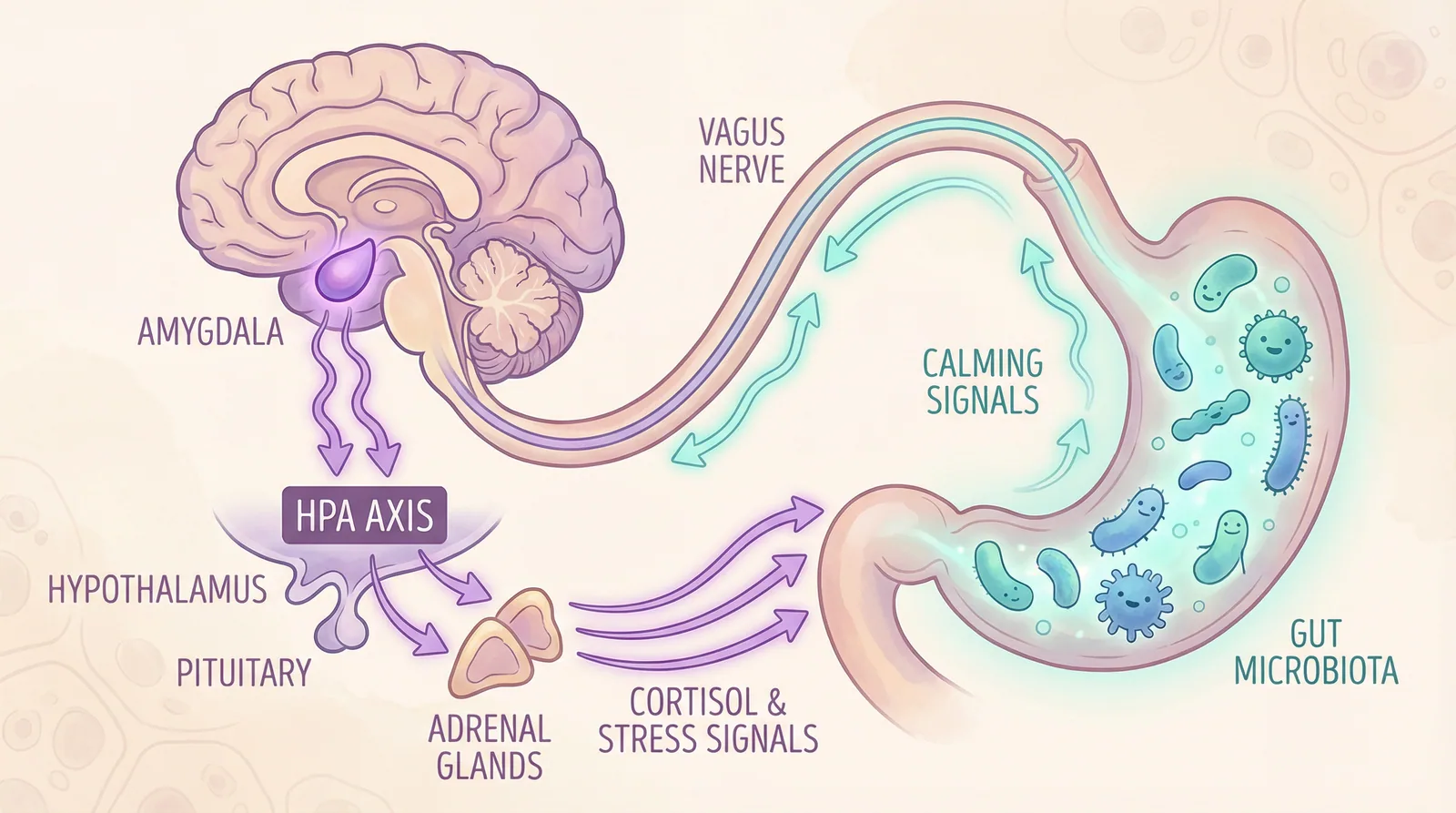
The hypothalamic-pituitary-adrenal axis is your central stress response system:
Normal function:
- Brain perceives a stressor
- Hypothalamus releases CRH (corticotropin-releasing hormone)
- Pituitary releases ACTH (adrenocorticotropic hormone)
- Adrenal glands release cortisol
- Cortisol helps you respond to the challenge
- Feedback mechanisms shut down the response
Microbiome influence:
- Gut bacteria affect every step of this cascade
- Dysbiosis can lead to hyperactive or blunted HPA response
- Certain probiotics normalize HPA axis function
- Early-life microbiome shapes lifelong stress responses
When Stress Becomes Harmful
Problems arise when the stress response is:
Overactive:
- Cortisol remains elevated
- Creates chronic inflammation
- Damages hippocampus (memory center)
- Depletes neurotransmitters
Underactive:
- Inadequate response to challenges
- Fatigue and burnout
- Difficulty coping with normal stressors
- Often follows prolonged overactivation
How Bacteria Build Resilience
Regulating Cortisol
Certain bacteria directly affect cortisol levels[1]:
- Bifidobacterium longum 1714 reduces cortisol response to acute stress
- Lactobacillus rhamnosus normalizes stress-induced cortisol elevation
- Lactobacillus helveticus combined with B. longum reduces cortisol and anxiety[2]
Supporting Neurotransmitter Balance
Resilience requires adequate neurotransmitter reserves:
- Beneficial bacteria support serotonin production
- They produce GABA, which calms the stress response
- They maintain dopamine systems for motivation
- Depletion of these neurotransmitters reduces coping capacity
Reducing Inflammation
Chronic inflammation sensitizes the stress response:
- Anti-inflammatory bacteria dampen inflammatory signaling
- This prevents stress amplification
- SCFAs have anti-inflammatory effects throughout the body
- Less inflammation means more stress tolerance
Maintaining Gut Barrier Integrity
Stress increases gut permeability:
- "Leaky gut" allows inflammatory compounds into circulation
- This further activates stress systems
- Beneficial bacteria strengthen barriers
- Breaking this cycle improves resilience
The Stress-Microbiome Feedback Loop
How Stress Damages the Microbiome
Stress negatively affects gut bacteria through[5]:
- Altered gut motility (too fast or too slow)
- Changes in digestive secretions
- Immune system alterations
- Increased intestinal permeability
- Direct effects of stress hormones on bacteria
Common changes:
- Reduced Lactobacillus and Bifidobacterium
- Increased potentially harmful species
- Decreased diversity
- Altered metabolite production
Breaking the Negative Cycle
To interrupt stress-dysbiosis spirals:
- Support the microbiome during stressful periods
- Use stress management techniques that improve gut function
- Address both gut and stress simultaneously
- Be patient—recovery takes time
Signs of Poor Stress Resilience
You might have compromised stress resilience if you:
- Feel overwhelmed by minor stressors
- Take a long time to recover from stress
- Experience physical symptoms with stress (digestive upset, headaches)
- Have difficulty sleeping when stressed
- Struggle with emotional regulation during challenges
- Feel exhausted despite adequate rest
- Get sick frequently when stressed
- Have difficulty concentrating under pressure
Key Resilience-Building Microbes
Lactobacillus rhamnosus
The most-studied stress-resilience probiotic:
- Reduces anxiety in controlled trials
- Normalizes stress-induced behavior changes
- Effects depend on intact vagus nerve
- Strain JB-1 particularly researched
Bifidobacterium longum
Powerful stress modulator[1]:
- Strain 1714 reduces subjective stress
- Improves cognitive performance under stress
- Reduces cortisol awakening response
- Modulates brain activity patterns related to stress
Lactobacillus casei
Supports resilience through:
- Improving mood under stress
- Supporting immune function during stressful periods
- Strain Shirota studied in stressed populations
- May reduce stress-related digestive symptoms
Lactobacillus acidophilus
Foundational probiotic for stress:
- Supports overall microbiome health
- May reduce stress-related inflammation
- Combined with other strains shows synergistic effects

Strategies to Build Stress Resilience
Dietary Approaches
Fermented foods:
- Daily intake supports resilience-building bacteria
- Variety provides diverse beneficial species
- Start gradually if new to fermented foods
Fiber-rich diet:
- Feeds beneficial bacteria
- Supports SCFA production
- Diverse plant foods are key
Stress-modulating nutrients:
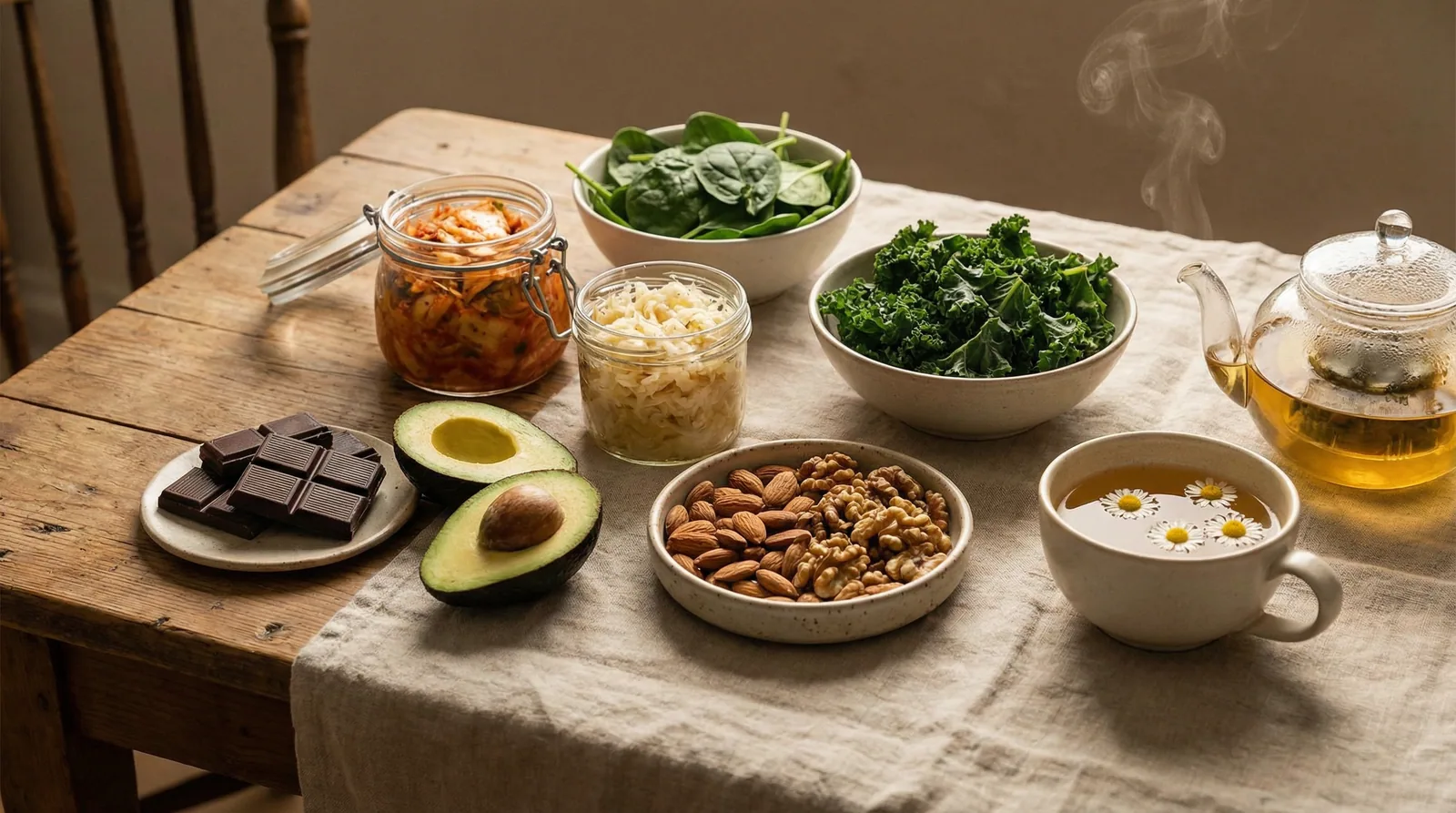
- Magnesium (dark leafy greens, nuts, seeds)
- B vitamins (whole grains, legumes, eggs)
- Omega-3s (fatty fish, walnuts, flaxseed)
- Vitamin C (citrus, bell peppers)
Adaptogenic foods and herbs:
- Ashwagandha
- Rhodiola
- Holy basil
- Reishi mushrooms
Lifestyle Interventions
Exercise:
- Regular moderate exercise builds resilience
- Supports healthy microbiome
- Reduces cortisol over time
- Improves stress coping
Sleep:
- Adequate sleep is essential for resilience
- Sleep deprivation increases stress vulnerability
- Consistent schedule supports circadian rhythms
- Quality matters as much as quantity
Meditation and mindfulness:
- Directly reduces stress response
- Improves vagal tone
- May positively affect microbiome
- Multiple techniques are effective
Social connection:
- Strong relationships buffer stress
- Isolation worsens stress response
- Social support improves microbiome
- Quality of relationships matters
Nature exposure:
- Time in nature reduces cortisol
- May diversify microbiome
- Promotes relaxation response
- Regular exposure is beneficial
Stress Management Techniques
Breathing exercises:
- Activate parasympathetic nervous system
- Reduce acute stress response
- Support healthy vagal tone
- Practice daily for best results
Progressive muscle relaxation:
- Releases physical tension
- Interrupts stress response
- Can be done anywhere
- Helpful before sleep
Cognitive reframing:
- Changes how we interpret stressors
- Reduces perceived threat
- Builds psychological resilience
- Takes practice to develop
Building Long-Term Resilience
Developing stress resilience through the microbiome involves:
- Consistent probiotic support through food or supplements
- Stress management practices that become habitual
- Lifestyle factors that support both gut and mental health
- Addressing acute stressors while building long-term capacity
- Patience and persistence — resilience builds over time
Most people notice improvements in stress tolerance within 3-4 weeks of consistent microbiome-supporting practices. Building robust, lasting resilience typically requires 3-6 months of sustained effort, but the capacity to handle life's challenges without being overwhelmed is worth the investment.
Supporting Practices
Evidence-based strategies to support this benefit:
- Practice regular meditation or mindfulness
- Include adaptogenic herbs like ashwagandha and rhodiola
- Engage in regular moderate exercise
- Prioritize consistent, quality sleep
- Build strong social connections
- Consume magnesium-rich foods like dark leafy greens
Frequently Asked Questions
What is Better Stress Resilience?
Build robust stress tolerance and faster recovery through microbiome optimization that supports healthy HPA axis function and emotional regulation.
How does the microbiome support better stress resilience?
Your gut microbiome plays a crucial role in better stress resilience through various mechanisms involving specific beneficial bacteria and their metabolites.
Which microbes are important for better stress resilience?
Key beneficial microbes include: Lactobacillus rhamnosus, Bifidobacterium longum, Lactobacillus casei, Lactobacillus acidophilus.
References
- Allen AP, Hutch W, Borre YE, et al.. Bifidobacterium longum 1714 as a translational psychobiotic: modulation of stress, electrophysiology and neurocognition in healthy volunteers. Translational Psychiatry. 2016;6(11):e939. doi:10.1038/tp.2016.191
- Messaoudi M, Lalonde R, Violle N, et al.. Assessment of psychotropic-like properties of a probiotic formulation (Lactobacillus helveticus R0052 and Bifidobacterium longum R0175) in rats and human subjects. British Journal of Nutrition. 2011;105(5):755-764. doi:10.1017/S0007114510004319
- Foster JA, McVey Neufeld KA. Gut-brain axis: how the microbiome influences anxiety and depression. Trends in Neurosciences. 2013;36(5):305-312. doi:10.1016/j.tins.2013.01.005
- Sudo N, Chida Y, Aiba Y, et al.. Postnatal microbial colonization programs the hypothalamic-pituitary-adrenal system for stress response in mice. The Journal of Physiology. 2004;558:263-275. doi:10.1113/jphysiol.2004.063388
- Galley JD, Nelson MC, Yu Z, et al.. Exposure to a social stressor disrupts the community structure of the colonic mucosa-associated microbiota. BMC Microbiology. 2014;14:189. doi:10.1186/1471-2180-14-189
- Tillisch K, Labus J, Kilpatrick L, et al.. Consumption of fermented milk product with probiotic modulates brain activity. Gastroenterology. 2013;144(7):1394-1401. doi:10.1053/j.gastro.2013.02.043