

Improved Skin Barrier Function
Strengthen your skin's protective barrier through gut microbiome optimization for better hydration, resilience, and defense against environmental stressors.
Key Supporting Microbes
These beneficial microorganisms play key roles in supporting this health benefit:
The Gut-Skin Connection
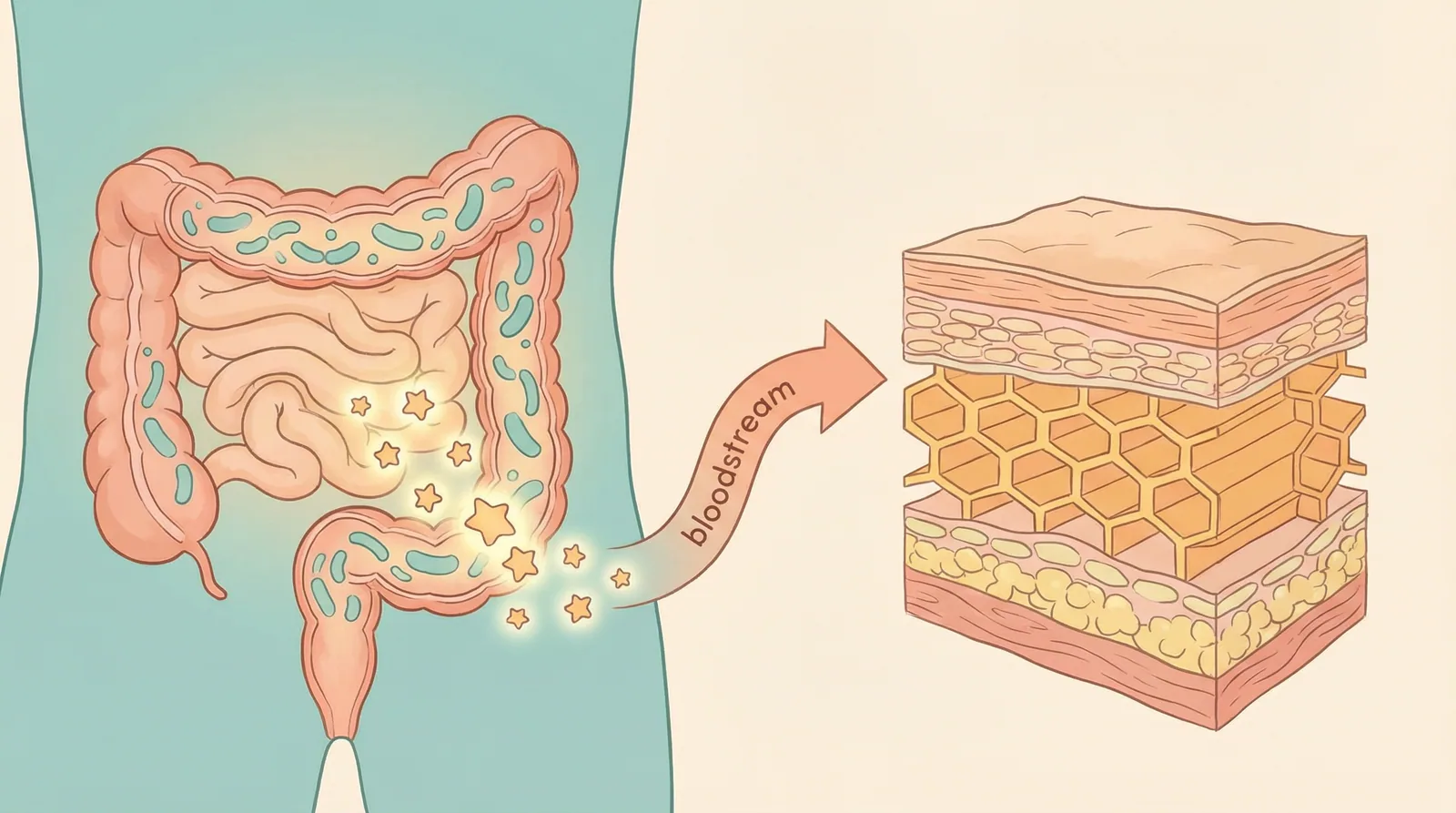
Your skin isn't just affected by what you put on it—it's profoundly influenced by what's happening inside your gut. The gut-skin axis is a bidirectional communication system where gut health directly impacts skin barrier function, hydration, and resilience.[1]
When your gut microbiome is balanced, it supports a strong, healthy skin barrier. When it's disrupted, skin problems often follow. Understanding this connection opens new avenues for achieving healthy, resilient skin from the inside out.
Understanding the Skin Barrier
What Is the Skin Barrier?
The skin barrier (stratum corneum) is the outermost layer of your skin:
Structure:
- Dead skin cells (corneocytes) arranged like bricks
- Lipid matrix (ceramides, cholesterol, fatty acids) acting like mortar
- Creates a waterproof, protective seal
Functions:
- Prevents water loss (transepidermal water loss - TEWL)
- Blocks pathogens and irritants
- Regulates what enters and exits the skin
- Protects against UV damage and pollution
When the Barrier Is Compromised
A damaged barrier leads to:
- Dry, flaky, or rough skin
- Increased sensitivity and reactivity
- Redness and irritation
- Accelerated aging
- Greater susceptibility to infections
- Difficulty healing
How Gut Bacteria Influence Skin Barrier
Systemic Inflammation
Gut dysbiosis creates inflammation that affects skin:[2]
- Inflammatory cytokines from the gut reach the skin via circulation
- These cytokines disrupt lipid production
- They impair keratinocyte function
- They compromise tight junctions between skin cells
Beneficial bacteria reduce this inflammatory load.
Nutrient Absorption
The gut determines how well you absorb skin-supporting nutrients:
- Vitamins A, D, E (fat-soluble, need healthy fat absorption)
- Essential fatty acids for lipid matrix
- Zinc for skin cell renewal
- B vitamins for skin metabolism
Gut health directly affects nutrient availability for skin.
Short-Chain Fatty Acid Effects
SCFAs from gut bacteria support skin barrier:
- May reach skin via circulation
- Have anti-inflammatory effects
- Support skin microbiome health
- Influence skin lipid production
Immune System Modulation
Gut bacteria shape skin immunity:
- Train immune cells that travel to skin
- Influence inflammatory vs. tolerant responses
- Affect how skin responds to allergens and irritants
- Balance is key—not too reactive, not too suppressed
Key Microbes for Skin Barrier
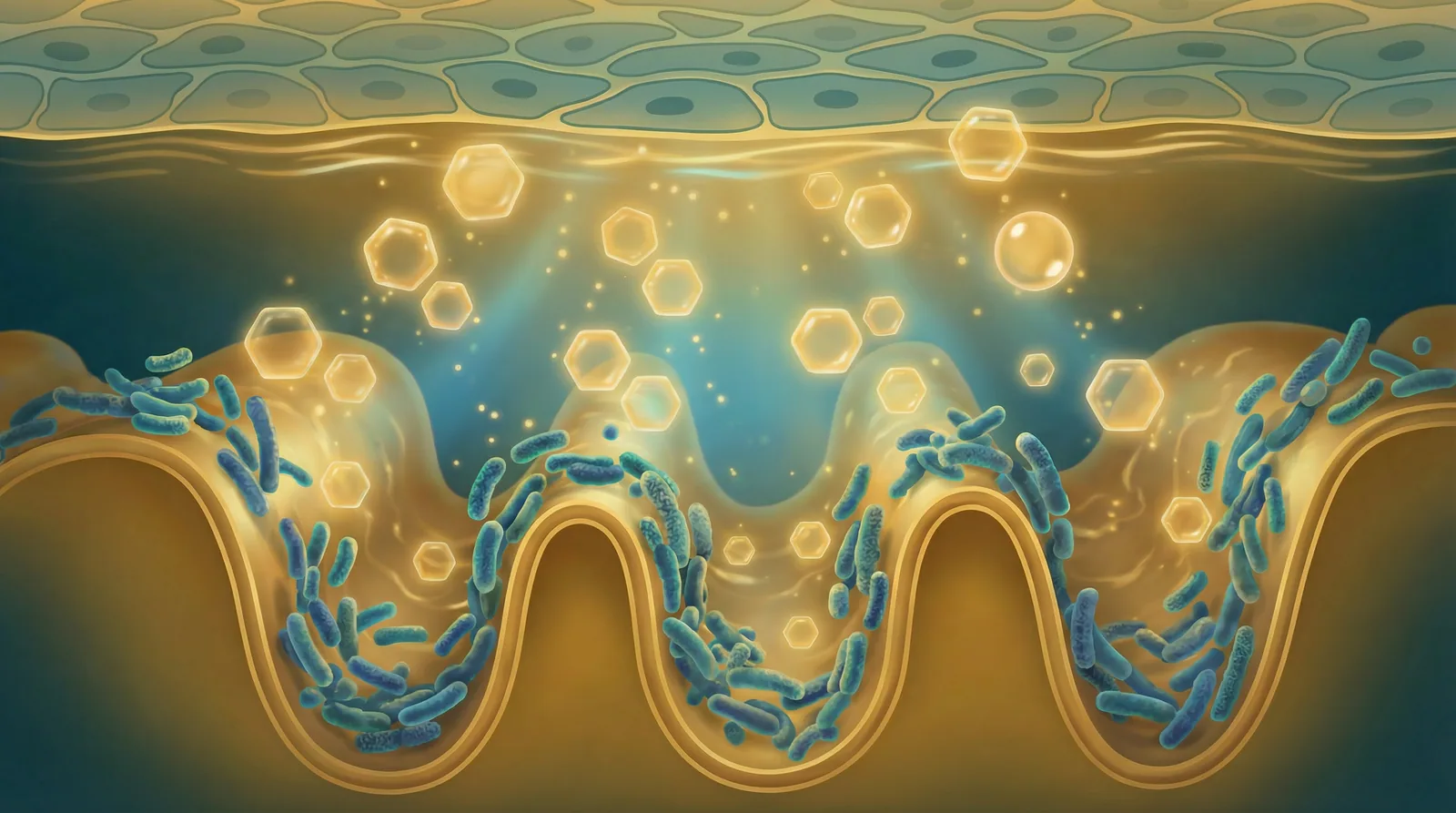
Lactobacillus rhamnosus
Well-studied for skin benefits:
- Reduces skin sensitivity
- Improves skin hydration
- Strengthens barrier function
- Strain GG particularly researched
Bifidobacterium breve
Supports skin from within:
- Improves skin hydration markers
- Reduces transepidermal water loss
- May enhance ceramide production
- Strain B-3 shown to improve skin moisture
Lactobacillus paracasei
Specific barrier benefits:[3]
- Accelerates barrier recovery after damage
- Reduces skin sensitivity
- Inhibits substance P (a stress-related skin factor)
- Strain ST11 well-researched
Akkermansia muciniphila
Supports gut barrier, indirectly helping skin:
- Reduces systemic inflammation
- Improves metabolic health markers
- Associated with better skin outcomes
- Responds to polyphenol-rich foods
Signs of Compromised Skin Barrier
Your skin barrier may need support if you experience:
- Persistent dryness despite moisturizing
- Skin that feels tight after washing
- Increased sensitivity to products that worked before
- Redness and irritation without clear cause
- Slow healing of minor cuts or blemishes
- Skin that looks dull or rough
- Increased visibility of fine lines
- Reactions to environmental factors (wind, cold, pollution)
Dietary Strategies for Skin Barrier
Essential Fatty Acids
Critical for the lipid matrix:
Omega-3s:
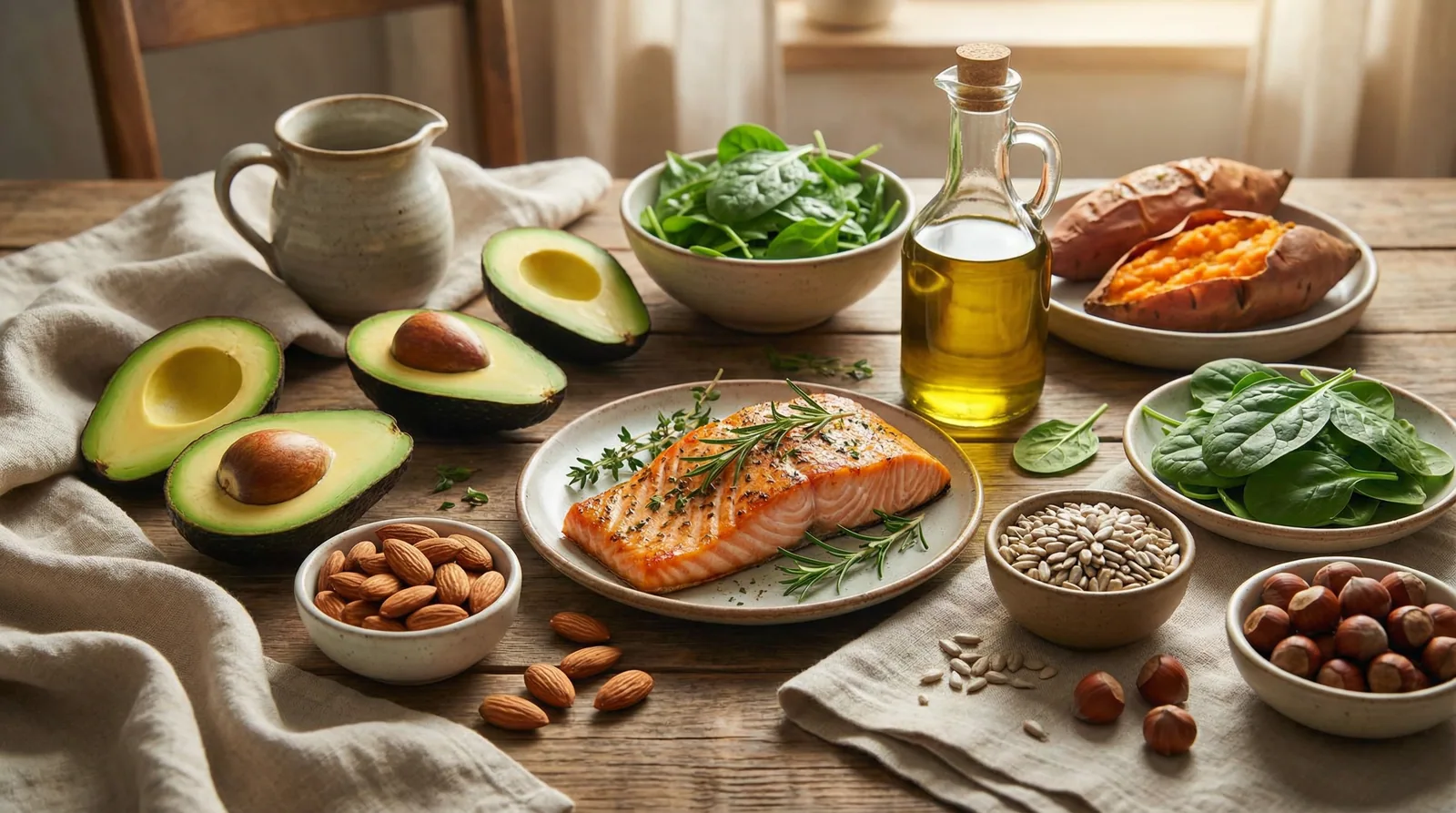
- Fatty fish (salmon, mackerel, sardines)
- Walnuts and flaxseeds
- Chia seeds
- Algae supplements
Omega-6s (in balance):
- Evening primrose oil
- Borage oil
- Healthy amounts from whole foods
Barrier-Supporting Nutrients
Vitamin A:
- Sweet potatoes and carrots
- Leafy greens
- Eggs
- Supports skin cell turnover
Vitamin E:
- Nuts and seeds
- Avocados
- Olive oil
- Protects skin lipids from oxidation
Zinc:
- Pumpkin seeds
- Beef and oysters
- Legumes
- Essential for skin healing
Vitamin C:
- Citrus fruits
- Bell peppers
- Berries
- Supports collagen for barrier structure
Fermented Foods
Support the gut-skin axis:
- Yogurt with live cultures
- Kefir
- Sauerkraut and kimchi
- Miso and tempeh
Hydrating Foods
Support skin hydration from within:
- Cucumber
- Watermelon
- Celery
- Coconut water
- Bone broth (contains collagen)
Lifestyle Factors
Hydration
Water intake affects skin hydration:
- Aim for 8+ glasses daily
- More with exercise or dry climates
- Herbal teas count
- Avoid excessive caffeine and alcohol which dehydrate
Gentle Skincare
Protect the barrier externally:
Do:
- Use pH-balanced cleansers (around 5.5)
- Apply moisturizer while skin is damp
- Use ceramide-containing products
- Protect from sun exposure
Avoid:
- Harsh sulfates and detergents
- Over-exfoliation
- Hot water on the face
- Fragrance in sensitive products
Stress Management
Stress directly impacts skin barrier:
- Increases cortisol, which impairs barrier function
- Triggers inflammation
- Disrupts both gut and skin microbiomes
- Regular stress management practices help both gut and skin
Sleep
Sleep is when skin repairs:
- Growth hormone release during deep sleep
- Barrier repair happens overnight
- Poor sleep shows on skin quickly
- Prioritize 7-9 hours
The Skin Microbiome Connection
Your skin has its own microbiome that interacts with barrier function:
- Healthy skin bacteria produce protective factors
- They compete with pathogens
- They communicate with skin immune cells
- Gut health influences skin microbiome composition
Supporting gut bacteria indirectly supports skin bacteria.
Building Better Skin Barrier
Strengthening your skin barrier through the gut-skin axis involves:
- Supporting gut health with fiber and fermented foods
- Ensuring adequate essential fatty acids in your diet
- Getting key nutrients (vitamins A, C, E, zinc) from whole foods
- Staying hydrated consistently
- Using gentle skincare that supports rather than strips the barrier
- Managing stress and sleep for optimal skin repair
Most people notice improvements in skin hydration and sensitivity within 4-6 weeks of consistent gut-supporting practices. Fully strengthening a compromised barrier typically takes 2-3 months, but the resilience and healthy glow are worth the investment.
Supporting Practices
Evidence-based strategies to support this benefit:
- Stay well-hydrated throughout the day
- Consume omega-3 fatty acids from fatty fish or supplements
- Include fermented foods for gut-skin axis support
- Avoid harsh soaps that strip natural skin oils
- Use gentle, pH-balanced skincare products
- Manage stress which impairs skin barrier function
Frequently Asked Questions
What is Improved Skin Barrier Function?
Strengthen your skin's protective barrier through gut microbiome optimization for better hydration, resilience, and defense against environmental stressors.
How does the microbiome support improved skin barrier function?
Your gut microbiome plays a crucial role in improved skin barrier function through various mechanisms involving specific beneficial bacteria and their metabolites.
Which microbes are important for improved skin barrier function?
Key beneficial microbes include: Lactobacillus rhamnosus, Bifidobacterium breve, Lactobacillus paracasei, Akkermansia muciniphila.
References
- Salem I, Ramser A, Isham N, Ghannoum MA. The Gut Microbiome as a Major Regulator of the Gut-Skin Axis. Frontiers in Microbiology. 2018;9:1459. doi:10.3389/fmicb.2018.01459 ↩
- Kober MM, Bowe WP. The effect of probiotics on immune regulation, acne, and photoaging. International Journal of Women's Dermatology. 2015;1(2):85-89. doi:10.1016/j.ijwd.2015.02.001 ↩
- Gueniche A, Benyacoub J, Philippe D, et al.. Lactobacillus paracasei CNCM I-2116 (ST11) inhibits substance P-induced skin inflammation and accelerates skin barrier function recovery. European Journal of Dermatology. 2010;20(6):731-737. doi:10.1684/ejd.2010.1108 ↩