

Better GABA Signaling
Enhance your brain's calming neurotransmitter system through gut microbiome support for easier relaxation and deeper sleep.
Key Supporting Microbes
These beneficial microorganisms play key roles in supporting this health benefit:
GABA: Your Brain's Brake Pedal
GABA (gamma-aminobutyric acid) is your brain's main inhibitory neurotransmitter—it puts the brakes on neural activity, calming racing thoughts and allowing relaxation. Adequate GABA signaling is essential for falling asleep, staying asleep, and achieving the deep restorative stages of sleep.[1]
What's remarkable is that gut bacteria can both produce GABA directly and influence brain GABA receptors through gut-brain communication.
How Gut Bacteria Affect GABA
Direct GABA Production
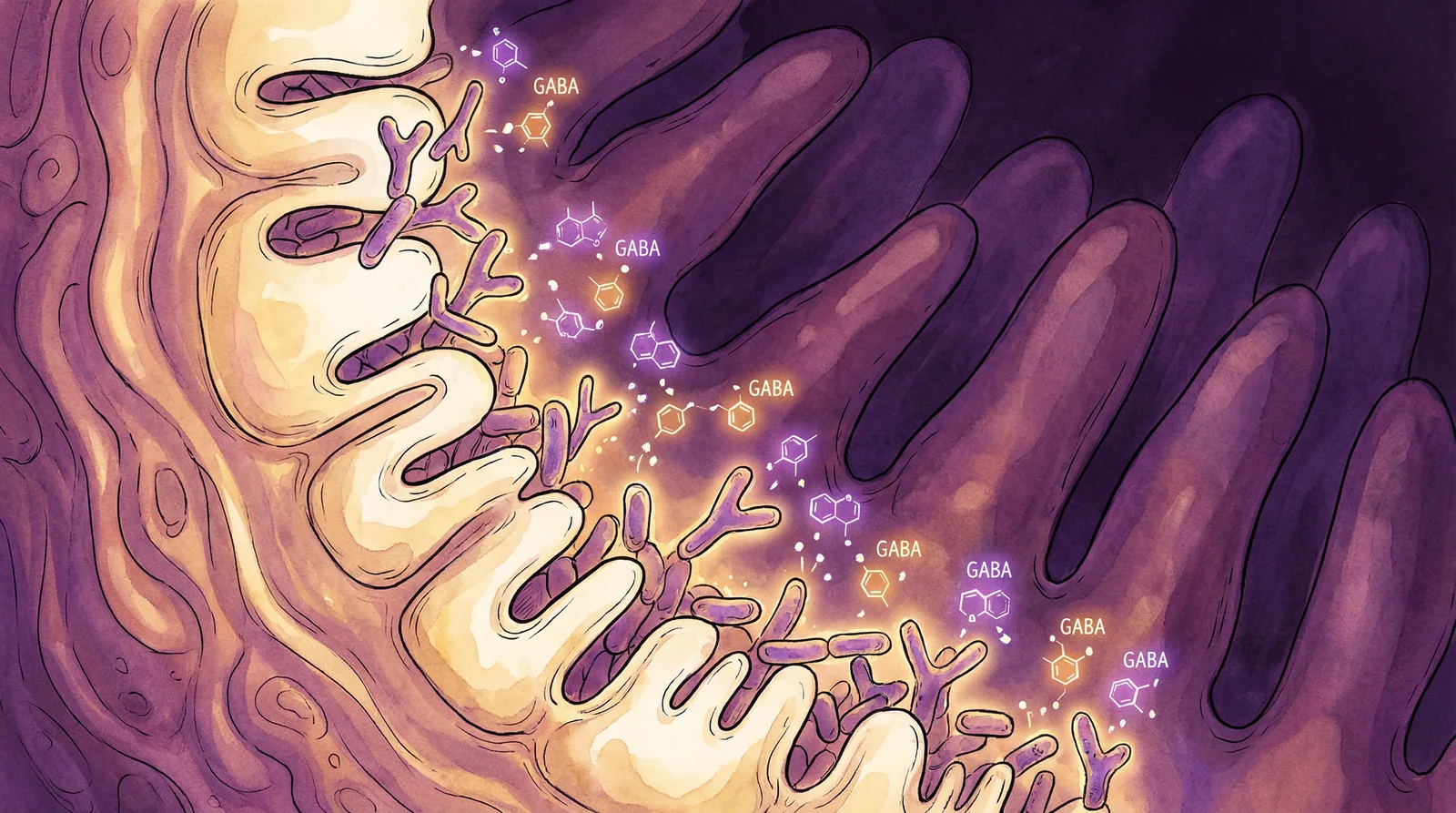
Several gut bacteria actually produce GABA:[2]
GABA-producing species:
- Lactobacillus brevis
- Bifidobacterium dentium
- Lactobacillus plantarum
- Lactobacillus paracasei
- Some Bacteroides species
The production process:
- Bacteria convert glutamate to GABA
- Use glutamate decarboxylase (GAD) enzyme
- GABA concentrations can be significant in gut
Vagus Nerve Signaling
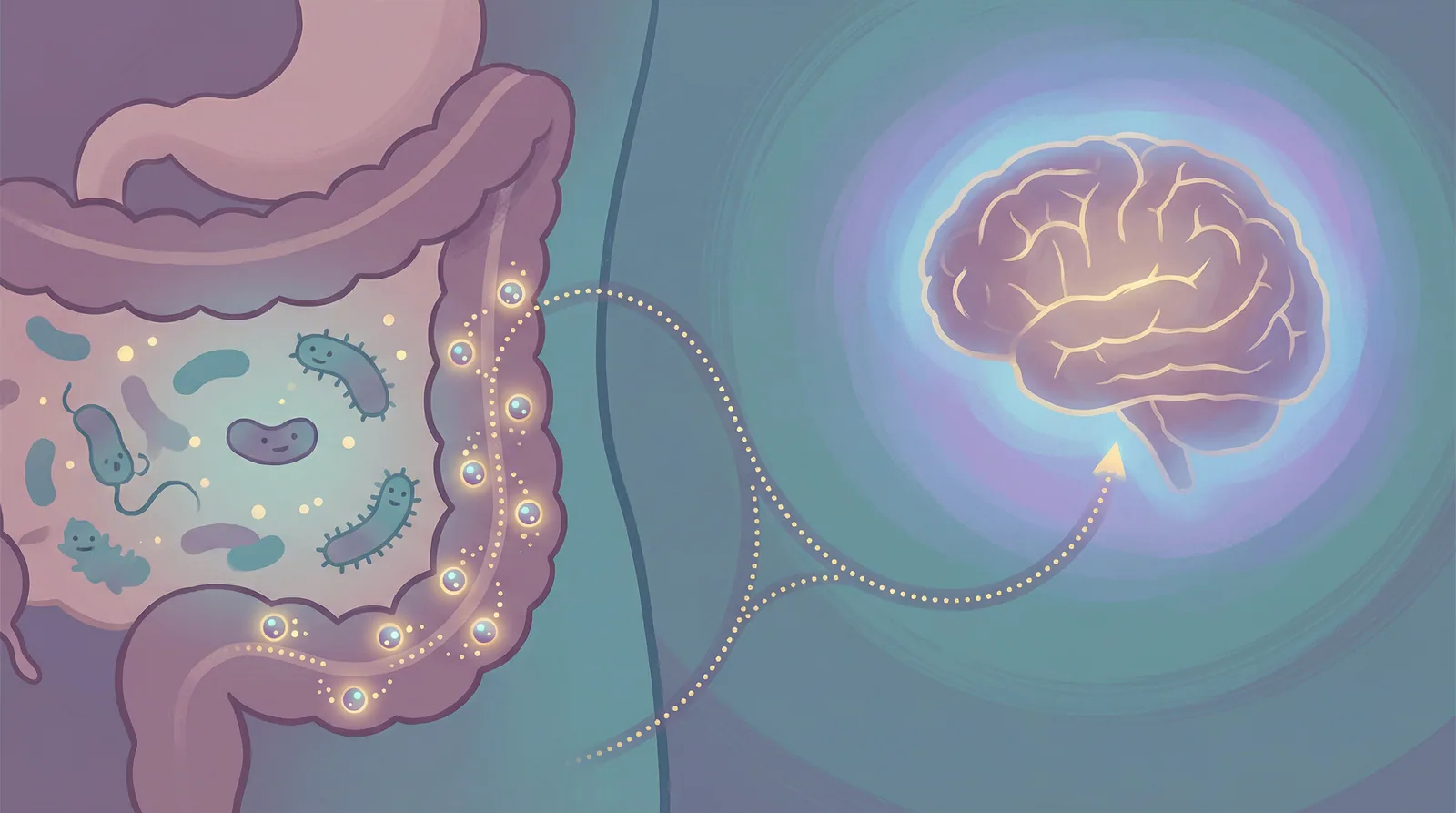
Gut bacteria influence brain GABA through neural pathways:[1]
The landmark study:
- Lactobacillus rhamnosus JB-1 reduced anxiety in mice
- Changed GABA receptor expression in brain regions
- Effects disappeared when vagus nerve was cut
- Proves gut-brain GABA communication
How it works:
- Bacteria produce compounds that stimulate vagus nerve
- Signals travel directly to brain
- Influence GABA receptor density and sensitivity
- Affect emotional and sleep-related brain areas
SCFA Effects
Short-chain fatty acids may influence GABA:
- May affect GABA metabolism
- Support healthy gut-brain communication
- Indirect effects on GABA signaling
- Part of overall gut-brain support
Signs of Low GABA Activity
You may have suboptimal GABA if you experience:
- Racing thoughts, especially at bedtime
- Difficulty "turning off" your brain
- Anxiety or nervousness
- Physical tension
- Light or interrupted sleep
- Easily startled
- Overwhelmed by stimulation
- Difficulty relaxing even when you have time
Key GABA-Supporting Microbes
Lactobacillus rhamnosus
Most studied for GABA and brain effects:
- Directly influences brain GABA receptors
- Reduces anxiety behaviors
- Strain JB-1 specifically researched
- Effects require intact vagus nerve
Lactobacillus brevis
High GABA production:
- Efficient GAD enzyme
- Found in fermented foods (especially kimchi)
- Strain FPA3709 particularly studied
- Can produce significant GABA
Bifidobacterium dentium
GABA-producing species:[3]
- One of the major GABA producers in human gut
- Found in healthy individuals
- May contribute to baseline GABA levels
Lactobacillus plantarum
Versatile GABA supporter:
- Some strains produce GABA
- Overall gut health support
- Found in many fermented vegetables
- Multiple beneficial effects
Dietary Strategies for GABA Support
GABA-Rich Fermented Foods
Some fermented foods contain significant GABA:
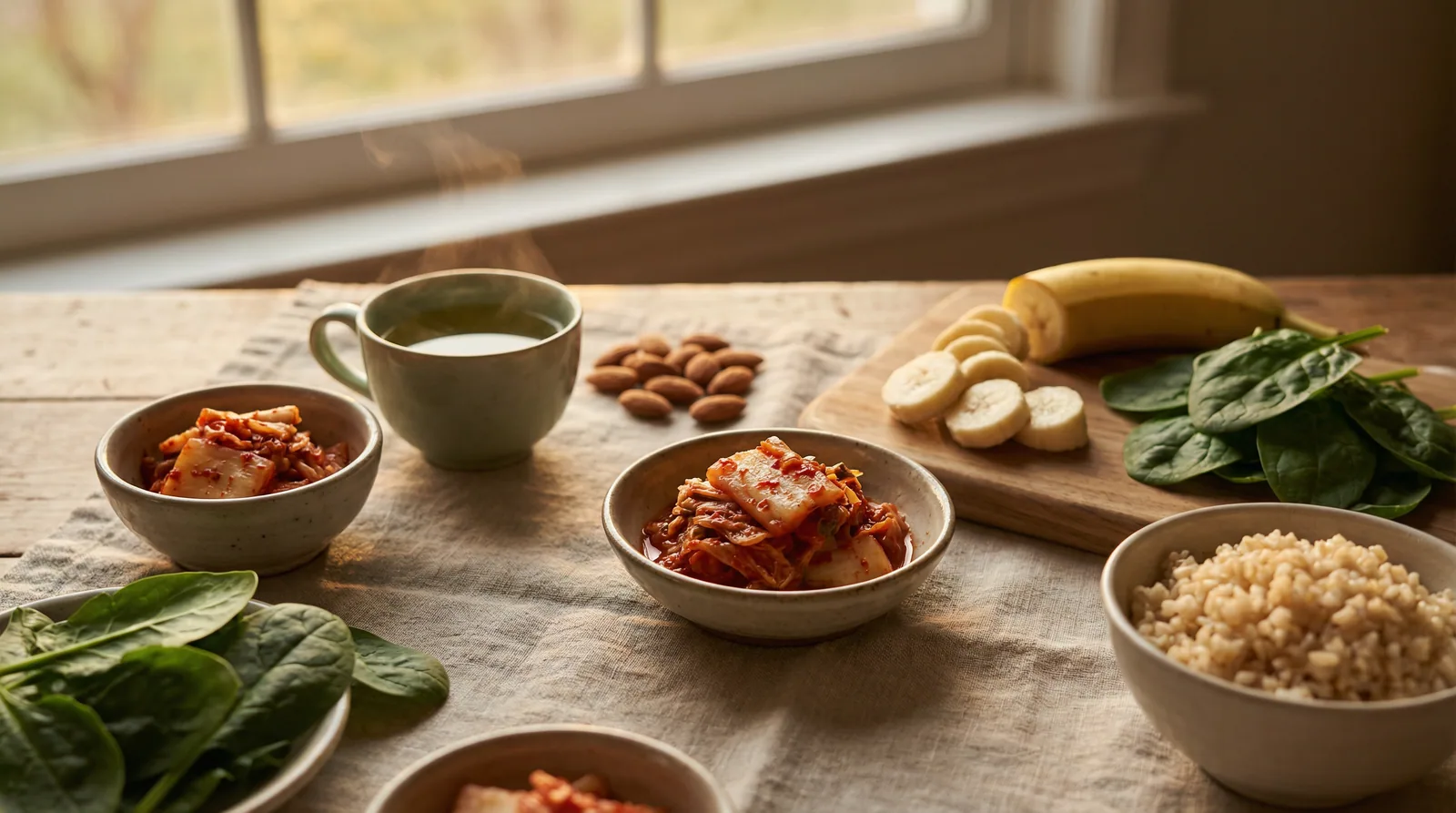
Kimchi:
- Lactobacillus brevis in fermentation produces GABA
- Traditionally fermented highest in GABA
- Include regularly
Fermented soy:
- Miso, tempeh, natto
- Fermentation produces GABA
- Part of traditional diets associated with longevity
Yogurt and kefir:
- Depends on strains used
- Live cultures provide benefit
- Choose products with active cultures
GABA Precursor Foods
Foods that support GABA synthesis:
Glutamate sources (GABA precursor):
- Tomatoes
- Mushrooms
- Cheese (especially parmesan)
- Fermented foods
Vitamin B6 sources (cofactor for GABA synthesis):
- Poultry
- Fish
- Potatoes
- Bananas
- Fortified cereals
GABA-Enhancing Compounds
Green tea (L-theanine):
- Amino acid that increases GABA
- Promotes calm without sedation
- 2-3 cups daily beneficial
- Matcha has concentrated theanine
Magnesium:
- Essential for GABA receptor function
- Relaxes muscles
- Leafy greens, nuts, dark chocolate
- Common deficiency
Taurine:
- Amino acid that enhances GABA activity
- Found in meat and fish
- Also in energy drinks (though those aren't recommended)
Lifestyle Factors
Stress Management
Chronic stress depletes GABA:
- Practice regular relaxation techniques
- Yoga specifically increases GABA
- Meditation supports GABA activity
- Deep breathing activates calming pathways
Exercise
Physical activity boosts GABA:
- Yoga shown to increase brain GABA levels
- Regular aerobic exercise supports GABA
- Timing: not too close to bedtime
- Consistency more important than intensity
Avoid GABA Disruptors
Alcohol:
- Initially increases GABA effect (why it feels relaxing)
- But disrupts GABA system with regular use
- Rebound anxiety and poor sleep
- Avoid, especially for sleep purposes
Excessive caffeine:
- Opposes GABA effects
- Stimulates rather than calms
- Limit, especially afternoon/evening
Chronic stress:
- Depletes GABA
- Creates cycle of anxiety and poor sleep
- Prioritize stress management
Supplements to Consider
If dietary approaches aren't sufficient:
GABA supplements:
- Oral GABA may not cross blood-brain barrier well
- Some people report benefit
- Start with low dose
- Sublingual may be more effective
L-theanine:
- Well-absorbed
- Gentle calming effect
- 100-200mg effective for many
- Safe to use regularly
Magnesium:
- Glycinate or threonate forms may be best for brain
- 200-400mg before bed
- Very safe for most people
Taurine:
- May enhance GABA effects
- 500-1000mg
- Well-tolerated
Relaxation Techniques That Boost GABA
Yoga:
- Research shows yoga increases brain GABA
- Even a single session has effects
- Regular practice builds GABA capacity
Meditation:
- Activates parasympathetic nervous system
- Supports GABA activity
- Multiple types effective
Deep breathing:
- Stimulates vagus nerve
- Promotes GABA-related calm
- 4-7-8 breathing technique helpful
Progressive muscle relaxation:
- Physical relaxation
- Activates calming pathways
- Good before bed
Building Better GABA Signaling
Supporting GABA through the gut-brain axis involves:
- Including GABA-producing fermented foods regularly
- Supporting GABA-producing bacteria with fiber and fermented foods
- Consuming L-theanine from green tea
- Ensuring adequate magnesium and B6
- Practicing GABA-enhancing activities like yoga
- Avoiding GABA disruptors like alcohol and excess caffeine
Most people notice improved ability to relax and better sleep onset within 2-4 weeks of consistent GABA-supporting practices. Building robust GABA signaling through the gut-brain axis is an ongoing process that deepens with sustained lifestyle practices.
Supporting Practices
Evidence-based strategies to support this benefit:
- Consume fermented foods that contain natural GABA
- Include magnesium-rich foods for GABA receptor function
- Practice relaxation techniques that enhance GABA
- Drink green tea for L-theanine which boosts GABA
- Avoid excessive alcohol which disrupts GABA system
- Include vitamin B6-rich foods for GABA synthesis
Frequently Asked Questions
What is Better GABA Signaling?
Enhance your brain's calming neurotransmitter system through gut microbiome support for easier relaxation and deeper sleep.
How does the microbiome support better gaba signaling?
Your gut microbiome plays a crucial role in better gaba signaling through various mechanisms involving specific beneficial bacteria and their metabolites.
Which microbes are important for better gaba signaling?
Key beneficial microbes include: Lactobacillus rhamnosus, Lactobacillus brevis, Bifidobacterium dentium, Lactobacillus plantarum.
References
- Bravo JA, Forsythe P, Chew MV, et al.. Ingestion of Lactobacillus strain regulates emotional behavior and central GABA receptor expression in a mouse via the vagus nerve. Proceedings of the National Academy of Sciences. 2011;108(38):16050-16055. doi:10.1073/pnas.1102999108 ↩
- Barrett E, Ross RP, O'Toole PW, et al.. γ-Aminobutyric acid production by culturable bacteria from the human intestine. Journal of Applied Microbiology. 2012;113(2):411-417. doi:10.1111/j.1365-2672.2012.05344.x ↩
- Strandwitz P, Kim KH, Terekhova D, et al.. GABA-modulating bacteria of the human gut microbiota. Nature Microbiology. 2019;4(3):396-403. doi:10.1038/s41564-018-0307-3 ↩