

Enhanced Melatonin Production
Support your body's natural melatonin synthesis through gut microbiome optimization for better sleep onset and quality.
Key Supporting Microbes
These beneficial microorganisms play key roles in supporting this health benefit:
The Gut-Melatonin Connection
When we think of melatonin, we think of the pineal gland in the brain. But here's a surprising fact: your gut contains 400 times more melatonin than your pineal gland.[1] This gut-produced melatonin isn't just for local gut functions—it may influence overall sleep regulation and circadian rhythm.
Understanding how the gut microbiome affects melatonin production reveals new approaches to supporting healthy sleep naturally.
How the Gut Produces Melatonin
The Serotonin-Melatonin Pathway
Melatonin synthesis follows a specific pathway:
Step 1: Tryptophan acquisition
- Essential amino acid from diet
- Absorbed in the gut
- Gut health affects absorption
Step 2: Serotonin synthesis
- Tryptophan → 5-HTP → Serotonin
- 95% of body's serotonin made in gut
- Enterochromaffin cells produce it
- Gut bacteria influence this process
Step 3: Melatonin synthesis
- Serotonin → N-acetylserotonin → Melatonin
- Occurs in gut enterochromaffin cells
- Also occurs in pineal gland (brain)
- Requires specific enzymes and cofactors
Bacterial Influence on the Pathway
Gut bacteria affect melatonin production in several ways:
Tryptophan availability:
- Some bacteria compete for tryptophan
- Others make it more available
- Microbiome composition affects precursor supply
Serotonin production:
- Certain bacteria stimulate enterochromaffin cells
- Short-chain fatty acids enhance serotonin production
- Spore-forming bacteria particularly important
Direct melatonin production:[2]
- Some bacteria may produce melatonin directly
- Bacteria have their own circadian rhythms
- Melatonin affects bacterial communities too
Gut Melatonin Functions
Beyond sleep, gut melatonin serves important local functions:[3]
Gut motility:
- Helps regulate intestinal contractions
- May explain gut dysfunction with poor sleep
Barrier protection:
- Supports intestinal barrier integrity
- Antioxidant effects in gut
- Protects against stress-induced damage
Immune regulation:
- Modulates gut immune responses
- Anti-inflammatory effects locally
The bidirectional relationship:
- Poor sleep damages gut
- Poor gut affects melatonin and sleep
- Breaking this cycle helps both
Signs of Low Melatonin
You may have suboptimal melatonin if you experience:
- Difficulty falling asleep
- Not feeling tired at bedtime
- Waking frequently at night
- Poor sleep quality despite adequate duration
- Jet lag takes a long time to resolve
- Difficulty adjusting to time changes
- Light sensitivity issues
- Mood disturbances related to seasons
Key Factors for Melatonin Support
Tryptophan-Rich Foods
Building blocks for melatonin:
- Turkey and chicken
- Eggs
- Cheese
- Fish
- Nuts and seeds (especially pumpkin seeds)
- Tofu and soy products
- Oats
Cofactors for Synthesis
Nutrients needed for the pathway:
Vitamin B6:
- Essential for serotonin synthesis
- Poultry, fish, potatoes, bananas
- Deficiency impairs melatonin production
Magnesium:
- Supports melatonin synthesis
- Relaxes muscles for sleep
- Leafy greens, nuts, dark chocolate
- Common deficiency
Folate:
- Part of the conversion pathway
- Leafy greens, legumes
- Works with B12
Fermented Foods
Support gut bacteria involved in melatonin:
- Yogurt with live cultures
- Kefir
- Fermented vegetables
- Support overall gut-sleep axis
Light Exposure Patterns
Light is the primary melatonin regulator:
Morning bright light:
- Sets circadian clock
- Suppresses melatonin appropriately
- Get 15-30 minutes early in day
Evening dim light:
- Allows melatonin to rise
- Avoid bright lights 2-3 hours before bed
- Use red/amber lighting if needed
Avoid blue light at night:
- Screens suppress melatonin
- Use blue light filters
- Consider blue light blocking glasses
Lifestyle Factors
Consistent Schedule
Regular timing supports melatonin rhythm:
- Same wake time daily (even weekends)
- Same bedtime when possible
- Meals at consistent times
- Creates predictable melatonin pattern
Evening Routine
Help melatonin rise naturally:
- Dim lights after sunset
- Relaxing activities (reading, bath)
- Avoid stimulating content
- Cool bedroom temperature
Meal Timing
Food affects melatonin:
- Dinner at least 3 hours before bed
- Late eating suppresses melatonin
- Tryptophan-containing bedtime snack okay (small)
- Avoid heavy meals at night
Exercise Timing
Physical activity affects melatonin:
- Morning or afternoon exercise best
- Evening intense exercise may delay melatonin
- Regular activity improves sleep overall
- Relaxing evening movement okay
Foods That Support Melatonin
Melatonin-Containing Foods
Some foods contain melatonin directly:
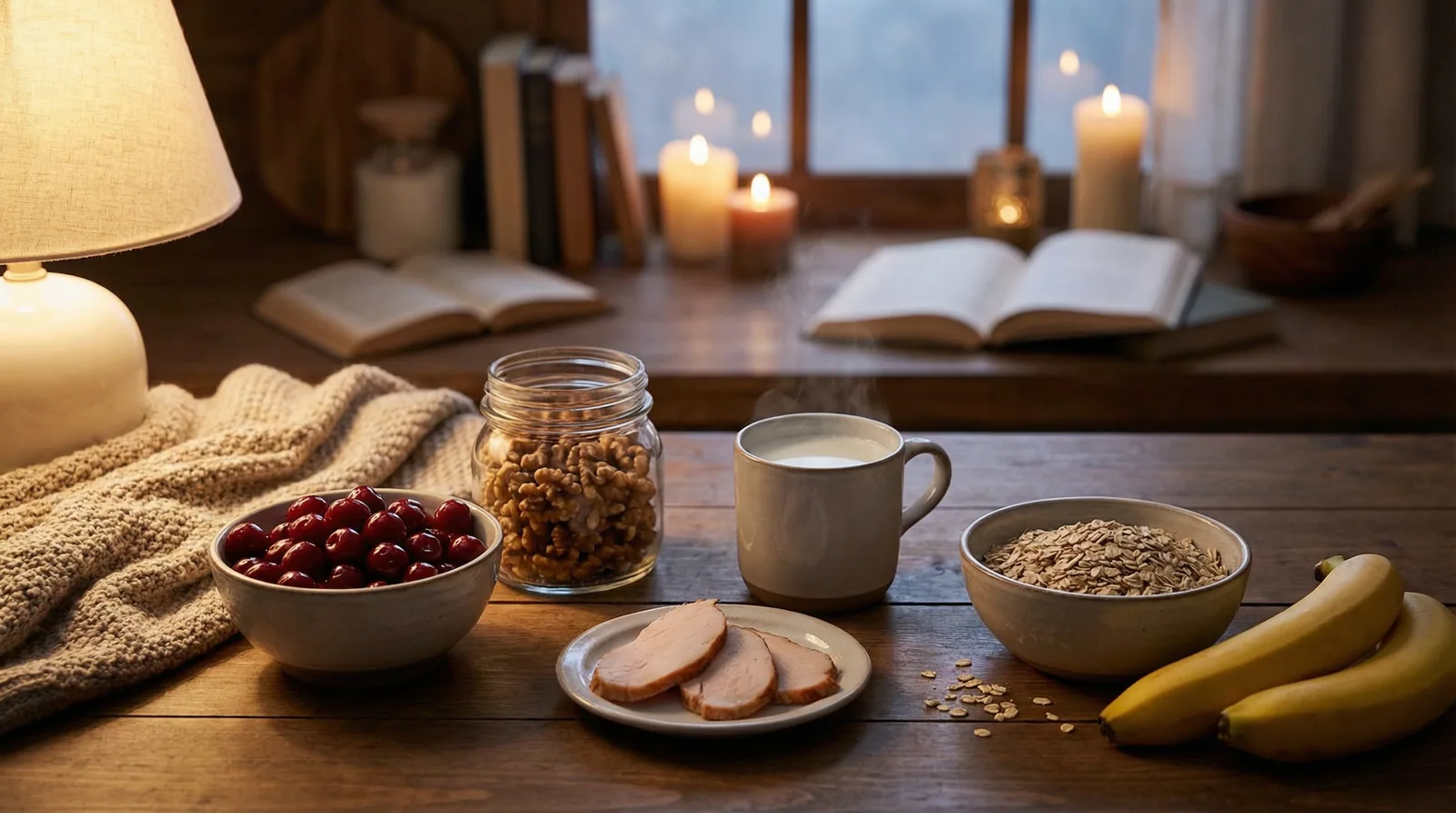
- Tart cherries (and tart cherry juice)
- Walnuts
- Tomatoes
- Grapes
- Rice
- Barley
- Rolled oats
Indirect Support Foods
Foods that support the production pathway:
- Fatty fish (omega-3s support sleep)
- Kiwi fruit (shown to improve sleep)
- Bananas (B6 and magnesium)
- Almonds (magnesium)
- Turkey (tryptophan)
Gut Health for Melatonin
Support the Gut-Melatonin Axis
Fiber:
- Feeds bacteria that support serotonin production
- Diverse fiber sources
- Supports overall gut health
Prebiotic foods:
- Specific bacteria stimulate serotonin
- Onions, garlic, asparagus
- Jerusalem artichokes
Probiotics:
- May support serotonin production
- Overall gut health helps
- Certain strains being researched for sleep
Avoid Gut Disruptors
Alcohol:
- Disrupts sleep architecture
- Impairs melatonin production
- Damages gut microbiome
- Avoid, especially near bedtime
Late caffeine:
- Suppresses melatonin
- Avoid after noon (or earlier for sensitive individuals)
- Remember hidden sources
Gut irritants:
- Foods that cause personal digestive upset
- Eating too close to bedtime
- Very spicy or acidic foods at night
Melatonin Supplementation
If considering supplements:
Start low:
- 0.5-1mg often sufficient
- Higher isn't necessarily better
- Start 30-60 minutes before bed
Time-release options:
- For staying asleep
- Mimic natural production
- Work with healthcare provider
Address root causes:
- Supplements don't fix underlying issues
- Support natural production first
- Use supplements as temporary bridge
Building Better Melatonin Production
Supporting melatonin through the gut-brain axis involves:
- Consuming tryptophan-rich foods regularly
- Ensuring cofactor nutrients (B6, magnesium)
- Supporting gut bacteria that enhance serotonin
- Respecting light/dark cycles for circadian support
- Timing meals appropriately to not suppress evening melatonin
- Maintaining gut health as foundation for the pathway
Most people notice improvements in sleep onset within 1-2 weeks of circadian and dietary interventions. Optimizing the gut's role in melatonin production is a longer process that develops over 4-8 weeks of consistent gut-supporting practices.
Supporting Practices
Evidence-based strategies to support this benefit:
- Get morning sunlight exposure to set circadian rhythm
- Consume tryptophan-rich foods like turkey and eggs
- Dim lights and avoid screens 1-2 hours before bed
- Eat dinner at least 3 hours before sleep
- Include magnesium-rich foods like leafy greens
- Maintain consistent sleep and wake times
Frequently Asked Questions
What is Enhanced Melatonin Production?
Support your body's natural melatonin synthesis through gut microbiome optimization for better sleep onset and quality.
How does the microbiome support enhanced melatonin production?
Your gut microbiome plays a crucial role in enhanced melatonin production through various mechanisms involving specific beneficial bacteria and their metabolites.
Which microbes are important for enhanced melatonin production?
Key beneficial microbes include: Enterochromaffin cells support, Lactobacillus species, Bifidobacterium species, Enterococcus species.
References
- Chen CQ, Fichna J, Bashashati M, et al.. Distribution, function and physiological role of melatonin in the lower gut. World Journal of Gastroenterology. 2011;17(34):3888-3898. doi:10.3748/wjg.v17.i34.3888 ↩
- Paulose JK, Wright JM, Patel AG, Cassone VM. Human gut bacteria are sensitive to melatonin and express endogenous circadian rhythmicity. PLoS One. 2016;11(1):e0146643. doi:10.1371/journal.pone.0146643 ↩
- Gao T, Wang Z, Dong Y, et al.. Role of Melatonin in Sleep Deprivation-Induced Intestinal Barrier Dysfunction in Mice. Journal of Pineal Research. 2019;67(1):e12574. doi:10.1111/jpi.12574 ↩