

Improved Circadian Rhythm Support
Strengthen your body's internal clock through gut microbiome optimization for consistent, restorative sleep patterns.
Key Supporting Microbes
These beneficial microorganisms play key roles in supporting this health benefit:
Your Bacteria Have a Schedule Too
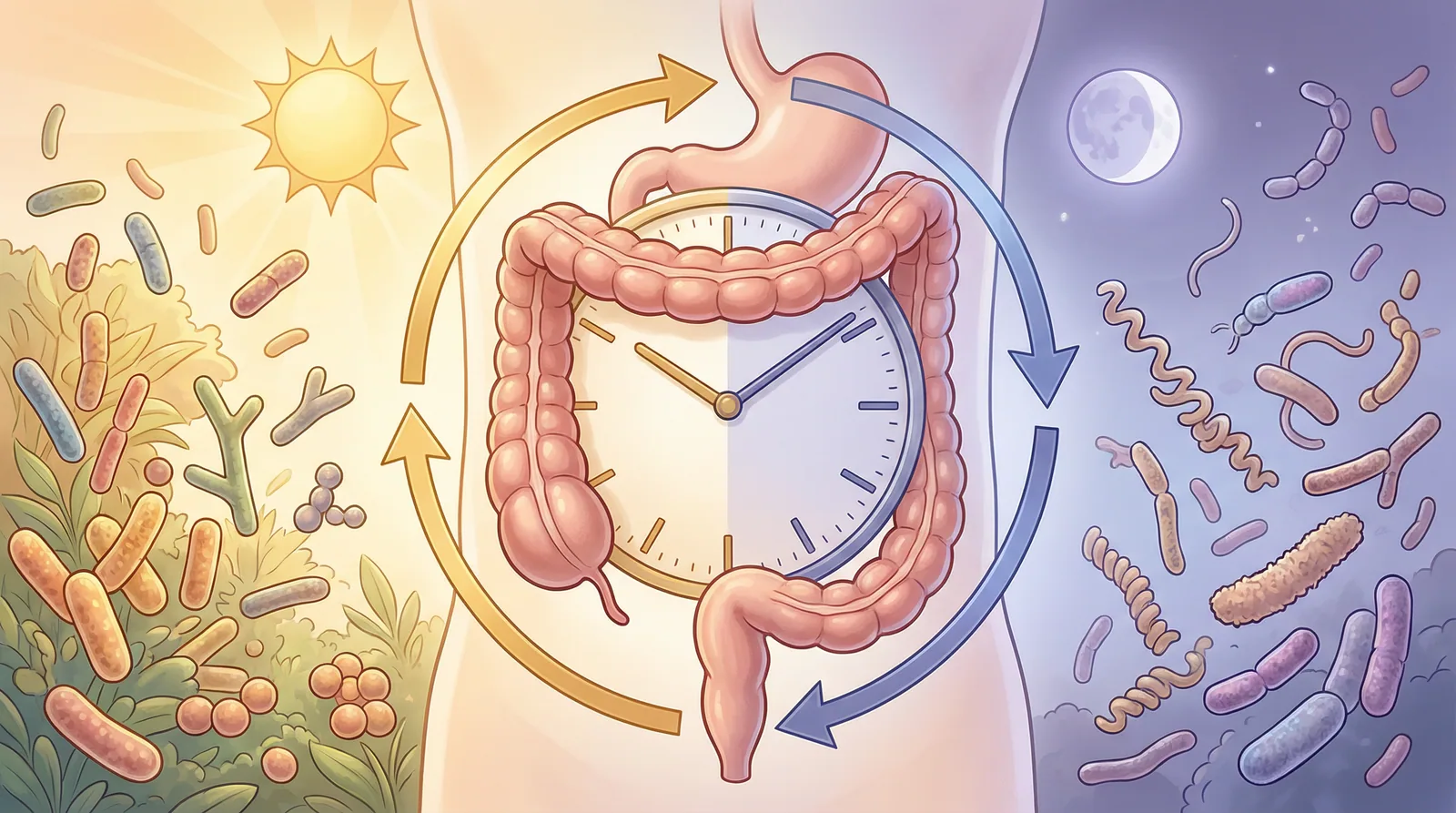
Your gut bacteria don't just exist in a static state—they follow their own circadian rhythms. Different species rise and fall in abundance throughout the day, and their activities shift in sync with day-night cycles. This bacterial clock interacts with your body's master clock, creating a bidirectional relationship that profoundly affects sleep quality.[1]
Understanding and supporting these microbial rhythms is a new frontier in sleep optimization.
The Microbiome's Circadian Dance
Bacterial Oscillations
Your gut bacteria fluctuate predictably:[2]
Daytime patterns:
- Certain bacteria more abundant/active during day
- These may support energy metabolism
- Activity peaks during feeding times
Nighttime patterns:
- Different species become more prominent
- Support repair and regeneration processes
- Prepare gut for next day's activities
What drives the rhythm:
- Feeding timing is major signal
- Light-dark cycles (indirect)
- Host circadian hormones
- Activity patterns
The Two-Way Relationship
The microbiome-circadian connection is bidirectional:[3]
Your clock affects bacteria:
- Meal timing signals bacterial rhythms
- Circadian hormones influence microbiome
- Activity patterns shape gut environment
Bacteria affect your clock:
- Bacterial metabolites influence circadian genes
- SCFAs affect peripheral clocks
- Disrupted microbiome disrupts circadian function
When Rhythms Are Disrupted
Circadian Disruption Harms Microbiome
Research shows circadian disruption damages gut bacteria:[3]
Shift work:
- Significantly alters microbiome composition
- Associated with increased inflammation
- Higher risk of metabolic disorders
- Gut problems common in shift workers
Jet lag:
- Temporarily disrupts microbial rhythms
- May take days for bacteria to readjust
- Contributes to jet lag digestive symptoms
Irregular schedules:
- Eating at varying times
- Inconsistent sleep-wake times
- Creates chronic low-grade disruption
Microbiome Disruption Impairs Circadian Function
The reverse is also true:
Dysbiosis effects:
- Can alter circadian gene expression
- May impair melatonin production
- Affects host metabolic rhythms
- Disrupts sleep patterns
High-fat diet:[2]
- Eliminates normal bacterial oscillations
- Disrupts circadian function even with normal light-dark exposure
- Shows importance of diet for rhythm maintenance
Signs of Circadian Disruption
Your rhythms may be off if you experience:
- Difficulty falling asleep at consistent time
- Not feeling alert in the morning
- Energy crashes at unexpected times
- Appetite at unusual hours
- Mood fluctuations throughout day
- Difficulty adjusting to time changes
- "Night owl" or "early bird" extremes
- Social jet lag (weekend schedule different from weekday)
Supporting Circadian-Microbiome Harmony
Light Exposure
Light is the master clock setter:
Morning bright light:
- Critical for setting daily rhythm
- 15-30 minutes within first hour of waking
- Natural sunlight is ideal
- Light therapy lamps if needed
Evening dim light:
- Signals approaching sleep time
- Dim lights 2-3 hours before bed
- Reduce blue light exposure
- Create dark sleeping environment
Meal Timing
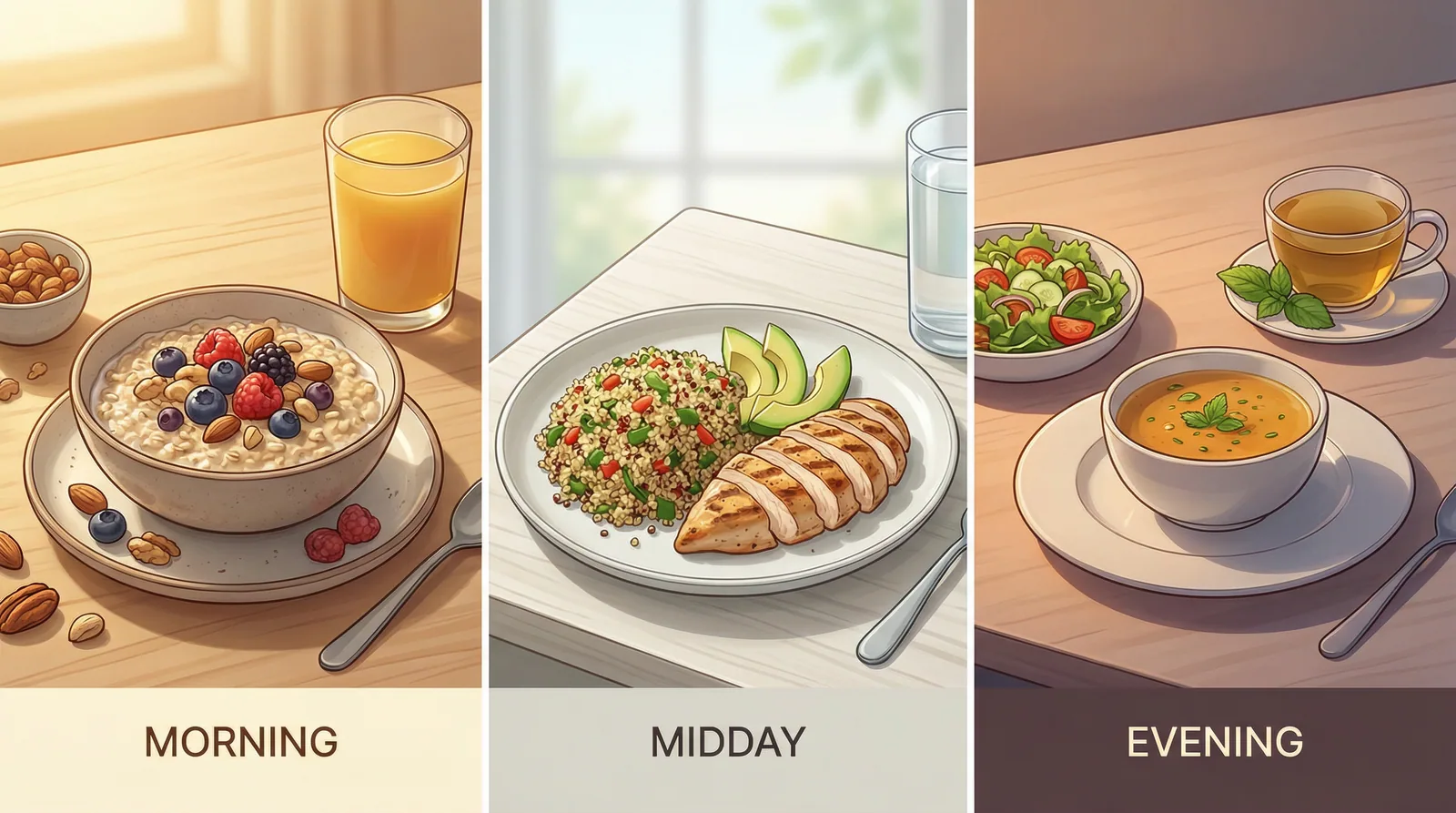
Eating patterns strongly signal circadian systems:
Consistent meal times:
- Eat at same times daily
- Major signal for peripheral clocks
- Directly affects bacterial rhythms
Time-restricted eating:
- Confine eating to 8-12 hour window
- Aligns with natural circadian patterns
- Gives gut time to rest overnight
- Supports microbial rhythms
Early dinner:
- Eat at least 3 hours before bed
- Better for metabolic health
- Aligns with natural patterns
- Allows microbiome to shift to night mode
Sleep Schedule Consistency
Regular sleep-wake patterns:
Same wake time daily:
- Most important factor
- Yes, including weekends
- Anchors the rest of the schedule
Consistent bedtime:
- Within 30 minutes each night
- Creates predictable pattern
- Supports bacterial rhythms
Exercise Timing
Physical activity affects rhythms:
Morning or afternoon best:
- Reinforces daytime alertness
- Helps anchor circadian rhythm
Avoid late intense exercise:
- Can delay sleep onset
- Shifts body temperature rhythm
- Gentle evening movement okay

Dietary Strategies for Circadian Support
Foods That Support Rhythms
High-fiber foods:
- Support healthy bacterial oscillations
- Different fibers feed different bacteria
- Consume earlier in the day when possible
Fermented foods:
- Support overall microbiome health
- Include regularly
- May help maintain bacterial diversity
Tryptophan-rich proteins:
- Support evening melatonin production
- Turkey, eggs, dairy
- Can include at dinner
Foods to Time Carefully
Caffeine:
- Avoid after noon (or earlier)
- Disrupts sleep architecture
- Shifts circadian timing
Alcohol:
- Disrupts sleep rhythms
- Affects bacterial patterns
- Avoid near bedtime
Heavy, late meals:
- Interfere with night patterns
- Keep dinner moderate
- Allow digestion time
Special Considerations
Shift Workers
Extra attention needed:
- Maintain meal timing as consistent as possible
- Support gut health particularly well
- Light exposure management critical
- Consider melatonin strategically
- Work with healthcare provider
Frequent Travelers
Jet lag recovery:
- Adjust meal times to destination immediately
- Light exposure at new location's appropriate times
- Support microbiome during travel
- Probiotics may help
- Allow extra recovery time
Night Owls
For natural late chronotypes:
- Work with your natural tendency when possible
- If schedule requires change, shift gradually
- Light exposure particularly important
- Meal timing can help shift phase
Building Better Circadian Support
Supporting circadian rhythms through the microbiome involves:
- Maintaining consistent sleep-wake times daily
- Timing meals predictably with earlier dinner
- Using light strategically (bright AM, dim PM)
- Supporting gut bacteria that maintain healthy oscillations
- Avoiding circadian disruptors (late eating, irregular schedules)
- Exercising at consistent times preferably earlier in day
Most people notice improved sleep timing and quality within 2-3 weeks of consistent circadian practices. Fully re-establishing disrupted rhythms (like after long-term shift work) may take several months of dedicated attention to timing cues.
Supporting Practices
Evidence-based strategies to support this benefit:
- Wake at the same time every day, including weekends
- Get bright light exposure within 30 minutes of waking
- Eat meals at consistent times to set peripheral clocks
- Avoid eating within 3 hours of bedtime
- Reduce light exposure in the evening
- Maintain regular exercise timing
Frequently Asked Questions
What is Improved Circadian Rhythm Support?
Strengthen your body's internal clock through gut microbiome optimization for consistent, restorative sleep patterns.
How does the microbiome support improved circadian rhythm support?
Your gut microbiome plays a crucial role in improved circadian rhythm support through various mechanisms involving specific beneficial bacteria and their metabolites.
Which microbes are important for improved circadian rhythm support?
Key beneficial microbes include: Lactobacillus reuteri, Bifidobacterium species, Akkermansia muciniphila, Bacteroides species.
References
- Thaiss CA, Zeevi D, Levy M, et al.. Transkingdom control of microbiota diurnal oscillations promotes metabolic homeostasis. Cell. 2014;159(3):514-529. doi:10.1016/j.cell.2014.09.048 ↩
- Leone V, Gibbons SM, Martinez K, et al.. Effects of diurnal variation of gut microbes and high-fat feeding on host circadian clock function and metabolism. Cell Host & Microbe. 2015;17(5):681-689. doi:10.1016/j.chom.2015.03.006 ↩
- Voigt RM, Forsyth CB, Green SJ, et al.. Circadian disorganization alters intestinal microbiota. PLoS One. 2014;9(5):e97500. doi:10.1371/journal.pone.0097500 ↩