

Corynebacterium diphtheriae
Corynebacterium diphtheriae is a Gram-positive, non-spore-forming, non-motile, pleomorphic rod-shaped bacterium that is the causative agent of diphtheria, a serious respiratory disease. The name "diphtheria" is derived from the Greek word "diphtheria" meaning "leather hide," referring to the characteristic pseudomembrane that forms in the throat of infected individuals.
Key Characteristics
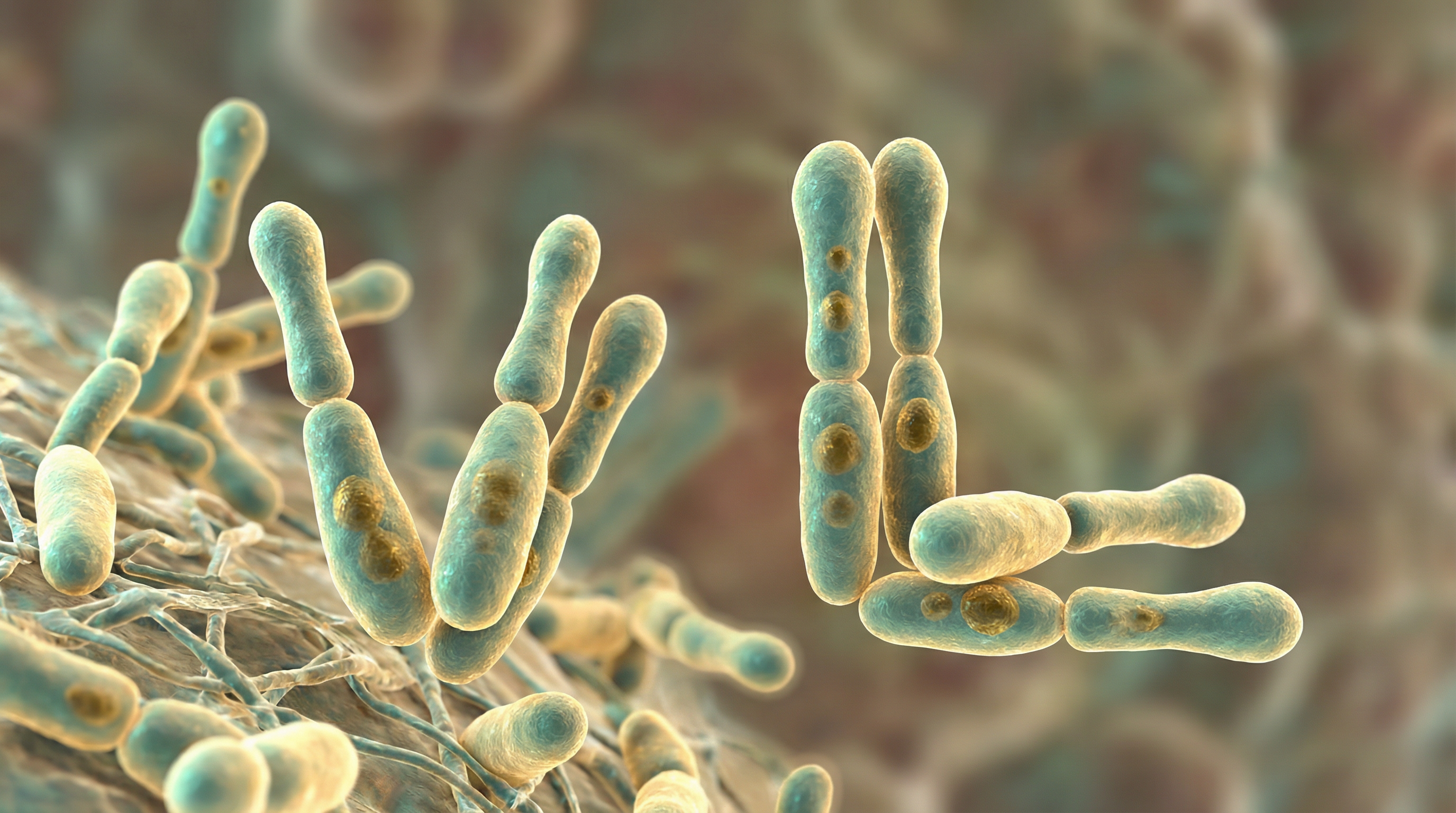
C. diphtheriae is characterized by its distinctive morphology, often described as club-shaped or "coryne-form" (from Greek koryne, meaning "club"). When stained with methylene blue, the bacteria display metachromatic granules (Babes-Ernst bodies) due to the presence of polyphosphate. The bacterium forms characteristic arrangements resembling Chinese letters or palisades when viewed under a microscope.
Four biotypes of C. diphtheriae have been identified based on colony morphology and biochemical properties: gravis, mitis, intermedius, and belfanti. These biotypes differ in their virulence and geographical distribution, with gravis and mitis being the most commonly associated with severe disease outbreaks.
The bacterium can be cultured on selective media such as Löffler's serum medium or tellurite-containing media, where it produces distinctive black colonies due to the reduction of potassium tellurite. C. diphtheriae is catalase-positive, oxidase-negative, and can ferment glucose without gas production.
Role in the Human Microbiome
C. diphtheriae is not considered a normal component of the healthy human microbiome. Rather, it is a transient colonizer of the upper respiratory tract and occasionally the skin. In vaccinated populations, carriage rates are extremely low. However, in unvaccinated communities or regions with poor vaccination coverage, asymptomatic carriage can occur, serving as a reservoir for potential outbreaks.
The bacterium primarily colonizes the nasopharynx and throat, where it can compete with the normal respiratory flora. Cutaneous colonization can occur in tropical regions or in conditions of poor hygiene, leading to skin infections that may serve as a reservoir for respiratory transmission.
Health Implications
Detrimental Effects
C. diphtheriae is primarily known for causing diphtheria, a potentially life-threatening disease characterized by:
- Formation of a tough, grayish pseudomembrane in the throat that can cause airway obstruction
- Systemic toxicity due to the production of diphtheria toxin
- Myocarditis (inflammation of the heart muscle)
- Peripheral neuropathy
- Nephritis
The pathogenicity of C. diphtheriae is largely dependent on lysogenic conversion by a specific bacteriophage (corynephage beta) that carries the tox gene encoding diphtheria toxin. Non-toxigenic strains can cause milder infections but do not produce the characteristic systemic effects of diphtheria.
In recent years, non-toxigenic C. diphtheriae has been increasingly recognized as a cause of invasive infections, including:
- Endocarditis
- Septic arthritis
- Osteomyelitis
- Splenic abscesses
- Septicemia
These infections demonstrate that C. diphtheriae possesses virulence factors beyond the diphtheria toxin that enable tissue invasion and persistence.
Beneficial Effects
There are no known beneficial effects of C. diphtheriae colonization in humans. Unlike many other members of the human microbiome, this bacterium is not associated with any positive contributions to host health or immunity.
Metabolic Activities
C. diphtheriae is a facultative anaerobe with relatively simple metabolic requirements. Key metabolic features include:
- Utilization of glucose and other carbohydrates through fermentative pathways
- Production of acid but not gas from carbohydrate metabolism
- Inability to metabolize lactose
- Catalase production
- Urease activity (variable among strains)
- Nitrate reduction
- Cystinase activity
The bacterium possesses several iron acquisition systems that are crucial for its virulence, as iron limitation is a key host defense mechanism. These systems include siderophores and heme-binding proteins that enable C. diphtheriae to compete for limited iron in the human host.
Interestingly, iron availability also regulates toxin production, with low iron conditions enhancing toxin expression through the diphtheria toxin repressor (DtxR) protein, which acts as an iron-dependent transcriptional regulator.
Clinical Relevance
The clinical significance of C. diphtheriae stems primarily from its role as the causative agent of diphtheria. Diphtheria was once a major cause of childhood mortality worldwide but has been largely controlled in developed countries through widespread vaccination.
Diphtheria toxin, the primary virulence factor, is an AB toxin consisting of:
- Fragment A: The enzymatically active domain that inhibits protein synthesis by ADP-ribosylation of elongation factor 2
- Fragment B: The binding domain that facilitates entry into host cells
This toxin mechanism results in cell death and tissue damage, particularly affecting the heart, kidneys, and nervous system.
Diagnosis of C. diphtheriae infections involves:
- Culture on selective media
- Biochemical identification
- Toxigenicity testing (Elek test or PCR for the tox gene)
- MALDI-TOF mass spectrometry for rapid identification
Treatment typically includes:
- Prompt administration of diphtheria antitoxin to neutralize circulating toxin
- Antibiotics (penicillin or erythromycin) to eliminate the bacteria
- Supportive care for complications
- Isolation to prevent transmission
Prevention relies heavily on vaccination with diphtheria toxoid, typically administered as part of combination vaccines (DTaP, Tdap, DT, Td). Vaccination provides protection against the effects of the toxin but does not necessarily prevent colonization with the bacterium.
Interaction with Other Microorganisms
C. diphtheriae interacts with other microorganisms in several ways:
- Competition with normal respiratory flora for nutrients and attachment sites
- Acquisition of the tox gene through bacteriophage infection, demonstrating the importance of horizontal gene transfer in bacterial pathogenesis
- Potential synergistic infections with other respiratory pathogens, particularly in cases of cutaneous diphtheria
The bacterium can form biofilms, which may enhance its persistence in the environment and resistance to antimicrobial agents. This biofilm formation capability may also facilitate co-infection with other biofilm-forming bacteria.
Research has shown that C. diphtheriae possesses several adhesins and invasins that mediate attachment to host cells and subsequent invasion. These factors, including pili and surface-associated proteins, may also play a role in interactions with other microorganisms in polymicrobial communities.
Despite significant progress in controlling diphtheria through vaccination, C. diphtheriae remains a pathogen of concern, particularly in regions with inadequate vaccination coverage. Continued surveillance and research are essential to monitor for the emergence of toxigenic strains, antibiotic resistance, and changes in the epidemiology of this important human pathogen.