

Prevotella melaninogenica
Prevotella melaninogenica is a Gram-negative, obligate anaerobic, rod-shaped bacterium belonging to the phylum Bacteroidetes. It is the type species of the genus Prevotella and is recognized as one of the core anaerobic bacteria in the human oral microbiome. P. melaninogenica is notable for its ability to produce a brown to black pigment when grown on blood agar, a characteristic that historically helped distinguish it from non-pigmented Prevotella species. This organism plays important roles as a commensal in the oral cavity but can also contribute to various pathological conditions when present in dysbiotic communities or at extra-oral sites.
Key Characteristics
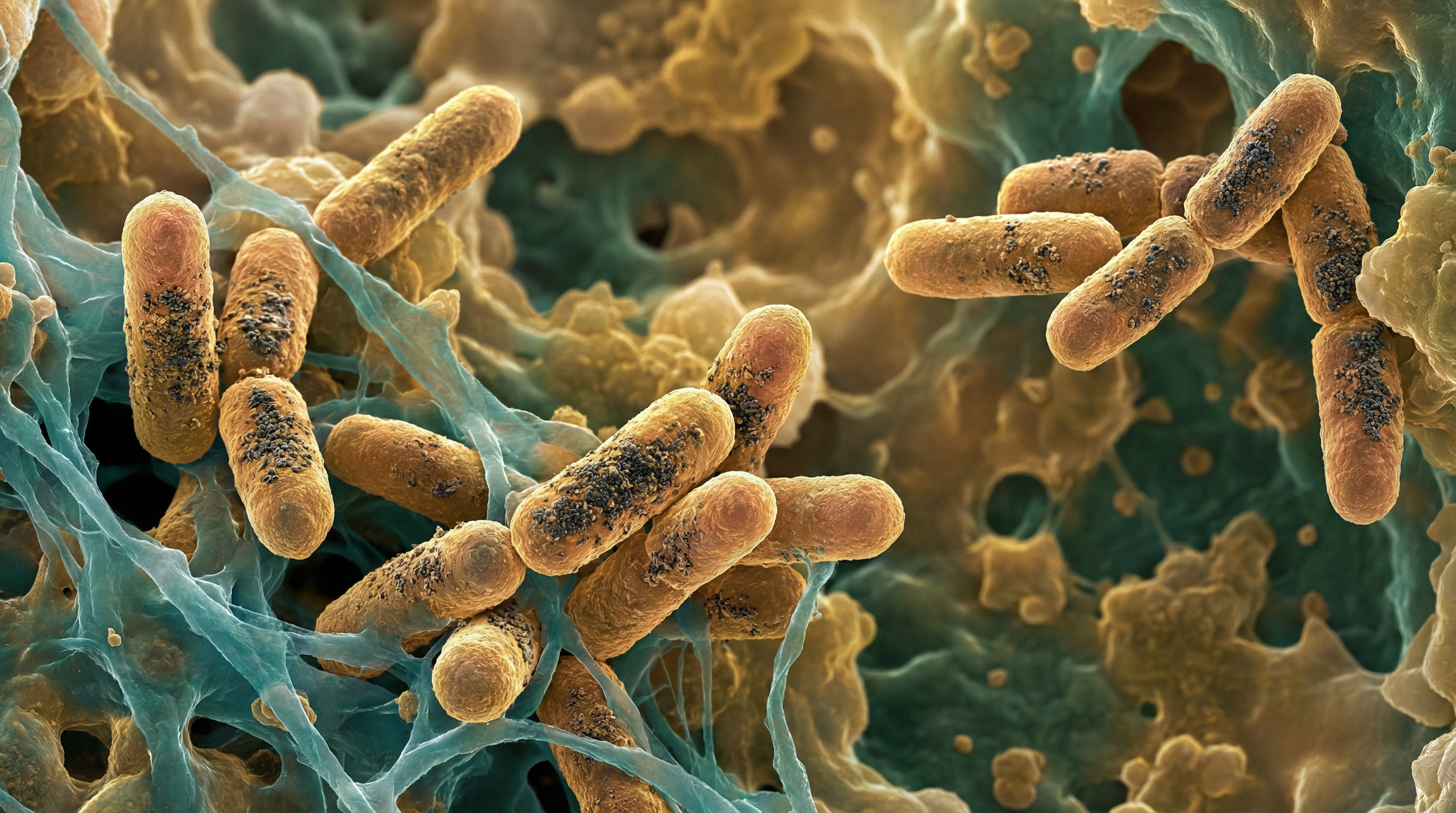
P. melaninogenica is characterized by its strictly anaerobic metabolism, Gram-negative cell wall structure, and short rod-shaped morphology. As the type species of the Prevotella genus, it exemplifies the moderately saccharolytic and bile-susceptible nature that distinguishes Prevotella from other related genera like Bacteroides.
One of the most distinctive features of P. melaninogenica is its ability to produce a brown to black pigment when grown on blood agar, although the intensity of this pigmentation can vary. This pigmentation is less intense than that produced by some other pigmented oral anaerobes like Porphyromonas gingivalis.
P. melaninogenica is non-motile and does not form spores. It ferments carbohydrates to produce various end products, including acetic, succinic, and lactic acids. The organism possesses various virulence factors, including adhesins that facilitate attachment to host tissues and enzymes that can degrade host proteins.
Taxonomically, P. melaninogenica has undergone several reclassifications. It was originally classified as Bacteroides melaninogenicus before being reclassified as Prevotella melaninogenica in 1990 when the genus Prevotella was created to accommodate moderately saccharolytic and bile-susceptible Bacteroides species, most of which were isolated from the oral cavity.
Role in the Human Microbiome
P. melaninogenica primarily inhabits the human oral cavity, where it is among the earliest anaerobic colonizers, establishing itself from the early months of life onward. It is particularly abundant in saliva and on the dorsum and lateral sites of the tongue. In healthy adults, detection rates of Prevotella organisms, including P. melaninogenica, are high in saliva and dental plaque.
Beyond the oral cavity, P. melaninogenica can also be found in other parts of the human body:
Gastrointestinal tract: Through constant saliva swallowing (approximately 1.5 L daily), P. melaninogenica and other oral bacteria can be translocated to the digestive tract. Those that survive the acidic environment of the stomach can reach the small intestine and colon.
Respiratory tract: P. melaninogenica can access the lower airways through microaspiration and is considered one of the major genera colonizing mucosal surfaces of the aerodigestive tract, including the lungs.
In these various habitats, P. melaninogenica functions primarily as a commensal organism, contributing to the normal microbiota. However, its ecological role can shift depending on environmental conditions, host factors, and the composition of the surrounding microbial community.
The distribution of P. melaninogenica across body sites highlights its adaptability to different microenvironments within the human body. Its presence in multiple interconnected habitats (oral, respiratory, and gastrointestinal) underscores the concept of the "oral-gut-lung axis" in human health and disease.
Health Implications
Beneficial Effects
As a commensal organism in the oral cavity, P. melaninogenica contributes to the normal microbiota and may play roles in:
Maintaining microbial homeostasis: By occupying ecological niches, it may help prevent colonization by more pathogenic organisms.
Immune system education: Like other commensals, it likely contributes to the development and regulation of the host immune system.
Metabolic functions: It participates in the breakdown of complex carbohydrates and other nutrients, potentially contributing to local nutrient cycling.
Potential Negative Effects
Despite its role as a commensal, P. melaninogenica can be associated with various pathological conditions:
Oral diseases: While not among the primary periodontal pathogens, P. melaninogenica can be part of dysbiotic communities associated with periodontal diseases and other oral infections.
Respiratory infections: When aspirated into the lower respiratory tract, P. melaninogenica can contribute to various respiratory infections, including pneumonia, lung abscesses, and empyema, particularly in immunocompromised individuals.
Gastrointestinal disorders: Although less well-studied, there is evidence suggesting that oral Prevotella species, including P. melaninogenica, may play a role in certain gastrointestinal disorders when they reach the gut in significant numbers.
Systemic infections: In rare cases, P. melaninogenica can cause systemic infections, including bacteremia, especially in immunocompromised hosts or following invasive dental procedures.
Potential role in cancer: Some research has suggested associations between P. melaninogenica and oral squamous cell carcinoma, where it may influence gene expression in cancer cells.
The pathogenic potential of P. melaninogenica is generally considered lower than that of some other oral anaerobes, such as Porphyromonas gingivalis. However, its ability to participate in polymicrobial infections and biofilms makes it a clinically relevant organism in various disease contexts.
Metabolic Activities
P. melaninogenica possesses a moderately saccharolytic metabolism, which is one of the defining characteristics that led to the creation of the Prevotella genus. Its key metabolic activities include:
Carbohydrate fermentation: It can ferment various carbohydrates, producing short-chain fatty acids as end products, primarily acetic, succinic, and lactic acids.
Protein degradation: While less proteolytic than some other oral anaerobes, P. melaninogenica possesses enzymes that can degrade certain host proteins.
Pigment production: The characteristic brown to black pigmentation is related to its ability to process heme compounds, although the exact biochemical pathways and the adaptive significance of this pigmentation are not fully understood.
Adaptation to microaerophilic conditions: Although classified as an obligate anaerobe, P. melaninogenica shows some tolerance to microaerophilic conditions, which may contribute to its ability to colonize various niches within the human body.
Biofilm formation: P. melaninogenica can participate in the formation of multispecies biofilms, which are complex microbial communities embedded in an extracellular matrix. This ability is crucial for its persistence in the oral cavity and potentially at other body sites.
These metabolic capabilities allow P. melaninogenica to thrive in the nutrient-rich environment of the oral cavity and to adapt to other body sites when translocated.
Clinical Relevance
The clinical significance of P. melaninogenica stems from its potential involvement in various infectious and inflammatory conditions:
Periodontal diseases: While not considered a primary periodontal pathogen, P. melaninogenica can be part of the complex microbial communities associated with gingivitis and periodontitis.
Respiratory infections: P. melaninogenica is among the anaerobic bacteria that can cause aspiration pneumonia, lung abscesses, and empyema, particularly in individuals with poor oral hygiene, dysphagia, or compromised immune systems.
Head and neck infections: It can be isolated from various head and neck infections, including sinusitis, otitis media, and deep neck space infections.
Gastrointestinal disorders: There is emerging evidence suggesting potential roles for oral Prevotella species, including P. melaninogenica, in certain gastrointestinal disorders when they reach the gut in significant numbers.
Systemic infections: In rare cases, P. melaninogenica can enter the bloodstream and cause bacteremia or contribute to distant site infections, especially in immunocompromised individuals.
From a diagnostic perspective, the identification of P. melaninogenica in clinical specimens has been facilitated by molecular methods, which have largely replaced traditional culture-based approaches. These molecular techniques have improved our understanding of the prevalence and distribution of P. melaninogenica in both health and disease.
Therapeutically, P. melaninogenica is generally susceptible to various antibiotics, including metronidazole, which is often used to treat anaerobic infections. However, there are reports of increasing antibiotic resistance among Prevotella species, highlighting the importance of antimicrobial susceptibility testing in clinical settings.
Interaction with Other Microorganisms
P. melaninogenica engages in complex interactions with other members of the human microbiome:
Synergistic relationships: It can form synergistic relationships with other oral bacteria, such as Streptococcus species, in biofilm formation and nutrient exchange.
Competitive interactions: Like other members of the oral microbiome, P. melaninogenica likely competes with other bacteria for nutrients and ecological niches.
Polymicrobial infections: P. melaninogenica is often isolated as part of polymicrobial infections, suggesting that it can cooperate with other microorganisms in pathogenic processes.
Influence on microbial succession: As an early colonizer of the oral cavity, P. melaninogenica may influence the subsequent colonization and establishment of other microbial species.
Cross-feeding relationships: Metabolic by-products of P. melaninogenica may serve as nutrients for other microorganisms, establishing cross-feeding networks within microbial communities.
These interactions contribute to the complex ecological dynamics of the microbiomes in which P. melaninogenica resides and may influence its transition from commensal to pathogen under certain conditions.
Research Significance
P. melaninogenica has been the subject of various research efforts due to its significance in human health and disease:
Taxonomic studies: As the type species of the Prevotella genus, P. melaninogenica has been central to taxonomic revisions and the description of new Prevotella species.
Microbiome research: It is frequently identified in microbiome studies of the oral cavity, respiratory tract, and gastrointestinal tract, contributing to our understanding of the composition and function of these microbial communities.
Pathogenesis studies: Research on the virulence factors and pathogenic mechanisms of P. melaninogenica has provided insights into its potential roles in various infectious and inflammatory conditions.
Oral-systemic connections: Studies on P. melaninogenica and other oral bacteria have contributed to our understanding of the connections between oral health and systemic conditions.
Antimicrobial resistance: Monitoring of antibiotic resistance patterns in P. melaninogenica and other Prevotella species has implications for the clinical management of infections caused by these organisms.
Despite these research efforts, many aspects of P. melaninogenica biology and its roles in health and disease remain to be fully elucidated. Future research directions may include more detailed investigations of its metabolic capabilities, virulence mechanisms, interactions with the host immune system, and potential roles in various systemic conditions.
In conclusion, Prevotella melaninogenica is a significant member of the human oral microbiome with potential implications for health and disease at various body sites. Its ability to function as both a commensal and a potential pathogen, depending on the context, highlights the complex and dynamic nature of host-microbe interactions in the human body. As research in this field continues to advance, our understanding of P. melaninogenica and its roles in human health will likely continue to evolve.