

Arabinoxylan: Whole Grain Prebiotic
Arabinoxylan is a prebiotic fiber from whole grains that promotes diverse gut bacteria growth and supports metabolic health through sustained fermentation.
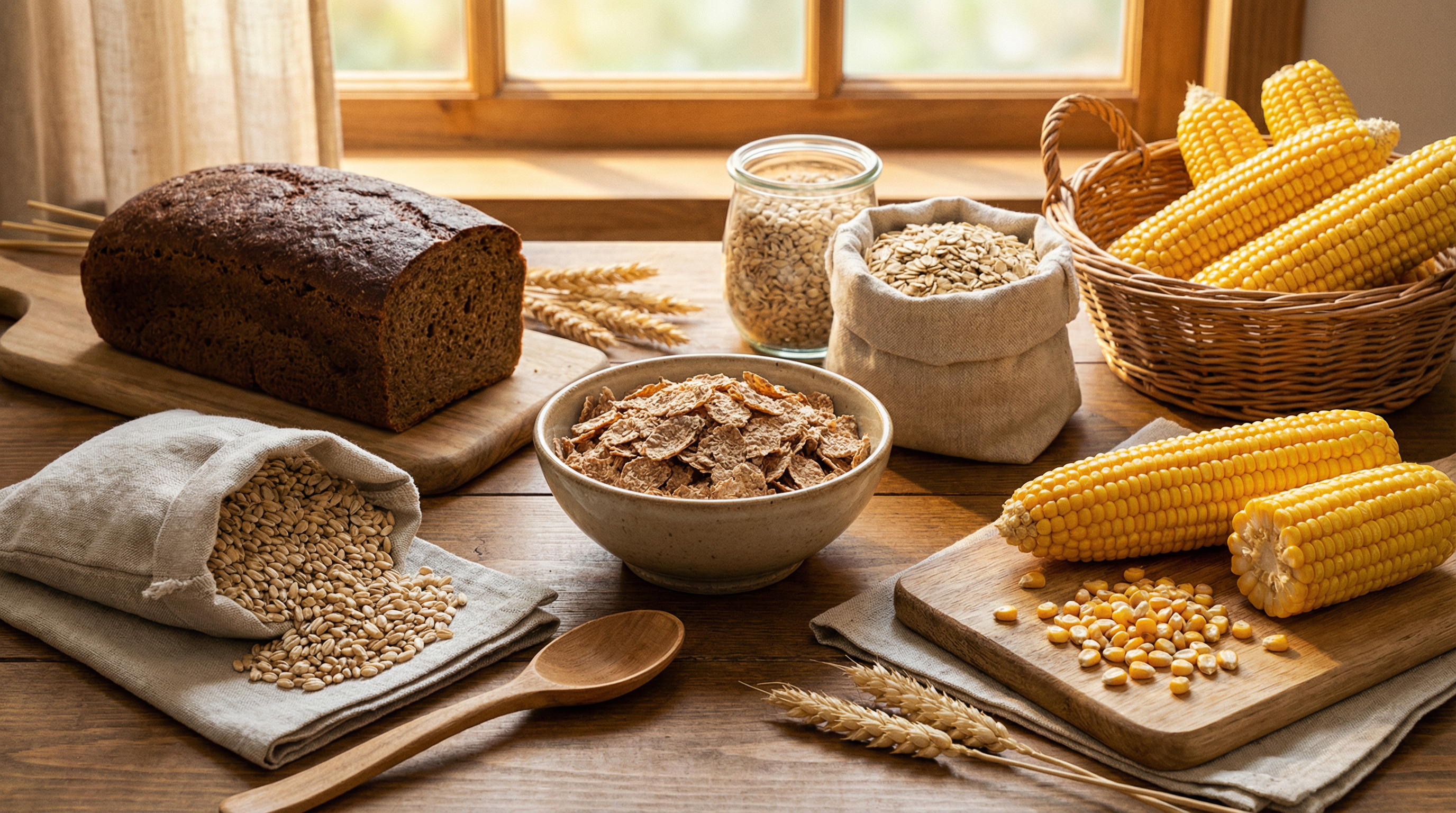
Food Sources
Naturally found in these foods:
Key Benefits
- Promotes diverse bacteria growth
- Supports butyrate production
- May improve metabolic markers
- Enhances immune function
- Supports gut barrier integrity
Bacteria This Prebiotic Feeds
This prebiotic selectively nourishes these beneficial microorganisms:
Overview
Arabinoxylan (AX) is a major hemicellulose found in the cell walls of cereal grains, representing a significant component of dietary fiber in whole grain foods[1]. Structurally composed of a xylose backbone with arabinose side chains, arabinoxylan and its oligosaccharide derivatives (AXOS) serve as important substrates for colonic fermentation. The fermentation of arabinoxylan supports a diverse range of beneficial gut bacteria and produces health-promoting short-chain fatty acids.
Structure and Sources
Chemical Structure
Arabinoxylan consists of:
- Backbone: β-1,4-linked D-xylose units
- Side chains: α-L-arabinose attached at C(O)-2 and/or C(O)-3 positions
- Substitution pattern: Varies by source, affects fermentation
- Ferulic acid: Often esterified to arabinose units
Structural Variations
| Property | Effect on Function |
|---|---|
| High substitution | Slower fermentation |
| Low substitution | Faster fermentation |
| Ferulic acid content | Antioxidant activity |
| Molecular weight | Fermentation rate |
Dietary Sources
Arabinoxylan content varies among grains:
- Wheat bran: 15-25% AX
- Rye: 8-12% AX
- Barley: 5-8% AX
- Corn: 5-7% AX
- Rice bran: 4-6% AX
- Oats: 2-4% AX
Mechanism of Action
Prebiotic Fermentation
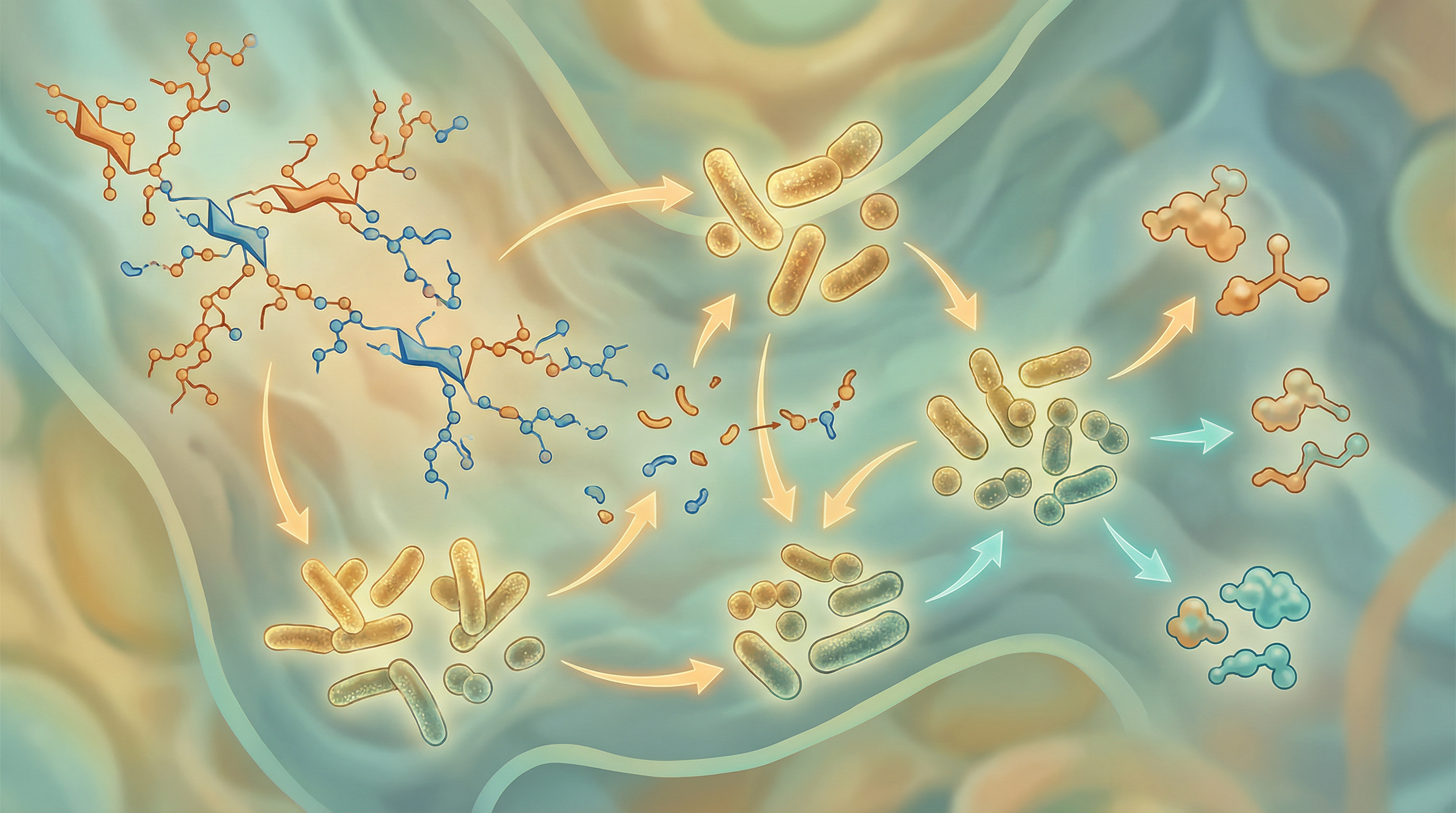
Arabinoxylan undergoes extensive fermentation in the colon[2]:
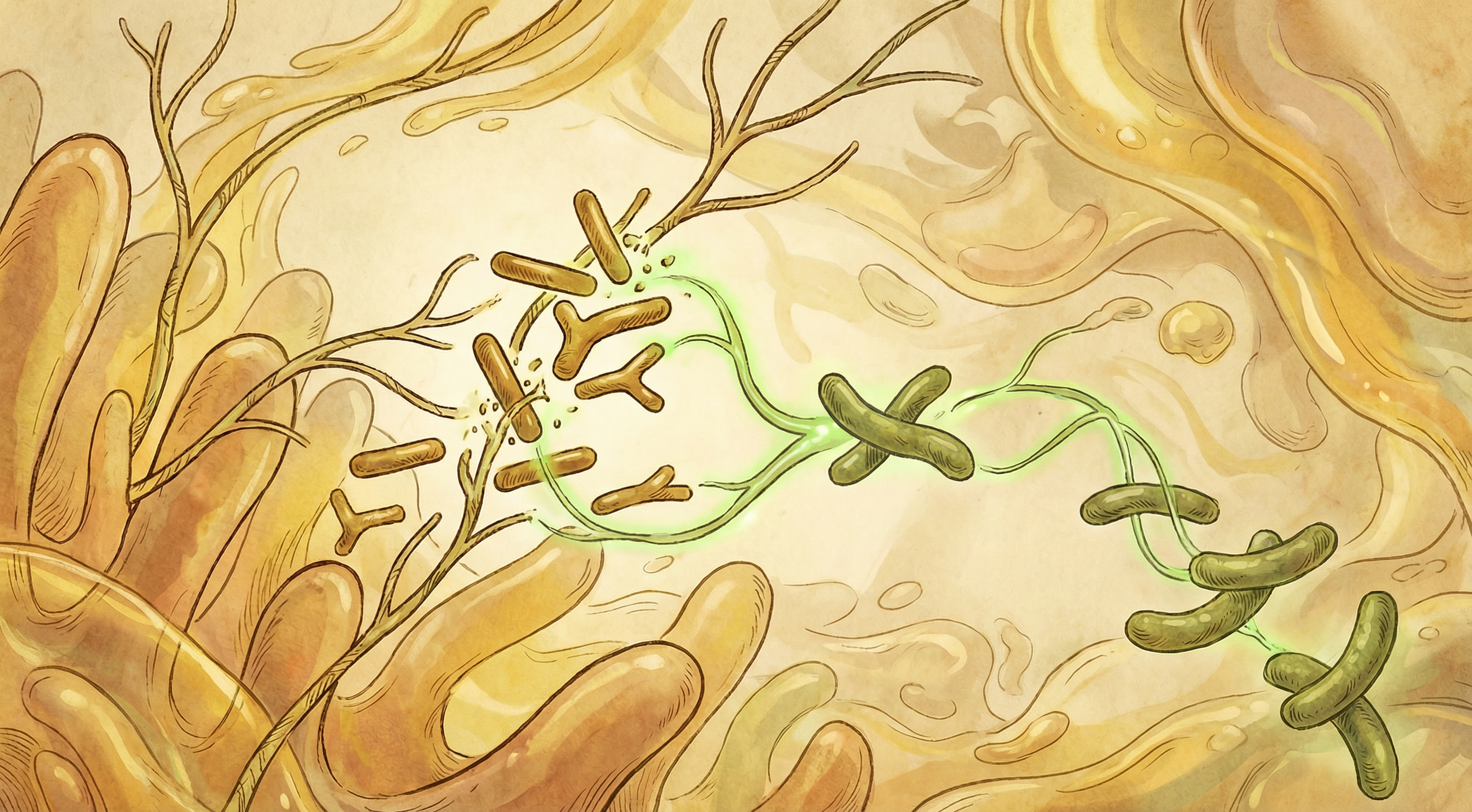
- Initial degradation: Bacteroides and Prevotella species initiate breakdown
- Cross-feeding: Degradation products become available to secondary fermenters
- Bifidobacterium utilization: Preferential use of AXOS
- Butyrate production: Via cross-feeding networks with Roseburia and Faecalibacterium
Studies using human gut simulators demonstrate that arabinoxylan oligosaccharides have distinct prebiotic effects compared to inulin, supporting different bacterial populations and fermentation patterns.
Sustained Fermentation
Unlike rapidly fermented prebiotics, arabinoxylan provides:
- Extended fermentation throughout the colon
- Sustained SCFA production
- Prebiotic effects in distal colon regions
- Support for diverse bacterial communities
Effects on Gut Microbiome
Animal Studies
Research in diet-induced obese mice demonstrated significant prebiotic effects[1]:
- Increased Bifidobacterium abundance
- Enhanced Roseburia populations
- Greater Bacteroides/Prevotella numbers
- Improved metabolic parameters
Human Studies
Clinical trials confirm arabinoxylan's prebiotic effects in humans:
François et al. (2012) found that wheat bran AXOS[3]:
- Increased fecal Bifidobacterium levels
- Enhanced SCFA production
- Improved gastrointestinal comfort
- Good tolerability at 10g daily
Damen et al. (2012) showed bread-based AXOS delivery[5]:
- Altered gastrointestinal effects
- Increased colonic fermentation
- Changes in breath hydrogen and SCFA profiles
- Practical food-based delivery feasible
Immune-Microbiome Interactions
Whole grain consumption, rich in arabinoxylan, has been linked to immunological improvements via microbiome changes[6]:
- Gut microbiome composition linked to immune responses
- Whole grain-induced changes in bacterial populations
- Enhanced immune function parameters
- Suggests AX contributes to whole grain health benefits
Health Benefits
Metabolic Health
Arabinoxylan demonstrates significant metabolic effects[4]:
Glycemic Control:
- Reduces postprandial glucose response
- Lowers peak blood glucose levels
- Improves glycemic variability
- Mechanism: Viscosity and delayed absorption
Weight Management:
- Enhanced satiety signaling
- May reduce body fat accumulation (animal studies)
- SCFA-mediated metabolic effects
- Supports healthy body composition
Gut Health
Arabinoxylan supports digestive health through:
- Prebiotic stimulation of beneficial bacteria
- Butyrate production for colonocyte health
- Enhanced gut barrier function
- Reduced intestinal inflammation
Immune Function
Whole grain arabinoxylan consumption is associated with[6]:
- Improved immune markers
- Reduced inflammatory cytokines
- Enhanced innate immunity
- Microbiome-mediated immune effects
Dosage and Sources
Effective Dosages
Based on clinical research[3]:
- Prebiotic effects: 5-15g daily
- Clinical trials: Typically used 10g daily
- Whole grain approach: 48g whole grains provides significant AX
Dietary Strategies
To increase arabinoxylan intake:
- Choose whole grain breads and cereals
- Include wheat bran in diet
- Consume rye bread products
- Add wheat bran to baked goods
- Include diverse whole grains
Supplement Forms
- Wheat bran extract
- Arabinoxylan oligosaccharides (AXOS)
- Whole grain fiber supplements
- Concentrated AX preparations
Comparison with Other Prebiotics
| Feature | Arabinoxylan | Inulin | FOS |
|---|---|---|---|
| Structure | Hemicellulose | Fructan | Fructan |
| Fermentation | Extended | Moderate | Rapid |
| Primary bacteria | Diverse | Bifidobacterium | Bifidobacterium |
| Butyrate production | High | Moderate | Lower |
| Food integration | Natural in grains | Added | Added |
Advantages of Arabinoxylan
Unique Properties
- Diverse bacterial support: Feeds multiple beneficial species
- Sustained fermentation: Effects throughout colon
- Natural food source: Integral to whole grains
- Metabolic benefits: Glycemic and weight effects
- Immune effects: Linked to whole grain benefits
Practical Benefits
- Naturally occurring in whole grain foods
- Can be consumed through regular diet
- Synergistic with other grain components
- Well-studied in whole grain context
Safety and Tolerability
Arabinoxylan is generally well-tolerated:
- Part of normal diet for millennia
- GRAS status
- Minimal GI side effects at moderate doses
- May cause mild bloating initially
Considerations
- Gluten-containing grains not suitable for celiac disease
- Gradual introduction recommended
- High doses may cause GI symptoms
- Individual tolerance varies
Practical Recommendations
Dietary Approach
- Include whole grain wheat products
- Choose rye bread and crackers
- Add wheat bran to cereals or smoothies
- Select barley as a grain side dish
- Aim for 3+ servings of whole grains daily
Supplementation
- Start with 5g daily AXOS
- Increase to 10g over 1-2 weeks
- Take with meals
- Maintain adequate hydration
- Allow 4+ weeks for full effects
Summary
Arabinoxylan represents a key prebiotic component of whole grains with well-documented effects on gut microbiome composition and metabolic health. Its complex structure supports sustained fermentation and diverse bacterial populations, distinguishing it from simpler prebiotics that primarily feed Bifidobacterium. The strong link between whole grain consumption, arabinoxylan intake, and health benefits makes increasing whole grain consumption an effective strategy for obtaining arabinoxylan's prebiotic effects while gaining the additional benefits of other whole grain components.
Arabinoxylan as a Prebiotic for Gut Health
Among the various prebiotics for gut health, arabinoxylan occupies a unique position due to its complex structure and broad-spectrum effects on the microbiome. While simpler prebiotics like FOS and inulin primarily target Bifidobacterium, arabinoxylan functions as a more comprehensive prebiotic for gut health by supporting multiple beneficial bacterial groups simultaneously.
Why Arabinoxylan Stands Out Among Prebiotics for Gut Health
- Diverse bacterial support: Unlike single-target prebiotics, arabinoxylan feeds Bifidobacterium, Prevotella, Bacteroides, and Roseburia—creating a more balanced and resilient microbial ecosystem
- Sustained fermentation: Its complex structure means fermentation continues throughout the colon, reaching distal regions that faster-fermenting prebiotics for gut health may miss
- Butyrate production: Through cross-feeding networks, arabinoxylan consumption may lead to higher butyrate production compared to shorter-chain prebiotics—butyrate being one of the most important metabolites for colonocyte health and gut barrier function
- Natural food integration: As a natural component of whole grains, arabinoxylan can be obtained through regular dietary choices rather than requiring supplementation
- Immune-microbiome synergy: Whole grain consumption rich in arabinoxylan has been linked to immunological improvements mediated through microbiome changes[6]
Combining Arabinoxylan with Other Prebiotics for Gut Health
For a comprehensive prebiotic strategy, consider combining arabinoxylan from whole grains with other prebiotics for gut health:
- GOS for strong bifidogenic effects and HMO-like benefits
- Resistant starch for additional butyrate production
- Pectin for sustained fermentation and diverse bacterial support
This multi-prebiotic approach provides a broader range of substrates for different beneficial bacterial populations, supporting a more diverse and resilient gut ecosystem.
Dosage Guidelines
Recommended Dosage
5-15g daily
Start with a lower dose and gradually increase to minimize digestive discomfort. Consult a healthcare provider for personalized recommendations.
Frequently Asked Questions
What is Arabinoxylan: Whole Grain Prebiotic?
Arabinoxylan is a prebiotic fiber from whole grains that promotes diverse gut bacteria growth and supports metabolic health through sustained fermentation.
What foods contain Arabinoxylan: Whole Grain Prebiotic?
Arabinoxylan: Whole Grain Prebiotic can be found in: Wheat bran, Rye, Barley, Corn, Rice bran, Oats.
What are the health benefits of Arabinoxylan: Whole Grain Prebiotic?
Key benefits include: Promotes diverse bacteria growth, Supports butyrate production, May improve metabolic markers, Enhances immune function, Supports gut barrier integrity.
References
- Neyrinck AM, Possemiers S, Druart C, et al.. Prebiotic effects of wheat arabinoxylan related to the increase in bifidobacteria, Roseburia and Bacteroides/Prevotella in diet-induced obese mice. PLoS ONE. 2011;6(6):e20944. doi:10.1371/journal.pone.0020944
- Grootaert C, Van den Abbeele P, Marzorati M, et al.. Comparison of prebiotic effects of arabinoxylan oligosaccharides and inulin in a simulator of the human intestinal microbial ecosystem. FEMS Microbiology Ecology. 2009;69(2):231-242. doi:10.1111/j.1574-6941.2009.00712.x
- François IE, Lescroart O, Veraverbeke WS, et al.. Effects of a wheat bran extract containing arabinoxylan oligosaccharides on gastrointestinal health parameters in healthy adult human volunteers: a double-blind, randomised, placebo-controlled, cross-over trial. British Journal of Nutrition. 2012;108(12):2159-2166. doi:10.1017/S0007114512000372
- Lu ZX, Walker KZ, Muir JG, et al.. Arabinoxylan fiber, a byproduct of wheat flour processing, reduces the postprandial glucose response in normoglycemic subjects. American Journal of Clinical Nutrition. 2000;71(5):1123-1128. doi:10.1093/ajcn/71.5.1123
- Damen B, Cloetens L, Broekaert WF, et al.. Consumption of breads containing in situ–produced arabinoxylan oligosaccharides alters gastrointestinal effects in healthy volunteers. Journal of Nutrition. 2012;142(3):470-477. doi:10.3945/jn.111.146464
- Martínez I, Lattimer JM, Hubach KL, et al.. Gut microbiome composition is linked to whole grain–induced immunological improvements. The ISME Journal. 2013;7(2):269-280. doi:10.1038/ismej.2012.104