

Pectin: A Prebiotic Fiber in Fruit
Pectin is a gel-forming soluble fiber in fruits like apples and citrus that supports diverse gut bacteria, promotes SCFA production, and aids digestion.
Food Sources
Naturally found in these foods:
Key Benefits
- Promotes diverse gut bacteria
- Supports butyrate production
- May lower cholesterol
- Aids glycemic control
- Supports gut barrier function
Bacteria This Prebiotic Feeds
This prebiotic selectively nourishes these beneficial microorganisms:
Overview
Pectin is a complex heteropolysaccharide found in the cell walls and intercellular spaces of plants, serving as a structural component and providing firmness to fruits[1]. As a soluble dietary fiber, pectin has long been recognized for its gel-forming properties in food applications, but it is increasingly valued for its prebiotic effects on the gut microbiome. The structural diversity of pectin allows it to support a wide range of beneficial bacteria, promoting a healthy, diverse gut ecosystem.
Structure and Types
Pectin's complex structure contributes to its diverse functions[5]:
Structural Domains
- Homogalacturonan (HG): Linear backbone of galacturonic acid; most abundant domain
- Rhamnogalacturonan-I (RG-I): Branched region with diverse side chains
- Rhamnogalacturonan-II (RG-II): Highly conserved, complex branched structure
Key Structural Features
- Degree of methylation (DM): Affects gel properties and fermentation
- High methoxyl (HM) pectin: DM >50%, gels with sugar and acid
- Low methoxyl (LM) pectin: DM <50%, gels with calcium
- Molecular weight: Varies widely, affecting viscosity and fermentation
Sources
Different fruits and vegetables contain pectins with varying structures:
- Citrus peel: 20-30% pectin (primarily HM)
- Apple pomace: 10-15% pectin
- Sugar beet pulp: 15-25% pectin (rich in RG-I)
- Berries, carrots, plums: Moderate pectin content

Mechanism of Action
Prebiotic Fermentation
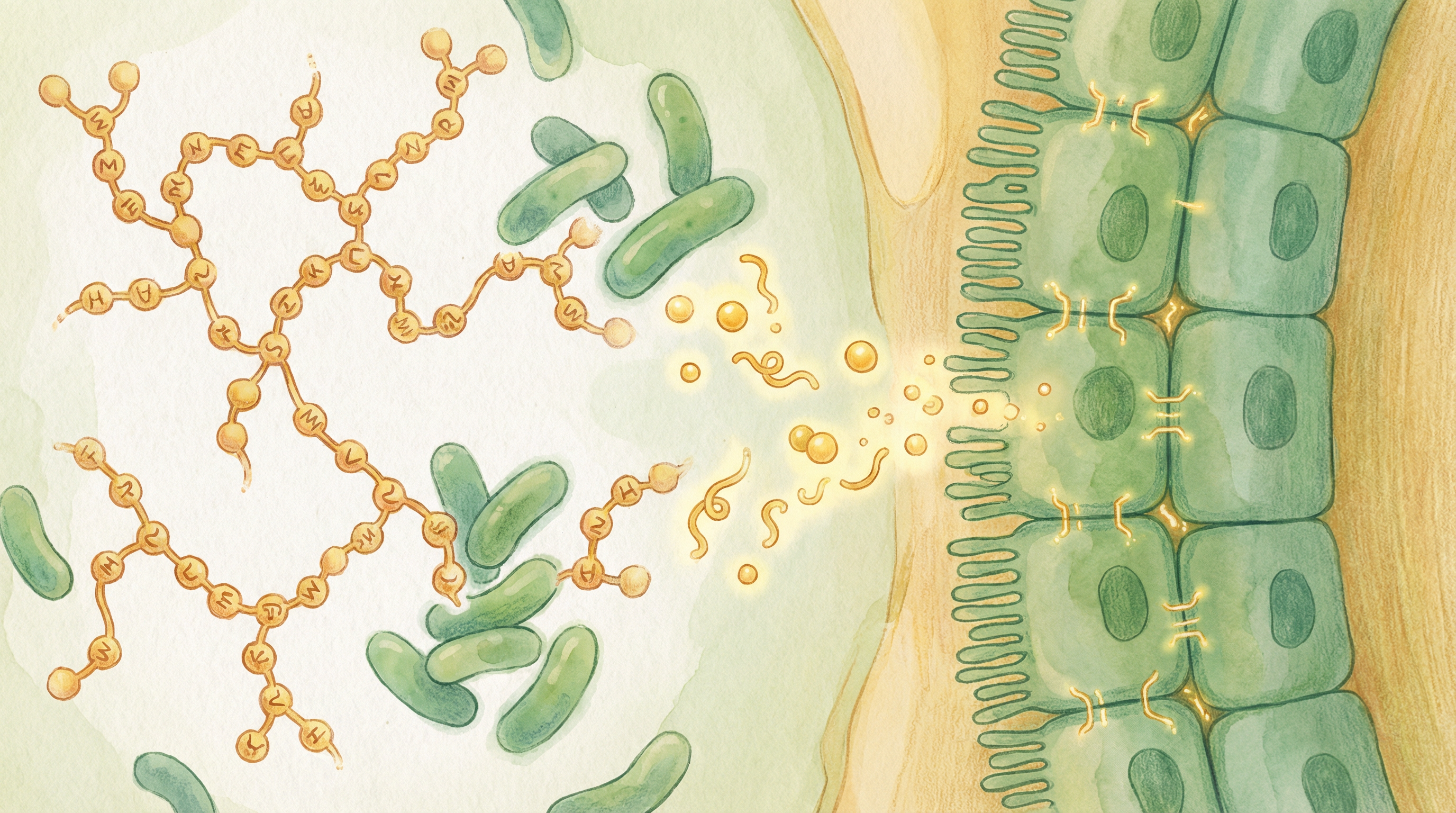
Pectin's prebiotic effects arise from its selective fermentation by gut bacteria[4]:
- Initial degradation: Bacteroides species possess pectinolytic enzymes for initial breakdown
- Cross-feeding: Degradation products become available to other bacteria
- SCFA production: Fermentation yields acetate, propionate, and butyrate
- Selective growth: Different pectin structures favor different bacterial species
Research has shown that microbial utilization varies based on pectin structure:
- Low DM pectins are more readily fermented
- RG-I domains promote different bacteria than HG domains
- Structural diversity supports microbiome diversity
Promotion of Anti-Inflammatory Bacteria
Studies demonstrate pectin's ability to promote anti-inflammatory commensal bacteria[3]:
- Increases Faecalibacterium prausnitzii abundance
- Enhances Bifidobacterium populations
- Supports Lactobacillus growth
- Promotes butyrate-producing species
SCFA Production
Pectin fermentation is a significant source of short-chain fatty acids[6]:
- Acetate: Most abundant SCFA from pectin fermentation
- Propionate: Significant production, influences hepatic metabolism
- Butyrate: Key energy source for colonocytes, anti-inflammatory
Effects on Gut Microbiome
Primary Effects
- Bifidobacterium: Consistently enhanced with pectin supplementation
- Lactobacillus: Supported by pectin oligosaccharides
- Bacteroides: Key degraders of intact pectin polymers
- Faecalibacterium prausnitzii: Major butyrate producer, promoted by pectin
Structure-Dependent Effects
Different pectin fractions show varying selectivity[4]:
| Pectin Type | Primary Bacteria Supported |
|---|---|
| Low DM pectin | Bifidobacterium, Bacteroides |
| High DM pectin | Slower fermentation, more distal colon effects |
| RG-I rich | Faecalibacterium, diverse species |
| Pectic oligosaccharides | Bifidobacterium, Lactobacillus |
Microbiome Diversity
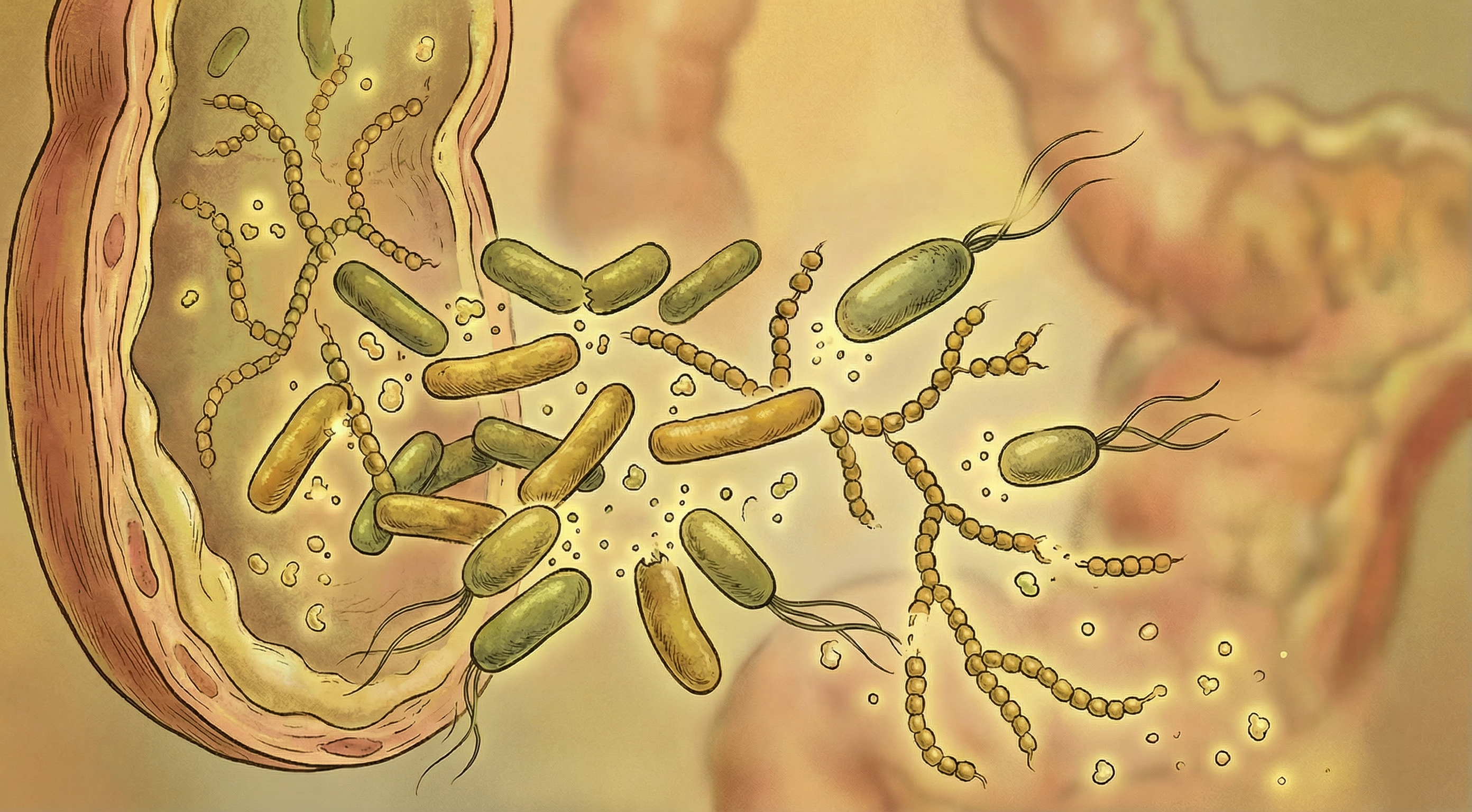
Unlike some prebiotics that predominantly feed one bacterial group, pectin's structural complexity supports broader microbiome diversity[2]:
- Multiple bacterial species involved in degradation
- Cross-feeding networks established
- Both saccharolytic and proteolytic bacteria affected
- Overall community structure improved
Health Benefits
Digestive Health
Pectin supports gut health through multiple mechanisms:
- Enhanced SCFA production for colonocyte nutrition
- Improved gut barrier function
- Increased mucus production
- Modulated intestinal immune responses
Cardiovascular Health
Pectin has well-documented effects on cardiovascular risk factors[1]:
- Cholesterol reduction: 6-15g daily can reduce LDL cholesterol
- Mechanism: Bile acid binding and increased excretion
- Additional effects: May lower blood pressure
Glycemic Control
Pectin's gel-forming properties influence glucose metabolism:
- Slows gastric emptying
- Reduces glucose absorption rate
- Improves postprandial glycemia
- May enhance insulin sensitivity
Satiety and Weight Management
The viscosity of pectin solutions contributes to:
- Increased satiety signaling
- Delayed gastric emptying
- Reduced energy intake
- Potential support for weight management
Clinical Applications
Diarrhea Management
Pectin has traditional use in managing diarrhea:
- Absorbs excess water in the intestine
- Supports beneficial bacteria recovery
- May reduce duration of acute diarrhea
- Often combined with kaolin in OTC preparations
Gut Health Support
Regular pectin consumption supports:
- Microbiome diversity
- SCFA production
- Gut barrier integrity
- Anti-inflammatory environment
Dosage and Sources
Dietary Intake
Average dietary pectin intake is 2-6g daily, with higher intakes in fruit-rich diets[1].
Supplemental Dosage
- Prebiotic effects: 6-15g daily
- Cholesterol lowering: 6-15g daily
- General gut health: 3-10g daily
Rich Food Sources
| Food | Pectin Content (g/100g fresh) |
|---|---|
| Citrus peel | 20-30 |
| Apple (with skin) | 0.5-1.6 |
| Apricots | 0.4-1.0 |
| Carrots | 0.4-0.8 |
| Plums | 0.5-1.0 |
| Berries | 0.3-0.8 |
Supplement Forms
- Citrus pectin: Most common supplement form
- Modified citrus pectin (MCP): Processed for enhanced absorption
- Apple pectin: Alternative source
- Pectic oligosaccharides: Pre-degraded for faster fermentation
Practical Recommendations
Dietary Strategies
- Include whole fruits rather than juices
- Consume fruits with skin when appropriate
- Include citrus in the diet regularly
- Eat a variety of pectin-rich vegetables
Supplementation
- Start with 3-5g daily
- Increase gradually to target dose
- Take with adequate water
- Divide doses throughout the day
Safety and Tolerability
Pectin is generally very safe:
- Long history of food use
- GRAS status
- Well-tolerated at moderate doses
- May cause gas and bloating initially
Considerations
- High doses may interfere with mineral absorption
- Drug absorption may be affected (take separately)
- Gradual introduction recommended
- Adequate hydration important
Summary
Pectin represents a valuable prebiotic fiber distinguished by its structural complexity and ability to support diverse gut bacteria. Unlike simpler prebiotics that primarily feed Bifidobacterium, pectin's heterogeneous structure promotes a broader range of beneficial species, including the important butyrate producer Faecalibacterium prausnitzii. Combined with its well-established benefits for cardiovascular health and glycemic control, pectin from dietary sources or supplements offers comprehensive support for gut microbiome health and overall metabolic wellness.
Dosage Guidelines
Recommended Dosage
6-15g daily
Start with a lower dose and gradually increase to minimize digestive discomfort. Consult a healthcare provider for personalized recommendations.
Frequently Asked Questions
What is Pectin: A Prebiotic Fiber in Fruit?
Pectin is a gel-forming soluble fiber in fruits like apples and citrus that supports diverse gut bacteria, promotes SCFA production, and aids digestion.
What foods contain Pectin: A Prebiotic Fiber in Fruit?
Pectin: A Prebiotic Fiber in Fruit can be found in: Citrus peels (highest concentration), Apples, Apricots, Carrots, Plums, Berries.
What are the health benefits of Pectin: A Prebiotic Fiber in Fruit?
Key benefits include: Promotes diverse gut bacteria, Supports butyrate production, May lower cholesterol, Aids glycemic control, Supports gut barrier function.
References
- Lattimer JM, Haub MD. Effects of dietary fiber and its components on metabolic health. Nutrients. 2010;2(12):1266-1289. doi:10.3390/nu2121266
- Tian L, Scholte J, Borewicz K, et al.. Effects of pectin supplementation on the fermentation patterns of different structural carbohydrates in rats. Molecular Nutrition & Food Research. 2016;60(10):2256-2266. doi:10.1002/mnfr.201600149
- Chung WSF, Meijerink M, Zeuner B, et al.. Prebiotic potential of pectin and pectic oligosaccharides to promote anti-inflammatory commensal bacteria in the human colon. FEMS Microbiology Ecology. 2017;93(11):fix127. doi:10.1093/femsec/fix127
- Onumpai C, Kolida S, Bonnin E, Rastall RA. Microbial utilization and selectivity of pectin fractions with various structures. Applied and Environmental Microbiology. 2011;77(16):5747-5754. doi:10.1128/AEM.00179-11
- Wu D, Zheng J, Mao G, et al.. Rethinking the impact of RG-I mainly from fruits and vegetables on dietary health. Critical Reviews in Food Science and Nutrition. 2020;60(17):2938-2960. doi:10.1080/10408398.2019.1672037
- Koh A, De Vadder F, Kovatcheva-Datchary P, Bäckhed F. From dietary fiber to host physiology: Short-chain fatty acids as key bacterial metabolites. Cell. 2016;165(6):1332-1345. doi:10.1016/j.cell.2016.05.041