

Better Blood Pressure Regulation
Support healthy blood pressure through gut microbiome optimization affecting vascular tone, inflammation, and sodium handling.
Key Supporting Microbes
These beneficial microorganisms play key roles in supporting this health benefit:
The Gut-Blood Pressure Connection
High blood pressure (hypertension) affects over a billion people worldwide and is a leading cause of heart disease and stroke. While factors like salt intake, stress, and exercise are well-known, research has revealed that the gut microbiome plays a significant role in blood pressure regulation.[1]
This opens new therapeutic avenues—optimizing gut bacteria could help prevent and manage hypertension naturally.
How Gut Bacteria Influence Blood Pressure
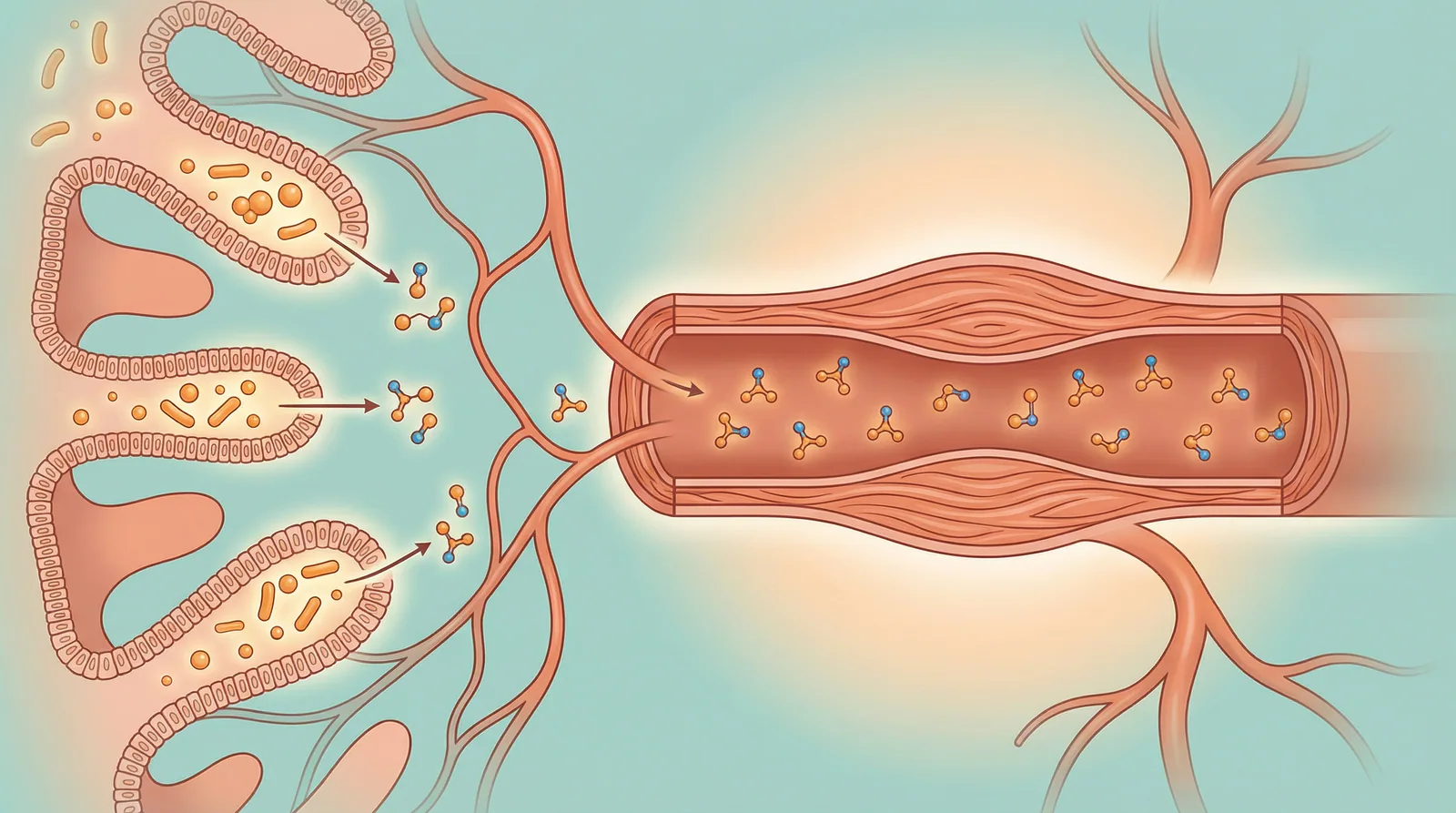
Short-Chain Fatty Acid Signaling
SCFAs directly affect blood pressure:[2]
Receptor activation:
- SCFAs activate specific G-protein coupled receptors (GPR41, GPR43)
- These receptors are found in blood vessels and kidneys
- Activation generally promotes vasodilation
- Also affects kidney sodium handling
Renin regulation:
- SCFAs influence renin release from kidneys
- Renin is key in the blood pressure control system
- May help reduce overall blood pressure
ACE-Inhibiting Peptides
Some bacteria produce natural blood pressure lowering compounds:[3]
Lactobacillus peptides:
- Certain strains produce peptides that inhibit ACE
- ACE (angiotensin-converting enzyme) raises blood pressure
- These peptides work similarly to ACE-inhibitor drugs
- Found especially in fermented dairy
Specific strains:
- Lactobacillus helveticus
- Lactobacillus casei
- Produce bioactive peptides during fermentation
Vascular Inflammation
As covered in vascular inflammation:
- Gut-derived inflammation affects blood vessels
- Inflamed vessels are stiffer and less compliant
- This raises blood pressure
- Anti-inflammatory bacteria help
Sodium Handling
Gut bacteria affect how the body handles sodium:
- Influence kidney sodium reabsorption
- Affect gut sodium absorption
- May modify salt sensitivity
- SCFAs play a role in this regulation
Nitric Oxide Pathway
Some bacteria influence nitric oxide production:
- Nitric oxide relaxes blood vessels
- Certain bacteria convert dietary nitrates
- This supports healthy vascular tone
- Found especially with nitrate-rich vegetable consumption
Microbiome Patterns in Hypertension
Research shows characteristic changes in hypertension:[1]
Common findings:
- Reduced microbial diversity
- Decreased Bifidobacterium
- Altered Lactobacillus populations
- Lower SCFA production
- Increased inflammatory species
Transplant studies:
- Fecal transplant from hypertensive animals raises BP in recipients
- Suggests microbiome is causally involved
Key Blood Pressure-Supporting Microbes
Lactobacillus helveticus
Specifically studied for blood pressure:
- Produces ACE-inhibiting peptides
- Found in certain fermented cheeses and dairy
- Clinical trials show blood pressure reduction
- Often combined with other strains
Bifidobacterium longum
Supports healthy blood pressure:
- Associated with lower blood pressure
- Anti-inflammatory effects
- Often reduced in hypertension
- Responds to prebiotic fibers
Lactobacillus acidophilus
Foundational probiotic:
- Supports overall gut health
- May contribute to blood pressure regulation
- Part of effective combinations
- Well-studied and safe
Akkermansia muciniphila
Supports metabolic and vascular health:
- Associated with better metabolic markers
- Reduces inflammation
- Supports gut barrier
- May indirectly support blood pressure
Signs of Blood Pressure Issues
High blood pressure often has no symptoms ("silent killer"), but watch for:
- Readings consistently above 120/80 mmHg
- Headaches (with very high pressure)
- Shortness of breath
- Nosebleeds
- Dizziness
- Vision problems
- Chest pain
Regular monitoring is essential.
Dietary Strategies for Blood Pressure
The DASH Pattern
DASH (Dietary Approaches to Stop Hypertension) diet:
- High in fruits and vegetables
- Includes whole grains and legumes
- Low-fat dairy
- Limited sodium, red meat, and sweets
- Proven to lower blood pressure
- Also supports healthy microbiome
Specific Blood Pressure Foods
Potassium-rich foods:
- Bananas
- Sweet potatoes
- Leafy greens
- Avocados
- Potassium balances sodium
Nitrate-rich vegetables:
- Beets and beet juice
- Arugula and spinach
- Celery
- Convert to nitric oxide for vessel relaxation
Fermented dairy:
- Yogurt with live cultures
- Kefir
- Aged cheeses
- Contain ACE-inhibiting peptides
High-fiber foods:
- Promote SCFA production
- Diverse plant fibers
- Legumes particularly effective
- Support beneficial bacteria
Sodium Reduction
Limiting sodium helps blood pressure:
- Processed foods are main source
- Cook more meals at home
- Read labels carefully
- Use herbs and spices instead
- Microbiome may affect salt sensitivity
Limit Alcohol
Excessive alcohol raises blood pressure:
- Limit to moderate amounts
- Red wine may have some benefits (moderate)
- Excessive intake raises BP significantly
- Also disrupts microbiome

Lifestyle Factors
Exercise
Physical activity is powerful for blood pressure:
- Aerobic exercise especially effective
- 150+ minutes moderate activity weekly
- Also improves microbiome
- Effects seen within weeks
Stress Management
Chronic stress elevates blood pressure:
- Activates sympathetic nervous system
- Raises cortisol
- Deep breathing and meditation help
- Yoga combines movement and relaxation
Sleep
Poor sleep contributes to hypertension:
- Affects hormones that regulate blood pressure
- Increases sympathetic activity
- Sleep apnea particularly harmful
- Prioritize quality sleep
Weight Management
Excess weight raises blood pressure:
- Losing even modest amounts helps
- Microbiome plays role in weight
- Comprehensive approach most effective

Testing and Monitoring
Track blood pressure regularly:
- Home monitoring recommended
- Morning and evening readings
- Keep a log to identify patterns
- Share with healthcare provider
Other relevant tests:
- Kidney function
- Electrolytes (sodium, potassium)
- Microbiome testing for patterns
Building Better Blood Pressure
Supporting blood pressure through the microbiome involves:
- Following DASH-style eating patterns
- Including fermented dairy with bioactive peptides
- Eating nitrate-rich vegetables regularly
- Prioritizing high fiber for SCFA production
- Reducing sodium from processed foods
- Regular exercise and stress management
Most people see blood pressure improvements within 4-8 weeks of dietary changes. Combining microbiome optimization with other lifestyle factors can reduce blood pressure by 5-10 mmHg or more, which significantly reduces cardiovascular risk.
Supporting Practices
Evidence-based strategies to support this benefit:
- Consume potassium-rich foods like bananas and leafy greens
- Limit sodium intake from processed foods
- Include fermented dairy products with ACE-inhibiting peptides
- Practice regular aerobic exercise
- Manage stress through meditation or deep breathing
- Include nitrate-rich vegetables like beets
Frequently Asked Questions
What is Better Blood Pressure Regulation?
Support healthy blood pressure through gut microbiome optimization affecting vascular tone, inflammation, and sodium handling.
How does the microbiome support better blood pressure regulation?
Your gut microbiome plays a crucial role in better blood pressure regulation through various mechanisms involving specific beneficial bacteria and their metabolites.
Which microbes are important for better blood pressure regulation?
Key beneficial microbes include: Lactobacillus helveticus, Bifidobacterium longum, Lactobacillus acidophilus, Akkermansia muciniphila.
References
- Yang T, Santisteban MM, Rodriguez V, et al.. Gut dysbiosis is linked to hypertension. Hypertension. 2015;65(6):1331-1340. doi:10.1161/HYPERTENSIONAHA.115.05315 ↩
- Marques FZ, Nelson E, Chu PY, et al.. High-Fiber Diet and Acetate Supplementation Change the Gut Microbiota and Prevent the Development of Hypertension and Heart Failure in Hypertensive Mice. Circulation. 2017;135(10):964-977. doi:10.1161/CIRCULATIONAHA.116.024545 ↩
- Seppo L, Jauhiainen T, Poussa T, Korpela R. A fermented milk high in bioactive peptides has a blood pressure-lowering effect in hypertensive subjects. American Journal of Clinical Nutrition. 2003;77(2):326-330. doi:10.1093/ajcn/77.2.326 ↩