

Reduced Vascular Inflammation
Decrease inflammation in blood vessels through gut microbiome optimization to protect against atherosclerosis and cardiovascular disease.
Key Supporting Microbes
These beneficial microorganisms play key roles in supporting this health benefit:
Vascular Inflammation: The Hidden Driver
Atherosclerosis—the buildup of plaque in arteries—was once thought to be simply about cholesterol. We now know it's fundamentally an inflammatory disease. Inflammation in blood vessel walls initiates and perpetuates plaque formation, making vascular inflammation a critical target for cardiovascular protection[1].
What's emerged from recent research is that gut health profoundly influences vascular inflammation through multiple pathways.
The Gut-Vascular Connection
Metabolic Endotoxemia
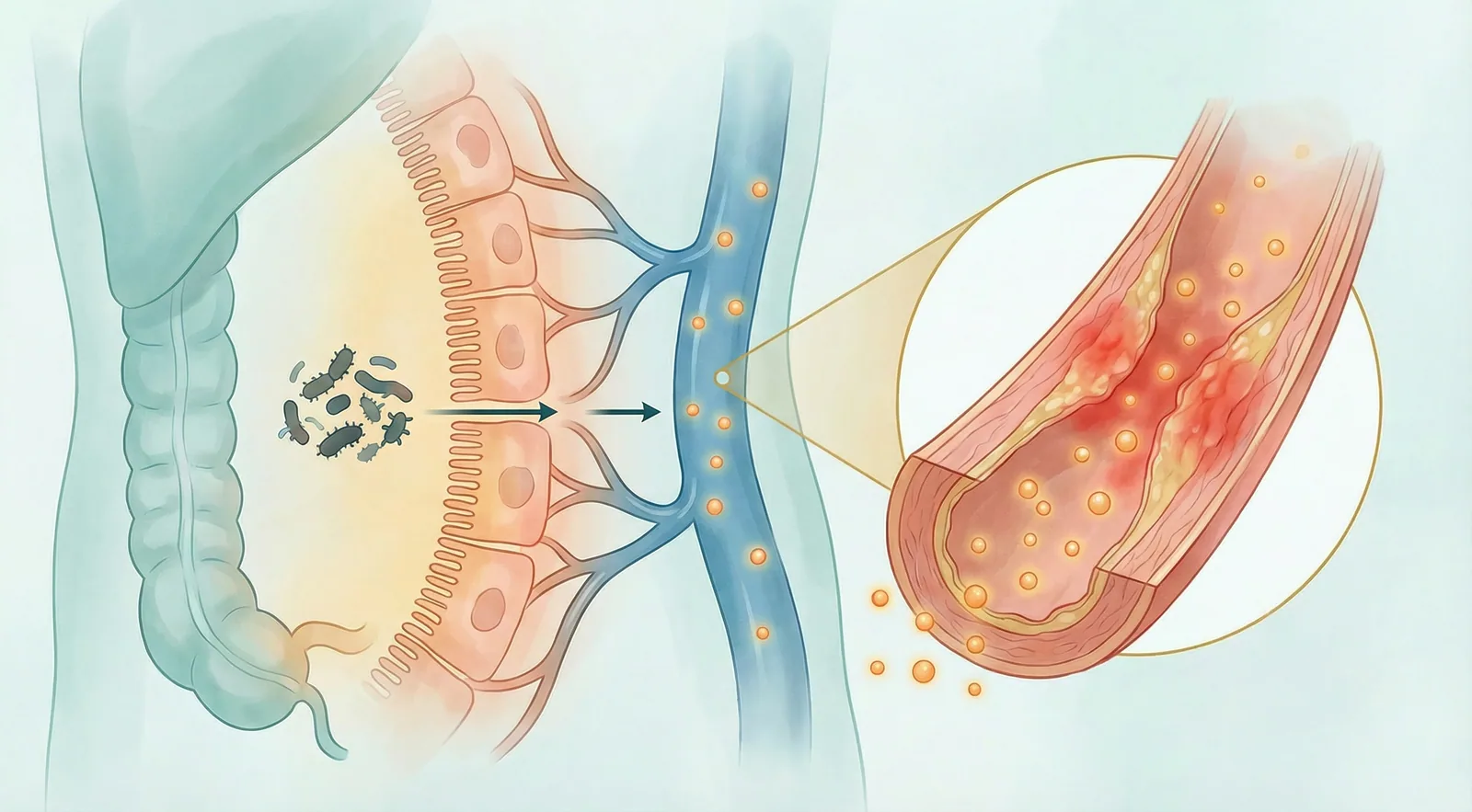
Gut bacteria affect vascular inflammation through barrier integrity[3]. The concept of "metabolic endotoxemia"—chronic low-grade inflammation from gut-derived bacterial products—was first characterized as a key initiator of obesity and insulin resistance[5]:
Lipopolysaccharide (LPS):
- Component of gram-negative bacterial cell walls
- Leaks into blood when gut barrier is compromised
- Triggers potent inflammatory responses
- Activates endothelial cells lining blood vessels
The cascade:
- Gut dysbiosis weakens intestinal barrier
- LPS and other bacterial products enter circulation
- They activate immune cells and inflammation
- Blood vessel walls become inflamed
- Atherosclerosis development accelerates
Short-Chain Fatty Acids
SCFAs from beneficial bacteria protect vessels:
Anti-inflammatory effects:
- Reduce inflammatory cytokine production
- Inhibit NF-κB activation
- Support regulatory T cells
- Reach blood vessels via circulation
Butyrate specifically:
- Most potent anti-inflammatory SCFA
- Protects endothelial function
- Reduces oxidative stress
- Produced by key beneficial bacteria
Direct Bacterial Effects
Some bacteria may directly affect vessels:
- Bacterial DNA found in atherosclerotic plaques[2]
- Some bacteria may translocate to vessel walls
- Certain species associated with more or less inflammation
- Microbiome composition predicts cardiovascular risk
Microbiome Patterns in Cardiovascular Disease
Research shows distinct patterns in those with atherosclerosis[2]. Recent comprehensive reviews have further characterized these gut microbiota-cardiovascular disease relationships[4]:
Increased in cardiovascular disease:
- Certain Enterobacteriaceae
- Some Clostridium species
- Pro-inflammatory species
Decreased in cardiovascular disease:
- Butyrate-producing bacteria
- Roseburia species
- Anti-inflammatory bacteria
Key Anti-Inflammatory Microbes
Faecalibacterium prausnitzii
Most potent anti-inflammatory gut bacterium:
- Major butyrate producer
- Secretes anti-inflammatory proteins
- Consistently depleted in inflammatory conditions
- Protecting and promoting this species is key
Roseburia intestinalis
Important for vascular health:
- Significant butyrate producer
- Associated with lower cardiovascular risk
- Responds to dietary fiber
- Often reduced in metabolic disease
Akkermansia muciniphila
Supports vascular health through barrier function:
- Maintains gut barrier integrity
- Reduces LPS translocation
- Associated with better metabolic markers
- Responds to polyphenols
Bifidobacterium Species
Foundational for anti-inflammatory environment:
- Produce acetate and lactate
- Support barrier function
- Associated with lower inflammation
- Respond to prebiotic fibers
Signs of Vascular Inflammation
Vascular inflammation often has no symptoms until advanced, but consider risk if you have:
- Elevated hs-CRP (high-sensitivity C-reactive protein)
- Metabolic syndrome
- Type 2 diabetes or insulin resistance
- Elevated blood pressure
- Abnormal lipid profile
- Family history of early heart disease
- Chronic inflammatory conditions
- Known atherosclerosis
Dietary Strategies for Vascular Health
Anti-Inflammatory Foods
Omega-3 fatty acids:
- Fatty fish (salmon, mackerel, sardines)
- Directly reduce vascular inflammation
- Improve endothelial function
- 2-3 servings of fatty fish weekly
Polyphenol-rich foods:
- Berries (especially blueberries)
- Extra virgin olive oil
- Dark chocolate
- Green tea
- Red wine (moderate)
Fiber for SCFA production:
- Legumes
- Whole grains
- Vegetables and fruits
- Diverse plant foods
Nitrate-rich vegetables:
- Beets
- Leafy greens
- Support nitric oxide for vessel health
Pro-Inflammatory Foods to Limit
Refined carbohydrates:
- Spike glucose and insulin
- Promote inflammation
- Damage gut barrier
Processed meats:
- Associated with increased inflammation
- May promote harmful bacteria
- Contain pro-inflammatory additives
Excessive omega-6 fats:
- Industrial seed oils
- Processed foods
- Shift balance toward inflammation
Trans fats:
- Directly damage blood vessels
- Promote inflammation
- Found in some processed foods
Excessive alcohol:
- Damages gut barrier
- Promotes inflammation
- Raises blood pressure

The Mediterranean Pattern
The Mediterranean diet is particularly protective:
- High in olive oil (polyphenols, oleic acid)
- Rich in vegetables and fruits
- Includes fatty fish
- Moderate wine (optional)
- Limited processed foods
- Supports anti-inflammatory microbiome
Lifestyle Factors
Exercise
Regular physical activity reduces vascular inflammation:
- Lowers inflammatory markers
- Improves endothelial function
- Supports healthy microbiome
- 150+ minutes moderate activity weekly
Stress Management
Chronic stress promotes vascular inflammation:
- Elevates cortisol and catecholamines
- Increases inflammatory cytokines
- Disrupts gut barrier function
- Regular stress management essential
Sleep
Poor sleep increases vascular inflammation:
- Elevates inflammatory markers
- Impairs endothelial function
- Disrupts microbiome
- Prioritize 7-9 hours
Not Smoking
Smoking is profoundly pro-inflammatory:
- Directly damages blood vessels
- Disrupts microbiome
- Impairs barrier function
- Quitting essential for vascular health
Testing Vascular Inflammation
Key markers include:
- hs-CRP: General inflammation marker, predicts cardiovascular events
- Fibrinogen: Clotting factor, elevated in inflammation
- Lp-PLA2: Vascular-specific inflammation marker
- Microbiome testing: Can reveal inflammatory patterns
Building Vascular Health
Reducing vascular inflammation through the microbiome involves:
- Prioritizing fiber to feed SCFA-producing bacteria
- Including omega-3s and polyphenols daily
- Following Mediterranean-style eating
- Eliminating trans fats and limiting processed foods
- Managing stress, sleep, and exercise
- Monitoring inflammatory markers to track progress
Most people see improvements in inflammatory markers within 6-8 weeks of consistent dietary changes. Reducing established vascular inflammation and plaque progression is a longer-term process requiring sustained lifestyle modification.
Supporting Practices
Evidence-based strategies to support this benefit:
- Consume omega-3 fatty acids from fatty fish
- Include polyphenol-rich foods like berries and olive oil
- Eat high-fiber foods to produce anti-inflammatory SCFAs
- Limit refined sugars and processed foods
- Manage stress which promotes vascular inflammation
- Exercise regularly to reduce inflammatory markers
Frequently Asked Questions
What is Reduced Vascular Inflammation?
Decrease inflammation in blood vessels through gut microbiome optimization to protect against atherosclerosis and cardiovascular disease.
How does the microbiome support reduced vascular inflammation?
Your gut microbiome plays a crucial role in reduced vascular inflammation through various mechanisms involving specific beneficial bacteria and their metabolites.
Which microbes are important for reduced vascular inflammation?
Key beneficial microbes include: Faecalibacterium prausnitzii, Roseburia intestinalis, Akkermansia muciniphila, Bifidobacterium species.
References
- Jönsson AL, Bäckhed F. Role of gut microbiota in atherosclerosis. Nature Reviews Cardiology. 2017;14(2):79-87. doi:10.1038/nrcardio.2016.183
- Karlsson FH, Fåk F, Nookaew I, et al.. Symptomatic atherosclerosis is associated with an altered gut metagenome. Nature Communications. 2012;3:1245. doi:10.1038/ncomms2266
- Tang WHW, Kitai T, Hazen SL. Gut Microbiota in Cardiovascular Health and Disease. Circulation Research. 2017;120(7):1183-1196. doi:10.1161/CIRCRESAHA.117.309715
- Witkowski M, Weeks TL, Hazen SL. Gut Microbiota and Cardiovascular Disease. Circulation Research. 2020;127(4):553-570. doi:10.1161/CIRCRESAHA.120.316242
- Cani PD, Amar J, Iglesias MA, et al.. Metabolic endotoxemia initiates obesity and insulin resistance. Diabetes. 2007;56(7):1761-1772. doi:10.2337/db06-1491