

Enhanced Fat Metabolism
Optimize your body's ability to burn and regulate fat through microbiome support for healthy weight management and energy production.
Key Supporting Microbes
These beneficial microorganisms play key roles in supporting this health benefit:
The Microbiome-Obesity Connection
One of the earliest and most striking discoveries in microbiome research was that gut bacteria differ substantially between lean and obese individuals—and that these differences actually cause metabolic changes, not just correlate with them[2]. Further studies confirmed that obese and lean humans differ in the relative proportions of key bacterial groups, particularly a reduced ratio of Bacteroidetes to Firmicutes[4].
Transferring gut bacteria from obese mice to lean mice causes weight gain. This means your microbiome isn't just a bystander in metabolism—it's an active participant that can be optimized to support healthy fat metabolism.
How Gut Bacteria Affect Fat Metabolism
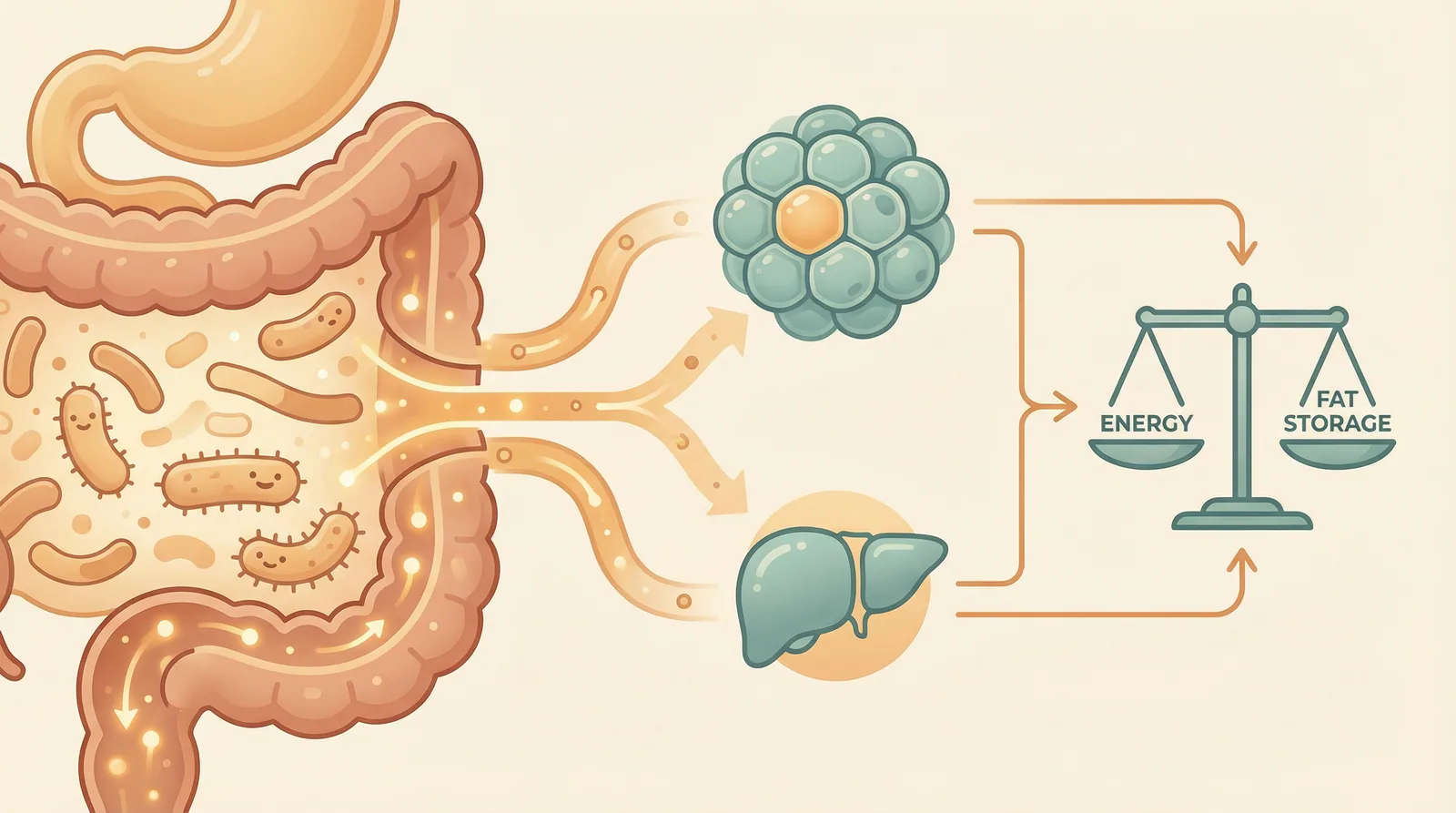
Energy Harvest Efficiency
Your microbiome determines how many calories you extract from food:
Efficient vs. inefficient microbiomes:
- Some bacterial compositions extract more calories from the same food
- The "obese microbiome" may harvest 10-15% more energy
- This can translate to significant weight differences over time
- A diverse microbiome tends to be less calorically efficient
Fiber fermentation:
- Converting fiber to SCFAs provides additional calories
- But these calories come with metabolic benefits
- The net effect is typically positive for weight management
- The type of bacteria matters more than total fermentation
Fat Storage vs. Burning Signals
Bacteria produce signals that affect fat fate:
Fasting-induced adipose factor (FIAF):
- Normally inhibits fat storage
- Certain bacteria suppress FIAF, promoting fat accumulation
- Beneficial bacteria support FIAF activity
- This affects whether calories go to storage or burning
AMPK activation:
- SCFAs activate AMPK (metabolic master switch)
- AMPK promotes fat oxidation
- Suppresses fat synthesis
- Exercise also activates this pathway
Brown Fat Activation
Beneficial bacteria may enhance brown fat activity:
- Brown fat burns calories to generate heat
- Microbiome metabolites can activate brown fat
- Cold-exposed mice with healthy microbiomes brown better
- This may explain some microbiome effects on metabolism
Bile Acid Effects
Bacterial bile acid metabolism affects fat handling[3]:
- Bile acids are essential for fat absorption
- Bacterial modifications change bile acid signaling
- Certain profiles promote fat burning over storage
- FXR and TGR5 activation increases energy expenditure
Key Microbes for Fat Metabolism
Akkermansia muciniphila
Consistently associated with leanness[5]:
- Abundant in lean individuals, depleted in obesity
- Supplementation prevents weight gain in animals
- Human studies show metabolic improvements
- Responds to polyphenol-rich foods
Christensenella minuta
The "leanness bacterium"[1]:
- Most heritable gut bacterium
- Strongly associated with lean body mass
- Transfer to mice prevents weight gain
- May be a marker of metabolically favorable microbiome
Bacteroides Species
Important for metabolic health:
- Higher Bacteroides-to-Firmicutes ratio associated with leanness
- Efficient at degrading complex carbohydrates
- Produce beneficial metabolites
- Respond to plant-based diets
Lactobacillus gasseri
Specifically studied for weight management:
- May reduce abdominal fat
- Improves metabolic markers
- Has been tested in human trials
- Available in certain probiotic supplements

Signs of Suboptimal Fat Metabolism
You might have impaired fat metabolism if you experience:
- Difficulty losing weight despite effort
- Rapid weight gain with minor diet changes
- Feeling sluggish and low energy
- Persistent visceral fat (belly fat)
- Poor exercise recovery
- Carbohydrate cravings
- Blood sugar swings
- Elevated triglycerides
Dietary Strategies for Fat Metabolism
Support Fat-Burning Bacteria
Polyphenol-rich foods:
- Green tea (catechins boost fat oxidation)
- Berries (support Akkermansia)
- Dark chocolate
- Extra virgin olive oil
Diverse fiber:
- Feeds beneficial bacteria
- Supports SCFA production
- Reduces caloric extraction efficiency
- Include 30+ plant varieties weekly
Fermented foods:
- Introduce beneficial species
- Support overall microbiome health
- Daily intake recommended
Strategic Fat Choices
Medium-chain triglycerides:
- MCT oil and coconut oil
- Rapidly burned for energy
- May support ketone production
- Don't require bile for absorption
Omega-3 fatty acids:
- Support metabolically favorable bacteria
- Reduce inflammation
- May enhance fat oxidation
- Found in fatty fish, walnuts, flaxseed
Limit inflammatory fats:
- Excess omega-6 from seed oils
- Trans fats
- These promote unfavorable microbiome shifts
Meal Patterns for Fat Burning
Time-restricted eating:
- 8-12 hour eating windows
- Promotes metabolic flexibility
- Encourages fat burning during fasting
- Supports circadian microbiome rhythms
Protein timing:
- Adequate protein supports metabolism
- Distribute throughout the day
- Protein increases thermic effect of food
- Supports lean muscle mass

Lifestyle Factors
Exercise for Fat Metabolism
Aerobic exercise:
- Enhances fat oxidation capacity
- Improves microbiome diversity
- Creates metabolically favorable environment
- Regular, moderate intensity most sustainable
Resistance training:
- Builds metabolically active muscle
- Increases resting energy expenditure
- Improves insulin sensitivity
- Supports healthy body composition
HIIT (High-Intensity Interval Training):
- Maximizes fat burning in less time
- Creates metabolic afterburn
- May uniquely affect the microbiome
- Balance with recovery
Sleep and Fat Metabolism
Sleep deprivation impairs fat burning:
- Shifts fuel preference toward carbohydrates
- Increases fat storage signals
- Disrupts hormones that regulate metabolism
- Alters microbiome composition
Prioritize:
- 7-9 hours consistently
- Regular sleep schedule
- Dark, cool sleeping environment
Cold Exposure
Cold activates fat-burning pathways:
- Stimulates brown fat
- May affect microbiome beneficially
- Cold showers or brief cold exposure
- Start gradually and build tolerance
Testing Fat Metabolism
Consider these assessments:
- Body composition analysis: Beyond weight to fat vs. muscle
- Metabolic rate testing: Measures actual energy expenditure
- Respiratory quotient: Shows fuel preference (fat vs. carbs)
- Microbiome testing: Reveals metabolic bacterial patterns
- Lipid panel: Triglycerides especially informative
Building Better Fat Metabolism
Optimizing fat metabolism through the microbiome involves:
- Increasing microbiome diversity to reduce caloric extraction
- Supporting Akkermansia and other lean-associated bacteria
- Implementing time-restricted eating to enhance fat oxidation
- Regular exercise combining aerobic and resistance training
- Prioritizing sleep for metabolic hormone balance
- Strategic dietary choices that support fat-burning pathways
Most people notice improved energy and reduced cravings within 2-4 weeks. Changes in body composition typically become apparent over 2-3 months of consistent effort. Establishing optimal fat metabolism is an ongoing process that improves steadily over 6-12 months.
Supporting Practices
Evidence-based strategies to support this benefit:
- Include medium-chain triglycerides (MCT oil, coconut oil)
- Practice intermittent fasting to enhance fat oxidation
- Engage in regular aerobic exercise
- Consume green tea for catechin benefits
- Ensure adequate protein intake
- Get quality sleep for metabolic hormone regulation
Frequently Asked Questions
What is Enhanced Fat Metabolism?
Optimize your body's ability to burn and regulate fat through microbiome support for healthy weight management and energy production.
How does the microbiome support enhanced fat metabolism?
Your gut microbiome plays a crucial role in enhanced fat metabolism through various mechanisms involving specific beneficial bacteria and their metabolites.
Which microbes are important for enhanced fat metabolism?
Key beneficial microbes include: Akkermansia muciniphila, Christensenella minuta, Bacteroides species, Lactobacillus gasseri.
References
- Goodrich JK, Waters JL, Poole AC, et al.. Human genetics shape the gut microbiome. Cell. 2014;159(4):789-799. doi:10.1016/j.cell.2014.09.053
- Turnbaugh PJ, Ley RE, Mahowald MA, et al.. An obesity-associated gut microbiome with increased capacity for energy harvest. Nature. 2006;444(7122):1027-1031. doi:10.1038/nature05414
- Sayin SI, Wahlström A, Felin J, et al.. Gut microbiota regulates bile acid metabolism by reducing the levels of tauro-beta-muricholic acid, a naturally occurring FXR antagonist. Cell Metabolism. 2013;17(2):225-235. doi:10.1016/j.cmet.2013.01.003
- Ley RE, Turnbaugh PJ, Klein S, Gordon JI. Microbial ecology: human gut microbes associated with obesity. Nature. 2006;444(7122):1022-1023. doi:10.1038/4441022a
- Everard A, Belzer C, Geurts L, et al.. Cross-talk between Akkermansia muciniphila and intestinal epithelium controls diet-induced obesity. Proceedings of the National Academy of Sciences. 2013;110(22):9066-9071. doi:10.1073/pnas.1219451110