

Mycobacterium leprae
Mycobacterium leprae is an obligate intracellular pathogen and the primary causative agent of leprosy (Hansen's disease), a chronic infectious disease that primarily affects the skin, peripheral nerves, upper respiratory tract, and eyes. Discovered by Gerhard Armauer Hansen in 1873, M. leprae was the first bacterium to be identified as causing disease in humans. Despite being one of the oldest recorded human diseases, leprosy remains a significant public health challenge in many parts of the world, with approximately 200,000 new cases reported annually.
Key Characteristics
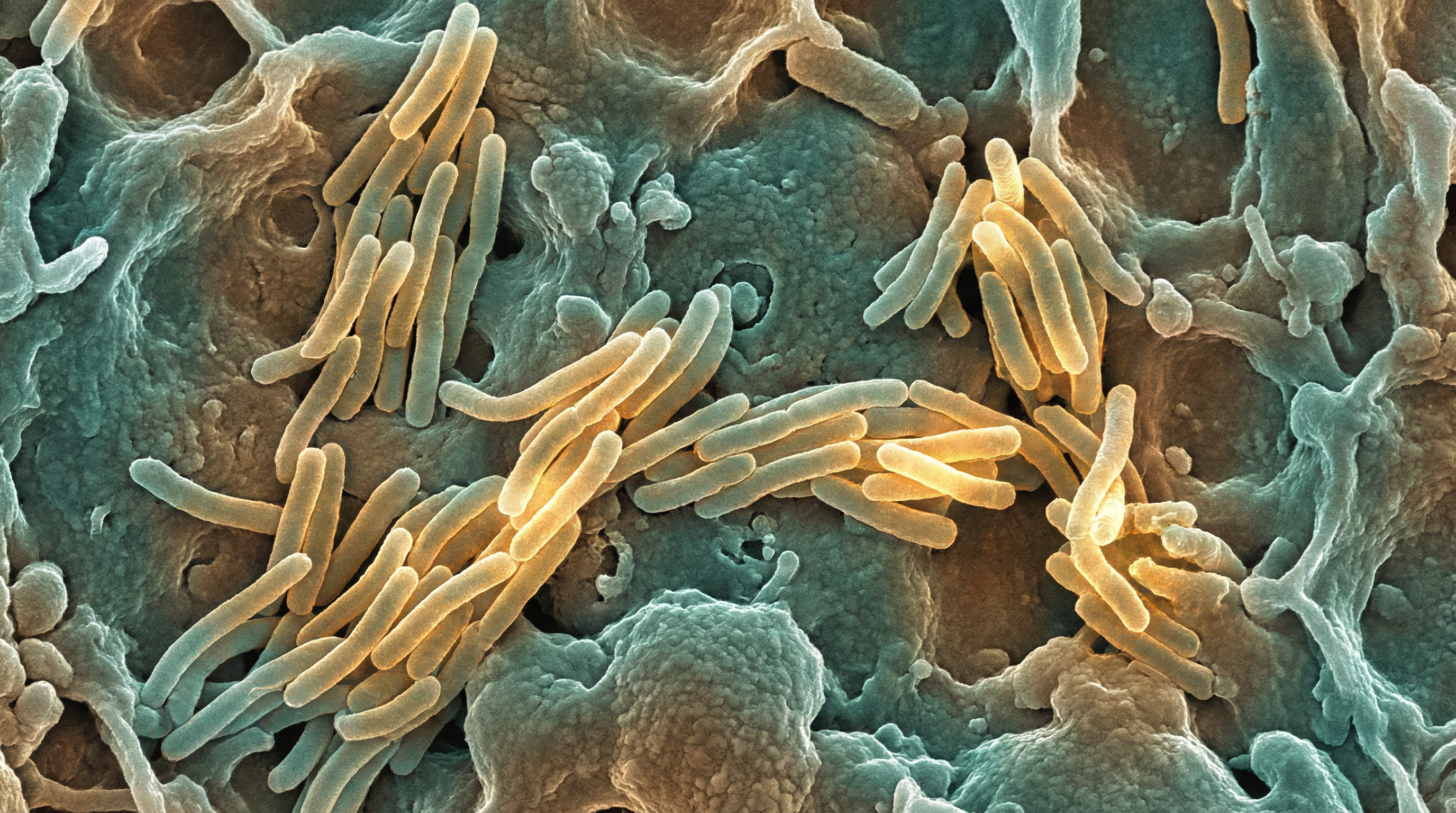
M. leprae is a slow-growing, acid-fast bacillus with several distinctive features that set it apart from other mycobacteria. It is slightly curved, measuring 1-8 μm in length and 0.3-0.5 μm in diameter. The bacterium is non-motile, microaerophilic, and has a unique preference for cooler temperatures (30-33°C), which explains its predilection for the cooler areas of the human body such as the skin, peripheral nerves, and respiratory mucosa.
One of the most remarkable characteristics of M. leprae is its extremely slow growth rate, with a doubling time of approximately 12-14 days, compared to the 20 hours required by Mycobacterium tuberculosis. This slow replication contributes to the chronic nature of leprosy and the long incubation period, which can range from a few months to 20 years, with an average of 5 years.
M. leprae has undergone massive gene decay, with nearly half of its genome consisting of pseudogenes (non-functional genes). This extensive genome reduction has resulted in the loss of many metabolic pathways, making M. leprae an obligate intracellular parasite that relies heavily on host cells for survival and replication. The bacterium cannot be cultured on artificial media, which has significantly hampered laboratory research and diagnostic development.
Role in the Human Microbiome
Unlike many other bacteria discussed in this collection, M. leprae is not considered a normal component of the human microbiome. It is strictly a pathogen that causes disease when it infects human hosts. The bacterium is primarily transmitted through prolonged close contact with untreated leprosy cases, likely via respiratory droplets from the nose and mouth. Contrary to popular belief, casual contact such as handshakes or sharing meals does not spread the disease.
M. leprae has a unique tropism for two specific cell types in humans: macrophages (particularly dermal histiocytes) and Schwann cells that surround peripheral nerves. This neurotropism is a distinctive feature of M. leprae and explains the peripheral nerve damage characteristic of leprosy.
While humans are considered the primary reservoir for M. leprae, the bacterium has also been found in armadillos in the Americas and certain non-human primates, suggesting potential zoonotic transmission in some regions.
Health Implications
Detrimental Effects
M. leprae causes leprosy, a disease with a spectrum of clinical manifestations depending on the host's immune response. The Ridley-Jopling classification divides leprosy into five types:
- Tuberculoid (TT): Characterized by strong cellular immunity, limited bacterial load, and localized skin lesions with well-defined borders
- Borderline Tuberculoid (BT)
- Mid-Borderline (BB)
- Borderline Lepromatous (BL)
- Lepromatous (LL): Characterized by weak cellular immunity, high bacterial load, and widespread, poorly defined skin lesions
The primary pathology of leprosy involves:
- Skin lesions: Hypopigmented or erythematous patches with reduced sensation
- Peripheral nerve damage: Leading to sensory loss, motor weakness, and autonomic dysfunction
- Immunological reactions: Type 1 (reversal reactions) and Type 2 (erythema nodosum leprosum) reactions that can cause acute inflammation and tissue damage
The nerve damage caused by M. leprae can lead to progressive and permanent disabilities, including:
- Loss of sensation, leading to unnoticed injuries and subsequent tissue damage
- Muscle weakness and paralysis
- Contractures and deformities
- Visual impairment and blindness
- Secondary infections due to sensory loss
Beyond the physical impact, leprosy has profound psychosocial consequences due to stigma and discrimination, which can lead to social isolation, depression, and economic hardship.
Beneficial Effects
There are no known beneficial effects of M. leprae infection in humans. Unlike some commensal bacteria that contribute positively to human health, M. leprae is strictly a pathogen.
Metabolic Activities
M. leprae has a highly reduced genome and limited metabolic capabilities compared to other mycobacteria. Key metabolic features include:
- Obligate dependence on host cells for many essential nutrients and metabolic functions
- Preference for lipids as a carbon and energy source
- Inability to synthesize many essential compounds, including purines, pyrimidines, and most amino acids
- Retention of pathways for cell wall synthesis, particularly those involved in the production of mycolic acids and phenolic glycolipids
- Utilization of host-derived lipids for energy and cell wall components
The cell wall of M. leprae contains unique lipids, particularly phenolic glycolipid-1 (PGL-1), which is specific to M. leprae and plays a role in the bacterium's tropism for Schwann cells. These cell wall components are important in the pathogenesis of leprosy, as they can modulate host immune responses and contribute to the bacterium's survival within host cells.
Clinical Relevance
Leprosy remains a significant public health challenge in many parts of the world, particularly in Brazil, India, and Indonesia, which account for approximately 80% of new cases globally. The disease is classified as a neglected tropical disease (NTD) by the World Health Organization (WHO).
Diagnosis of leprosy is primarily clinical, based on the presence of at least one of three cardinal signs:
- Definite loss of sensation in a pale or reddish skin patch
- Thickened or enlarged peripheral nerve with loss of sensation or muscle weakness
- Presence of acid-fast bacilli in a slit-skin smear
For treatment purposes, cases are classified as either paucibacillary (PB, 1-5 skin lesions without demonstrated bacilli) or multibacillary (MB, more than 5 skin lesions or with demonstrated bacilli).
Leprosy is curable with multidrug therapy (MDT), which consists of a combination of dapsone, rifampicin, and clofazimine. The standard treatment duration is 6 months for PB cases and 12 months for MB cases. Early diagnosis and prompt treatment are crucial to prevent disabilities.
Prevention strategies include:
- Early case detection and treatment
- Contact tracing (household, neighborhood, and social contacts)
- Single-dose rifampicin as post-exposure prophylaxis (SDR-PEP)
- BCG vaccination, which offers some protection against leprosy
The WHO has set ambitious goals in its "Towards zero leprosy" strategy for 2021-2030, aiming for zero infection and disease, zero disability, and zero stigma and discrimination.
Interaction with Other Microorganisms
Due to its obligate intracellular lifestyle and the limited research on M. leprae in natural settings, relatively little is known about its interactions with other microorganisms. However, some observations include:
- M. leprae may interact with the skin and nasal microbiota during transmission and early infection
- Secondary bacterial infections are common in leprosy patients with sensory loss and skin lesions
- The immunomodulatory effects of M. leprae infection may alter the host's response to other pathogens
Research on M. leprae continues to be challenging due to the inability to culture the bacterium in vitro. However, advances in molecular techniques, animal models (particularly the armadillo model), and genomic analyses have provided valuable insights into this ancient human pathogen. Understanding the unique biology and pathogenesis of M. leprae remains crucial for developing better diagnostic tools, treatment strategies, and ultimately achieving the goal of leprosy elimination.