

Nitrososphaera viennensis
Overview
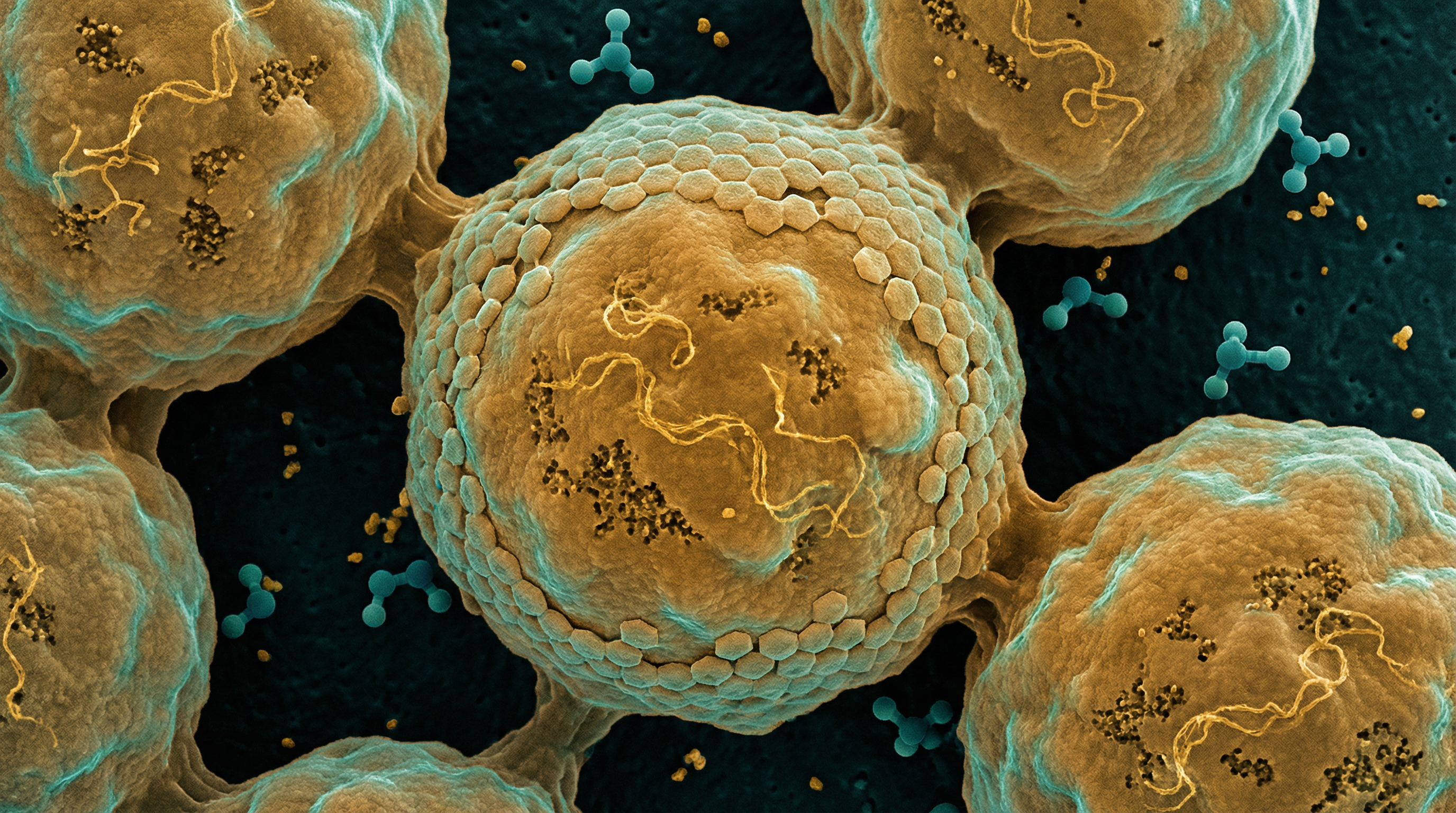
Nitrososphaera viennensis is an ammonia-oxidizing archaeon belonging to the phylum Thaumarchaeota (recently reclassified as Thermoproteota, class Nitrososphaeria). While originally isolated from garden soil in Vienna, Austria, relatives of this archaeon have been consistently detected on human skin, where they form part of the core archaeome of the skin microbiome. These archaea are particularly interesting as they represent one of the few archaeal lineages that have successfully colonized the human body outside the digestive tract. On human skin, Nitrososphaera-like archaea are more abundant in individuals either younger than 12 years or older than 60 years compared to middle-aged subjects, suggesting a relationship between archaeal colonization and age-related changes in skin physiology. These archaea play a role in nitrogen cycling on the skin by oxidizing ammonia to nitrite, using ammonia and urea (components of human sweat) as energy sources. Despite being relatively low in abundance compared to bacterial members of the skin microbiome, their consistent presence across individuals and their specialized metabolism suggest they occupy a specific ecological niche on human skin. Recent research has even identified cultivated strains of related skin archaea (Candidatus Nitrosocosmicus epidermidis and Ca. Nitrosocosmicus unguis), further confirming the adaptation of ammonia-oxidizing archaea to the human skin environment. The presence of N. viennensis and related archaea on human skin represents an intriguing example of how microorganisms with specialized metabolic capabilities can find ecological niches in the human microbiome, potentially contributing to skin homeostasis through their involvement in nitrogen cycling and interactions with bacterial community members.
Characteristics
Nitrososphaera viennensis exhibits several distinctive characteristics that define its biological identity:
Morphology:
- Irregular cocci (spherical cells) with a diameter of 0.6-0.9 μm
- Possesses archaella (archaeal flagella) and archaeal pili as cell appendages
- Contains clearly discernible areas of high and low electron density
- Features tubule-like structures visible under electron microscopy
- Has an S-layer with p3 symmetry, a feature previously only reported for members of the Sulfolobales
Cell membrane composition:
- Contains crenarchaeol as the major core lipid
- Possesses archaeal-specific membrane lipids with ether-linked isoprenoid chains
- Membrane composition differs from bacterial fatty acid-based membranes
Genomic features:
- Genome has a DNA G+C content of 52.7 mol%
- Shares only 85% 16S rRNA gene sequence identity with its closest cultivated relative, 'Candidatus Nitrosopumilus maritimus' SCM1
- Shares a maximum of 81% 16S rRNA gene sequence identity with members of the phyla Crenarchaeota and Euryarchaeota
- Contains genes encoding ammonia monooxygenase (amoA, amoB, amoC), the key enzyme for ammonia oxidation
Growth conditions:
- Aerobic (requires oxygen)
- Mesophilic with an optimal growth temperature of 42°C
- Neutrophilic with an optimal pH of 7.5
- Optimal growth with ammonium concentration of 2.6 mM
- Optimal growth with pyruvate concentration of 1 mM
- Different from marine ammonia-oxidizing archaea, can grow on urea and under higher ammonia concentrations
Metabolic capabilities:
- Chemolithoautotrophic, gaining energy by oxidizing ammonia to nitrite
- Fixes carbon dioxide during growth
- Requires small amounts of organic acids (like pyruvate) for growth
- Can utilize urea as an alternative nitrogen source
- Possesses urease activity to convert urea to ammonia
Taxonomic classification:
- Domain: Archaea
- Phylum: Thaumarchaeota (recently reclassified as Thermoproteota)
- Class: Nitrososphaeria
- Order: Nitrososphaerales
- Family: Nitrososphaeraceae
- Genus: Nitrososphaera
- Species: N. viennensis
Ecological distribution:
- Originally isolated from garden soil
- Related strains detected on human skin
- More abundant in young (<12 years) and elderly (>60 years) individuals
- Found in sebaceous areas of human skin
- Part of the core archaeome of human skin
Adaptations to skin environment:
- Ability to utilize ammonia and urea, components of human sweat
- Tolerance to the aerobic conditions of the skin surface
- Potential adaptations to skin pH and temperature
- Possible interactions with skin-associated bacteria
These characteristics reflect N. viennensis's specialized adaptation to its ecological niches, both in soil and on human skin. Its ability to oxidize ammonia while requiring small amounts of organic compounds suggests a metabolic strategy that allows it to thrive in environments where both inorganic nitrogen compounds and organic matter are present, such as fertilized soils and human skin. The recent identification of closely related strains specifically adapted to the human skin environment further highlights the evolutionary adaptability of this archaeal lineage.
Role in Human Microbiome
Nitrososphaera viennensis and closely related ammonia-oxidizing archaea (AOA) occupy a specialized niche within the human skin microbiome:
Distribution and prevalence:
- Consistently detected on human skin across different individuals
- More abundant in individuals younger than 12 years or older than 60 years
- Higher prevalence in sebaceous (oily) areas of the skin
- Forms part of the core archaeome of human skin
- Generally represents a small fraction of the total microbial community on skin
Age-related patterns:
- Shows a U-shaped distribution pattern with respect to human age
- Lower abundance in middle-aged individuals (12-60 years)
- Higher abundance in children and elderly people
- This pattern correlates with age-related changes in skin physiology
- May be linked to lower sebum levels and lipid content in young and elderly skin
Skin site specificity:
- More prevalent in sebaceous areas
- Distribution varies across different body sites
- May be influenced by local skin conditions such as moisture, pH, and nutrient availability
- Co-occurrence patterns with specific bacteria suggest ecological interactions
Ecological function:
- Participates in nitrogen cycling on the skin
- Oxidizes ammonia (from sweat and microbial activity) to nitrite
- May help regulate ammonia levels on the skin surface
- Contributes to the metabolic network of the skin microbiome
- Potential role in maintaining skin microbiome homeostasis
Metabolic interactions:
- Utilizes ammonia produced by bacterial community members
- May form syntrophic relationships with ammonia-producing bacteria
- Produces nitrite, which could be utilized by nitrite-oxidizing bacteria
- Requires small amounts of organic compounds, potentially provided by other microbiome members
- Contributes to the overall metabolic network of the skin microbiome
Adaptation to skin environment:
- Utilizes ammonia and urea, which are components of human sweat
- Tolerates the aerobic conditions of the skin surface
- Adapted to the temperature and pH conditions of human skin
- Recently identified skin-specific strains (Ca. Nitrosocosmicus epidermidis and Ca. Nitrosocosmicus unguis) show genomic adaptations for skin colonization
Stability and persistence:
- Forms a stable component of the healthy skin microbiome
- Consistently detected in longitudinal studies
- Suggests long-term colonization rather than transient presence
- May represent a commensal relationship with the human host
Detection challenges:
- Often overlooked in standard microbiome analyses due to methodological biases
- Requires specialized approaches for accurate detection and quantification
- Likely underrepresented in many skin microbiome studies
- Recent advances in cultivation and molecular techniques have improved detection capabilities
The role of N. viennensis and related AOA in the human skin microbiome represents an emerging area of research. While these archaea constitute a minor component of the skin microbiota in terms of abundance, their consistent presence across individuals and their specialized metabolism suggest they occupy a specific ecological niche. The correlation between AOA abundance and age-related changes in skin physiology points to a potential relationship with host factors. As research continues to elucidate the complex interactions within the skin microbiome, the functional significance of these ammonia-oxidizing archaea in skin health and disease may become clearer.
Health Implications
The health implications of Nitrososphaera viennensis and related ammonia-oxidizing archaea (AOA) on human skin are still being investigated, but several potential effects can be identified:
Nitrogen cycling on skin:
- Oxidizes ammonia to nitrite, potentially helping to regulate ammonia levels on skin
- Ammonia in high concentrations can be irritating to skin
- By converting ammonia to nitrite, may contribute to skin pH regulation
- Participates in the nitrogen metabolism network of the skin microbiome
Nitric oxide production:
- Ammonia oxidation by AOA can produce nitric oxide (NO) as a byproduct
- NO is an important signaling molecule in humans
- Involved in various physiological processes including vasodilation and immune response
- Could potentially contribute to skin homeostasis through NO-mediated effects
- May influence local blood flow and immune cell activity in the skin
Microbiome balance:
- Forms stable associations with specific bacterial community members
- May contribute to the overall stability and resilience of the skin microbiome
- Could play a role in preventing colonization by opportunistic pathogens
- Contributes to the metabolic diversity of the skin microbiome
Age-related skin changes:
- More abundant in young (<12 years) and elderly (>60 years) individuals
- Correlates with age-related changes in skin physiology
- May be linked to lower sebum levels and lipid content in young and elderly skin
- Could potentially influence or respond to age-related skin conditions
Skin barrier function:
- Potential indirect effects on skin barrier function through interactions with bacterial community
- May influence local chemical environment of the skin
- Could contribute to maintaining skin pH through ammonia consumption
- Potential role in skin moisture regulation through metabolic activities
Inflammatory response:
- No direct evidence of pro-inflammatory effects
- May indirectly influence inflammatory processes through NO production
- Could potentially modulate local immune responses
- Relationship with skin inflammatory conditions remains to be investigated
Potential therapeutic applications:
- Better understanding could lead to probiotic or prebiotic approaches targeting skin AOA
- Potential applications in managing skin conditions related to microbiome dysbiosis
- Could inform development of skin care products that support beneficial microbial communities
- May represent a novel target for skin microbiome modulation
Research challenges:
- Low abundance makes it difficult to study direct health effects
- Causal relationships between skin AOA and health outcomes not yet established
- Interactions with host immune system not fully characterized
- Long-term colonization patterns and their health implications require further study
The health implications of N. viennensis and related AOA on human skin represent an emerging area of research. While direct evidence for specific health effects is limited, their consistent presence across individuals and their specialized metabolism suggest they may play a role in skin homeostasis. The correlation between AOA abundance and age-related changes in skin physiology points to a potential relationship with host factors that influence skin health. As research continues to elucidate the complex interactions within the skin microbiome, the functional significance of these ammonia-oxidizing archaea in skin health and disease may become clearer. Currently, they are best considered as commensal organisms that contribute to the metabolic network of the skin microbiome, with potential indirect effects on skin health through their metabolic activities and interactions with other microbiome members.
Metabolic Activities
Nitrososphaera viennensis exhibits specialized metabolic capabilities that define its ecological niche:
Ammonia oxidation:
- Primary energy-generating metabolism involves oxidizing ammonia (NH₃) to nitrite (NO₂⁻)
- Uses the enzyme ammonia monooxygenase (AMO) for the initial oxidation step
- AMO is encoded by the genes amoA, amoB, and amoC
- Ammonia oxidation is coupled to electron transport and ATP generation
- This process represents the first step in nitrification
Carbon fixation:
- Autotrophic metabolism, fixing carbon dioxide during growth
- Uses a modified 3-hydroxypropionate/4-hydroxybutyrate cycle for CO₂ fixation
- This pathway is distinct from the Calvin cycle used by plants and many bacteria
- Allows growth using CO₂ as the primary carbon source
- Requires less energy than the Calvin cycle, making it more efficient
Mixotrophic growth:
- Despite autotrophic capabilities, requires small amounts of organic acids for growth
- Optimal growth occurs with pyruvate at a concentration of 1 mM
- Can assimilate organic carbon compounds to supplement autotrophic growth
- This mixotrophic lifestyle provides metabolic flexibility
- May represent an adaptation to environments with variable resource availability
Urea utilization:
- Can use urea as an alternative nitrogen source
- Possesses urease activity to convert urea to ammonia
- Ammonia generated from urea can then be used for energy production
- This capability is particularly relevant on human skin, where urea is present in sweat
- Distinguishes it from some marine ammonia-oxidizing archaea
Electron transport and energy conservation:
- Uses a complex electron transport system for energy conservation
- Does not rely on complex I as a source of electrons for the electron transport chain
- May use alternative electron donors and acceptors
- Generates a proton motive force for ATP synthesis
- Has unique adaptations for energy conservation compared to other archaea
Nitrogen metabolism:
- Central role in the nitrogen cycle
- Converts reduced nitrogen (ammonia) to oxidized forms (nitrite)
- May produce nitric oxide (NO) as a byproduct of ammonia oxidation
- NO is an important signaling molecule with various physiological effects
- Contributes to nitrogen cycling in soil and potentially on human skin
Adaptations to oxygen:
- Strictly aerobic, requiring oxygen for ammonia oxidation
- Has mechanisms to protect against oxidative stress
- Optimized for growth in aerobic environments
- This aerobic lifestyle is compatible with conditions on the skin surface
- Distinguishes it from many other archaea, which are often strict anaerobes
Stress responses:
- Can tolerate moderate levels of ammonia
- Adapted to mesophilic temperature ranges (optimal growth at 42°C)
- Prefers neutral to slightly alkaline pH (optimal pH 7.5)
- Has mechanisms to cope with various environmental stressors
- These adaptations allow it to thrive in diverse environments
The metabolic activities of N. viennensis reflect its specialized ecological role as an ammonia-oxidizing archaeon. Its ability to generate energy from ammonia oxidation while fixing carbon dioxide makes it an important contributor to both nitrogen and carbon cycling in its environments. The requirement for small amounts of organic compounds despite autotrophic capabilities suggests a metabolic strategy that balances energy efficiency with resource availability. On human skin, these metabolic capabilities would allow N. viennensis and related AOA to utilize ammonia and urea from sweat while potentially interacting with other microbiome members through metabolic exchanges. The production of nitrite and possibly nitric oxide as metabolic byproducts could have further implications for the local chemical environment of the skin and potentially for host physiology.
Clinical Relevance
The clinical relevance of Nitrososphaera viennensis and related ammonia-oxidizing archaea (AOA) on human skin is an emerging area of research with several potential implications:
Skin microbiome assessment:
- Presence and abundance of skin AOA could serve as indicators of microbiome health
- Age-related patterns of AOA abundance may inform age-appropriate skin care approaches
- Could be included in comprehensive skin microbiome profiling for personalized dermatology
- May represent a previously overlooked component in clinical microbiome analyses
Skin pH regulation:
- By consuming ammonia and producing nitrite, may influence skin pH
- Skin pH is an important factor in barrier function and microbial community composition
- Changes in AOA abundance could potentially affect skin pH homeostasis
- May be relevant in conditions associated with altered skin pH
Ammonia metabolism on skin:
- Helps regulate ammonia levels on skin surface
- Excessive ammonia can be irritating to skin
- May be particularly relevant in conditions with altered sweat composition
- Could play a role in odor control by metabolizing ammonia
Nitric oxide production:
- Ammonia oxidation can produce nitric oxide (NO) as a byproduct
- NO has vasodilatory effects and influences immune function
- Local NO production could affect skin blood flow and immune responses
- Potential implications for inflammatory skin conditions
Age-related skin conditions:
- Higher abundance in young and elderly individuals correlates with age-related skin changes
- May be relevant to pediatric and geriatric dermatology
- Could inform age-specific approaches to managing skin microbiome
- Potential relationship with age-associated skin conditions
Microbiome-based interventions:
- Understanding the role of AOA could inform probiotic or prebiotic approaches
- Potential for developing skin care products that support beneficial archaeal communities
- May represent novel targets for microbiome modulation strategies
- Could complement bacterial-focused approaches to skin microbiome management
Diagnostic considerations:
- Currently not included in standard skin microbiome testing
- Specialized methods required for accurate detection and quantification
- Potential biomarker for specific skin conditions or microbiome states
- Improved detection methods could enhance clinical microbiome profiling
Research limitations:
- Direct causal relationships between skin AOA and clinical outcomes not yet established
- Low abundance makes clinical significance difficult to assess
- Interactions with host immune system not fully characterized
- Long-term colonization patterns and their clinical implications require further study
The clinical relevance of N. viennensis and related AOA on human skin is still being elucidated. While direct evidence for specific clinical applications is limited, their consistent presence across individuals and their specialized metabolism suggest they may play a role in skin homeostasis that could be clinically relevant. The correlation between AOA abundance and age-related changes in skin physiology points to a potential relationship with factors that influence skin health across the lifespan. As research continues to advance our understanding of the skin archaeome, the clinical significance of these ammonia-oxidizing archaea may become clearer, potentially opening new avenues for microbiome-based approaches in dermatology. Currently, they represent an intriguing component of the skin microbiome that warrants inclusion in comprehensive clinical assessments of skin microbial communities.
Interactions with Other Microorganisms
Nitrososphaera viennensis and related ammonia-oxidizing archaea (AOA) engage in complex interactions with other members of the skin microbiome:
Metabolic cross-feeding:
- Utilizes ammonia produced by proteolytic and ureolytic bacteria
- Bacterial community members break down proteins and urea, releasing ammonia
- AOA convert this ammonia to nitrite, potentially creating a metabolic feedback loop
- May depend on organic compounds produced by heterotrophic bacteria
- Creates a network of interdependent metabolic activities
Co-occurrence patterns:
- Shows specific co-occurrence patterns with certain bacterial taxa
- Network analysis reveals non-random associations with specific bacteria
- These patterns suggest ecological interactions rather than random co-existence
- May form functional guilds with specific bacterial partners
- Understanding these patterns helps elucidate community assembly rules
Niche partitioning:
- Occupies a specialized metabolic niche within the skin microbiome
- Ammonia oxidation capability distinguishes it from most bacterial community members
- This metabolic specialization may reduce competition with bacteria
- Allows coexistence through resource partitioning
- Contributes to the overall functional diversity of the skin microbiome
Biofilm integration:
- May be incorporated into polymicrobial biofilms on skin
- Could contribute to biofilm formation and stability
- Metabolic activities might influence the local environment within biofilms
- Potential structural role in microbial community architecture
- Biofilm incorporation could provide protection and stable growth conditions
Competition for resources:
- Competes with ammonia-assimilating bacteria for available ammonia
- May compete with other autotrophs for carbon dioxide
- Competition for micronutrients and trace elements
- Competitive interactions likely influence community composition
- Adaptation to specific competitive environments may drive niche specialization
Influence on bacterial metabolism:
- Production of nitrite could affect the metabolism of nitrite-utilizing bacteria
- May influence local oxygen concentrations through aerobic metabolism
- Potential effects on redox conditions in the microenvironment
- Could alter substrate availability for other community members
- These effects may ripple through the microbial community
Age-dependent interactions:
- Different interaction patterns may exist in young, middle-aged, and elderly individuals
- Changes in bacterial community composition with age could affect AOA
- Age-related physiological changes may influence microbial interactions
- Understanding these dynamics could inform age-specific approaches to microbiome management
Stability and resilience:
- Contributes to the functional redundancy of the skin microbiome
- May enhance community stability through metabolic interactions
- Could play a role in community recovery after perturbations
- Persistent associations suggest stable ecological relationships
- These interactions contribute to the overall resilience of the skin microbiome
The interactions between N. viennensis and other microorganisms on human skin represent a fascinating aspect of microbiome ecology. The specialized metabolism of AOA creates opportunities for unique ecological relationships with bacterial community members. Metabolic cross-feeding, where the waste products of one organism become resources for another, likely plays a central role in these interactions. The consistent co-occurrence patterns observed between AOA and specific bacteria suggest that these relationships are not random but reflect ecological interdependencies. These interactions contribute to the complex web of relationships that characterize the skin microbiome, where diverse organisms coexist and collectively influence the local environment. Understanding these interactions is essential for developing a comprehensive view of skin microbiome function and for designing interventions that consider the full complexity of microbial communities on human skin.
Research Significance
Nitrososphaera viennensis and related ammonia-oxidizing archaea (AOA) have substantial significance across multiple research domains:
Expanding the known human microbiome:
- Represents one of the few archaeal lineages consistently found on human skin
- Challenges the traditional view that the human microbiome is predominantly bacterial
- Highlights the need for more comprehensive approaches to microbiome characterization
- Expands our understanding of the diversity of human-associated microorganisms
- Demonstrates the importance of including archaea in human microbiome studies
Skin microbiome ecology:
- Provides insights into specialized metabolic niches within the skin microbiome
- Illustrates how organisms with unique metabolic capabilities can find ecological niches
- Contributes to understanding the functional diversity of skin microbial communities
- Helps elucidate the complex network of interactions among skin microbiome members
- Advances our knowledge of factors influencing microbial community assembly on skin
Age-related microbiome changes:
- Correlation with age provides a model for studying age-dependent microbiome dynamics
- Offers insights into how skin physiology influences microbial colonization
- May help explain age-related changes in skin health and function
- Contributes to understanding the development and aging of the skin microbiome
- Could inform age-appropriate approaches to skin care and microbiome management
Nitrogen cycling in human-associated environments:
- Demonstrates the presence of nitrogen cycle processes on human skin
- Expands our understanding of microbial metabolism on skin beyond carbon utilization
- Connects human microbiome research with environmental microbiology concepts
- Highlights the potential importance of inorganic nitrogen metabolism in human-associated microbiomes
- May have implications for understanding nitrogen metabolism in other body sites
Methodological advances:
- Drives development of improved techniques for detecting and studying skin archaea
- Highlights the importance of archaeal-specific approaches in microbiome research
- Encourages more comprehensive microbiome characterization methods
- Advances in cultivating skin AOA open new research possibilities
- Contributes to overcoming the bacteria-centric bias in microbiome research
Evolutionary insights:
- Provides a model for studying microbial adaptation to the human host
- Illustrates how environmental microorganisms can colonize human niches
- Offers insights into the evolution of host-microbe relationships
- Comparison with soil-dwelling relatives reveals potential adaptations to skin environment
- Contributes to understanding the evolutionary history of human-microbe associations
Potential applications:
- Could inform development of novel approaches to skin microbiome modulation
- May lead to new strategies for managing skin conditions related to microbiome dysbiosis
- Potential applications in personal care product development
- Could contribute to the development of more comprehensive skin probiotics
- May inform approaches to supporting healthy skin aging
Future research directions:
- Functional studies to determine specific roles in skin health and disease
- Investigation of interactions with the host immune system
- Exploration of potential metabolite exchanges with other microbiome members
- Development of skin-specific AOA as model organisms for laboratory studies
- Integration of archaeal components into comprehensive skin microbiome models
The research significance of N. viennensis and related AOA extends beyond their specific role on human skin, touching on fundamental questions in microbiology, ecology, and human health. As members of a domain of life that has been historically overlooked in human microbiome research, these archaea represent an important frontier in our understanding of the microbial communities that inhabit the human body. Their specialized metabolism and consistent presence across individuals suggest they play a meaningful role in skin ecology that warrants further investigation. As research continues to elucidate the complex interactions within the skin microbiome, the significance of these ammonia-oxidizing archaea in both basic science and applied contexts is likely to become increasingly apparent.