

Saccharomyces cerevisiae
Overview
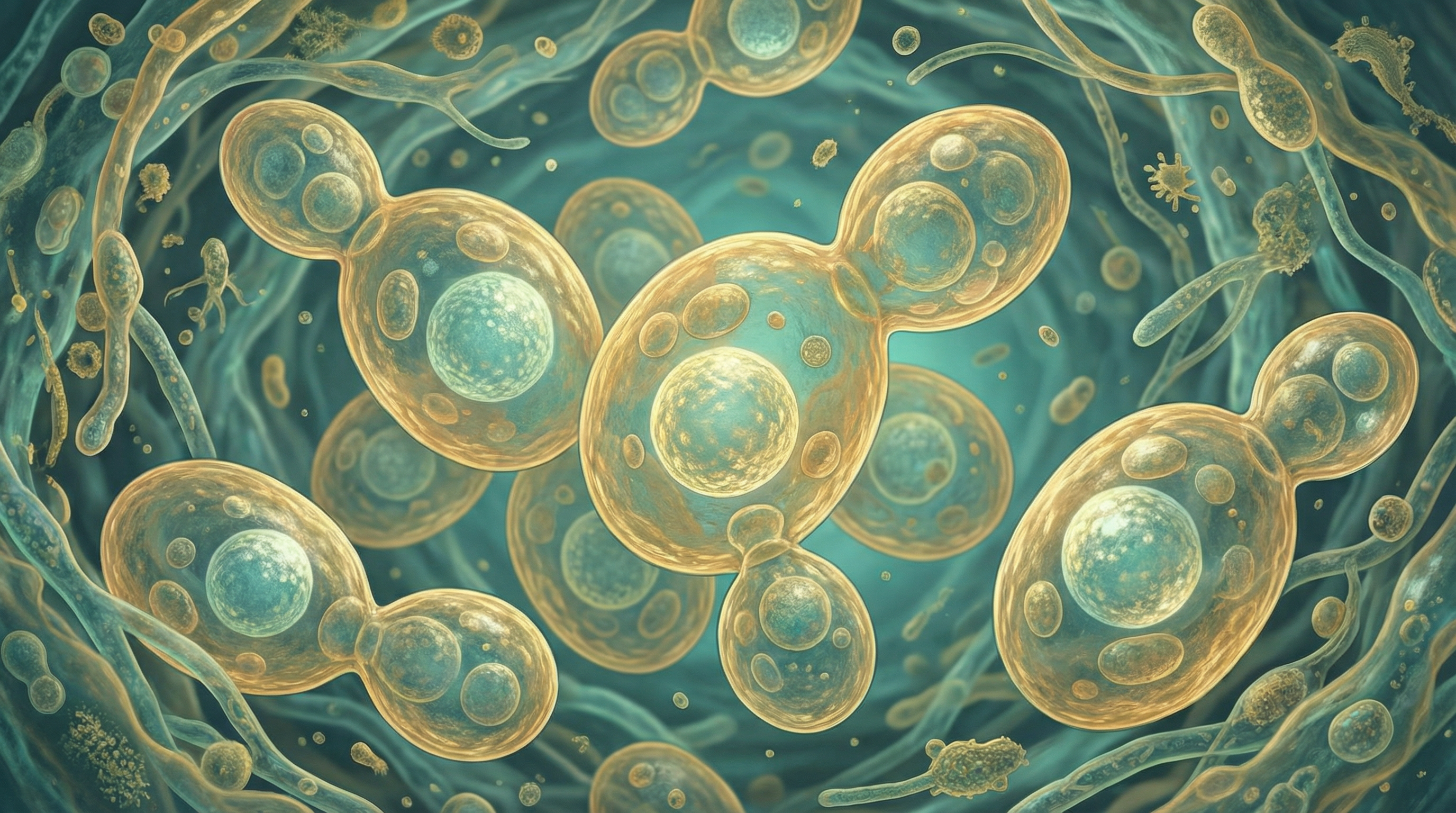
Saccharomyces cerevisiae, commonly known as baker's yeast, is one of the most widely studied eukaryotic organisms and a common dietary fungus frequently detected in the human gut microbiome. While traditionally viewed as a transient microorganism passing through the digestive system from dietary sources, emerging research suggests that S. cerevisiae may have the capacity to colonize the human gut and potentially influence human health in various ways. As part of the human mycobiome (fungal microbiome), S. cerevisiae has gained increasing attention for its potential probiotic properties, particularly through its subspecies S. cerevisiae var. boulardii, which has been extensively studied for its therapeutic applications in gastrointestinal disorders.
S. cerevisiae has a long history of use in food production, including bread making, beer brewing, and wine fermentation. Beyond its industrial applications, this yeast has emerged as an important component of the human gut ecosystem, with complex interactions with the host and other microbiota members. While not considered a permanent resident of the human gut like some bacterial species, S. cerevisiae's ability to utilize mucin as a carbon source suggests it may have adaptations that allow it to survive and potentially thrive in the gut environment under certain conditions.
Characteristics
Saccharomyces cerevisiae possesses several distinctive characteristics that contribute to its potential role in the human microbiome:
Morphology: S. cerevisiae cells are oval to round in shape, with dimensions of approximately 2.5-10.5 μm in length and about 3 μm in thickness. The cells reproduce primarily through budding, a form of asexual reproduction.
Cell Structure: The cell wall of S. cerevisiae is composed of a rigid inner polysaccharide layer with a 1,3-β-glucan branched structure, while the outer layer consists of mannoproteins. This structure accounts for approximately 30% of the yeast's dry weight, with polysaccharides making up about 85% and proteins about 15% of the cell wall mass.
Genome: S. cerevisiae has a fully sequenced genome of approximately 11.3 Mb, containing about 6,000 genes and 275 additional tRNA genes. Interestingly, about 23% of its genome shares homology with the human genome.
Metabolic Capabilities: This yeast can adapt to various environmental conditions, including low oxygen levels and acidic environments, which are characteristic of the human gut. Recent research has demonstrated that S. cerevisiae can utilize mucin, a major component of the gut mucosa, as a carbon source, suggesting potential adaptations for survival in the gut environment.
Genetic Diversity: S. cerevisiae exhibits considerable genetic diversity, with different strains showing varying capabilities and potential health effects. The subspecies S. cerevisiae var. boulardii, in particular, has been identified for its probiotic properties.
Enzymatic Activity: S. cerevisiae possesses yapsin proteases (Yps1, Yps2, Yps3, etc.) that share similarities with the secreted aspartyl proteases (SAPs) found in Candida albicans. These enzymes may play a role in the yeast's ability to break down proteins in the gut environment.
Role in Human Microbiome
The role of S. cerevisiae in the human microbiome is complex and still being elucidated:
Prevalence and Distribution: S. cerevisiae is frequently detected in human stool samples and occasionally in mucosal samples, though traditionally this has been attributed to dietary sources rather than colonization. Recent research suggests that under certain conditions, this yeast may be able to establish itself in the gut environment.
Interaction with Gut Environment: S. cerevisiae has demonstrated the ability to utilize mucin, the large, gel-forming, highly glycosylated proteins that constitute a major carbon source in the gut mucosa. This ability suggests that S. cerevisiae may be able to survive and potentially colonize the gut mucosa, similar to its close relative Candida albicans.
Mitochondrial Function: Research has shown that growth in mucin induces mitogenesis and cellular respiration in S. cerevisiae, highlighting the metabolic adaptations that allow this yeast to thrive in the gut environment.
Interaction with Gut Microbiota: S. cerevisiae may influence the composition and function of the gut bacterial microbiota, potentially promoting the growth of beneficial bacteria while inhibiting pathogenic species.
Temporal Dynamics: The presence and abundance of S. cerevisiae in the gut may fluctuate over time, influenced by factors such as diet, antibiotic use, and host immune status.
Health Implications
The health implications of S. cerevisiae in the human gut are multifaceted and context-dependent:
Beneficial Effects
Probiotic Properties: S. cerevisiae var. boulardii, in particular, has been extensively studied for its probiotic effects. It has shown efficacy in treating various gastrointestinal disorders, including antibiotic-associated diarrhea, traveler's diarrhea, Clostridium difficile infections, and inflammatory bowel disease.
Immune Modulation: S. cerevisiae can stimulate the host immune system, potentially enhancing protection against pathogens. It has been shown to reduce symptoms of colitis and even counteract viral infections through immunological stimulation in both mice and humans.
Pathogen Inhibition: This yeast can inhibit the growth and virulence of various pathogenic bacteria through multiple mechanisms, including competition for nutrients, production of antimicrobial compounds, and enhancement of the gut barrier function.
Nutritional Contributions: S. cerevisiae is a rich source of proteins, vitamins (particularly B vitamins), minerals, and antioxidants, potentially contributing to the nutritional status of the host.
Anti-inflammatory Effects: Some strains of S. cerevisiae have demonstrated anti-inflammatory properties, potentially benefiting conditions characterized by chronic inflammation.
Potential Concerns
Cognitive Function: Some research has suggested a potential negative association between the presence of S. cerevisiae in the gut and cognitive function, particularly in attention and executive function domains. However, the causal relationship and underlying mechanisms require further investigation.
Intestinal Damage: In certain contexts, such as in germ-free mice, S. cerevisiae has been shown to increase intestinal damage and permeability by enhancing host purine metabolism and inducing uric acid synthesis.
Individual Variability: The effects of S. cerevisiae may vary significantly between individuals based on factors such as genetic background, existing microbiota composition, and overall health status.
Rare Infections: In immunocompromised individuals, S. cerevisiae can occasionally cause fungemia (yeast in the bloodstream) or other invasive infections, though this is extremely rare with dietary or probiotic strains.
Metabolic Activities
The metabolic activities of S. cerevisiae in the human gut include:
Carbohydrate Metabolism: S. cerevisiae can ferment various carbohydrates, producing ethanol, carbon dioxide, and other metabolites. In the gut environment, it has demonstrated the ability to utilize complex carbohydrates, including those found in mucin.
Protein Metabolism: Through its proteolytic enzymes, S. cerevisiae can break down proteins, potentially contributing to protein digestion in the gut.
Mitochondrial Function: Growth in mucin induces mitogenesis and cellular respiration in S. cerevisiae, highlighting the importance of mitochondrial function for survival in the gut environment.
Antioxidant Production: S. cerevisiae produces various antioxidant compounds, including glutathione, which may contribute to its health-promoting effects.
Secondary Metabolite Production: This yeast produces various bioactive compounds that may influence the gut environment and interact with the host and other microbiota members.
Clinical Relevance
The clinical relevance of S. cerevisiae, particularly its variant S. cerevisiae var. boulardii, is well-established in several areas:
Treatment of Diarrheal Diseases: S. cerevisiae var. boulardii has shown efficacy in treating various forms of diarrhea, including antibiotic-associated diarrhea, traveler's diarrhea, and AIDS-associated diarrhea. It is often recommended as an adjunct to antibiotic therapy to prevent antibiotic-associated diarrhea.
Management of Inflammatory Bowel Disease: Some studies suggest that S. cerevisiae var. boulardii may help manage symptoms of inflammatory bowel diseases such as Crohn's disease and ulcerative colitis, potentially through its anti-inflammatory and immune-modulatory properties.
Prevention and Treatment of C. difficile Infections: S. cerevisiae var. boulardii has shown promise in preventing recurrent Clostridium difficile infections, a common and potentially serious complication of antibiotic use.
Irritable Bowel Syndrome: Some evidence suggests that S. cerevisiae var. boulardii may help manage symptoms of irritable bowel syndrome, though results have been mixed.
Potential in Cancer Prevention: Preliminary research suggests that S. cerevisiae may have anti-carcinogenic properties, potentially through inactivation of epidermal growth factor receptor (EGFR) and suppression of EGFR-Erk and EGFR-Akt pathways, leading to induced apoptosis in tumor cells.
Interactions with Other Microorganisms
S. cerevisiae engages in complex interactions with other members of the gut microbiome:
Competition with Pathogenic Fungi: S. cerevisiae may compete with pathogenic fungi such as Candida albicans for nutrients and ecological niches in the gut.
Modulation of Bacterial Microbiota: This yeast can influence the composition and function of the bacterial microbiota, potentially promoting the growth of beneficial bacteria while inhibiting pathogenic species.
Cross-Kingdom Signaling: S. cerevisiae may engage in cross-kingdom signaling with bacteria and other microorganisms in the gut, influencing their behavior and gene expression.
Biofilm Interactions: In some contexts, S. cerevisiae may participate in or influence the formation of polymicrobial biofilms in the gut.
Immune-Mediated Interactions: Through its effects on the host immune system, S. cerevisiae may indirectly influence the composition and function of the gut microbiota.
Research Significance
S. cerevisiae holds significant importance in microbiome research for several reasons:
Model Organism: As one of the most well-studied eukaryotic organisms, S. cerevisiae provides valuable insights into fundamental biological processes relevant to human health and disease.
Probiotic Development: Research on S. cerevisiae, particularly its variant S. cerevisiae var. boulardii, has contributed significantly to the development of probiotic therapies for various gastrointestinal disorders.
Mycobiome Understanding: Studies on S. cerevisiae have enhanced our understanding of the human mycobiome and its potential role in health and disease.
Microbiome-Host Interactions: Research on S. cerevisiae has provided insights into the complex interactions between the gut microbiome and the host, including effects on metabolism, immunity, and even cognitive function.
Therapeutic Applications: Ongoing research on S. cerevisiae continues to uncover potential therapeutic applications for various conditions, from gastrointestinal disorders to metabolic diseases and beyond.
Despite its long history of use and extensive study, many aspects of S. cerevisiae's role in the human gut microbiome remain to be fully elucidated. Continued research on this fascinating yeast promises to yield valuable insights into the complex ecosystem of the human gut and its implications for human health and disease.