

Yersinia pestis
Key Characteristics
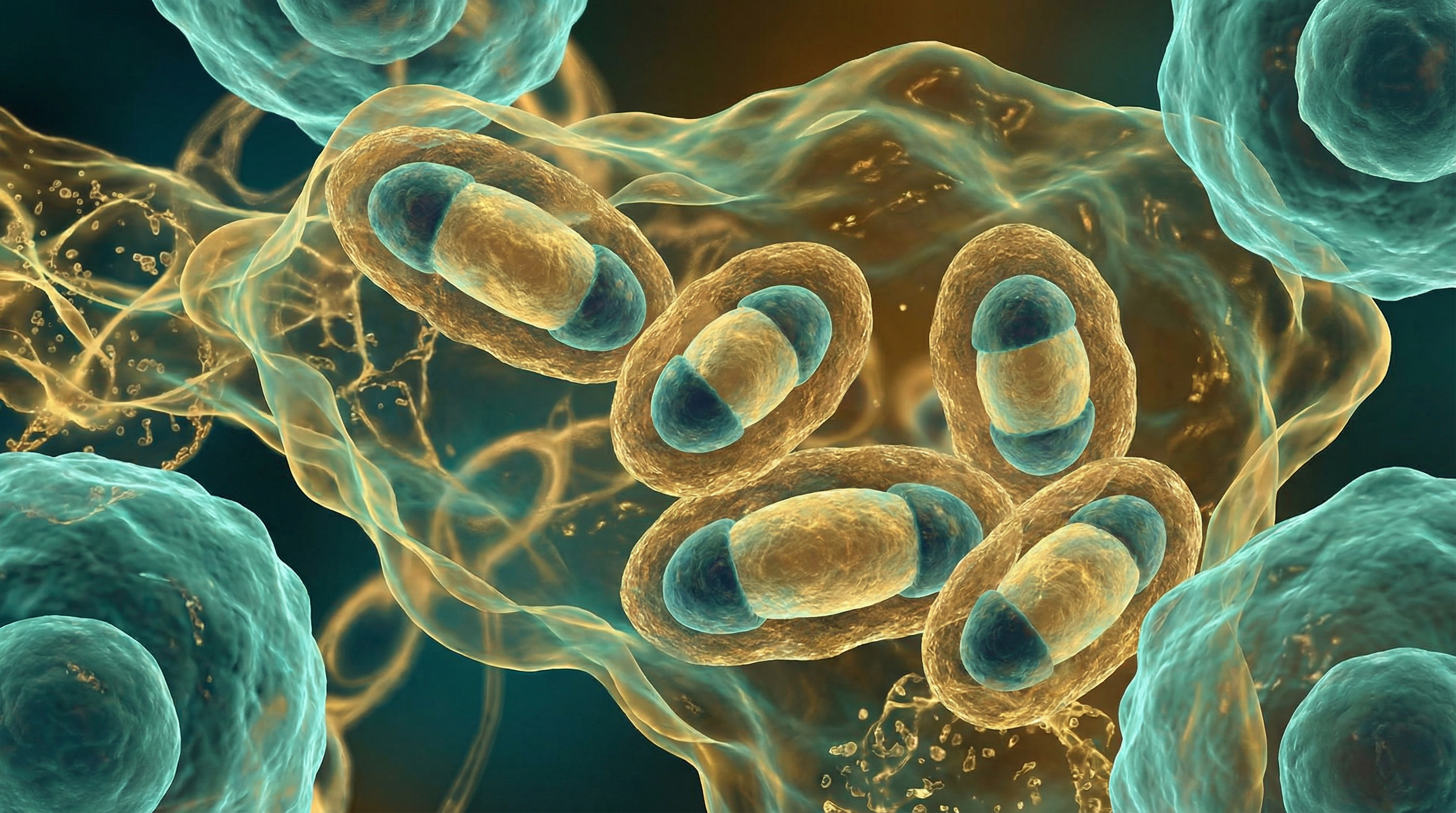
Yersinia pestis is a Gram-negative, non-motile, facultatively anaerobic, coccobacillus bacterium that belongs to the family Enterobacteriaceae. It is the causative agent of plague, one of history's most devastating infectious diseases. Key characteristics of Y. pestis include:
- Gram-negative coccobacillus (spherical to cylindrical in shape) measuring approximately 0.5-0.8 μm in width and 1-3 μm in length
- Non-motile due to inactivation of flagellar genes during evolution from its ancestral species
- Facultatively anaerobic, capable of growing with or without oxygen
- Non-spore-forming bacterium with a thin peptidoglycan cell wall surrounded by an outer lipopolysaccharide membrane
- Bipolar staining (giving a "safety pin" appearance) when treated with certain dyes
- Optimal growth temperature of 28-30°C, reflecting adaptation to both mammalian hosts (37°C) and flea vectors (lower temperatures)
- Slow-growing, with colonies typically visible after 48 hours of incubation
- Forms small, gray-white, translucent colonies with irregular edges on standard laboratory media
- Possesses a virulence plasmid (pYV/pCD1) encoding a type III secretion system essential for mammalian infection
- Contains two additional plasmids (pPCP1 and pMT1) that encode factors important for flea-borne transmission
- Relatively recent pathogen that evolved from Yersinia pseudotuberculosis less than 6,000 years ago
- Divided into four main biovars (Antiqua, Medievalis, Orientalis, and Microtus) based on biochemical properties
- Unable to ferment rhamnose and melibiose, unlike its ancestral species Y. pseudotuberculosis
- Lacks urease activity due to a mutation in the urease gene, an important adaptation for flea-borne transmission
- Produces a capsular antigen (fraction 1 or F1) at 37°C that inhibits phagocytosis
- Contains lipopolysaccharide (LPS) with reduced endotoxic activity compared to other Gram-negative bacteria
- Expresses Yersinia outer proteins (Yops) that are injected into host cells to disrupt immune responses
- Capable of forming biofilms in the flea foregut, which is essential for efficient transmission
- Exhibits temperature-dependent gene expression, with different virulence factors expressed at flea temperature versus mammalian host temperature
- Possesses multiple iron acquisition systems to obtain this essential nutrient from host sources
- Relatively resistant to phagocytosis and intracellular killing by neutrophils and macrophages
Y. pestis is primarily a zoonotic pathogen that circulates in rodent populations and is transmitted to humans via the bite of infected fleas. Its remarkable virulence and historical significance as the cause of devastating plague pandemics have made it one of the most intensively studied bacterial pathogens.
Role in Human Microbiome
Yersinia pestis is not considered a component of the normal human microbiome. Unlike commensal or opportunistic pathogens that may colonize human body sites, Y. pestis is an obligate pathogen with a complex life cycle involving rodent reservoirs and flea vectors. Its relationship with humans can be characterized as follows:
Absence from normal microbiome:
- Y. pestis is not found as part of the normal bacterial communities in any human body site
- It does not establish long-term colonization in humans in the absence of disease
- Human infection represents an accidental endpoint in its natural transmission cycle
- The bacterium has not evolved to coexist with humans as commensals do
Natural ecological niche:
- Primarily circulates in wild rodent populations (e.g., rats, ground squirrels, prairie dogs, gerbils)
- Transmitted between rodents by flea vectors
- Maintains enzootic (endemic) cycles in rodent populations in specific geographic regions
- Occasionally causes epizootic outbreaks with high mortality in rodent populations
- Humans enter this cycle accidentally when bitten by infected fleas or through other routes of exposure
Transmission to humans:
- Most commonly occurs through the bite of an infected flea
- Can also occur through direct contact with infected animal tissues
- Person-to-person transmission is possible in pneumonic plague
- Rare cases of transmission through inhalation of infectious aerosols or ingestion of contaminated food
Geographic distribution:
- Endemic foci exist in parts of Africa, Asia, South America, and the western United States
- Natural transmission cycles persist in these regions in wild rodent populations
- Human cases are sporadic and relatively rare in modern times
- Historically caused devastating pandemics affecting large human populations
Interaction with human microbiome during infection:
- During infection, Y. pestis may transiently interact with the resident microbiota at the site of infection
- In bubonic plague, bacteria multiply in lymph nodes rather than competing with the skin microbiome
- In pneumonic plague, bacteria infect the lungs but do not establish as part of the respiratory microbiome
- The inflammatory response to infection may disrupt normal microbiome communities
Evolutionary perspective:
- Relatively recent pathogen that evolved from Y. pseudotuberculosis approximately 1,500-6,000 years ago
- Evolution involved acquisition of new genes and loss of functions present in its ancestor
- Adapted specifically for transmission by fleas rather than for colonization of human body sites
- Has not developed commensalism with humans despite thousands of years of interaction
Comparison with other Yersinia species:
- Other Yersinia species (Y. enterocolitica, Y. pseudotuberculosis) can transiently colonize the human intestinal tract
- Y. pestis lost this ability during its evolution, becoming a vector-borne pathogen instead
- Gene loss and pseudogene formation during evolution from Y. pseudotuberculosis reduced its ability to survive in diverse environments
- Specialized for a narrower ecological niche compared to related Yersinia species
Unlike many other bacteria discussed in this collection, Y. pestis is exclusively a pathogen rather than a member of the human microbiome. Its interactions with humans are characterized by acute, often severe disease rather than colonization or commensalism. The bacterium's biology is specialized for transmission between rodents via fleas, with humans representing an accidental and ultimately dead-end host in its life cycle.
Health Implications
Yersinia pestis is associated with significant negative health implications as the causative agent of plague, a disease that has profoundly impacted human history. The health implications of Y. pestis infection include:
Clinical forms of plague:
- Bubonic plague: The most common form (80-95% of cases)
- Develops 2-6 days after infection from a flea bite
- Characterized by sudden onset of fever, headache, chills, and weakness
- Formation of painful, swollen lymph nodes (buboes) near the site of infection
- Untreated mortality rate of 50-60%
- Pneumonic plague: The most severe and infectious form
- Results from inhalation of infectious droplets or secondary spread from bubonic/septicemic plague
- Characterized by severe pneumonia with fever, weakness, and rapidly developing shortness of breath
- Cough with bloody or watery sputum develops as the disease progresses
- Nearly 100% fatal if not treated within 24 hours of symptom onset
- Can spread person-to-person through respiratory droplets
- Septicemic plague: Infection of the bloodstream
- Can occur primarily or secondary to bubonic plague
- Characterized by fever, extreme weakness, abdominal pain, and shock
- May cause disseminated intravascular coagulation with bleeding and tissue necrosis
- Nearly 100% fatal if untreated
- Meningeal plague: Rare form involving infection of the meninges
- Usually occurs as a complication of untreated bubonic or septicemic plague
- Presents with fever, headache, stiff neck, and altered mental status
- High mortality rate even with treatment
- Pharyngeal plague: Rare form resulting from ingestion of contaminated materials
- Characterized by pharyngitis, cervical lymphadenopathy, and fever
- Can progress to systemic disease if untreated
- Bubonic plague: The most common form (80-95% of cases)
Pathogenesis and virulence factors:
- Type III secretion system: Injects effector proteins (Yops) into host cells
- Disrupts phagocytosis and cytoskeletal function
- Inhibits pro-inflammatory cytokine production
- Induces apoptosis in macrophages and neutrophils
- F1 antigen: Forms an antiphagocytic capsule at 37°C
- Prevents attachment of phagocytes to bacterial surface
- Major protective antigen in vaccine development
- Plasminogen activator (Pla): Surface protease with multiple functions
- Activates plasminogen to plasmin, promoting tissue invasion
- Degrades complement components
- Essential for bubonic plague but not pneumonic plague
- Yersiniabactin: Iron acquisition siderophore
- Scavenges iron from host proteins
- Essential for virulence in bubonic plague
- LPS modifications: Altered lipid A structure
- Reduces recognition by Toll-like receptor 4
- Decreases inflammatory response compared to other Gram-negative bacteria
- Biofilm formation: Enables colonization of flea foregut
- Essential for transmission from fleas to mammals
- Involves hemin storage (Hms) proteins
- Type III secretion system: Injects effector proteins (Yops) into host cells
Epidemiological impact:
- Historical pandemics:
- Justinian Plague (541-750 CE): Estimated 25-50 million deaths
- Black Death (1347-1351): Killed 30-60% of Europe's population
- Third Pandemic (1855-1959): Originated in China and spread globally
- Modern epidemiology:
- Endemic in parts of Africa, Asia, South America, and western United States
- Approximately 1,000-2,000 human cases reported annually worldwide
- Periodic outbreaks still occur, such as the 2017 Madagascar outbreak
- Classified as a Category A bioterrorism agent due to potential for weaponization
- Historical pandemics:
Risk factors for human infection:
- Living or working in areas with endemic plague in rodent populations
- Occupational exposure to potentially infected animals
- Hunting or handling potentially infected wildlife
- Living in rural areas with poor housing conditions allowing rodent entry
- Exposure to domestic cats with plague (cats can develop plague and transmit to humans)
- Travel to endemic regions without appropriate precautions
Diagnosis and treatment:
- Diagnostic methods:
- Culture and identification of Y. pestis from clinical specimens
- Polymerase chain reaction (PCR) for rapid detection
- Immunofluorescence assays for F1 antigen detection
- Serology for retrospective diagnosis
- Treatment approaches:
- Prompt antibiotic therapy is essential for survival
- First-line antibiotics include streptomycin, gentamicin, doxycycline, and fluoroquinolones
- Combination therapy may be used for severe cases
- Supportive care for complications such as shock, respiratory failure, and DIC
- Isolation precautions for pneumonic plague cases
- Diagnostic methods:
Prevention strategies:
- Environmental control:
- Rodent control in urban and peridomestic settings
- Flea control through insecticides
- Improved housing to reduce rodent entry
- Personal protective measures:
- Avoiding contact with sick or dead animals in endemic areas
- Use of insect repellents and protective clothing
- Prompt treatment of pets with flea control products
- Post-exposure prophylaxis:
- Antibiotic prophylaxis for close contacts of pneumonic plague cases
- Surveillance of contacts for development of symptoms
- Vaccination:
- No widely available vaccine currently exists
- Previous whole-cell vaccines had significant side effects and limited duration of protection
- New subunit vaccines targeting F1 and V antigens are in development
- Environmental control:
Long-term sequelae in survivors:
- Potential for long-term complications from tissue necrosis in septicemic plague
- Possible neurological sequelae following meningeal plague
- Lung damage and fibrosis following severe pneumonic plague
- Psychological impacts related to the traumatic nature of the disease
Despite its historical significance and continued presence in certain regions, modern antibiotics and public health measures have dramatically reduced the impact of plague. However, the potential for outbreaks remains in endemic areas, particularly where surveillance and healthcare infrastructure are limited. The disease continues to be of public health importance due to its severity, potential for person-to-person spread in the pneumonic form, and classification as a potential bioterrorism agent.
Metabolic Activities
Yersinia pestis exhibits complex and adaptable metabolic capabilities that enable it to survive and replicate in diverse environments, including the flea vector and mammalian host. Key aspects of Y. pestis metabolism include:
Central carbon metabolism:
- Utilizes both aerobic respiration and fermentation for energy generation
- Contains complete glycolytic pathway for glucose metabolism
- Possesses functional tricarboxylic acid (TCA) cycle for aerobic energy production
- Capable of mixed acid fermentation under anaerobic conditions
- Has lost the ability to ferment certain sugars (rhamnose, melibiose) that its ancestor Y. pseudotuberculosis can utilize
- Biovar Orientalis strains have lost the ability to ferment glycerol due to a 93-bp deletion in the glpD gene
- Metabolizes amino acids as carbon and energy sources, particularly in the nutrient-rich host environment
- Exhibits temperature-dependent regulation of metabolic pathways, with different patterns at flea temperature (26°C) versus mammalian host temperature (37°C)
Adaptations for flea colonization:
- Forms biofilms in the flea foregut through production of exopolysaccharide matrix
- Biofilm formation requires the hemin storage (hms) locus, which is expressed at flea temperature but not at mammalian temperature
- Utilizes blood meal components as nutrient sources in the flea gut
- Has lost urease activity due to m (Content truncated due to size limit. Use line ranges to read in chunks)