

Improved Nutrient Absorption
Optimize your body's ability to extract and utilize essential nutrients from food through microbiome-supported digestive processes.
Key Supporting Microbes
These beneficial microorganisms play key roles in supporting this health benefit:
The Microbiome-Nutrient Connection
Your ability to extract nutrients from food depends not just on what you eat, but on the trillions of microorganisms living in your digestive tract. The gut microbiome acts as a metabolic organ, transforming, synthesizing, and facilitating the absorption of essential nutrients that would otherwise be unavailable to your body.[1]
Even with a perfect diet, suboptimal microbiome composition can lead to nutrient deficiencies. Conversely, a well-balanced microbiome can maximize the nutritional value you receive from every meal.
How Bacteria Enhance Nutrient Availability
Breaking Down Complex Molecules
Many nutrients in plant foods are bound to fiber or exist in forms that human enzymes cannot access:
- Polyphenols in fruits and vegetables are often released and activated by bacterial enzymes
- Phytates in grains and legumes can block mineral absorption until bacterial phytases break them down
- Complex carbohydrates are fermented into absorbable short-chain fatty acids
- Proteins may be further broken down, increasing amino acid availability
Vitamin Synthesis
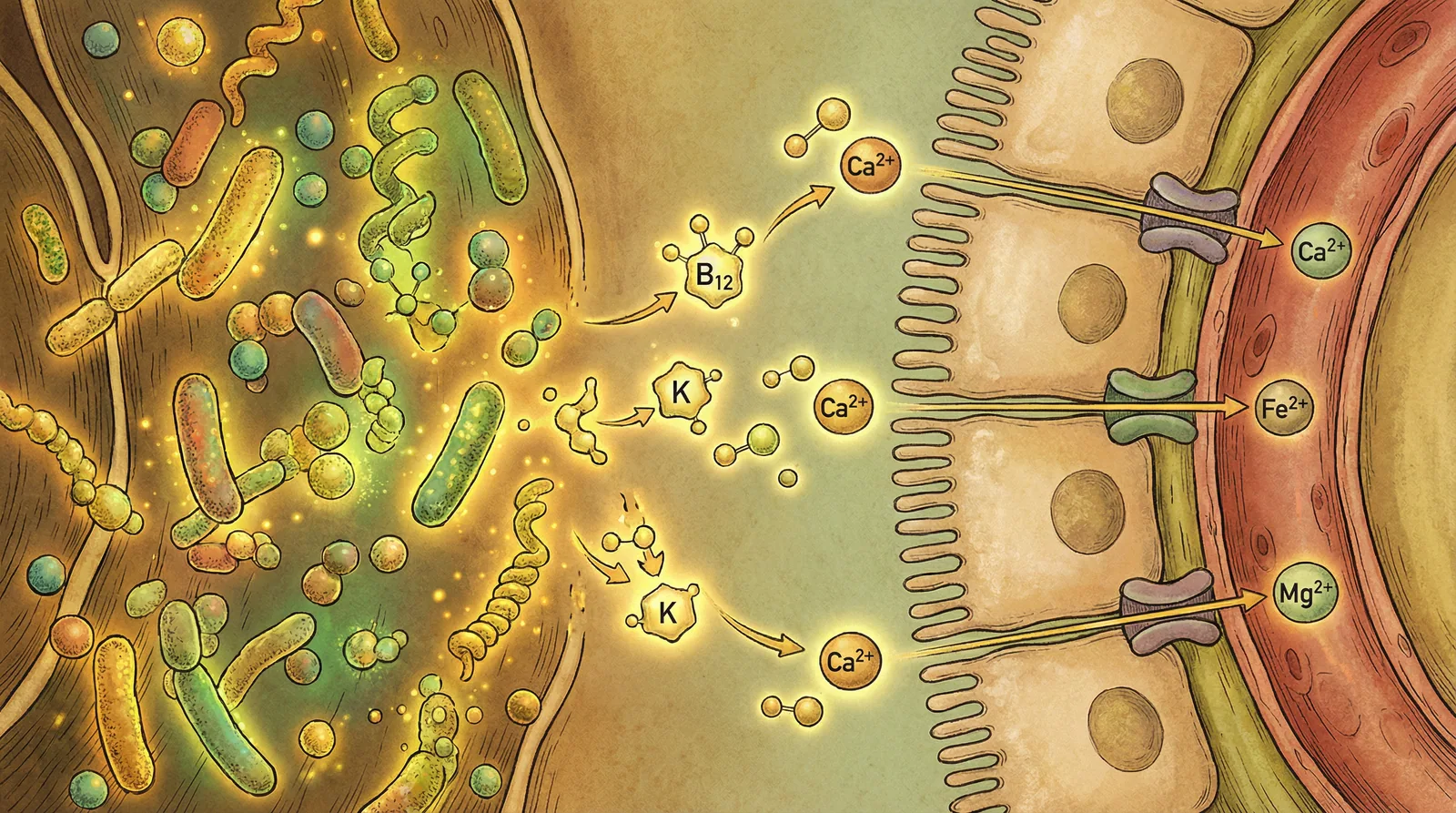
Your gut bacteria are prolific vitamin producers:[2]
B Vitamins:
- B12 (cobalamin) — essential for nerve function and DNA synthesis
- B9 (folate) — critical for cell division and pregnancy
- B7 (biotin) — important for metabolism and hair/skin health
- B5 (pantothenic acid) — needed for energy production
- B2 (riboflavin) — supports cellular function
Vitamin K:
- K2 (menaquinone) — essential for blood clotting and bone health
- Certain bacteria can produce significant amounts, contributing to daily requirements
Mineral Enhancement
Gut bacteria improve mineral bioavailability through multiple mechanisms:[3]
- Lowering intestinal pH through acid production increases mineral solubility
- Breaking down phytates and oxalates that bind minerals
- Producing organic acids that chelate minerals for better absorption
- Maintaining epithelial health to ensure proper transport mechanisms
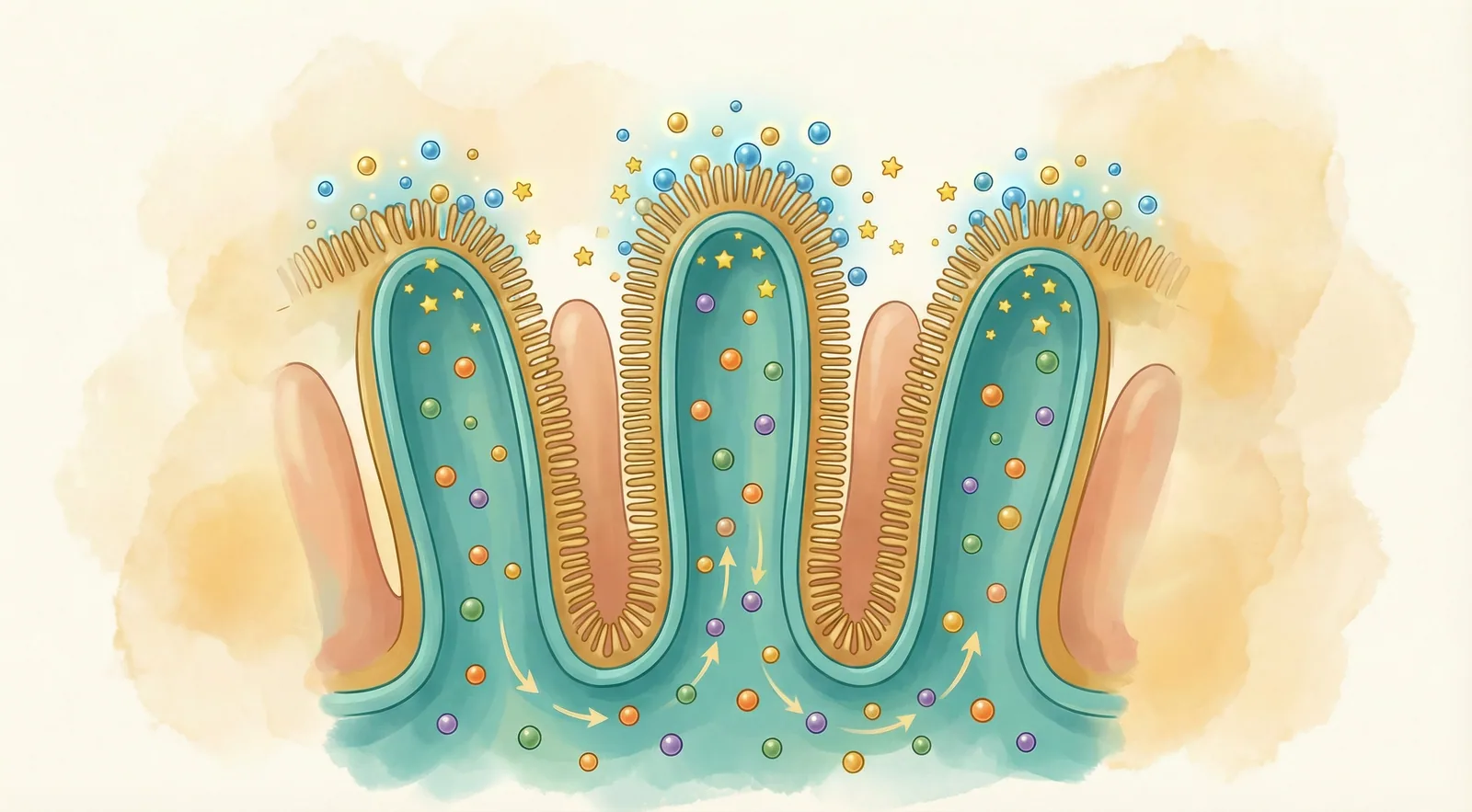
Key Microbes for Nutrient Absorption
Bacteroides thetaiotaomicron
This versatile bacterium is a master of carbohydrate metabolism:
- Possesses the largest known repertoire of carbohydrate-degrading enzymes
- Breaks down complex plant polysaccharides
- Releases sugars and metabolites for both host and other bacteria
- Supports overall microbial ecosystem health
Lactobacillus Species
These lactic acid bacteria contribute to absorption by:
- Lowering intestinal pH to enhance mineral solubility
- Producing enzymes that break down lactose and other compounds
- Synthesizing B vitamins and vitamin K
- Supporting intestinal barrier function
Bifidobacterium Species
Essential for gut health from infancy, these bacteria:
- Ferment dietary fiber into beneficial short-chain fatty acids
- Produce B vitamins including folate
- Improve calcium and magnesium absorption
- Support immune function in the gut
Roseburia intestinalis
A major butyrate producer that:
- Feeds colonocytes to maintain healthy absorption surface
- Supports epithelial integrity
- Ferments resistant starch and dietary fiber
- Creates an environment conducive to nutrient uptake
Nutrients Most Affected by Microbiome Status
Iron
Iron absorption is heavily influenced by gut bacteria:
- Beneficial bacteria can reduce ferric iron (Fe³⁺) to more absorbable ferrous iron (Fe²⁺)
- Dysbiosis can lead to iron deficiency despite adequate dietary intake
- Some pathogenic bacteria compete for iron, reducing host availability
Calcium and Magnesium
These essential minerals benefit from:
- SCFA production, which lowers colonic pH and increases solubility
- Prebiotic fermentation, which enhances mineral absorption
- Healthy epithelial cells with functional transport proteins
Zinc
Zinc absorption depends on:
- Phytate degradation by bacterial phytases
- Healthy intestinal villi with proper transport mechanisms
- Balanced inflammation levels (chronic inflammation impairs zinc status)
Fat-Soluble Vitamins (A, D, E, K)
The microbiome influences these vitamins through:
- Bile acid metabolism (bacteria modify bile acids that aid fat absorption)
- Vitamin K2 synthesis
- Maintaining healthy fat absorption mechanisms
Signs of Suboptimal Nutrient Absorption
You might have absorption issues if you experience:
- Fatigue despite adequate sleep and iron-rich diet
- Brittle nails or hair loss
- Frequent illness suggesting immune compromise
- Poor wound healing
- Muscle cramps or spasms
- Numbness or tingling (potential B12 deficiency)
- Easy bruising (possible vitamin K issue)
Strategies to Optimize Absorption
Dietary Approaches
Support beneficial bacteria:
- Eat diverse plant fibers from vegetables, fruits, legumes, and whole grains
- Include fermented foods daily
- Consume prebiotic-rich foods like garlic, onions, and asparagus
Enhance specific nutrient absorption:
- Pair vitamin C-rich foods with iron sources
- Include healthy fats with fat-soluble vitamins
- Soak or sprout grains and legumes to reduce phytates
Mindful eating practices:
- Chew thoroughly to maximize enzyme exposure
- Avoid excessive liquid with meals (can dilute digestive secretions)
- Allow adequate time for meals without stress
Lifestyle Factors
Timing considerations:
- Some supplements are better absorbed at specific times
- Probiotics may be most effective on an empty stomach
- Minerals often absorb better with food
Medication awareness:
- Proton pump inhibitors reduce B12, iron, and calcium absorption
- Antibiotics can temporarily disrupt absorption-enhancing bacteria
- Discuss alternatives with healthcare providers when possible
Testing Your Nutrient Status
Consider testing if you suspect absorption issues:
- Comprehensive metabolic panel for general nutrient status
- Vitamin D, B12, and folate levels commonly affected by gut health
- Iron studies including ferritin
- RBC magnesium for accurate magnesium assessment
- Microbiome testing to identify dysbiosis patterns
Building Better Absorption
Improving nutrient absorption through microbiome optimization typically involves:
- Increasing microbial diversity through varied plant food intake
- Supporting key bacterial species with targeted prebiotics
- Reducing factors that harm beneficial bacteria (processed foods, unnecessary antibiotics)
- Addressing underlying gut issues like inflammation or permeability
- Being patient — microbiome changes take weeks to months to stabilize
With consistent effort, you can significantly improve your body's ability to extract and utilize the nutrients from your food, potentially resolving deficiencies that persisted despite supplementation.

Supporting Practices
Evidence-based strategies to support this benefit:
- Chew food thoroughly to initiate proper digestion
- Include digestive enzyme-rich foods like pineapple and papaya
- Consume fermented foods to support beneficial bacteria
- Pair iron-rich foods with vitamin C for better absorption
- Avoid drinking large amounts of liquid during meals
- Include healthy fats to aid fat-soluble vitamin absorption
Frequently Asked Questions
What is Improved Nutrient Absorption?
Optimize your body's ability to extract and utilize essential nutrients from food through microbiome-supported digestive processes.
How does the microbiome support improved nutrient absorption?
Your gut microbiome plays a crucial role in improved nutrient absorption through various mechanisms involving specific beneficial bacteria and their metabolites.
Which microbes are important for improved nutrient absorption?
Key beneficial microbes include: Bacteroides thetaiotaomicron, Lactobacillus acidophilus, Bifidobacterium adolescentis, Roseburia intestinalis.
References
- Rowland I, Gibson G, Heinken A, et al.. Gut microbiota functions: metabolism of nutrients and other food components. European Journal of Nutrition. 2018;57(1):1-24. doi:10.1007/s00394-017-1445-8 ↩
- LeBlanc JG, Milani C, de Giori GS, et al.. Bacteria as vitamin suppliers to their host: a gut microbiota perspective. Current Opinion in Biotechnology. 2013;24(2):160-168. doi:10.1016/j.copbio.2012.08.005 ↩
- Magnúsdóttir S, Ravcheev D, de Crécy-Lagard V, Thiele I. Systematic genome assessment of B-vitamin biosynthesis suggests co-operation among gut microbes. Frontiers in Genetics. 2015;6:148. doi:10.3389/fgene.2015.00148 ↩