

Discover your unique microbiome profile with advanced testing

Learn More →
Bacterium

Lactobacillus acidophilus

Common name: L. acidophilus

Beneficial Digestive Gut Urogenital
Beneficial
Effect
Digestive
Impact
Gut, Urogenital
Location
Common
Prevalence

Lactobacillus acidophilus is one of the most well-researched probiotic bacteria. It naturally occurs in the human gut and vaginal microbiome and plays a crucial role in maintaining digestive and immune health.

Key Benefits
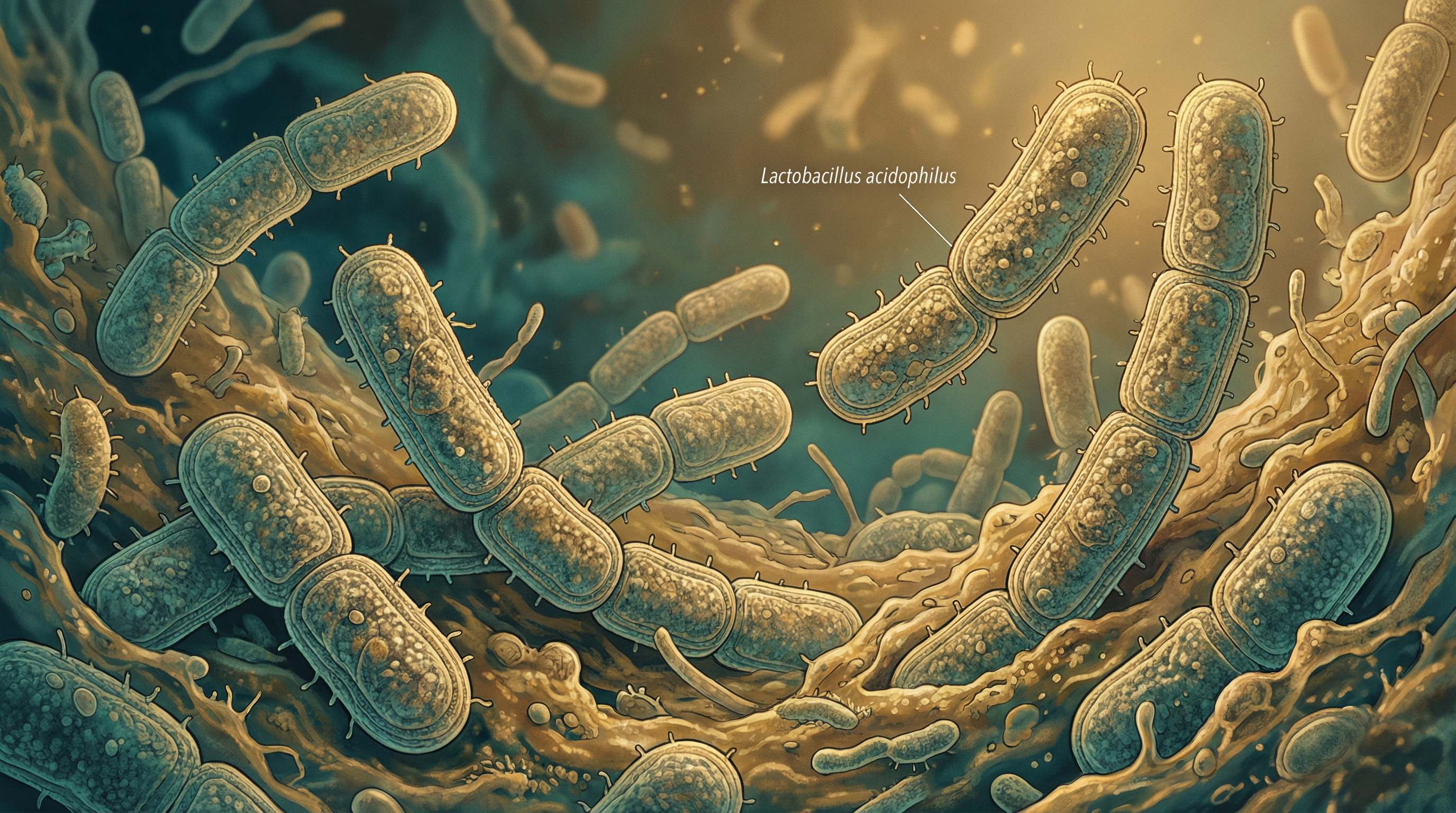
L. acidophilus produces lactic acid, which helps maintain an acidic environment in the gut and vagina, inhibiting the growth of harmful bacteria. It also produces natural antibiotics called bacteriocins that can directly kill pathogenic bacteria.

Digestive Health

This beneficial bacterium aids in the digestion of lactose, making it potentially helpful for people with lactose intolerance. It also helps maintain the integrity of the gut lining, preventing leaky gut syndrome and supporting overall digestive function.

Immune Support

Research shows that L. acidophilus can enhance immune function by stimulating the production of antibodies and activating immune cells. Regular consumption may help reduce the incidence and duration of common infections.

Vaginal Health

In the vaginal microbiome, L. acidophilus helps maintain a healthy pH balance, preventing the overgrowth of harmful microorganisms that can lead to infections like bacterial vaginosis and yeast infections.

Interaction with Other Microorganisms

L. acidophilus works synergistically with other beneficial bacteria like Bifidobacterium species. It competes with harmful bacteria such as certain strains of E. coli and can inhibit the overgrowth of Candida albicans.

Dietary Sources

Natural sources include fermented foods such as yogurt, kefir, sauerkraut, and some cheeses. It's also widely available as a probiotic supplement.

Associated Conditions

Research References

  1. Unknown. Lactobacillus acidophilus inhibits the TNF-alpha-induced increase in intestinal epithelial tight junction permeability via a TLR-2 and PI3K-dependent inhibition of NF-kappaB activation. Research. 2025. doi:10.3389/fimmu.2024.1348010
  2. Unknown. Probiotic lactobacilli and VSL#3 induce enterocyte β-defensin 2. Research. 2025. doi:10.1111/j.1365-2249.2007.03587.x
  3. Unknown. Regulation of induced colonic inflammation by Lactobacillus acidophilus deficient in lipoteichoic acid. Research. 2025. doi:10.1073/pnas.1005066107
  4. Unknown. Effect of Molecules Secreted by Lactobacillus acidophilus Strain La-5 on Escherichia coli O157:H7 Colonization. Research. 2025. doi:10.1128/AEM.01651-08
  5. Unknown. A lyophilized and inactivated culture of Lactobacillus acidophilus increases Helicobacter pylori eradication rates. Research. 2025. doi:10.1046/j.1365-2036.2000.00885.x
  6. Unknown. Lactobacillus acidophilus LA5 improves saturated fat-induced obesity mouse model through the enhanced intestinal Akkermansia muciniphila. Research. 2025. doi:10.1038/s41598-021-85449-2
  7. Unknown. The Lactobacillus Bile Salt Hydrolase Repertoire Reveals Niche-Specific Adaptation. Research. 2025. doi:10.1128/msphere.00140-18
  8. Unknown. Oral supplementation with selected Lactobacillus acidophilus triggers IL-17-dependent innate defense response, activation of innate lymphoid cells type 3 and improves colitis. Research. 2025. doi:10.1038/s41598-022-21643-0