

Clostridioides difficile
Clostridioides difficile (formerly known as Clostridium difficile) is a Gram-positive, spore-forming, anaerobic bacterium belonging to the Firmicutes phylum. It is a significant human pathogen that causes antibiotic-associated diarrhea and colitis, particularly in healthcare settings. C. difficile infection (CDI) has become one of the most common healthcare-associated infections globally, with substantial morbidity, mortality, and economic burden.
Key Characteristics
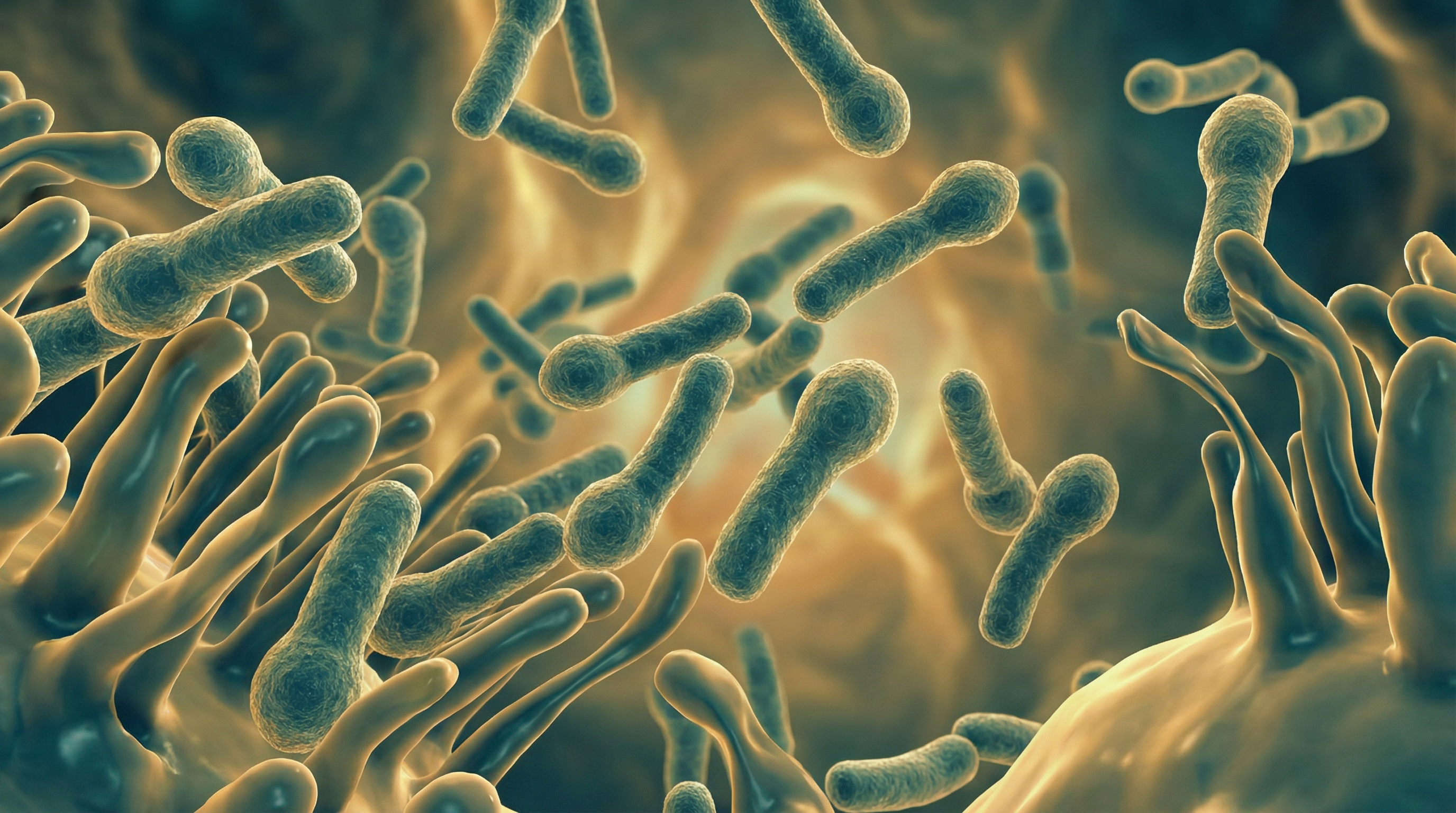
C. difficile is characterized by its ability to form endospores that are resistant to heat, acid, and many disinfectants, allowing the bacterium to persist in harsh environments for extended periods. These spores can survive on surfaces in healthcare settings for months, contributing to the spread of infection.
The bacterium is obligately anaerobic, meaning it can only grow in environments with little or no oxygen. It is rod-shaped (bacillus) and can appear singly or in pairs, occasionally forming short chains. When cultured on selective media, C. difficile colonies typically have a distinctive appearance and a characteristic "horse stable" odor.
C. difficile possesses flagella that provide motility and may contribute to its virulence by facilitating adherence to the intestinal mucosa. The cell surface of C. difficile includes various proteins and structures that interact with host tissues and the immune system, including surface layer proteins (SLPs) that form a paracrystalline layer around the bacterium.
A defining feature of pathogenic C. difficile strains is their ability to produce toxins, primarily Toxin A (TcdA) and Toxin B (TcdB), which are responsible for the clinical manifestations of CDI. Some hypervirulent strains, such as the NAP1/BI/027 strain, also produce a binary toxin (CDT) that may contribute to increased disease severity.
Role in the Human Microbiome
C. difficile primarily inhabits the human colon, where it can exist as a commensal organism in some individuals or as a pathogen in others. In healthy adults, C. difficile is present in the gut microbiota of approximately 2-5% of the population without causing symptoms, a state known as asymptomatic colonization.
The transition from colonization to pathogenicity typically occurs following disruption of the normal gut microbiota, most commonly due to antibiotic use. Antibiotics can eliminate many beneficial bacteria that normally compete with C. difficile for nutrients and ecological niches, allowing C. difficile to proliferate and produce toxins.
The relationship between C. difficile and the gut microbiota is complex and dynamic. A diverse and balanced gut microbiota provides colonization resistance against C. difficile through various mechanisms:
Competition for nutrients: Commensal bacteria compete with C. difficile for essential resources such as carbon sources and amino acids.
Production of inhibitory compounds: Some gut bacteria produce substances that directly inhibit C. difficile growth, such as secondary bile acids and bacteriocins.
Modulation of the gut environment: Commensal bacteria influence factors such as pH, redox potential, and bile acid metabolism, creating conditions that are less favorable for C. difficile growth.
Immune system regulation: The normal microbiota helps maintain a balanced immune response that can control C. difficile colonization.
Recent research has identified specific bacterial species that play key roles in C. difficile inhibition. For example, Clostridium scindens can convert primary bile acids to secondary bile acids that inhibit C. difficile growth, while Clostridium hiranonis has been identified as a "universal" inhibitor of diverse C. difficile strains across different nutrient environments.
Health Implications
Detrimental Effects
C. difficile is primarily known for its pathogenic effects, which include:
Antibiotic-associated diarrhea: The most common manifestation of CDI, ranging from mild to severe.
Pseudomembranous colitis: A severe inflammation of the colon characterized by the formation of pseudomembranes (plaques of inflammatory cells, fibrin, and cellular debris) on the colonic mucosa.
Toxic megacolon: A potentially life-threatening complication involving extreme dilation of the colon and systemic toxicity.
Intestinal perforation: In severe cases, inflammation can lead to perforation of the colon wall.
Sepsis: Systemic inflammatory response to infection that can lead to organ failure and death.
Recurrent infection: Approximately 20-30% of patients experience recurrence of CDI after initial treatment, with the risk increasing with each subsequent episode.
The pathogenicity of C. difficile is primarily mediated by its toxins:
Toxin A (TcdA): An enterotoxin that disrupts the cytoskeleton of intestinal epithelial cells, leading to cell rounding, detachment, and fluid secretion.
Toxin B (TcdB): A cytotoxin that is more potent than Toxin A and causes similar cellular effects.
Binary toxin (CDT): Present in some strains, it may enhance colonization and contribute to increased virulence.
These toxins trigger an inflammatory cascade in the intestinal mucosa, leading to neutrophil recruitment, cytokine production, and tissue damage. The resulting inflammation and fluid secretion manifest as diarrhea and, in severe cases, pseudomembranous colitis.
Beneficial Effects
Unlike many other members of the gut microbiota, C. difficile is not known to provide direct beneficial effects to the host. Its presence in the gut is generally considered neutral when it exists as a commensal (non-toxin-producing state) or detrimental when it becomes pathogenic.
However, understanding C. difficile has led to important advances in microbiome research and therapeutic approaches, such as fecal microbiota transplantation (FMT) and the development of targeted probiotics, which have broader implications for treating various microbiome-associated conditions.
Metabolic Activities
C. difficile possesses a versatile metabolism that allows it to adapt to changing conditions in the gut environment:
Carbohydrate fermentation: C. difficile can ferment various carbohydrates, including glucose, fructose, and mannose, producing short-chain fatty acids such as acetate, butyrate, and propionate as end products.
Amino acid fermentation: The bacterium utilizes amino acids as carbon and energy sources through Stickland fermentation, a process where one amino acid serves as an electron donor and another as an electron acceptor.
Proline metabolism: C. difficile has a particular preference for proline as a substrate, and competition for this amino acid with other gut bacteria can influence its growth.
Bile acid metabolism: C. difficile can germinate in response to certain primary bile acids (such as taurocholate), while secondary bile acids (produced by other gut bacteria) typically inhibit its growth and germination.
Sporulation and germination: In response to environmental stresses, C. difficile can form endospores that remain dormant until favorable conditions return, at which point they germinate to produce vegetative cells.
The metabolic activities of C. difficile are significantly influenced by the surrounding microbial community and nutrient availability. Research has shown that different C. difficile strains exhibit varying metabolic preferences and capabilities, contributing to their differential virulence and ecological fitness in diverse gut environments.
Clinical Relevance
C. difficile infection is a major public health concern with significant clinical implications:
Epidemiology: CDI incidence has increased dramatically since the early 2000s, with the emergence of hypervirulent strains such as NAP1/BI/027. It is one of the most common healthcare-associated infections, affecting approximately 500,000 people annually in the United States alone.
Risk factors: Major risk factors for CDI include antibiotic use, advanced age (>65 years), hospitalization, immunosuppression, gastrointestinal surgery, and inflammatory bowel disease.
Diagnosis: CDI is diagnosed through a combination of clinical symptoms (diarrhea) and laboratory tests, including enzyme immunoassays for C. difficile toxins, nucleic acid amplification tests for toxin genes, and toxigenic culture.
Treatment: Current treatment approaches include:
- Discontinuation of the inciting antibiotic when possible
- Antibiotic therapy with vancomycin, fidaxomicin, or metronidazole
- Fecal microbiota transplantation for recurrent CDI
- Bezlotoxumab, a monoclonal antibody against Toxin B, to prevent recurrence
- Emerging therapies such as non-toxigenic C. difficile strains, targeted probiotics, and microbiome-based therapeutics
Prevention: Strategies include antibiotic stewardship, infection control measures (hand hygiene, contact precautions, environmental cleaning), and potentially vaccination for high-risk individuals.
Recurrent CDI: A significant clinical challenge, with each recurrence increasing the likelihood of further episodes. Management often requires extended or pulsed antibiotic regimens, fecal microbiota transplantation, or other microbiome-based approaches.
Strain variability: Different C. difficile strains exhibit varying levels of virulence, antibiotic resistance, and response to treatment. Molecular typing methods are used to track strain emergence and transmission in healthcare settings.
Interaction with Other Microorganisms
C. difficile engages in complex interactions with other members of the gut microbiota:
Competition with commensal bacteria: Many gut bacteria compete with C. difficile for nutrients and ecological niches. For example, Akkermansia muciniphila competes for mucus-derived sugars, while various Clostridium species compete for amino acids used in Stickland metabolism.
Inhibition by specific bacteria: Certain bacteria produce compounds that directly inhibit C. difficile:
- Clostridium scindens converts primary bile acids to secondary bile acids that inhibit C. difficile growth and produces tryptophan-derived antibiotics
- Clostridium hiranonis has been identified as a robust inhibitor of diverse C. difficile strains across different nutrient environments, likely due to its high metabolic niche overlap with C. difficile
- Various Lactobacillus and Bifidobacterium species produce bacteriocins and organic acids that create an unfavorable environment for C. difficile
Synergistic interactions: Some bacteria may facilitate C. difficile colonization by modifying the gut environment or providing metabolites that C. difficile can utilize.
Strain-dependent interactions: Research has shown that different C. difficile strains exhibit varying patterns of interaction with other gut bacteria, reflecting their genetic and metabolic diversity.
Community context effects: The impact of specific bacteria on C. difficile growth and toxin production can vary depending on the broader community context and nutrient environment.
Transcriptional responses: C. difficile shows distinct transcriptional profiles when co-cultured with different bacterial species. For example, co-culture with C. hiranonis induces massive alterations in C. difficile metabolism and other cellular processes, reflecting their similar metabolic niches.
Understanding these complex interactions is crucial for developing effective microbiome-based approaches to prevent and treat CDI. Recent research has focused on identifying bacterial consortia that provide robust colonization resistance against diverse C. difficile strains across different environmental contexts, with the goal of developing more effective and reliable alternatives to fecal microbiota transplantation.
The study of C. difficile and its interactions with the gut microbiota exemplifies how disruption of the normal microbial community can lead to pathogen expansion and disease, highlighting the importance of maintaining a diverse and balanced microbiome for human health.