

Salmonella enterica
Key Characteristics
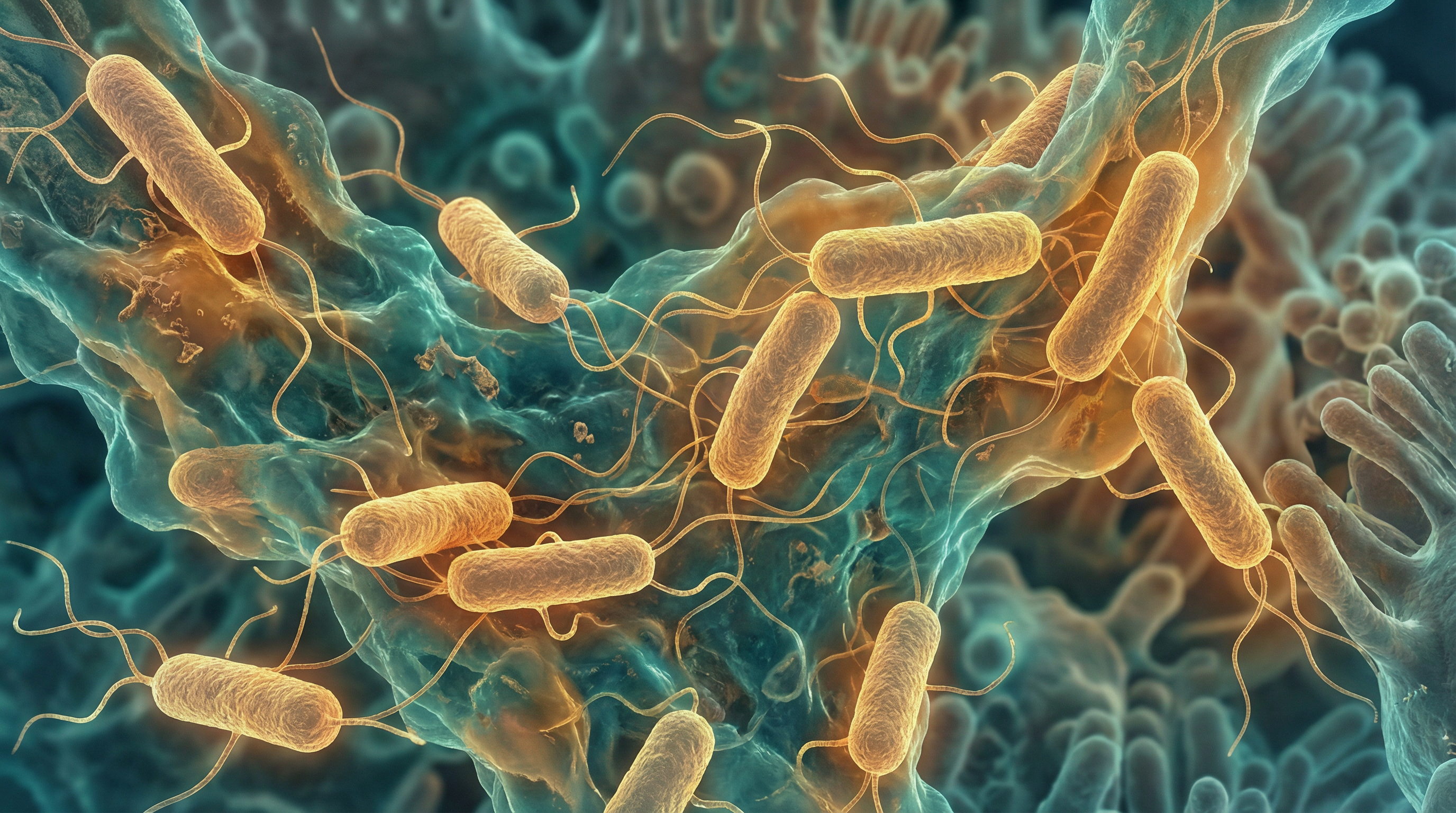
Salmonella enterica is a Gram-negative, non-spore-forming, rod-shaped bacterium belonging to the Enterobacteriaceae family. These facultatively anaerobic bacteria range in diameter from 0.7 to 1.5 μm, with a length of 2 to 5 μm. Most strains are motile, possessing peritrichous flagella that allow them to move through liquid environments.
S. enterica is divided into six subspecies: enterica, salamae, arizonae, diarizonae, houtenae, and indica. Among these, S. enterica subsp. enterica is the most clinically relevant, containing over 1,500 serovars that cause disease in humans and domestic animals. The classification of Salmonella is based on the Kauffmann-White scheme, which differentiates strains according to their O (lipopolysaccharide) and H (flagellar) antigens.
The most common serovars associated with human disease include Typhimurium, Enteritidis, Heidelberg, Newport, and Typhi. These serovars can be broadly categorized into typhoidal (Typhi and Paratyphi) and non-typhoidal Salmonella (NTS), which differ in their clinical presentations, host specificity, and virulence mechanisms. Typhoidal serovars are human-specific and cause systemic infections, while NTS serovars have a broader host range and typically cause localized gastroenteritis.
S. enterica possesses remarkable environmental resilience, capable of surviving in diverse conditions outside the host, including soil, water, and food products. This resilience contributes to its widespread distribution and frequent involvement in foodborne outbreaks.
Role in Human Microbiome
S. enterica is not considered a normal component of the human microbiome but rather an invasive pathogen that disrupts the established microbial community. When introduced into the gastrointestinal tract through contaminated food or water, S. enterica interacts with and perturbs the resident microbiota in several ways:
Disruption of Microbial Homeostasis
S. enterica infection alters the genomic, taxonomic, and functional traits of the gut microbiota. Studies have shown that Salmonella infection leads to a decrease in microbial diversity and significant shifts in community composition, often characterized by an increase in Enterobacteriaceae and a decrease in beneficial anaerobes like Bacteroidetes and Firmicutes.
Inflammation-Mediated Changes
The inflammatory response triggered by S. enterica creates an altered intestinal environment that favors its own growth while inhibiting commensal bacteria. Inflammation generates reactive oxygen species and alternative electron acceptors (like tetrathionate) that Salmonella can utilize for respiration, giving it a competitive advantage over obligate anaerobes.
Nutrient Competition
S. enterica competes with the resident microbiota for essential nutrients. It has evolved mechanisms to acquire nutrients in the inflamed gut, such as high-affinity metal ion transporters that allow it to scavenge iron, zinc, and manganese more effectively than commensal bacteria.
Biofilm Formation
In certain conditions, S. enterica can form biofilms on intestinal surfaces, creating protected microenvironments that facilitate persistent colonization and resistance to host defenses and antimicrobials.
Health Implications
S. enterica is one of the leading causes of foodborne illness globally, with significant public health impact:
Non-typhoidal Salmonellosis
Most S. enterica infections result in self-limiting gastroenteritis characterized by diarrhea, abdominal cramps, fever, and vomiting. Symptoms typically develop 6-72 hours after infection and resolve within 4-7 days without specific treatment. However, in vulnerable populations (young children, elderly, and immunocompromised individuals), infections can be more severe and may require hospitalization.
Invasive Non-typhoidal Salmonellosis
In some cases, particularly in immunocompromised hosts, NTS can invade beyond the intestinal mucosa, leading to bacteremia and focal infections such as meningitis, osteomyelitis, or endocarditis. Invasive NTS infections have a high mortality rate, especially in regions with high HIV prevalence.
Typhoid Fever
S. enterica serovar Typhi causes typhoid fever, a systemic infection characterized by high fever, headache, abdominal pain, and sometimes a rash. Without treatment, typhoid fever has a mortality rate of 12-30%. Even with appropriate treatment, 1-4% of patients become chronic carriers, harboring the bacteria in their gallbladder and shedding it intermittently.
Post-infectious Complications
A small percentage of individuals develop reactive arthritis following Salmonella infection, a form of inflammatory arthritis affecting the joints, eyes, and urinary tract. This condition typically develops 1-3 weeks after the initial infection and can persist for months or become chronic.
Antibiotic Resistance
The increasing prevalence of antibiotic-resistant S. enterica strains is a significant global health concern. Multidrug-resistant (MDR) strains, particularly those resistant to fluoroquinolones and extended-spectrum cephalosporins, complicate treatment of severe infections and contribute to higher morbidity and mortality rates.
Metabolic Activities
S. enterica possesses versatile metabolic capabilities that enable it to thrive in diverse environments, including the human gut:
Central Carbon Metabolism
S. enterica can utilize a wide range of carbon sources, including glucose, fructose, mannose, and other sugars through glycolysis and the pentose phosphate pathway. It can also metabolize alternative carbon sources such as propionate, ethanolamine, and 1,2-propanediol, which are abundant in the intestinal environment but cannot be utilized by many commensal bacteria.
Anaerobic Respiration
In the oxygen-limited environment of the intestine, S. enterica can perform anaerobic respiration using alternative electron acceptors such as nitrate, nitrite, fumarate, dimethyl sulfoxide (DMSO), and trimethylamine N-oxide (TMAO). Uniquely, it can also use tetrathionate, which is generated during inflammation, giving it a competitive advantage in the inflamed gut.
Iron Acquisition
S. enterica has evolved sophisticated mechanisms for iron acquisition, a critical nutrient that is limited in the host environment. It produces siderophores (enterobactin and salmochelin) that bind iron with high affinity and can also utilize heme and ferritin as iron sources.
Stress Response Mechanisms
S. enterica possesses robust stress response systems that allow it to survive various environmental stressors, including acid stress (encountered in the stomach), oxidative stress (generated by host immune cells), and antimicrobial peptides. These systems involve the production of protective proteins, modification of membrane components, and activation of repair mechanisms.
Virulence-Associated Metabolism
Many metabolic pathways in S. enterica are directly linked to virulence. For example, the ability to utilize ethanolamine as a carbon source is associated with enhanced colonization and virulence in the inflamed gut. Similarly, the production of hydrogen sulfide contributes to both energy generation and host cell cytotoxicity.
Clinical Relevance
S. enterica is a pathogen of significant clinical importance worldwide:
Epidemiology
Non-typhoidal Salmonella causes an estimated 93.8 million cases of gastroenteritis and 155,000 deaths globally each year. Typhoid fever affects approximately 11-20 million people annually, resulting in 128,000-161,000 deaths. The incidence is highest in regions with poor sanitation and limited access to clean water, particularly in South Asia and sub-Saharan Africa.
Diagnosis
Clinical diagnosis of Salmonella infections relies on bacterial culture of stool, blood, or other clinical specimens. Selective media such as MacConkey agar, Hektoen enteric agar, and xylose-lysine-deoxycholate (XLD) agar are commonly used for isolation. Serological tests and molecular methods like PCR are increasingly employed for rapid identification and typing.
Treatment
Most uncomplicated cases of non-typhoidal salmonellosis do not require antibiotic treatment and resolve with supportive care (hydration and electrolyte replacement). Antibiotics are indicated for severe or invasive infections, with fluoroquinolones (ciprofloxacin) and extended-spectrum cephalosporins (ceftriaxone) being the drugs of choice. However, increasing antibiotic resistance necessitates susceptibility testing to guide therapy.
Antibiotic Resistance
S. enterica has developed resistance to multiple antibiotics through various mechanisms:
- Production of β-lactamases, including extended-spectrum β-lactamases (ESBLs) and AmpC enzymes
- Mutations in DNA gyrase and topoisomerase IV genes conferring quinolone resistance
- Acquisition of aminoglycoside-modifying enzymes
- Efflux pump overexpression
- Target site modifications
The emergence of multidrug-resistant (MDR) and extensively drug-resistant (XDR) strains, particularly in typhoidal serovars, poses a significant therapeutic challenge.
Prevention and Control
Preventive measures include:
- Food safety practices (proper cooking, avoiding cross-contamination)
- Safe water and improved sanitation
- Vaccination (available for typhoid fever)
- Surveillance and outbreak investigation
- Antibiotic stewardship to limit resistance development
Interaction with Other Microorganisms
S. enterica engages in complex interactions with other members of the gut microbiota:
Competitive Interactions
S. enterica competes with commensal bacteria for nutrients and ecological niches within the gut. The established microbiota provides colonization resistance against Salmonella through direct competition for resources and production of inhibitory compounds. Conversely, Salmonella has evolved strategies to overcome this resistance, such as triggering inflammation that suppresses commensal bacteria while enhancing its own growth.
Synergistic Interactions
Some interactions between S. enterica and other microorganisms can be synergistic. For example, certain gut bacteria can modify bile acids in ways that enhance Salmonella virulence gene expression. Additionally, some bacteria may provide metabolites that Salmonella can utilize for growth or virulence.
Modulation of Pathogenicity
The composition of the gut microbiota can influence Salmonella pathogenicity. Studies have shown that germ-free animals are more susceptible to Salmonella infection, while animals with a diverse microbiota show greater resistance. Specific bacterial groups, such as Clostridia and Bacteroidetes, have been associated with enhanced protection against Salmonella colonization.
Horizontal Gene Transfer
S. enterica can acquire virulence and antibiotic resistance genes through horizontal gene transfer from other bacteria in the gut environment. This genetic exchange contributes to the evolution of more virulent and resistant strains.
Impact on Biofilm Communities
In environmental and host-associated biofilms, S. enterica interacts with other microorganisms through quorum sensing, metabolite exchange, and physical interactions. These multispecies biofilms can enhance Salmonella survival and persistence.
Research Significance
S. enterica has been extensively studied and continues to be a focus of research for several reasons:
Model Organism for Host-Pathogen Interactions
S. enterica, particularly serovar Typhimurium, serves as a model organism for studying bacterial pathogenesis and host-pathogen interactions. Its ability to cause disease in both humans and experimental animals (mice) makes it valuable for translational research.
Virulence Mechanisms
Research on S. enterica has led to the discovery of key virulence mechanisms, including type III secretion systems, which are now known to be important in many bacterial pathogens. The Salmonella Pathogenicity Islands (SPIs) and their regulation have provided insights into the evolution and function of virulence determinants.
Antibiotic Resistance
S. enterica is an important model for studying the emergence and spread of antibiotic resistance. Research on resistance mechanisms in Salmonella has contributed to our understanding of how bacteria adapt to antimicrobial pressure and has informed strategies for combating resistance.
Microbiome Interactions
Studies on how S. enterica interacts with and disrupts the gut microbiota have advanced our understanding of the role of the microbiome in health and disease. This research has implications for developing microbiome-based approaches to prevent and treat infections.
Vaccine Development
Research on S. enterica has driven the development of vaccines against typhoid fever and is informing efforts to create vaccines against non-typhoidal Salmonella. These studies contribute to our understanding of protective immunity and vaccine design.
Food Safety and Public Health
As a leading cause of foodborne illness, S. enterica is the focus of extensive research on food safety, surveillance methods, and outbreak investigation. This research has practical applications in protecting public health and preventing foodborne disease.
References
Fàbrega A, Vila J. Salmonella enterica serovar Typhimurium skills to succeed in the host: virulence and regulation. Clin Microbiol Rev. 2013;26(2):308-341.
Aljahdali NH, Sanad YM, Han J, Foley SL. Current knowledge and perspectives of potential impacts of Salmonella enterica on the profile of the gut microbiota. BMC Microbiol. 2020;20(1):353.
Stecher B, Hardt WD. Mechanisms controlling pathogen colonization of the gut. Curr Opin Microbiol. 2011;14(1):82-91.
Andino A, Hanning I. Salmonella enterica: survival, colonization, and virulence differences among serovars. ScientificWorldJournal. 2015;2015:520179.
Eng SK, Pusparajah P, Ab Mutalib NS, Ser HL, Chan KG, Lee LH. Salmonella: A review on pathogenesis, epidemiology and antibiotic resistance. Front Life Sci. 2015;8(3):284-293.
Feasey NA, Dougan G, Kingsley RA, Heyderman RS, Gordon MA. Invasive non-typhoidal salmonella disease: an emerging and neglected tropical disease in Africa. Lancet. 2012;379(9835):2489-2499.