

Tannerella forsythia
Tannerella forsythia is a Gram-negative, anaerobic, rod-shaped bacterium belonging to the phylum Bacteroidetes. It is a key member of the "red complex" bacteria, along with Porphyromonas gingivalis and Treponema denticola, which are strongly associated with severe forms of periodontal disease. Originally classified as Bacteroides forsythus, it was later reclassified as Tannerella forsythia based on 16S rRNA phylogenetic analysis. This fastidious organism plays a significant role in the initiation and progression of periodontitis through its various virulence factors and unique survival strategies.
Key Characteristics
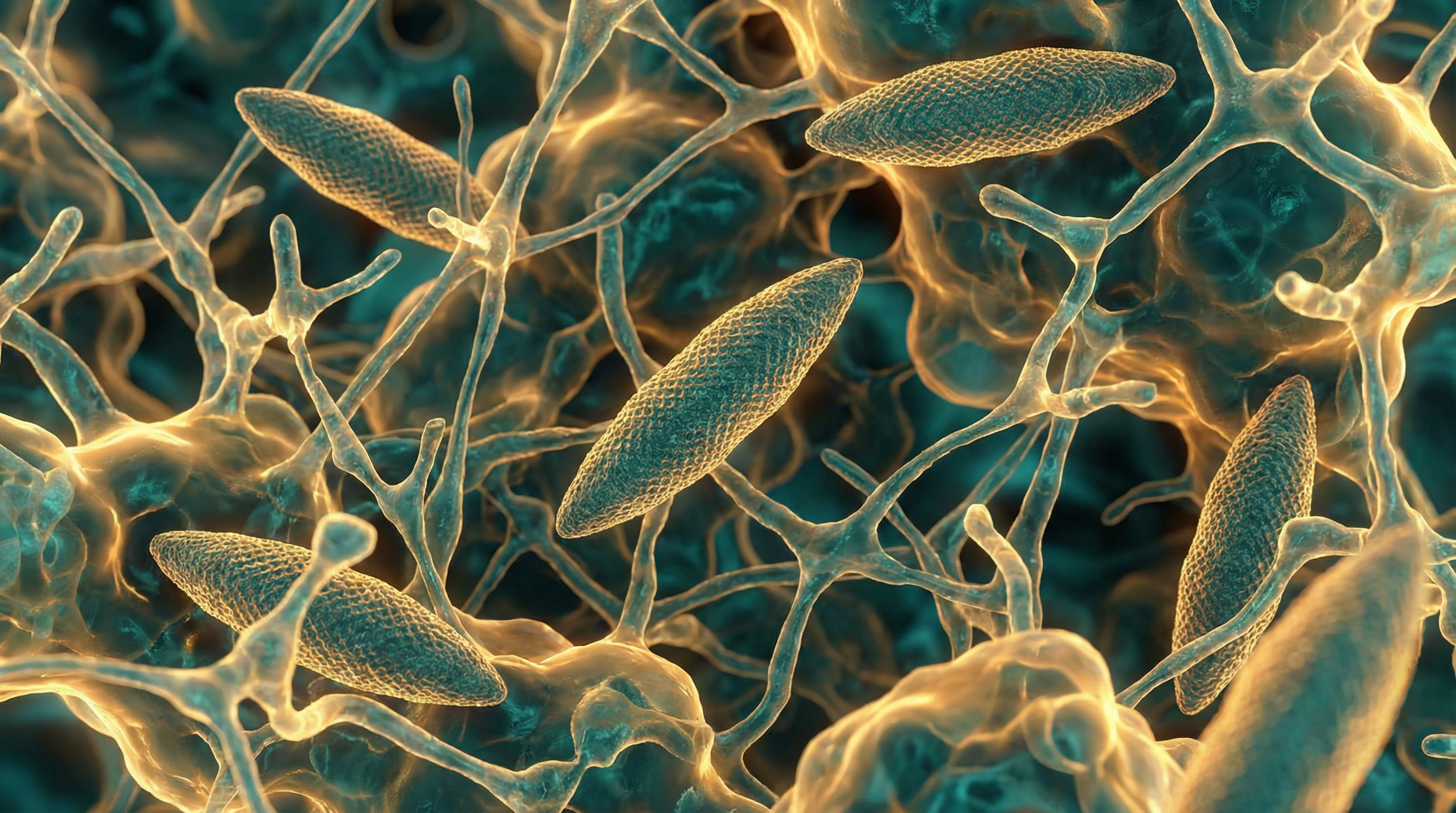
T. forsythia possesses several distinctive characteristics that contribute to its role in the oral microbiome and periodontal disease:
Gram-negative cell wall structure: Contains lipopolysaccharide (LPS) that triggers inflammatory responses in the host.
Obligate anaerobe: Requires an oxygen-free environment for growth, thriving in the anaerobic conditions of deep periodontal pockets.
Fastidious growth requirements: Uniquely auxotrophic for N-acetylmuramic acid (MurNAc), an essential bacterial cell wall sugar, making it dependent on other bacteria for survival.
Rod-shaped morphology: Typically appears as elongated rods under microscopic examination.
S-layer presence: Possesses a crystalline surface layer (S-layer) composed of regularly arranged glycoproteins that covers the entire cell surface, contributing to its virulence.
Type 9 protein secretion system (T9SS): Utilizes this specialized secretion system for the export of specific virulence factors across the outer membrane.
Extensive O-glycosylation: Modifies numerous proteins with species-specific glycans, which facilitates persistence in the host through molecular mimicry.
Late colonizer: Thrives as a late colonizer in the oral biofilm, relying on earlier colonizers to establish suitable conditions.
These characteristics enable T. forsythia to colonize the subgingival environment, evade host defenses, and contribute to the inflammatory processes that lead to periodontal tissue destruction.
Role in the Human Microbiome
T. forsythia primarily inhabits the human oral cavity, specifically the subgingival region. While it can be detected in healthy individuals, its abundance significantly increases in individuals with periodontal disease. As a member of the red complex, T. forsythia is strongly associated with the clinical parameters of periodontitis, including increased pocket depth, bleeding on probing, and clinical attachment loss.
In the context of the oral microbiome, T. forsythia functions as a late colonizer in the development of dental plaque biofilms. It relies on interactions with earlier colonizers, particularly Fusobacterium nucleatum, which provides attachment sites and creates the anaerobic conditions necessary for T. forsythia's growth. This ecological succession is critical for the development of a dysbiotic microbiome associated with periodontal disease.
T. forsythia's role in the oral microbiome is characterized by:
Biofilm participation: It integrates into subgingival biofilms, contributing to their structural integrity and resistance to antimicrobial agents.
Interspecies interactions: T. forsythia engages in complex relationships with other oral bacteria, including metabolic cooperation and synergistic pathogenicity. For example, it collaborates with P. gingivalis in sialic acid acquisition, where T. forsythia's sialic acid-esterase (NanS) works with P. gingivalis sialidase to optimize sialic acid utilization.
Nutrient scavenging: Due to its auxotrophy for N-acetylmuramic acid, T. forsythia scavenges this essential compound from cell wall turnover products or decay of cohabiting bacteria, establishing a unique ecological niche.
Host-microbe interactions: T. forsythia interacts with various host cell types, including epithelial cells, polymorphonuclear leukocytes, macrophages, and mesenchymal stromal cells, influencing immune responses and tissue homeostasis.
The presence and abundance of T. forsythia in the oral microbiome serve as biomarkers for periodontal disease risk and progression. Its detection in subgingival plaque samples is associated with active disease sites and can predict future attachment loss.
Health Implications
Periodontal Disease
The primary pathological role of T. forsythia is in the initiation and progression of periodontal disease. It contributes to this disease process through:
Direct tissue damage: Proteases and other enzymes produced by T. forsythia can directly degrade host tissues, including collagen, gelatin, elastin, and fibrinogen.
Immune dysregulation: T. forsythia can modulate host immune responses, leading to a dysregulated inflammatory state that causes collateral tissue damage.
Biofilm formation: By participating in dental plaque biofilms, T. forsythia contributes to a protected environment where bacteria can proliferate and resist host defenses and antimicrobial treatments.
Bone resorption: T. forsythia can induce osteoclast activity, leading to alveolar bone loss, a hallmark of advanced periodontitis.
Synergistic pathogenicity: T. forsythia exhibits enhanced pathogenic potential when co-infecting with other bacteria, particularly P. gingivalis and F. nucleatum, as demonstrated in animal models of abscess formation and alveolar bone loss.
Systemic Conditions
Emerging evidence suggests that T. forsythia may contribute to various systemic conditions beyond the oral cavity:
Obesity and metabolic disorders: Recent studies have suggested that T. forsythia infection is more likely to cause periodontitis in overweight women than in normal-weight women. Additionally, overweight or obese individuals have been found to have an overgrowth of T. forsythia compared to normal-weight individuals.
Cardiovascular diseases: As part of the periodontal pathogen complex, T. forsythia has been implicated in the potential link between periodontal disease and cardiovascular conditions. The inflammatory burden associated with T. forsythia infection may contribute to systemic inflammation and atherosclerotic processes.
Adverse pregnancy outcomes: Maternal periodontal disease involving T. forsythia has been associated with preterm birth and low birth weight.
Rheumatoid arthritis: Some studies have suggested a potential link between periodontal pathogens, including T. forsythia, and rheumatoid arthritis, possibly through shared inflammatory pathways.
These associations highlight the potential far-reaching implications of T. forsythia beyond its role in periodontal disease, emphasizing the importance of oral health in overall systemic health.
Metabolic Activities
T. forsythia exhibits specialized metabolic activities adapted to its niche in the subgingival environment:
Asaccharolytic metabolism: Similar to other red complex bacteria, T. forsythia primarily relies on protein degradation rather than carbohydrate fermentation for energy production.
Proteolytic activity: T. forsythia produces various proteases that break down host proteins into peptides and amino acids that the bacterium can utilize for growth.
Sialic acid utilization: T. forsythia possesses a dedicated sialic acid utilization and scavenging (nan) operon, allowing it to cleave and metabolize sialic acid from host glycoproteins.
N-acetylmuramic acid dependency: Uniquely among oral bacteria, T. forsythia is auxotrophic for N-acetylmuramic acid due to the absence of the MurAB enzymes involved in its biosynthesis. This dependency necessitates scavenging from other bacteria or host sources.
Glycosidase activity: T. forsythia produces alpha-D-glucosidase and N-acetyl-beta-glucosaminidase, which contribute to the degradation of complex carbohydrates.
Methylglyoxal production: T. forsythia generates methylglyoxal, a reactive dicarbonyl compound that can contribute to oxidative stress and tissue damage.
These metabolic activities not only support the growth and survival of T. forsythia but also contribute to its pathogenicity by generating toxic byproducts, modifying the local environment, and providing mechanisms to evade host defenses.
Virulence Factors
T. forsythia produces an array of virulence factors that contribute to its pathogenicity:
Proteases: Several proteolytic enzymes have been identified in T. forsythia:
- PrtH protease: A cysteine protease that can hydrolyze various substrates, including milk, synthetic peptides, and cause hemolysis of blood.
- Trypsin-like protease: An 81-kDa cell surface-associated serine protease that cleaves arginine or lysine bonds in synthetic peptides.
- KLIKK proteases: A family of secretory proteases capable of targeting diverse protein substrates such as collagen, gelatin, elastin, and casein.
Sialidases: T. forsythia produces sialidases (NanH) that cleave terminal sialic acid from host glycoproteins, which can be used as a carbon source and/or modify host cell surfaces to enhance bacterial attachment.
BspA protein: A leucine-rich repeat cell-surface-associated and secreted protein that mediates adherence to fibronectin and fibrinogen, promotes bacterial aggregation, and triggers pro-inflammatory cytokine production.
S-layer: The crystalline surface layer composed of two glycoproteins (TfsA and TfsB) that covers the entire cell surface. The S-layer contributes to serum resistance, adhesion to and invasion of epithelial cells, and suppression of pro-inflammatory cytokine production.
Outer membrane vesicles (OMVs): T. forsythia releases OMVs containing various virulence factors, including proteases and sialidases, which can deliver these factors to distant sites and modulate host immune responses.
Lipopolysaccharide (LPS): The LPS of T. forsythia induces inflammatory responses through activation of Toll-like receptors, contributing to periodontal tissue destruction.
Hemagglutinin: T. forsythia produces a hemagglutinin that mediates adherence to erythrocytes and potentially other host cells.
Apoptosis-inducing activity: T. forsythia can induce apoptosis in various host cell types, including gingival epithelial cells and lymphocytes, potentially contributing to immune evasion and tissue destruction.
These virulence factors work in concert to enable T. forsythia to colonize the oral cavity, evade host defenses, acquire nutrients, and cause tissue destruction, ultimately contributing to the pathogenesis of periodontal disease.
Clinical Relevance
The clinical significance of T. forsythia extends primarily from its role in periodontal disease:
Diagnostic marker: Detection of T. forsythia in subgingival plaque samples serves as a biomarker for periodontal disease activity and risk assessment. Its presence, particularly in combination with other red complex bacteria, is associated with increased severity of periodontitis.
Disease progression indicator: Elevated levels of T. forsythia are associated with the progression of clinical attachment loss in periodontitis, making it a valuable indicator for monitoring disease activity.
Treatment target: Targeting T. forsythia specifically or disrupting its virulence mechanisms represents a potential approach for treating periodontal disease beyond conventional mechanical debridement and broad-spectrum antibiotics.
Antibiotic resistance considerations: T. forsythia is resistant to the antibiotic fosfomycin due to the absence of the MurAB enzymes, which are the targets of this antibiotic. This natural resistance must be considered when designing antimicrobial therapies for periodontal infections.
Risk factor for systemic conditions: The presence of T. forsythia may serve as a risk indicator for certain systemic conditions, particularly in specific populations such as overweight or obese individuals.
From a clinical management perspective, controlling T. forsythia infection typically involves a combination of mechanical debridement (scaling and root planing), antimicrobial therapy (local or systemic), and in severe cases, surgical intervention. Patient education on oral hygiene practices is also crucial for preventing recolonization.
Interaction with Other Microorganisms
T. forsythia engages in complex interactions with other members of the oral microbiome:
Red complex consortium: T. forsythia forms a pathogenic consortium with P. gingivalis and T. denticola, collectively known as the "red complex." These bacteria exhibit synergistic virulence in animal models, causing more severe disease when present together than individually.
Fusobacterium nucleatum partnership: F. nucleatum serves as a bridge organism that facilitates the attachment of T. forsythia to early colonizers in the dental biofilm. This interaction is crucial for T. forsythia's integration into the biofilm community.
Metabolic interdependencies: Due to its auxotrophy for N-acetylmuramic acid, T. forsythia depends on other bacteria for this essential nutrient. Additionally, it collaborates with P. gingivalis in sialic acid acquisition through complementary enzymatic activities.
Biofilm architecture: Within dental plaque biofilms, T. forsythia occupies specific niches as a late colonizer, contributing to the overall architecture and stability of the mature biofilm.
Polymicrobial synergy: In animal models, T. forsythia exhibits enhanced pathogenicity when co-infecting with other bacteria, such as F. nucleatum or P. gingivalis, demonstrating the importance of polymicrobial interactions in disease progression.
Immune modulation: The combined presence of T. forsythia with other periodontal pathogens can lead to more pronounced dysregulation of host immune responses than individual bacteria alone.
These interactions highlight the ecological complexity of periodontal disease, where T. forsythia functions not in isolation but as part of a dysbiotic microbial community that collectively drives disease progression.
Research Significance
T. forsythia has been the subject of increasing research interest due to its significant role in periodontal disease:
- Periodontal disease pathogenesis: Research on T. forsythia has provided crucial insights into the mechan (Content truncated due to size limit. Use line ranges to read in chunks)