

Vibrio cholerae
Key Characteristics
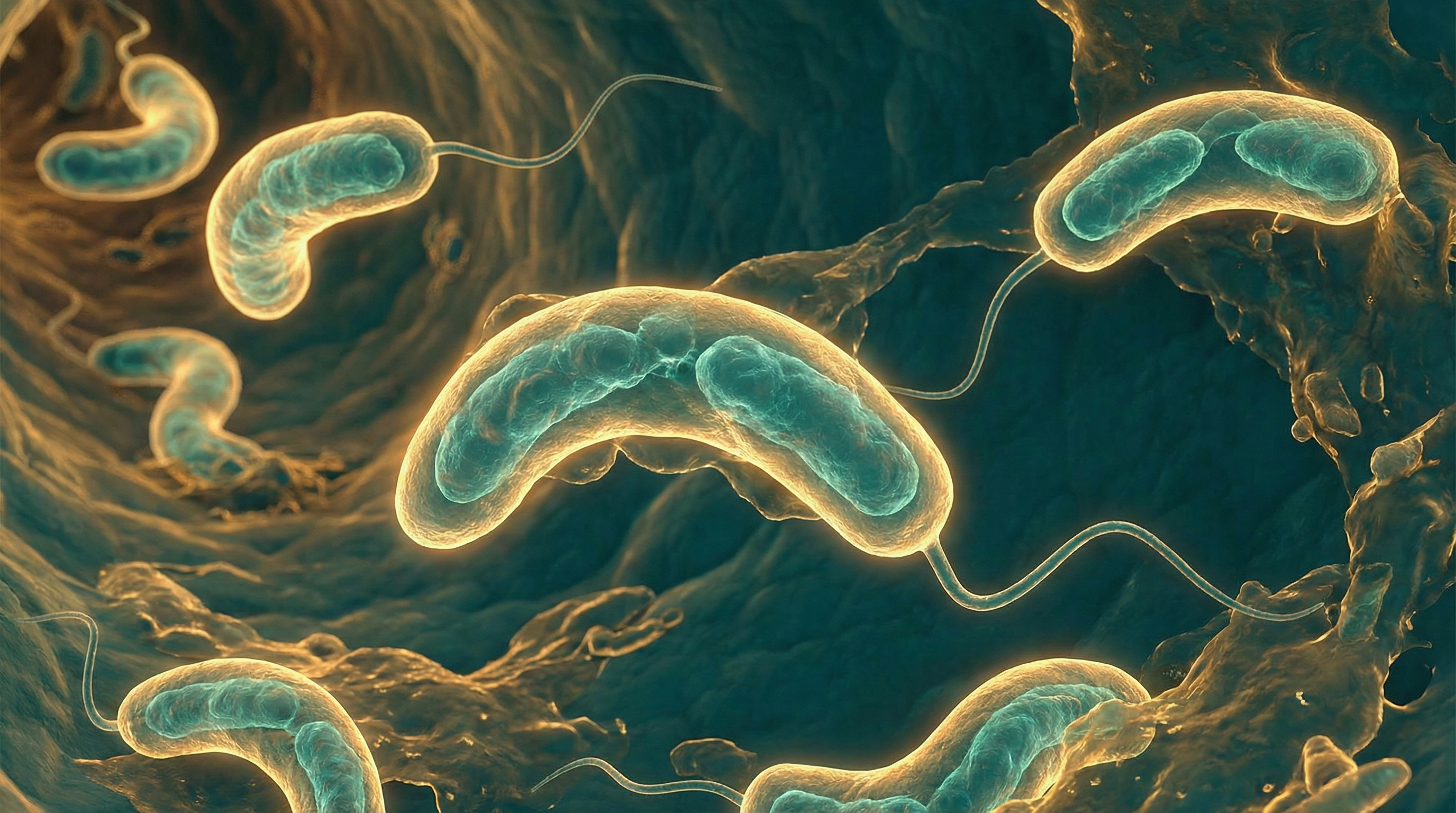
Vibrio cholerae is a gram-negative, facultatively anaerobic, curved or comma-shaped bacterium belonging to the family Vibrionaceae within the phylum Proteobacteria. It is the causative agent of cholera, a severe diarrheal disease that can lead to rapid dehydration and death if left untreated. V. cholerae possesses several distinctive characteristics:
- Curved or comma-shaped morphology (1.5-2.5 μm long and 0.5-0.8 μm wide)
- Highly motile with a single polar flagellum
- Non-spore forming and non-capsulated
- Oxidase-positive and ferments glucose without producing gas
- Grows optimally at pH 7.6-8.6 and temperature of 37°C
- Tolerates alkaline conditions but is sensitive to acidic environments
- Classified into more than 200 serogroups based on the O antigen of lipopolysaccharide
- Only serogroups O1 and O139 are associated with epidemic and pandemic cholera
- O1 serogroup is further divided into two biotypes: classical and El Tor
- Each biotype can be serotyped as either Ogawa or Inaba based on antigenic factors
- Natural inhabitant of aquatic environments, particularly brackish and estuarine waters
- Can enter a viable but non-culturable (VBNC) state under unfavorable conditions
V. cholerae has remarkable genetic plasticity and adaptability, allowing it to survive in diverse environments ranging from nutrient-poor aquatic habitats to the nutrient-rich human intestine. This adaptability has contributed to its success as a pathogen and its ability to cause seven recorded cholera pandemics throughout history, with the seventh pandemic (caused by the El Tor biotype) still ongoing since 1961.
Role in Human Microbiome
V. cholerae is not considered a normal component of the human microbiome. It is an exogenous pathogen that temporarily colonizes the human small intestine during infection. However, its interactions with the resident gut microbiota play a crucial role in its pathogenicity and the outcome of infection.
When V. cholerae enters the human gut, it encounters a complex and diverse microbial community that can either facilitate or inhibit its colonization:
Competitive interactions: The normal gut microbiota provides colonization resistance against V. cholerae through:
- Competition for nutrients and attachment sites
- Production of inhibitory substances like bacteriocins and organic acids
- Maintenance of an anaerobic environment that is less favorable for V. cholerae growth
Facilitative interactions: Some components of the gut microbiota may enhance V. cholerae colonization by:
- Modifying bile salts that can otherwise inhibit V. cholerae
- Providing nutrients through cross-feeding relationships
- Creating microenvironments with favorable pH and oxygen levels
Influence on virulence gene expression: The gut microbiota can modulate V. cholerae virulence through:
- Production of metabolites that affect quorum sensing and virulence gene regulation
- Alteration of host immune responses that influence V. cholerae behavior
- Modification of intestinal physiology that affects V. cholerae colonization patterns
Interestingly, V. cholerae infection itself causes significant disruption of the normal gut microbiota, leading to dysbiosis that may persist for weeks to months after clinical recovery. This dysbiosis is characterized by reduced diversity and altered community structure, which may contribute to prolonged intestinal dysfunction and susceptibility to other enteric infections.
In endemic regions, asymptomatic carriage of V. cholerae can occur, suggesting that in some individuals, the pathogen may establish a more balanced relationship with the host and resident microbiota without causing overt disease. This carrier state contributes to the persistence and transmission of V. cholerae in human populations.
Health Implications
V. cholerae infection causes cholera, a disease characterized by sudden onset of painless, profuse watery diarrhea often described as "rice-water stool" due to its appearance. The health implications of V. cholerae infection include:
Acute disease manifestations:
- Severe watery diarrhea (up to 1 liter per hour in extreme cases)
- Rapid dehydration leading to hypovolemic shock
- Electrolyte imbalances, particularly potassium and bicarbonate loss
- Metabolic acidosis due to bicarbonate loss in stool
- Muscle cramps due to electrolyte disturbances
- Weakness, lethargy, and altered mental status from dehydration
- Renal failure in severe cases
Severity spectrum:
- Asymptomatic infection (75% of cases in endemic areas)
- Mild to moderate diarrhea (20% of cases)
- Severe, life-threatening cholera gravis (5% of cases)
- Without treatment, severe cholera has a case fatality rate of over 50%
- With prompt rehydration therapy, mortality can be reduced to less than 1%
Risk factors for severe disease:
- Blood group O (associated with more severe cholera)
- Malnutrition and micronutrient deficiencies
- Reduced gastric acidity (including those on antacid medications)
- Immunocompromised states
- Pregnancy
- Young children and elderly individuals
- Lack of previous exposure in non-endemic areas
Long-term consequences:
- Post-infectious irritable bowel syndrome
- Persistent alterations in gut microbiota composition
- Growth stunting in children with repeated infections
- Potential for chronic carrier state in rare cases
Public health impact:
- Rapid spread in areas with inadequate water and sanitation
- Potential for large outbreaks and epidemics
- Economic burden from healthcare costs and lost productivity
- Disruption of healthcare systems during outbreaks
- Psychological impact on affected communities
The World Health Organization (WHO) estimates that annually there are 1.4 to 4.0 million cases and 21,000 to 143,000 deaths worldwide from cholera. However, these figures are likely underestimates due to limited surveillance and reporting in many endemic regions.
Metabolic Activities
V. cholerae exhibits versatile metabolic capabilities that enable it to thrive in both aquatic environments and the human intestine. Key metabolic features include:
Carbon metabolism:
- Utilizes a wide range of carbon sources including glucose, sucrose, mannose, and chitin
- Employs both respiratory and fermentative pathways for energy generation
- Can metabolize N-acetylglucosamine derived from chitin in aquatic environments
- Possesses complete glycolytic and pentose phosphate pathways
- Has a functional TCA cycle for aerobic respiration
- Can use alternative electron acceptors (nitrate, fumarate) under anaerobic conditions
Nitrogen metabolism:
- Assimilates ammonia through glutamine synthetase-glutamate synthase pathway
- Can utilize various amino acids as nitrogen sources
- Some strains possess urease activity for urea utilization
- Has complete pathways for amino acid biosynthesis
Adaptation to nutrient limitation:
- Enters viable but non-culturable (VBNC) state during nutrient deprivation
- Forms biofilms on surfaces to enhance nutrient acquisition
- Produces extracellular enzymes to break down complex substrates
- Stores carbon as glycogen during nutrient excess for use during starvation
Metabolic adaptations in the human host:
- Upregulates genes for amino acid catabolism in the intestinal environment
- Utilizes mucin-derived sugars from intestinal mucus
- Metabolizes bile salts and uses them as environmental signals
- Exploits inflammation-generated electron acceptors in the intestine
- Competes with commensal bacteria for micronutrients like iron
Metabolic regulation:
- Uses cyclic AMP-CRP system to regulate carbon utilization
- Employs quorum sensing to coordinate metabolic activities in bacterial populations
- Integrates environmental signals (pH, osmolarity, oxygen) to adjust metabolism
- Links metabolic state to virulence gene expression through regulatory networks
Unique metabolic features:
- Possesses Na+-driven flagellar motor instead of the more common H+-driven motor
- Uses sodium motive force for energy conservation in certain conditions
- Has specialized pathways for detoxifying reactive oxygen species
- Produces siderophores (vibriobactin) for iron acquisition
These metabolic capabilities allow V. cholerae to rapidly adapt to changing environmental conditions, which is crucial for its transition between aquatic reservoirs and the human host. The metabolic versatility of V. cholerae also contributes to its persistence in the environment and its success as a pathogen.
Clinical Relevance
V. cholerae remains a significant global health concern, particularly in regions with inadequate water, sanitation, and hygiene infrastructure. Its clinical relevance encompasses several aspects:
Diagnosis:
- Clinical suspicion based on characteristic rice-water stool and epidemiological context
- Direct microscopy showing motile, curved bacilli in fresh stool (low sensitivity)
- Culture on selective media (TCBS agar) for definitive diagnosis
- Rapid diagnostic tests (RDTs) based on immunochromatographic detection of V. cholerae O1/O139 antigens
- PCR-based methods for detection of toxigenic strains and molecular epidemiology
- Serological tests have limited utility for acute diagnosis but are useful for epidemiological studies
Treatment:
- Rehydration therapy is the cornerstone of treatment:
- Oral rehydration solution (ORS) for mild to moderate dehydration
- Intravenous fluids (Ringer's lactate) for severe dehydration
- Careful monitoring and replacement of ongoing fluid losses
- Antimicrobial therapy as an adjunct to rehydration:
- Shortens duration of diarrhea and reduces volume of stool
- Decreases shedding of vibrios, reducing transmission
- Common antibiotics include doxycycline, azithromycin, and ciprofloxacin
- Increasing antimicrobial resistance is a growing concern
- Zinc supplementation for children under 5 years
- Avoidance of antimotility agents, which can worsen outcomes
- Rehydration therapy is the cornerstone of treatment:
Prevention and control:
- Improved water, sanitation, and hygiene (WASH) practices
- Oral cholera vaccines (OCVs):
- Dukoral: killed whole-cell V. cholerae O1 with recombinant cholera toxin B subunit
- Shanchol and Euvichol: bivalent killed whole-cell vaccines containing O1 and O139 serogroups
- Vaxchora: live attenuated oral vaccine (CVD 103-HgR strain)
- Surveillance systems for early detection and response to outbreaks
- Health education about safe water, food handling, and hygiene practices
- Proper disposal of feces and wastewater
- Chemoprophylaxis not recommended due to risk of resistance development
Epidemiological significance:
- Seventh pandemic of cholera (El Tor biotype) ongoing since 1961
- Endemic in over 50 countries across Africa, Asia, and the Americas
- Potential for explosive outbreaks in humanitarian crises and natural disasters
- Seasonal patterns in endemic areas, often associated with rainfall and flooding
- Emergence of hybrid strains with enhanced virulence characteristics
- Increasing antimicrobial resistance threatening treatment efficacy
Global health initiatives:
- WHO Global Task Force on Cholera Control (GTFCC)
- "Ending Cholera: A Global Roadmap to 2030" initiative
- Goal to reduce cholera deaths by 90% and eliminate cholera in 20 countries by 2030
- Integrated approach combining surveillance, WASH interventions, and vaccination
The clinical management of cholera exemplifies how a potentially fatal disease can be effectively treated with simple interventions like rehydration therapy, reducing mortality from over 50% to less than 1% when properly implemented.
Interaction with Other Microorganisms
V. cholerae engages in complex interactions with other microorganisms in both its aquatic reservoir and the human intestinal environment:
Interactions in aquatic environments:
- Forms multispecies biofilms with other aquatic bacteria
- Associates with zooplankton, particularly copepods, utilizing their chitin-rich exoskeletons as carbon sources
- Competes with other Vibrio species for ecological niches
- Produces antibacterial compounds that inhibit competing bacteria
- Exchanges genetic material with other bacteria through horizontal gene transfer
- Interacts with bacteriophages, which can transfer virulence genes (e.g., cholera toxin genes)
- Forms symbiotic relationships with algae, which provide organic nutrients
Interactions in the human gut:
- Competes with commensal bacteria for nutrients and attachment sites
- Alters the composition of the gut microbiota during infection
- Is inhibited by certain Lactobacillus and Bifidobacterium species through production of organic acids and bacteriocins
- Responds to metabolites produced by gut commensals:
- Short-chain fatty acids can inhibit V. cholerae virulence gene expression
- Bile salt modifications by gut bacteria affect V. cholerae signaling
- Microbiota-derived nitric oxide can inhibit V. cholerae growth
- Exploits microbiota disruption caused by antibiotics or other factors
Specific microbial interactions:
- Bacteroides species can inhibit V. cholerae colonization through production of specific metabolites
- Ruminococcus obeum (now Blautia obeum) produces AI-2-like molecules that interfere with V. cholerae quorum sensing
- Enterococcus faecium strain produces a proteinaceous compound that inhibits V. cholerae growth
- Escherichia coli strains compete with V. cholerae for similar nutritional niches
- Bifidobacterium longum subspp. infantis produces factors that inhibit cholera toxin activity
Impact on microbial community dynamics:
- V. cholerae infection causes significant dysbiosis in the gut microbiota
- Reduction in anaerobic commensal bacteria during acute infection
- Increase in Proteobacteria and other aerotolerant organisms
- Disruption can persist for weeks to months after clinical recovery
- Microbiota composition influences susceptibility to V. cholerae infection
- Pre-existing microbiota diversity may protect against severe disease
Therapeutic implications:
- Potential for probiotic interventions to prevent or treat cholera
- Microbiota-based biomarkers for susceptibility to infection
- Fecal microbiota transplantation as a potential approach to restore healthy microbiota after cholera
These int (Content truncated due to size limit. Use line ranges to read in chunks)