

GOS (Galactooligosaccharides) Guide
Galactooligosaccharides (GOS) are prebiotics like human milk sugars that promote Bifidobacterium growth. Compare GOS vs FOS, dosage, and food sources.
Food Sources
Naturally found in these foods:
Key Benefits
- Strong bifidogenic effect
- Supports infant gut development
- Improves calcium absorption
- May reduce anxiety symptoms
- Enhances immune function
Bacteria This Prebiotic Feeds
This prebiotic selectively nourishes these beneficial microorganisms:
Overview
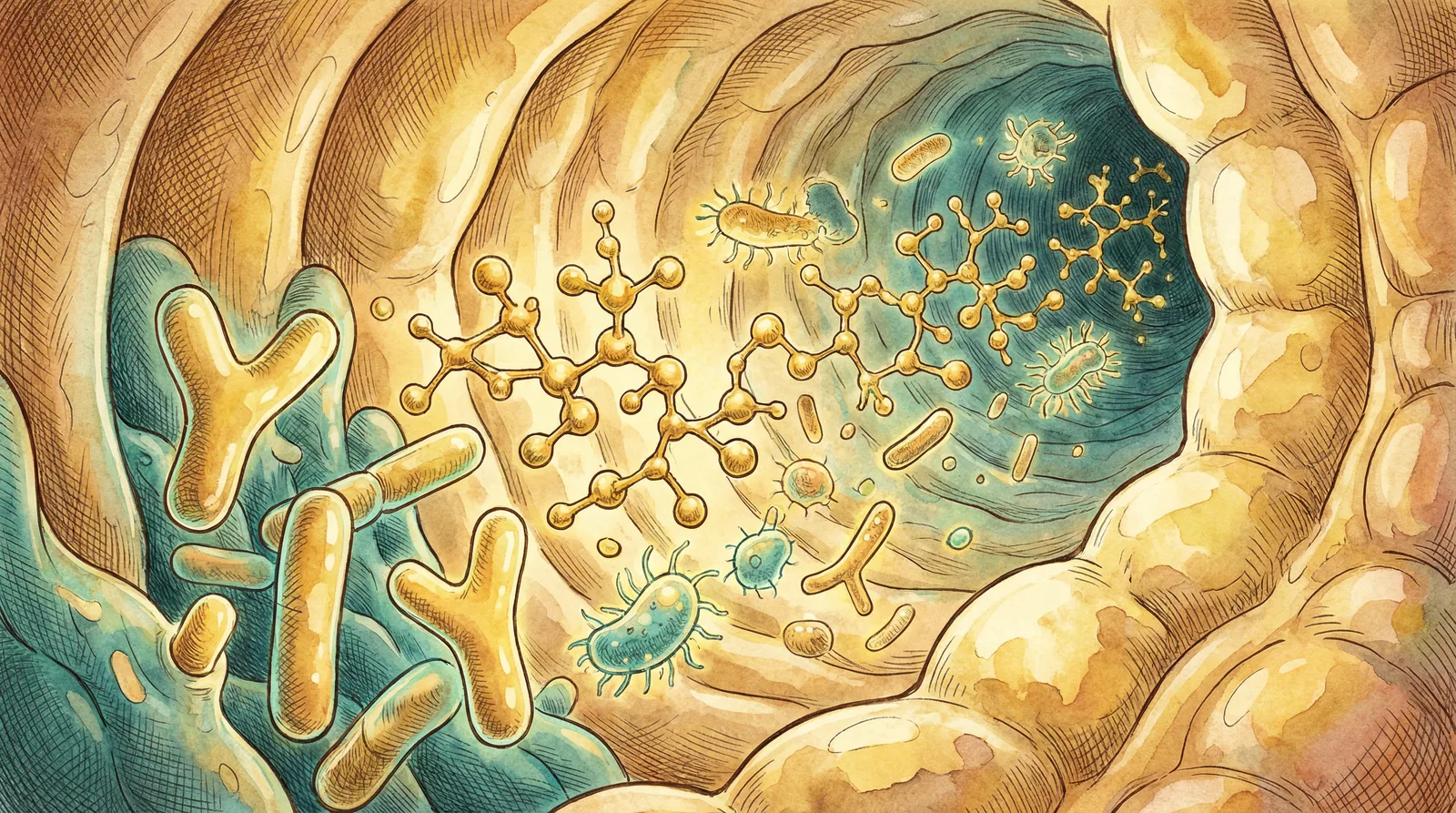
Galactooligosaccharides (GOS) are prebiotic oligosaccharides composed of galactose units with a terminal glucose molecule[1]. Structurally similar to the oligosaccharides found naturally in human breast milk, GOS are among the most effective prebiotics for promoting Bifidobacterium growth. They are commercially produced through enzymatic transgalactosylation of lactose and have been extensively studied in both infant and adult populations.
Structure and Production
GOS are produced through the action of β-galactosidase enzymes on lactose[2]:
Structural Features
- Chain length: 2-8 galactose units (typically 2-5)
- Terminal glucose unit
- Various glycosidic linkages (β-1,4; β-1,6; β-1,3)
- Degree of polymerization affects fermentation rate
Commercial Production
- Enzymatic conversion of lactose using β-galactosidase
- Multiple enzyme sources (bacterial, fungal, yeast)
- Resulting mixtures contain various GOS species
- Product characteristics vary by enzyme source and conditions

Mechanism of Action
Prebiotic Effect
GOS exert their prebiotic effects through selective utilization by beneficial bacteria[1]:
- Selective fermentation: Bifidobacteria possess β-galactosidase enzymes that efficiently cleave GOS bonds
- Competitive advantage: Beneficial bacteria gain nutritional advantage over pathogens
- SCFA production: Fermentation produces acetate, propionate, and lactate
- pH reduction: Acidification of colonic environment inhibits pathogen growth
Anti-Adhesion Effects
Research has demonstrated that GOS can prevent pathogenic bacteria from adhering to intestinal cells[4]:
- GOS act as receptor mimics
- Block pathogen binding sites
- Reduce enteropathogenic E. coli adherence
- May protect against enteric infections
Structural Similarity to HMOs
GOS's structural resemblance to human milk oligosaccharides (HMOs) underlies their effectiveness in infant nutrition[6]:
- Both promote Bifidobacterium infantis
- Similar receptor-blocking properties
- Support developing gut microbiome
- Enhance immune system maturation
Effects on Gut Microbiome
Primary Effects
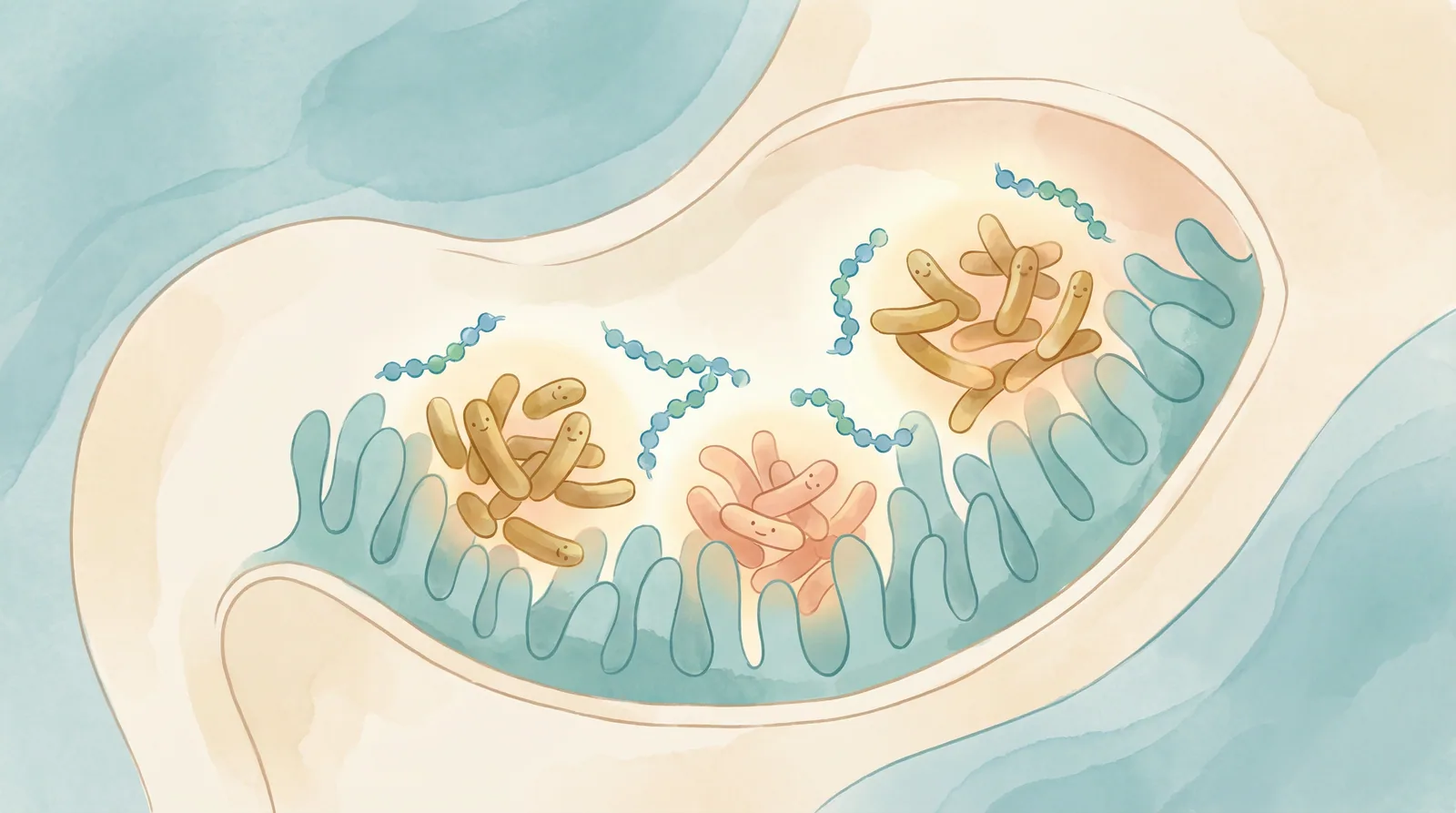
- Bifidobacterium: Strongest bifidogenic effect among common prebiotics
- Lactobacillus: Consistent enhancement of lactobacilli populations
- Bacteroides: Variable effects depending on GOS type and dose
Age-Specific Effects
Infants: GOS supplementation in infant formula has been shown to[6]:
- Shift microbiota toward breast-fed infant profile
- Increase Bifidobacterium dominance
- Reduce potential pathogens
- Improve stool consistency
Adults: In elderly individuals, GOS supplementation demonstrated[5]:
- Significant increases in Bifidobacterium species
- Enhanced immune parameters
- Improved metabolomic profiles
- Modulation of inflammatory markers
Clinical Evidence
Gut Health
GOS supplementation consistently shows:
- Increased stool frequency in constipated individuals
- Improved stool consistency
- Reduced symptoms of functional gastrointestinal disorders
- Enhanced mineral absorption (particularly calcium)
Immune Function
Studies in elderly populations have demonstrated GOS's immunomodulatory effects[5]:
- Increased phagocytic activity
- Enhanced NK cell activity
- Reduced pro-inflammatory cytokines
- Improved anti-inflammatory markers
Mental Health and Gut-Brain Axis
A notable study found that GOS supplementation influences stress responses and emotional processing[3]:
- Reduced cortisol awakening response: Lower morning cortisol levels
- Altered emotional bias: Decreased attention to negative stimuli
- Gut-brain connection: Supports the role of prebiotics in mental well-being
- Potential anxiolytic effects: May benefit individuals with anxiety
Infant Nutrition
Extensive evidence supports GOS in infant formulas[6]:
- Closer microbiota composition to breastfed infants
- Reduced incidence of infections
- Softer stool consistency
- Potential protection against allergies
Dosage and Usage
Recommended Dosages
| Population | Dose | Evidence Level |
|---|---|---|
| Adults | 2.5-10g daily | Strong |
| Elderly | 5.5g daily | Strong |
| Infants (formula) | 0.8g/100ml | Strong |
| Children | 2.5-5g daily | Moderate |
Practical Considerations
- Start gradually: Begin with 2.5g and increase over 1-2 weeks
- Timing: Can be taken with or without food
- Combination: Often combined with FOS in synbiotic products
- Duration: Effects observed within 1-2 weeks
GOS in Infant Formula
The addition of GOS to infant formulas has become standard practice[6]:
Benefits
- Mimics breast milk prebiotic effects
- Supports immune development
- Promotes healthy gut colonization
- Reduces formula-related constipation
Formulation
- Often combined with long-chain FOS (9:1 ratio)
- Dosage typically 0.8g/100ml formula
- Extensively studied for safety in infants
- Approved for use in infant formulas worldwide
Comparison with Other Prebiotics
| Feature | GOS | FOS | Inulin |
|---|---|---|---|
| Bifidogenic potency | Very high | High | High |
| Fermentation rate | Fast-moderate | Fast | Moderate |
| HMO similarity | High | Moderate | Low |
| Infant formula use | Common | Common | Less common |
| Tolerance | Good | Good | Good |
Safety and Tolerability
GOS are generally well-tolerated[2]:
- May cause mild flatulence at higher doses
- Contains trace lactose (consideration for severe lactose intolerance)
- No significant adverse effects in clinical trials
- Safe for long-term use in all age groups
- Approved for infant formula use by regulatory authorities
Special Considerations
Lactose Content
While GOS are produced from lactose, the final product contains minimal residual lactose:
- Most lactose intolerant individuals tolerate GOS well
- Severely lactose intolerant individuals should start with low doses
- Lactose-free GOS products are available
Synbiotic Applications
GOS are commonly combined with probiotics (synbiotics):
- Enhanced Bifidobacterium survival
- Synergistic effects on gut health
- Common in commercial probiotic products
Summary
Galactooligosaccharides represent one of the most potent and well-studied prebiotics, with particularly strong evidence for promoting Bifidobacterium growth. Their structural similarity to human milk oligosaccharides makes them uniquely valuable for infant nutrition, while their demonstrated effects on immune function, gut-brain axis, and metabolic health extend their benefits to adults and elderly populations. With excellent tolerability and extensive safety data, GOS are a foundational prebiotic for supporting gut microbiome health across the lifespan.
GOS vs. FOS: Choosing the Right Prebiotic
Both GOS and FOS (fructooligosaccharides) are among the most well-studied prebiotics, and they are frequently compared. Understanding the differences between GOS vs FOS can help guide prebiotic selection for specific health goals.
Structural Differences: GOS vs FOS
The fundamental difference between GOS vs FOS lies in their sugar composition:
- GOS: Composed of galactose units with a terminal glucose; produced from lactose via enzymatic transgalactosylation
- FOS: Composed of fructose units with a terminal glucose; derived from chicory inulin or synthesized from sucrose
This structural difference means GOS and FOS are fermented by partially overlapping but distinct bacterial populations.
Head-to-Head Comparison: GOS vs FOS
| Property | GOS | FOS |
|---|---|---|
| Primary sugar | Galactose | Fructose |
| Source | Lactose (dairy-derived) | Chicory root or sucrose |
| Bifidogenic potency | Very high | High |
| Lactobacillus support | Strong | Moderate |
| HMO similarity | High (closest prebiotic to breast milk sugars) | Moderate |
| Infant formula use | Very common (standard addition) | Common (often combined with GOS) |
| Fermentation rate | Fast to moderate | Fast |
| Anti-adhesion effects | Strong (blocks pathogen binding) | Moderate |
| Cortisol reduction | Documented (reduced waking cortisol)[3] | Less documented |
| Lactose content | Trace amounts (may concern severe lactose intolerance) | None |
| Typical dose | 2.5-10g/day | 2.5-15g/day |
When to Choose GOS Over FOS
GOS may be the better choice when:
- Infant nutrition: GOS's structural similarity to human milk oligosaccharides makes it the preferred prebiotic for infant formula
- Gut-brain axis support: GOS has more direct evidence for reducing cortisol and altering emotional processing
- Immune support in elderly: GOS (B-GOS) has specific evidence for enhancing immune parameters in older adults[5]
- Pathogen protection: GOS's anti-adhesion properties provide an additional layer of protection against enteric pathogens
When to Choose FOS Over GOS
FOS may be preferred when:
- Dairy avoidance: FOS is plant-derived and contains no lactose
- Budget considerations: FOS (especially as chicory-derived oligofructose) tends to be more affordable
- Higher-dose protocols: FOS has more clinical evidence at doses above 10g/day
- Combination with inulin: FOS and inulin can be easily combined for full-colon coverage
Best of Both: GOS + FOS Combinations
Many commercial products combine GOS and FOS, typically in a 9:1 ratio. This combination, widely used in infant formulas, aims to replicate the prebiotic diversity of human breast milk. Evidence suggests the combination may provide:
- Broader bacterial stimulation than either prebiotic alone
- Both rapid (FOS) and moderate-speed (GOS) fermentation
- Enhanced immune and metabolic effects through diverse SCFA production
Dosage Guidelines
Recommended Dosage
2.5-10g daily
Start with a lower dose and gradually increase to minimize digestive discomfort. Consult a healthcare provider for personalized recommendations.
Frequently Asked Questions
What is GOS (Galactooligosaccharides) Guide?
Galactooligosaccharides (GOS) are prebiotics like human milk sugars that promote Bifidobacterium growth. Compare GOS vs FOS, dosage, and food sources.
What foods contain GOS (Galactooligosaccharides) Guide?
GOS (Galactooligosaccharides) Guide can be found in: Human breast milk (naturally), Commercial synthesis from lactose, Legumes, Some vegetables.
What are the health benefits of GOS (Galactooligosaccharides) Guide?
Key benefits include: Strong bifidogenic effect, Supports infant gut development, Improves calcium absorption, May reduce anxiety symptoms, Enhances immune function.
References
- Davani-Davari D, Negahdaripour M, Karimzadeh I, et al.. Prebiotics: Definition, Types, Sources, Mechanisms, and Clinical Applications. Foods. 2019;8(3):92. doi:10.3390/foods8030092
- Torres DPM, Gonçalves MDPF, Teixeira JA, Rodrigues LR. Galacto-Oligosaccharides: Production, Properties, Applications, and Significance as Prebiotics. Comprehensive Reviews in Food Science and Food Safety. 2017;16(5):1034-1054. doi:10.1111/1541-4337.12290
- Schmidt K, Cowen PJ, Harmer CJ, et al.. Prebiotic intake reduces the waking cortisol response and alters emotional bias in healthy volunteers. Psychopharmacology. 2015;232:1793-1801. doi:10.1007/s00213-014-3810-0
- Shoaf K, Mulvey GL, Armstrong GD, Hutkins RW. Prebiotic galactooligosaccharides reduce adherence of enteropathogenic Escherichia coli to tissue culture cells. Infection and Immunity. 2006;74(12):6920-6928. doi:10.1128/IAI.01030-06
- Vulevic J, Juric A, Walton GE, et al.. Influence of galacto-oligosaccharide mixture (B-GOS) on gut microbiota, immune parameters and metabolomics in elderly persons. British Journal of Nutrition. 2015;114(4):586-595. doi:10.1017/S0007114515001889
- Vandenplas Y, Zakharova I, Dmitrieva Y. Oligosaccharides in infant formula: more evidence to validate the role of prebiotics. British Journal of Nutrition. 2015;113(9):1339-1344. doi:10.1017/S0007114515000823