
Immunity Support
Strengthen your immune system through microbiome optimization
Enhanced immune response to pathogens
Reduced inflammation throughout the body
Better recovery from illness
Improved barrier function in gut and respiratory tract
Balanced immune reactions to prevent autoimmunity
The Gut-Brain Connection
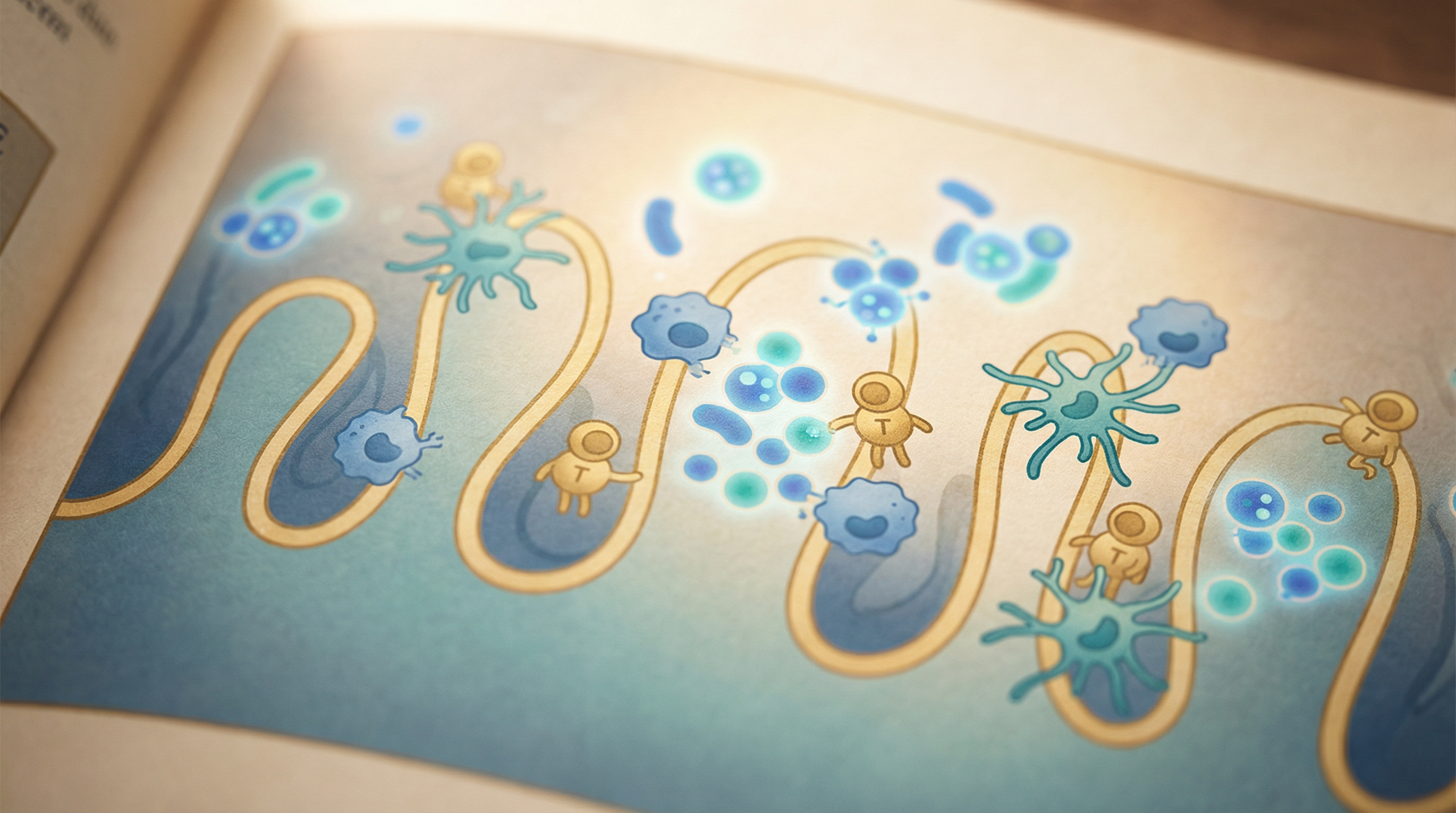
Your gut microbiome plays a profound role in immunity support. Through what scientists call the gut-brain axis, trillions of microorganisms communicate directly with your brain, influencing everything from mood to cognitive function.
💡 Key Insight
Research Highlights
Probiotics Enhance Immune Function
Research shows certain probiotic strains can enhance natural killer cell activity and increase production of antibodies.
Journal of Immunology Research, 2023
Gut Microbiome Diversity Linked to Stronger Immune Response
Higher diversity in gut microbiome correlates with stronger immune response to vaccines and infections.
Nature Immunology, 2024
Specific Benefits
Explore the specific ways microbiome optimization supports immunity support. Each benefit page provides in-depth information on mechanisms, supporting bacteria, and practical strategies.
Balanced Inflammatory Response
Achieve optimal inflammation regulation through microbiome modulation, reducing chronic inflammation while maintaining effective acute responses.
Learn moreEnhanced Pathogen Defense
Strengthen your body's natural defenses against harmful bacteria, viruses, and fungi through a well-balanced gut microbiome.
Learn moreImproved Vaccine Response
Enhance your immune system's ability to respond to vaccinations and build lasting protection through microbiome optimization.
Learn moreStrengthened Mucosal Immunity
Fortify your body's mucosal surfaces—gut, respiratory, and urogenital—through microbiome-supported immune function for comprehensive protection.
Learn more
Key Beneficial Microbes
These specific microorganisms have been scientifically shown to support immunity support through various mechanisms.
Bifidobacterium bifidum
B. bifidum
Supports immunity support by enhancing digestive function.
Faecalibacterium prausnitzii
F. prausnitzii
Supports immunity support by enhancing digestive function.
Lactobacillus acidophilus
L. acidophilus
Supports immunity support by enhancing digestive function.
Dietary Recommendations
🥗 Foods to Include
- Fermented foods (yogurt, kefir, sauerkraut)
- Garlic and onions
- Colorful fruits and vegetables
- Mushrooms (shiitake, maitake)
- Bone broth
💊 Supplements to Consider
- Probiotics with multiple Lactobacillus and Bifidobacterium strains
- Prebiotics (inulin, FOS)
- Vitamin D
- Zinc
- Vitamin C

Expert Tips
Include a variety of fermented foods in your diet daily
Reduce sugar intake, which can suppress immune function
Manage stress through meditation or yoga to support immune health
Ensure adequate sleep for microbiome and immune system recovery
Consider seasonal probiotic adjustments for changing immune challenges
Frequently Asked Questions
How quickly can the microbiome influence immune function?
Changes in immune markers can be detected within 2-4 weeks of significant microbiome interventions, though individual results vary.
Can probiotics help with seasonal allergies?
Yes, certain probiotic strains have been shown to reduce allergy symptoms by modulating immune responses and reducing inflammation.
References
- Yan F, Polk DB. Probiotics and Immune Health. Curr Opin Gastroenterol. 2011;27(6):496-501. doi:10.1097/MOG.0b013e32834baa4d
- Belkaid Y, Hand TW. Role of the microbiota in immunity and inflammation. Cell. 2014;157(1):121-141. doi:10.1016/j.cell.2014.03.011