

Deinococcus radiodurans
Key Characteristics
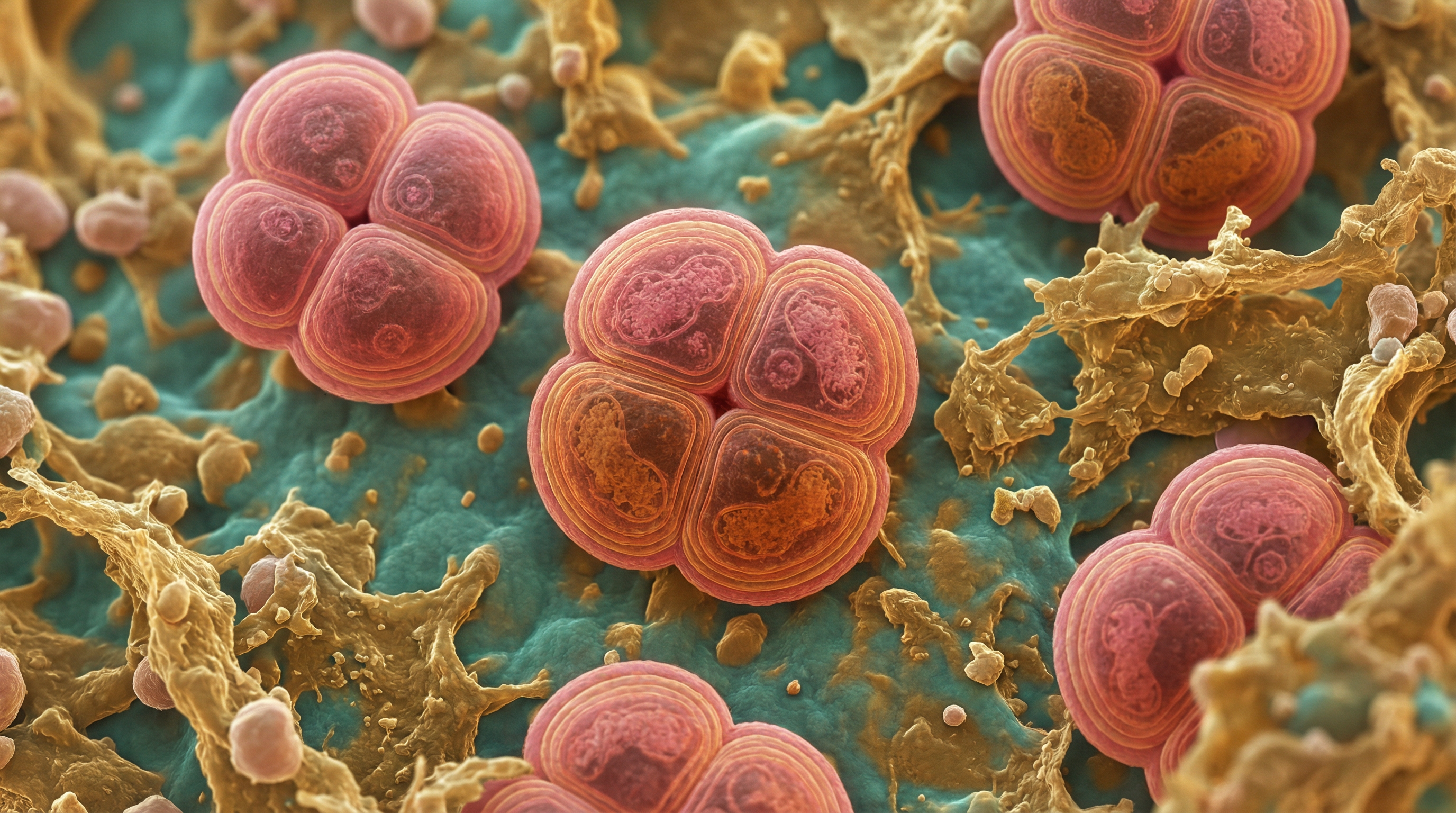
Deinococcus radiodurans is a remarkable extremophilic bacterium with several distinctive characteristics that set it apart from most other microorganisms:
- Gram-positive, non-motile, non-spore-forming, spherical bacterium that typically forms tetrads or pairs
- Extraordinary resistance to radiation, capable of surviving radiation doses up to 5,000 Gy (500 times the lethal dose for humans)
- Nicknamed "Conan the Bacterium" due to its extreme resilience
- Member of the Deinococcus-Thermus phylum, a distinct lineage in bacterial taxonomy
- Possesses a unique cell wall structure with multiple layers that contributes to its resistance properties
- Contains multiple copies of its genome (4-10 copies depending on growth phase)
- Genome consists of two chromosomes and two plasmids, with a total size of approximately 3.28 Mbp
- Aerobic chemoorganotroph that can utilize various carbon sources
- Produces distinctive pink to red colonies due to carotenoid pigments that serve as antioxidants
- Optimal growth temperature of 30-37°C, but can survive extreme temperature fluctuations
- Exceptional resistance to desiccation, capable of surviving prolonged periods of dehydration
- Highly resistant to oxidative stress, UV radiation, and various chemical mutagens
- Possesses efficient DNA repair mechanisms, including a unique RecA-dependent system
- Contains high levels of manganese complexes that protect proteins from oxidative damage
- Produces exopolysaccharides that contribute to stress resistance and biofilm formation
- Cell wall components (DeinoWall) have demonstrated anti-allergic properties
- First isolated in 1956 from irradiated canned meat that was supposed to be sterile
- Can survive in nutrient-poor environments for extended periods
- Capable of withstanding vacuum and the harsh conditions of outer space
- Has been studied in astrobiology as a model organism for potential extraterrestrial life
- Possesses a highly efficient antioxidant defense system
- Contains unique global regulatory factors that coordinate stress responses
- Demonstrates remarkable ability to reassemble its fragmented genome after radiation damage
- Metabolically versatile, able to adapt to various environmental conditions
- Genome contains numerous genes involved in stress response and DNA repair
- Produces various secondary metabolites with potential biotechnological applications
- Has been engineered for bioremediation of radioactive waste sites
The extraordinary resilience of Deinococcus radiodurans makes it one of the most extremophilic organisms known, with significant implications for understanding the limits of life, radiation biology, and potential applications in biotechnology and medicine.
Role in Human Microbiome
Deinococcus radiodurans occupies a unique niche within the human microbiome, primarily as a commensal organism with potential beneficial effects:
Skin Microbiome:
- Present in low abundance in the skin microbiome of healthy individuals
- Considered a commensal organism in healthy human skin
- Proportion of Deinococcus has been reported to be inversely associated with allergic skin inflammation and psoriasis
- May contribute to maintaining skin health through its unique properties
- Elicits minimal immune responses from host cells, suggesting a well-adapted commensal relationship
- Likely contributes to the microbial diversity that supports skin homeostasis
- May help protect the skin microbiome from environmental stressors due to its resistance properties
Gastrointestinal Tract:
- Has been detected in gastric endoscopic biopsy samples from healthy individuals
- The Deinococcus-Thermus phylum was first identified in humans through phylogenetic analysis of gastric samples
- Present in low abundance compared to dominant gut phyla like Firmicutes and Bacteroidetes
- Specific functional role in the gut microbiome remains largely unexplored
- May contribute to microbial diversity and resilience of the gut ecosystem
Vaginal Microbiome:
- Has been reported in the vaginal microflora of healthy women
- Present at low abundance compared to dominant Lactobacillus species
- Specific contribution to vaginal health is not well characterized
- May be part of the diverse microbial community that supports vaginal homeostasis
Ecological Interactions:
- Likely interacts with other members of the microbiome through various mechanisms
- May provide protective effects through its resistance to environmental stressors
- Could potentially share resistance mechanisms with other microbiome members
- Produces exopolysaccharides (DeinoPol) that may influence biofilm formation and microbial community structure
- Cell wall components (DeinoWall) have demonstrated immunomodulatory properties that could influence host-microbiome interactions
Colonization Patterns:
- Generally present at low abundance across different body sites
- Colonization appears to be stable in healthy individuals
- Environmental exposure likely contributes to initial colonization
- Specific factors that determine successful colonization are not well understood
- May occupy specific microniches within broader body sites
Temporal Dynamics:
- Limited information available on temporal changes in Deinococcus abundance
- Likely maintains relatively stable populations in the absence of perturbations
- May show resilience during microbiome disruptions due to its stress resistance properties
- Could potentially serve as a reservoir for recolonization after microbiome disturbances
Host-Specific Adaptations:
- Appears to have adapted to the human host environment despite its environmental origin
- Elicits minimal inflammatory responses, suggesting adaptation to avoid host immune recognition
- May have evolved specific mechanisms for adherence to human epithelial surfaces
- Genomic plasticity likely contributes to host adaptation capabilities
The role of Deinococcus radiodurans in the human microbiome represents an interesting case of a highly stress-resistant environmental organism that has established a commensal relationship with the human host. While present at relatively low abundance, its inverse association with certain inflammatory skin conditions suggests potential beneficial effects that warrant further investigation. The unique properties of this extremophile may contribute to microbiome resilience and host health in ways that are still being discovered.
Health Implications
The health implications of Deinococcus radiodurans in the human microbiome are emerging as an area of interest, with several potential beneficial effects:
Skin Health and Allergic Conditions:
- Inverse association with atopic dermatitis and psoriasis suggests a potential protective role
- Cell wall components (DeinoWall) have demonstrated anti-allergic properties in experimental models
- DeinoWall suppresses T helper type 2 (Th2) immune responses, which are typically elevated in allergic conditions
- Inhibits the production of Th2 cytokines such as IL-4 and IL-5 in response to allergen stimulation
- Reduces serum IgE levels and mast cell infiltration in experimental models of atopic dermatitis
- Promotes Th1-biased immunity, which may help balance Th1/Th2 responses in allergic conditions
- May contribute to skin barrier function and homeostasis through interactions with other microbiome members
- Could potentially be developed as a probiotic or postbiotic treatment for allergic skin conditions
Immunomodulatory Effects:
- Induces maturation of bone marrow-derived dendritic cells that promote Th1-biased immunity
- Helps regulate the balance between Th1 and Th2 immune responses
- Elicits minimal inflammatory responses from host cells, suggesting well-adapted host interactions
- May contribute to immune tolerance in the skin and other colonized sites
- Could potentially influence local and systemic immune development
- Cellular components have demonstrated specific immunomodulatory properties that could be harnessed therapeutically
Microbiome Resilience:
- Extreme resistance to environmental stressors may contribute to microbiome stability
- Could potentially serve as a reservoir for recolonization after microbiome disturbances
- May help protect other microbiome members through shared resistance mechanisms or protective compounds
- Contributes to microbial diversity, which is generally associated with healthier microbiome states
- Exopolysaccharides (DeinoPol) may influence biofilm formation and community structure
Antioxidant Properties:
- Produces carotenoid pigments and other antioxidant compounds that may benefit the host
- Highly efficient antioxidant systems could potentially mitigate oxidative stress in colonized tissues
- May contribute to protection against environmental oxidative damage, particularly in exposed sites like the skin
- Antioxidant properties have been explored for potential applications in cosmetic and pharmaceutical products
Potential Therapeutic Applications:
- Probiotics: Live D. radiodurans could potentially be developed as a probiotic for allergic conditions
- Postbiotics: Cell wall components (DeinoWall) show promise as postbiotic treatments for allergic diseases
- Immunomodulation: Components that promote Th1 responses could be used to balance immune responses
- Skin Care: Antioxidant properties and stress resistance mechanisms could be harnessed for skin protection
- Radiation Protection: Extreme radiation resistance mechanisms might inspire radioprotective strategies
- Bioremediation: Could potentially help detoxify environmental pollutants in the body
Safety Considerations:
- Generally recognized as safe due to its commensal nature and minimal inflammatory potential
- No reported pathogenicity in humans
- Long history of environmental exposure without adverse effects
- Potential for horizontal gene transfer with other microbiome members requires further investigation
- Immunomodulatory effects may need careful evaluation in immunocompromised individuals
Research Gaps and Future Directions:
- Mechanisms of colonization and persistence in the human microbiome need further study
- Specific interactions with other microbiome members remain largely unexplored
- Longitudinal studies needed to understand temporal dynamics and stability
- Potential for strain-specific effects requires investigation
- Therapeutic applications need rigorous clinical evaluation
- Optimal delivery methods for potential probiotic or postbiotic applications need development
The health implications of Deinococcus radiodurans highlight the potential benefits of this unique extremophile in the human microbiome. Its inverse association with inflammatory skin conditions and demonstrated anti-allergic properties suggest promising therapeutic applications. As research continues to unravel the complex interactions between D. radiodurans, the broader microbiome, and the human host, new opportunities for harnessing its beneficial properties may emerge. The remarkable resilience of this organism may translate into resilience benefits for the microbiome and, ultimately, human health.
Metabolic Activities
The metabolic activities of Deinococcus radiodurans reflect its adaptation to extreme environments and its unique ecological niche:
Carbon Metabolism:
- Aerobic chemoorganotroph that primarily utilizes respiratory metabolism
- Can metabolize a wide range of carbon sources, including sugars, amino acids, and organic acids
- Contains complete glycolytic pathway and tricarboxylic acid (TCA) cycle
- Possesses pentose phosphate pathway for generating NADPH and pentose sugars
- Capable of utilizing complex carbon sources through various hydrolytic enzymes
- Demonstrates metabolic flexibility that contributes to survival in diverse environments
- Efficient at scavenging nutrients from the environment, including dead organic matter
- Contains multiple carbohydrate transporters for uptake of various sugars
- Metabolic versatility allows adaptation to nutrient-limited conditions
Energy Generation:
- Primarily relies on aerobic respiration for energy production
- Contains complete electron transport chain for oxidative phosphorylation
- Can utilize various electron donors and acceptors
- Possesses high-efficiency respiratory mechanisms that contribute to stress resistance
- Maintains energy homeostasis even under extreme stress conditions
- Can shift metabolic strategies in response to environmental changes
- Efficient ATP generation supports energy-intensive repair processes
Nitrogen Metabolism:
- Can utilize various nitrogen sources, including amino acids and ammonium
- Contains pathways for amino acid biosynthesis and degradation
- Does not perform nitrogen fixation
- Efficient at recycling nitrogen compounds
- Possesses transporters for uptake of nitrogen-containing compounds
- Metabolic pathways are regulated to optimize nitrogen utilization
Lipid Metabolism:
- Synthesizes unique membrane lipids that contribute to stress resistance
- Contains pathways for fatty acid biosynthesis and modification
- Membrane lipid composition can be adjusted in response to environmental conditions
- Produces carotenoid pigments that integrate into membranes and provide antioxidant protection
- Lipid metabolism is tightly regulated to maintain membrane integrity under stress
Secondary Metabolite Production:
- Produces carotenoid pigments (primarily deinoxanthin) that give colonies their distinctive pink-red color
- Carotenoids serve as powerful antioxidants that protect against oxidative damage
- Synthesizes exopolysaccharides (DeinoPol) that contribute to biofilm formation and stress resistance
- Cell wall components (DeinoWall) have demonstrated immunomodulatory properties
- May produce other secondary metabolites with potential antimicrobial or protective functions
- Secondary metabolite production is regulated in response to environmental conditions
Stress Response Metabolism:
- Maintains high levels of man (Content truncated due to size limit. Use line ranges to read in chunks)