


Probiotics are live microorganisms that, when consumed in adequate amounts, confer health benefits on the host[1]. Your gut is home to trillions of bacteria, and among them are beneficial species often called "good bacteria" or probiotic bacteria. These microorganisms support digestion, strengthen immunity, and even influence mental wellbeing. Whether you are considering probiotic supplements or probiotic foods like yogurt and kimchi, understanding how probiotics work can empower you to make better choices for your gut health.
What Makes Bacteria "Beneficial"?
Beneficial bacteria are microorganisms that confer health advantages when present in adequate amounts[1]. They're characterized by:
- Positive health effects: Supporting digestion, immunity, and metabolism
- Non-pathogenic nature: Not causing disease in healthy individuals
- Competitive exclusion: Preventing harmful bacteria from colonizing
- Metabolite production: Creating beneficial compounds like short-chain fatty acids
- Immune modulation: Training and balancing the immune system
The Major Beneficial Bacterial Families
Lactobacillus Species
The Lactobacillus genus includes some of the most well-studied probiotics[2]:
Lactobacillus rhamnosus One of the most extensively researched probiotic strains, particularly L. rhamnosus GG. Benefits include:
- Reducing duration of diarrhea
- Supporting immune function
- Potential benefits for allergic conditions
- Gut barrier enhancement
Lactobacillus acidophilus A natural inhabitant of the human gut that:
- Aids lactose digestion
- Produces lactic acid to inhibit pathogens
- Supports vaginal health
- May reduce cholesterol absorption
Lactobacillus plantarum Known for its resilience and versatility:
- Survives stomach acid effectively
- Produces antimicrobial compounds
- Supports gut barrier function
- Found in many fermented vegetables
Bifidobacterium Species
Bifidobacterium species are among the first beneficial bacteria to colonize the infant gut and remain important throughout life[3]:
Bifidobacterium longum A versatile species found in both infants and adults:
- Produces vitamins (B vitamins, vitamin K)
- Breaks down dietary fiber
- Reduces inflammation
- Supports mental health via the gut-brain axis
Bifidobacterium bifidum Particularly important for:
- Early immune development
- Protecting against pathogens
- Producing essential nutrients
- Supporting digestive health
Bifidobacterium lactis Commonly used in supplements and dairy products:
- Enhances immune cell activity
- Supports digestive regularity
- May improve metabolic markers
- Well-tolerated in various populations
Butyrate-Producing Bacteria
These bacteria produce butyrate, a short-chain fatty acid that's crucial for gut health:
Faecalibacterium prausnitzii One of the most abundant bacteria in healthy guts:
- Major butyrate producer
- Powerful anti-inflammatory effects
- Reduced in IBD patients
- Supports gut barrier integrity
Roseburia species Important fiber fermenters:
- Produce butyrate from dietary fiber
- Support colon health
- May influence metabolic health
- Reduced in metabolic disorders
Other Notable Beneficial Species
Akkermansia muciniphila A mucin-degrading bacterium with remarkable benefits:
- Strengthens gut barrier
- Improves metabolic health
- Reduces inflammation
- Being developed as a next-generation probiotic
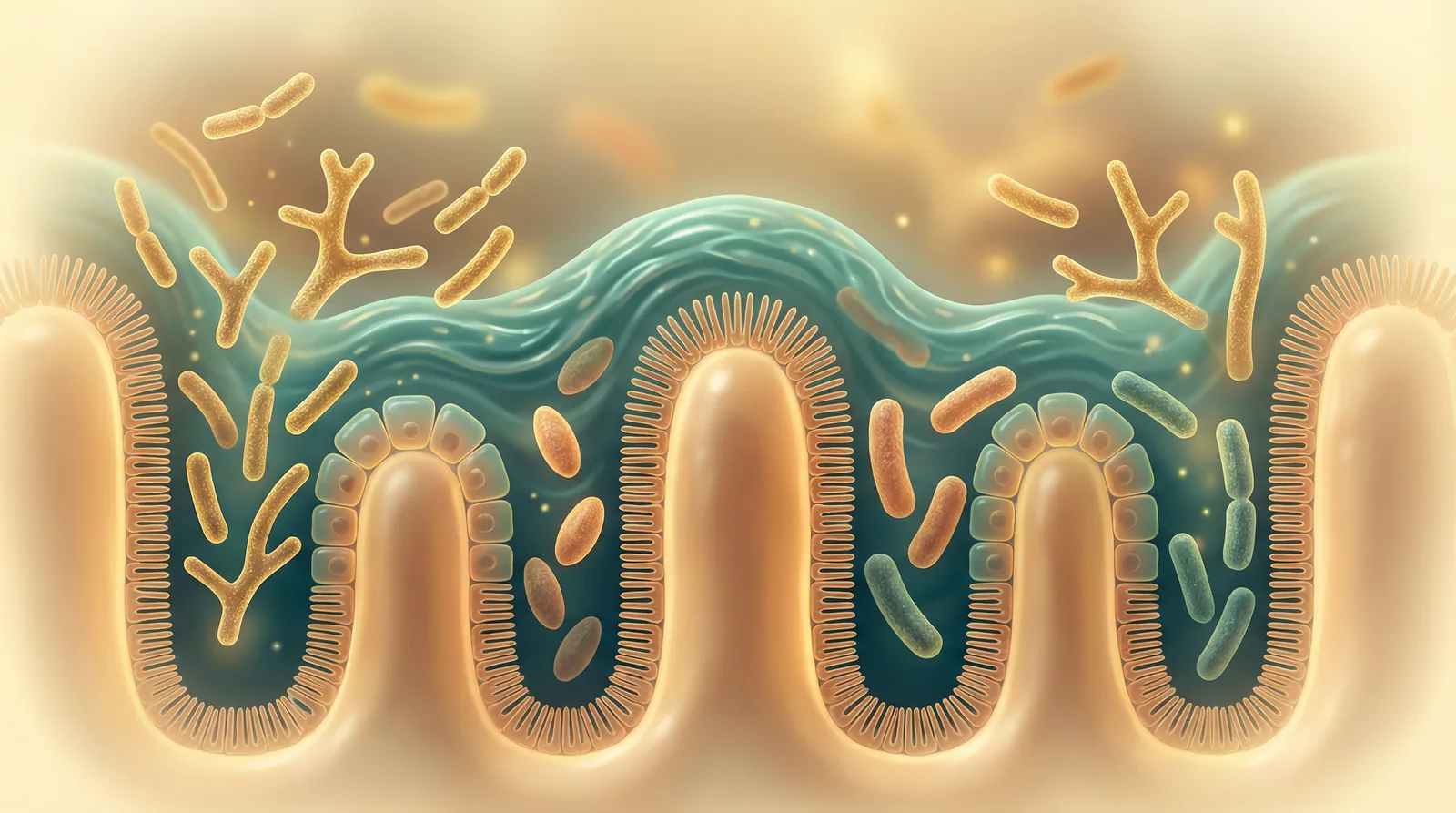
Types of Probiotics
Understanding the main types of probiotics can help you choose the right supplement or food for your specific health goals. Probiotic organisms span several genera, each with distinct characteristics and evidence-based applications[2].
Lactobacillus Probiotics
The Lactobacillus genus is the most widely used group of probiotic bacteria. These lactic acid-producing organisms are found naturally in fermented foods and the human digestive and urogenital tracts. Key species include L. acidophilus (one of the most studied probiotic species, with evidence for digestive and immune support), L. rhamnosus (particularly the GG strain, with strong evidence for diarrhea prevention), and L. plantarum (known for its resilience and IBS symptom relief). Lactobacillus probiotics are generally considered safe for most populations and are among the best probiotics for women's vaginal and urinary tract health.
Bifidobacterium Probiotics
Bifidobacterium species are among the first bacteria to colonize the infant gut and remain important throughout life. B. longum has research for stress management and gut-brain axis support, while B. bifidum plays a role in early immune development. B. infantis 35624 — since reclassified as B. longum subsp. longum 35624, and marketed as Align — has some of the most consistent evidence for IBS symptom relief; see the best probiotics for IBS for the full subtype-by-subtype breakdown. These species are particularly abundant in breastfed infants and tend to decline with age.
Saccharomyces Probiotics
Unlike bacterial probiotics, Saccharomyces boulardii is a beneficial yeast. Its key advantage is that it survives antibiotic treatment, making it particularly useful for preventing antibiotic-associated diarrhea and C. difficile infection. Because it is a yeast rather than a bacterium, it is not killed by antibacterial antibiotics and can be taken concurrently with antibiotic courses.
Bacillus Probiotics
Spore-forming Bacillus species (such as B. subtilis and B. coagulans) are increasingly popular in supplements due to their exceptional shelf stability. The spore form survives stomach acid, heat, and storage conditions that may kill other probiotics. While the evidence base is growing, research suggests potential benefits for digestive health and immune function.
For help choosing between probiotics and prebiotics, see our complete guide to prebiotics vs. probiotics.
Health Benefits of Beneficial Bacteria
Digestive Health
Beneficial bacteria support digestive function through multiple mechanisms[2]:
- Breaking down dietary fiber into useful metabolites
- Aiding lactose digestion in lactose-intolerant individuals
- Reducing symptoms of IBS in some patients
- Supporting regular bowel movements
- Maintaining gut barrier integrity
Immune System Support
Your gut houses approximately 70% of your immune cells, and beneficial bacteria play crucial roles in immune function:
- Training immune cells to respond appropriately
- Producing antimicrobial compounds
- Competing with pathogens for resources
- Modulating inflammatory responses
- Supporting antibody production
Mental Health and the Gut-Brain Axis
Research increasingly links gut bacteria to mental wellbeing:
- Certain strains reduce anxiety and depression symptoms
- Gut bacteria produce neurotransmitters like serotonin precursors
- The vagus nerve connects gut and brain
- Termed "psychobiotics" when used for mental health benefits
Metabolic Health
Beneficial bacteria influence metabolism through:
- Improving insulin sensitivity
- Regulating appetite hormones
- Extracting energy from otherwise indigestible foods
- Producing metabolites that influence fat storage
- Supporting healthy body weight
Food Sources of Beneficial Bacteria
Fermented Dairy
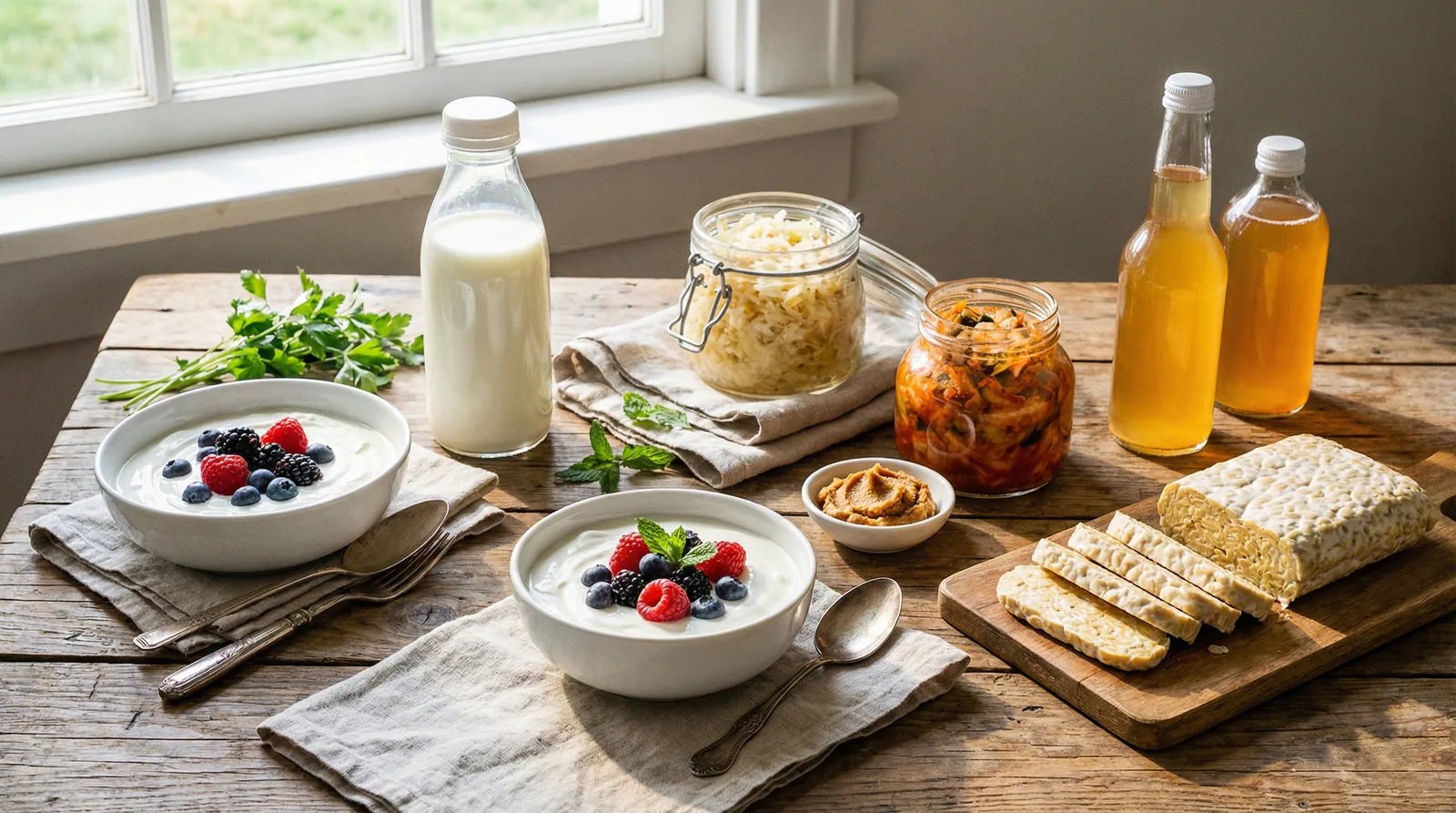
Fermented dairy products are excellent sources of live probiotics[4]:
Yogurt
- Contains Lactobacillus bulgaricus and Streptococcus thermophilus
- May include additional probiotic strains
- Choose varieties with "live active cultures"
- Avoid heavily sweetened options
Kefir
- Contains dozens of bacterial and yeast strains
- Often better tolerated by lactose-intolerant individuals
- More diverse probiotic content than yogurt
- Available in dairy and non-dairy versions
Fermented Vegetables
Sauerkraut
- Traditional lactic acid fermented cabbage
- Contains Lactobacillus plantarum and other species
- Must be unpasteurized to contain live bacteria
- Rich in vitamins C and K
Kimchi
- Korean fermented vegetables with spices
- Diverse bacterial population
- Contains Lactobacillus and Leuconostoc species
- Also provides fiber and vitamins
Traditional Pickles
- Lacto-fermented (not vinegar-brined)
- Cucumber pickles contain various Lactobacillus species
- Look for "naturally fermented" labels
- Refrigerated section products more likely to have live cultures
Other Fermented Foods
Miso and Tempeh
- Fermented soy products from Asian cuisine
- Contain Bacillus subtilis and other species
- Provide protein alongside probiotics
- Miso adds umami flavor to dishes
Kombucha
- Fermented tea with a SCOBY (symbiotic culture)
- Contains acetobacter and various yeasts
- Provides organic acids alongside probiotics
- Watch sugar content in commercial varieties
Probiotic Strain Comparison: Clinical Evidence by Condition
Not all probiotics work the same way. Strain specificity is the most important concept in probiotic science — a study on L. rhamnosus GG tells you nothing about a generic "Lactobacillus" supplement. The table below summarizes strains with the best clinical evidence by health application[2].
| Strain | Primary Evidence | Evidence Quality | Typical Dose | Notes |
|---|---|---|---|---|
| L. rhamnosus GG | Antibiotic-associated diarrhea prevention | ★★★★★ | 10–20 billion CFU | Most-studied probiotic worldwide |
| Saccharomyces boulardii | C. difficile prevention, traveler's diarrhea | ★★★★★ | 500mg–1g/day | A yeast, not bacteria; survives antibiotics |
| Bifidobacterium infantis 35624 | IBS overall symptom relief | ★★★★ | 1 billion CFU | Sold as Align; best overall IBS data |
| L. plantarum 299v | IBS-D (diarrhea), bloating | ★★★★ | 10 billion CFU | Well-tolerated; gastric acid stable |
| L. acidophilus NCFM | Lactose intolerance, immune support | ★★★ | 5–10 billion CFU | Supports lactase enzyme activity |
| Bifidobacterium longum 1714 | Stress response, sleep quality | ★★★ | 1 billion CFU | Emerging psychobiotic evidence |
| L. reuteri DSM 17938 | Infant colic, H. pylori adjunct | ★★★ | 100M–1 billion CFU | Also studied for bone density |
| VSL#3 (multi-strain high-dose) | Ulcerative colitis, pouchitis | ★★★★ | 450–900 billion CFU | Prescription strength available |
| Akkermansia muciniphila (pasteurized) | Metabolic health, gut barrier | ★★★ | 10 billion CFU | Next-generation; relatively new to market |
| Faecalibacterium prausnitzii | IBD inflammation, colitis | ★★ (research phase) | Not yet commercial | Most promising next-gen target |
Evidence quality: ★★★★★ = multiple RCTs with meta-analyses; ★★★★ = consistent RCT evidence; ★★★ = some RCT evidence; ★★ = preclinical/early human data
Key Strain Selection Principles
Match strain to condition: Use the table above to match evidence-based strains to your specific goal. Don't assume a multi-strain "broad spectrum" formula covers all bases — those are good for general maintenance, but specific strains outperform them for targeted conditions.
Check the strain designation: "Lactobacillus rhamnosus" and "Lactobacillus rhamnosus GG" are different. The subspecies/strain code (GG, 299v, NCFM, 35624) is what the clinical trials tested.
Verify through the expiration date: CFU counts at manufacturing time are meaningless. Look for products that guarantee viability through the expiration date.
Probiotic Supplements: What You Need to Know
Choosing a Probiotic
When selecting supplements, consider[5]:
Strain specificity: Different strains have different effects. Lactobacillus rhamnosus GG is well-studied for digestive health, while Bifidobacterium longum 1714 has research for stress management.
CFU count: Colony-forming units indicate live bacteria. Effective doses typically range from 1 billion to 100 billion CFUs, depending on the strain and purpose.
Shelf stability: Look for products with guaranteed CFUs through the expiration date, not just at manufacturing.
Quality assurance: Third-party testing ensures what's on the label is in the product.
Evidence-Based Applications
Probiotics with the strongest evidence[2]:
- Antibiotic-associated diarrhea prevention: Saccharomyces boulardii, Lactobacillus rhamnosus GG
- Acute infectious diarrhea: Various Lactobacillus strains
- IBS symptom management: Multi-strain combinations, Bifidobacterium infantis
- Preventing C. difficile infection: Saccharomyces boulardii
Important Caveats
Probiotic supplements have limitations:
- Effects are strain-specific, not general
- Benefits vary significantly between individuals
- Colonization is often temporary
- Not all supplements contain what they claim
- May not be appropriate for immunocompromised individuals
Supporting Your Beneficial Bacteria
Feed Them Well with Prebiotics
Beneficial bacteria thrive on prebiotic fibers[6]:
- Inulin from garlic, onions, chicory root
- FOS from bananas, asparagus, leeks
- GOS from legumes
- Resistant starch from cooled potatoes, green bananas
- Beta-glucan from oats and mushrooms
Dietary Diversity
A varied diet supports microbial diversity:
- Aim for 30+ different plant foods weekly
- Include different colored vegetables and fruits
- Consume whole grains regularly
- Add nuts, seeds, and legumes
What to Avoid
Certain factors can harm beneficial bacteria:
- Unnecessary antibiotics: Kill good bacteria along with bad
- Excessive alcohol: Disrupts gut barrier and microbiome
- Ultra-processed foods: May contain microbiome-disrupting additives
- Artificial sweeteners: Some alter gut bacteria composition
- Chronic stress: Negatively impacts microbiome through gut-brain axis

Testing and Personalization
Microbiome testing can reveal your current bacterial landscape:
What testing shows:
- Diversity levels
- Abundance of key beneficial species
- Potential imbalances
- Response tracking to interventions
Limitations:
- Snapshot in time
- Normal ranges vary individually
- Correlation doesn't equal causation
- Results should guide, not dictate, interventions
Building a Beneficial Bacteria Action Plan
Step 1: Assess Your Current Diet
- How many fermented foods do you eat weekly?
- Are you getting adequate fiber (25-38g daily)?
- Do you consume diverse plant foods?
Step 2: Gradual Introduction
- Start with one fermented food daily
- Increase fiber intake slowly (to minimize gas and bloating)
- Add new foods one at a time to monitor tolerance
Step 3: Consider Targeted Supplementation
- Choose supplements based on specific health goals
- Start with evidence-backed strains
- Give interventions 4-8 weeks before evaluating
Step 4: Monitor and Adjust
- Track digestive symptoms
- Note energy levels and mood
- Consider microbiome testing for objective data
Frequently Asked Questions
Do probiotic supplements actually work?
Probiotic supplements have strong evidence for specific conditions: preventing antibiotic-associated diarrhea (L. rhamnosus GG, Saccharomyces boulardii), reducing acute infectious diarrhea duration, and managing IBS symptoms (certain multi-strain formulas, Bifidobacterium infantis 35624). Evidence is weaker for general "gut health" without a specific condition. Key caveat: effects are strain-specific — a study on one strain doesn't predict results from another. For healthy people eating a fiber-rich diet, food-based probiotics (fermented foods) are equally effective for general microbiome support.
What is the best probiotic strain for IBS?
Several strains have peer-reviewed evidence for IBS: Bifidobacterium infantis 35624 (marketed as Align) has the most consistent evidence for overall IBS symptom relief. Lactobacillus plantarum 299v has good evidence for IBS-D (diarrhea-predominant). VSL#3 (multi-strain high-dose) has evidence for IBS-C and IBS-D. Saccharomyces boulardii helps specifically with diarrhea-predominant IBS. No single strain works for everyone — if one doesn't help after 6–8 weeks, try a different strain rather than abandoning probiotics entirely.
How long does it take for probiotics to work?
It depends on the condition. For acute diarrhea, some strains can reduce duration within 1–2 days. For IBS or digestive symptom improvement, studies typically see measurable effects at 4–8 weeks. For immune benefits and microbiome composition shifts, effects are typically assessed at 8–12 weeks. If you've used a high-quality, strain-specific probiotic consistently for 8 weeks with no improvement, that strain may not be effective for your condition — consider switching strains or consulting a gastroenterologist.
Should I take probiotics with or without food?
Take probiotics with or just before a meal containing some fat. Stomach acid levels are lower during meals, and fat content slows gastric emptying — both conditions help probiotic bacteria survive transit to the intestine. Avoid taking probiotics with very hot beverages (above 40°C/104°F) as heat can kill the bacteria. If taking antibiotics, space probiotics at least 2 hours from the antibiotic dose to minimize direct killing.
Can you take probiotics every day long-term?
Yes, daily long-term use is safe for healthy individuals. Most probiotic bacteria don't permanently colonize the gut — you need to keep taking them for ongoing benefit. However, the goal of consistent probiotic use should be to support a dietary pattern rich in fermented foods and prebiotic fiber so your own native microbiome thrives independently. For most people, daily fermented foods (yogurt, kefir, kimchi, sauerkraut) provide equivalent benefit to supplements at a fraction of the cost. Learn more in our guide to prebiotics vs. probiotics.
What are probiotics good for?
Probiotics have the strongest evidence for specific digestive conditions: preventing antibiotic-associated diarrhea, reducing acute infectious diarrhea duration, managing IBS symptoms, and preventing C. difficile recurrence. Emerging research also suggests benefits for immune support (reducing cold and flu severity), mental health (certain "psychobiotic" strains may reduce anxiety), metabolic health (improving insulin sensitivity), and women's vaginal health (maintaining healthy vaginal flora). The key principle is strain specificity — different probiotic strains have different effects, so matching the right strain to your digestive health goal is essential.
How do probiotics work?
Probiotics work through several complementary mechanisms[2]: they produce antimicrobial compounds (like lactic acid and bacteriocins) that inhibit harmful bacteria; they compete with pathogens for nutrients and attachment sites on the gut lining; they strengthen the intestinal barrier by supporting tight junction proteins; they modulate immune responses by communicating with immune cells in the gut; and they produce beneficial metabolites like short-chain fatty acids and vitamins. Most probiotic bacteria do not permanently colonize the gut — they exert their effects during transit and need to be consumed regularly for sustained benefit.
What are the best probiotics for women?
For women's health specifically, Lactobacillus rhamnosus GR-1 and Lactobacillus reuteri RC-14 have the most evidence for vaginal health and preventing urinary tract infections. For general digestive support, Lactobacillus acidophilus and Bifidobacterium lactis are well-studied options. During pregnancy, Lactobacillus rhamnosus GG has evidence for reducing the risk of gestational diabetes and eczema in infants. For IBS (which disproportionately affects women), Bifidobacterium infantis 35624 has consistent evidence. Always consult a healthcare provider before starting probiotics during pregnancy or while breastfeeding.
Conclusion
Beneficial bacteria are powerful allies in your health journey. From the well-known Lactobacillus and Bifidobacterium species to the emerging star Akkermansia muciniphila, these microorganisms support digestion, immunity, metabolism, and mental wellbeing.
By consuming fermented foods, feeding your gut bacteria with prebiotic fiber, and making lifestyle choices that support microbial health, you can cultivate a thriving community of beneficial bacteria.
Whether you're addressing specific health concerns or simply optimizing wellness, understanding and nurturing your good gut bacteria provides a foundation for lasting health.
Ready to learn more? Explore our comprehensive microbiome database to discover individual bacterial species, or read about prebiotics to understand how to feed your beneficial bacteria. Dive deeper into specific probiotics like Lactobacillus acidophilus and Saccharomyces boulardii, or learn how probiotics support digestive health goals. For a comparison of probiotics and prebiotics, see our prebiotics vs. probiotics guide. For personalized insights, consider microbiome testing to see where your gut health stands.
Choosing a Product
If you are evaluating a specific product, our guide to assessing any microbiome supplement label covers why the strain designation matters more than the CFU count, and what a label can and cannot tell you.
Frequently Asked Questions
Do probiotic supplements actually work?
Probiotic supplements have strong evidence for specific conditions: preventing antibiotic-associated diarrhea (Lactobacillus rhamnosus GG, Saccharomyces boulardii), reducing acute infectious diarrhea duration, and managing IBS symptoms (certain multi-strain formulas, Bifidobacterium infantis 35624). Evidence is weaker for general 'gut health' without a specific condition. Key caveat: effects are strain-specific — a study on one strain doesn't predict results from another. For healthy people eating a fiber-rich diet, food-based probiotics (fermented foods) are equally effective for general microbiome support.
What is the best probiotic strain for IBS?
Several strains have peer-reviewed evidence for IBS: Bifidobacterium infantis 35624 (marketed as Align) has the most consistent evidence for overall IBS symptom relief. Lactobacillus plantarum 299v has good evidence for IBS-D (diarrhea-predominant). VSL#3 (multi-strain high-dose) has evidence for IBS-C and IBS-D. Saccharomyces boulardii helps specifically with diarrhea-predominant IBS. The critical insight: no single strain works for everyone. If one doesn't help after 6–8 weeks, try a different strain rather than giving up on probiotics entirely.
How long does it take for probiotics to work?
It depends on the condition being addressed. For acute diarrhea, some strains can reduce duration within 1–2 days. For IBS or digestive symptom improvement, studies typically see measurable effects at 4–8 weeks. For immune benefits and microbiome composition shifts, effects are typically assessed at 8–12 weeks. If you've used a high-quality, strain-specific probiotic consistently for 8 weeks with no improvement, that strain may not be effective for your condition — consider switching strains or consulting a gastroenterologist.
Should I take probiotics with or without food?
Take probiotics with or just before a meal containing some fat. Stomach acid levels are lower during meals, and the fat content slows gastric emptying — both conditions help probiotic bacteria survive transit to the intestine. Avoid taking probiotics with very hot beverages (above 40°C/104°F) as heat can kill the bacteria. If taking antibiotics, space probiotics at least 2 hours from the antibiotic dose to minimize direct killing.
Can you take probiotics every day long-term?
Yes, daily long-term use is safe for healthy individuals. Most probiotic bacteria don't permanently colonize the gut — you need to keep taking them for ongoing benefit. However, the goal of consistent probiotic use should be to support a dietary pattern rich in fermented foods and fiber so your own native microbiome thrives independently. For most people, daily fermented foods (yogurt, kefir, kimchi, sauerkraut) provide equivalent benefit to supplements at a fraction of the cost.
What are probiotics good for?
Probiotics have the strongest evidence for specific digestive conditions: preventing antibiotic-associated diarrhea, reducing acute infectious diarrhea duration, managing IBS symptoms, and preventing C. difficile recurrence. Emerging research also suggests benefits for immune support (reducing cold and flu severity), mental health (certain 'psychobiotic' strains may reduce anxiety), metabolic health (improving insulin sensitivity), and women's vaginal health (maintaining healthy vaginal flora). The key principle is strain specificity — different probiotic strains have different effects, so matching the right strain to your health goal is essential.
How do probiotics work?
Probiotics work through several mechanisms: they produce antimicrobial compounds (like lactic acid and bacteriocins) that inhibit harmful bacteria; they compete with pathogens for nutrients and attachment sites on the gut lining; they strengthen the intestinal barrier by supporting tight junction proteins; they modulate immune responses by communicating with immune cells in the gut; and they produce beneficial metabolites like short-chain fatty acids and vitamins. Most probiotic bacteria do not permanently colonize the gut — they exert their effects during transit and need to be consumed regularly for sustained benefit.
What are the best probiotics for women?
For women's health specifically, Lactobacillus rhamnosus GR-1 and Lactobacillus reuteri RC-14 have the most evidence for vaginal health and preventing urinary tract infections. For general digestive support, Lactobacillus acidophilus and Bifidobacterium lactis are well-studied options. During pregnancy, Lactobacillus rhamnosus GG has evidence for reducing the risk of gestational diabetes and eczema in infants. For IBS (which disproportionately affects women), Bifidobacterium infantis 35624 has consistent evidence. Always consult a healthcare provider before starting probiotics during pregnancy or while breastfeeding.
References
- Hill C, Guarner F, Reid G, et al.. The International Scientific Association for Probiotics and Prebiotics consensus statement on the scope and appropriate use of the term probiotic. Nature Reviews Gastroenterology & Hepatology. 2014;11(8):506-514. doi:10.1038/nrgastro.2014.66
- Sanders ME, Merenstein DJ, Reid G, et al.. Probiotics and prebiotics in intestinal health and disease: from biology to the clinic. Nature Reviews Gastroenterology & Hepatology. 2019;16(10):605-616. doi:10.1038/s41575-019-0173-3
- Zmora N, Suez J, Elinav E. You are what you eat: diet, health and the gut microbiota. Nature Reviews Gastroenterology & Hepatology. 2019;16(1):35-56. doi:10.1038/s41575-018-0061-2
- Marco ML, Heeney D, Binda S, et al.. Health benefits of fermented foods: microbiota and beyond. Current Opinion in Biotechnology. 2017;44:94-102. doi:10.1016/j.copbio.2016.11.010
- Suez J, Zmora N, Segal E, Elinav E. The pros, cons, and many unknowns of probiotics. Nature Medicine. 2019;25(5):716-729. doi:10.1038/s41591-019-0439-x
- Valdes AM, Walter J, Segal E, Spector TD. Role of the gut microbiota in nutrition and health. BMJ. 2018;361:k2179. doi:10.1136/bmj.k2179